
If a bear enters your campsite at night, stay calm, avoid panicking, and don’t run. Make loud noises or use bear spray to scare it away if it shows aggression or gets too close. Back away slowly while keeping eye contact, and never approach or feed the bear. Properly storing food and scent items can reduce encounters, but staying prepared and understanding bear behavior helps keep you safe. Keep following these tips to be better prepared for unexpected visits.
TLDR
- The bear may investigate the campsite, attracted by food, scents, or noise, increasing the risk of confrontation.
- If startled, the bear might become aggressive or defensive, potentially attacking if feeling threatened.
- Properly responding with loud noises and bear spray can deter the bear and prevent escalation.
- Climbing a tree or hiding in a tent is unsafe; remaining calm and backing away slowly is recommended.
- Early detection and preparedness can reduce the chance of a dangerous encounter during nighttime.
What Should I Do Immediately If I See a Bear in My Campsite?
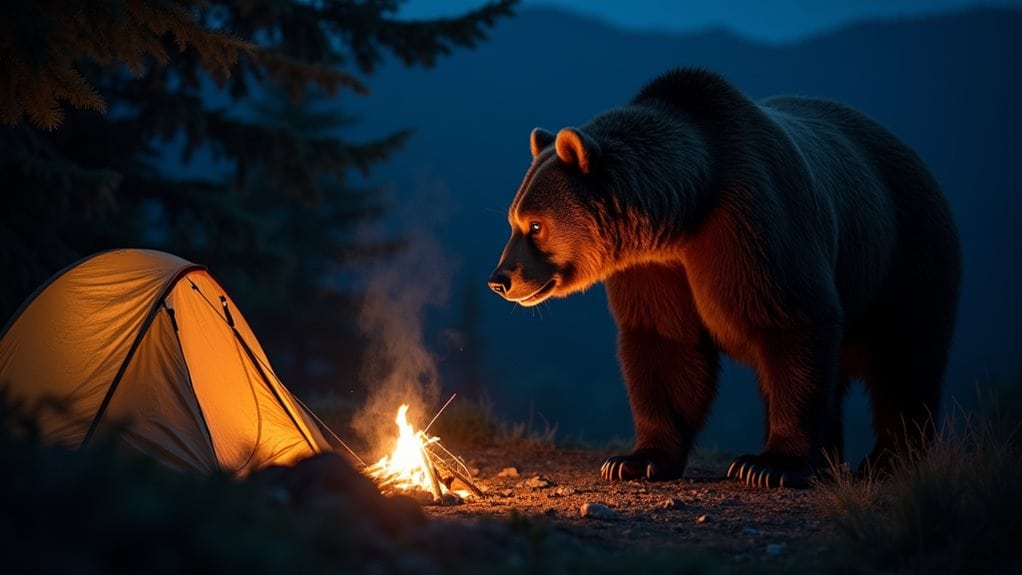
If you spot a bear in your campsite, it’s crucial to stay calm and avoid panicking, as sudden movements or loud reactions can escalate the situation.
Make loud noises, like shouting or banging pots, to scare the bear away.
If it acts aggressively or refuses to leave, use your bear spray, aiming at its face from a safe distance.
Additionally, understanding full-time RV living safety tips can help you prepare better for encounters in remote areas.
How Can I Scare a Bear Away Using Noise and Deterrents?
Using loud noises like shouting, banging pots, or blowing an air horn can effectively alert a bear to your presence and encourage it to leave.
Carrying and properly using deterrent devices such as bear spray within 30 feet provides a powerful way to discourage an approaching bear.
Additionally, making yourself appear larger by waving your arms or clothing can intimidate the bear and prevent it from advancing further.
To improve your safety, be sure to secure all gear and maintain awareness of wind conditions to avoid unexpected noise or movement that could attract the bear.
Effective Noise-Making Techniques
Making loud noises is one of the most effective ways to scare a bear away from your campsite. Use your voice loudly and firmly, making loud sounds that can scare it away.
Banging pots or using an air horn creates abrupt noises that activate the bear’s caution response.
Stand your ground, make yourself appear larger, and continue making loud, intimidating noise until the bear retreats.
Suitable Deterrent Devices
When it comes to deterring bears at your campsite, employing effective noise-making devices can considerably increase your safety. Carrying bear spray and making noise with whistles or alarms can prevent encounters a bear might investigate.
Creating loud, consistent sounds like banging sticks or clapping outside your tent helps scare bears away, making deterrent devices essential when you encounter a bear.
What Is the Best Way to Use Bear Spray Safely and Effectively?
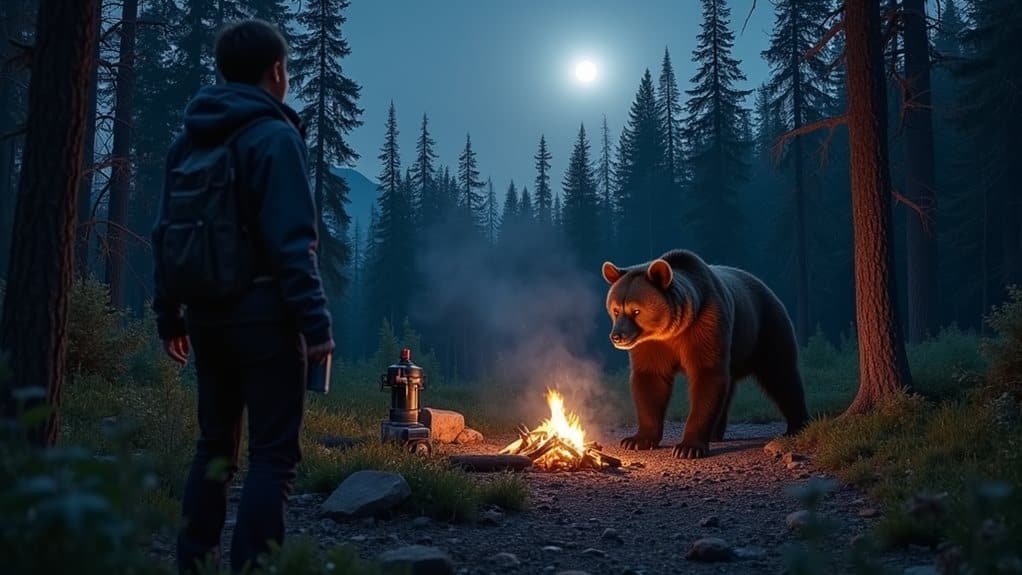
To use bear spray safely and effectively, you need to focus on proper technique, maintaining a safe distance, and timing your spray correctly. Always aim the spray at the bear’s face, specifically its eyes and nose, from at least 30 feet away, and practice deploying it quickly in advance. Remember to keep the spray accessible so you can respond immediately if a bear approaches or charges. A lightweight and accessible carry method can ensure you respond swiftly without fumbling in a stressful situation.
Proper Spray Technique
Using bear spray effectively requires understanding the correct spray technique to guarantee safety and maximize deterrence during a bear encounter.
Aim the spray at the bear’s face or nose, using short, steady bursts of 1-2 seconds.
Keep the canister upright and 4-6 feet away.
Practice deploying the spray to assure quick, effective use when needed.
Safe Distance and Timing
Maintaining the correct distance and timing when deploying bear spray is essential to ensuring both your safety and the effectiveness of the deterrent.
Keep a safe distance of at least 30 feet to avoid inhaling fumes or missing the bear’s face during an approach.
Use the spray only when the bear actively approaches or charges, aiming directly at its face for best results.
What Actions Should I Avoid If a Bear Is Near or Approaching?
When a bear is nearby or approaching, it’s essential to avoid actions that could escalate the situation. Refrain from making loud noises or shouting, as these can increase its curiosity or aggression. Never attempt to climb a tree or seek shelter in your tent, and avoid approaching or feeding the bear. Stay calm and back away slowly without sudden movements. Be aware that hiking with friends can help deter bears and reduce surprise encounters.
How Do I Respond If a Bear Gets Too Close or Acts Aggressively?
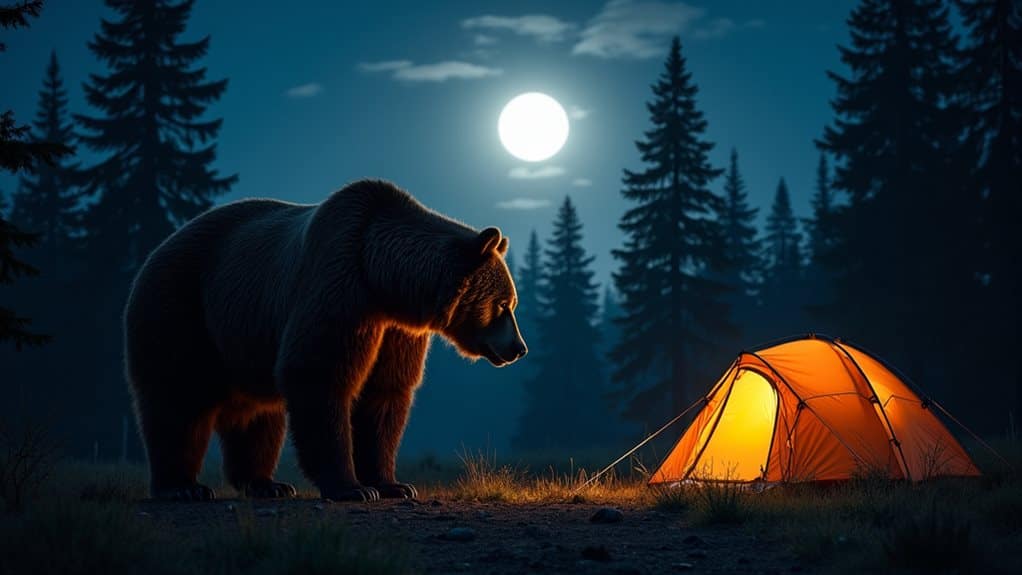
If a bear gets too close or begins to act aggressively, it’s essential to respond confidently and decisively to protect yourself.
Stand your ground, make yourself look bigger, and shout loudly to deter the aggressive bear.
If it’s within 30 feet, use bear spray aimed at its face.
Avoid feeding or approaching the bear to prevent escalation.
Be aware that a bear’s behavior might be unpredictable, especially if it has been surprised or is protecting young or food sources, so understanding bear behavior can help you respond appropriately.
What Should I Do If a Bear Enters or Attacks My Tent?
When a bear enters or attacks your tent, staying calm and acting quickly is essential for your safety.
Remain inside your tent, avoid panicking, and make loud noises to scare the bear away.
If you have bear spray, use it to defend yourself, aiming at the face.
Fight back vigorously if attacked, and report the incident afterward.
How Does Proper Food and Scent Storage Prevent Bear Encounters?

Proper food and scent storage are essential components of wilderness safety, as bears possess an extraordinary sense of smell—approximately 7,000 times better than humans—that makes them highly attracted to scented items.
Using bear-proof containers for food storage and managing scents properly reduces attracting bears, preventing encounters.
Always lock all scented items in secure containers or vehicles to avoid triggering bear curiosity and potential threats.
Implementing proper trail marker management and avoiding leaving scented items along the trail further decreases the chances of attracting bears to your campsite.
Tips for Camping Safely Overnight in Bear Country
Camping safely overnight in bear country requires more than just storing food properly; it involves adopting specific behaviors that minimize the risk of surprise encounters.
Keep your bear-proof containers or vehicle at least 100 yards from your tent, avoid scented items inside, and pack bear spray for quick access.
Making noise periodically helps alert bears and reduces the chance of bear encounters.
Final Note
By staying calm, making noise, and using proper deterrents like bear spray, you can reduce the risk of a dangerous encounter. Always store food securely and avoid surprising a bear to prevent conflicts. If a bear approaches or acts aggressively, respond confidently and follow recommended safety steps. Being prepared and vigilant helps guarantee your safety, allowing you to enjoy your camping experience in bear country responsibly. Remember, respecting wildlife and practicing caution are key to a safe outdoor expedition.


