
In clear water, fish can see fishing lines, especially if the lines are bright, reflective, or sharply contrasted against their environment. Their ability to detect lines depends on factors like water clarity, line material, color, and cover. Using stealth techniques such as fluorocarbon leaders, water-matching colors, or thinner lines can help hide your line, making it less noticeable. Learning more about how environmental conditions influence line visibility can greatly improve your chances of success.
TLDR
- Fish rely on eyesight and can detect lines based on color, reflectivity, and material, especially in clear water.
- Bright, reflective lines like braided or high-visibility colors are more easily seen by fish.
- Water clarity and environmental cover influence how visible fishing lines are underwater.
- Using fluorocarbon or water-matching lines reduces visibility and helps prevent fish from detecting the line.
- Dense cover and complex habitats help hide lines, decreasing fish awareness and increasing fishing success.
How Do Fish Detect Lines in Clear Water?
When fishing in clear water, fish rely heavily on their eyesight to detect lines, especially when those lines stand out against their environment. Visibility depends on water clarity, line color, and reflectivity. Fluorocarbon and braided lines, while strong, can be more visible, so choosing invisible or low-visibility lines helps reduce detection. Fish eyesight plays a key role in this process. Additionally, understanding species-specific hunting techniques can provide insights into how different fish may perceive and react to fishing lines in various conditions.
How Does Water Clarity Affect Line Visibility?
Water clarity plays a crucial role in how visible your fishing line appears to fish beneath the surface. In clear water, high transparency and light penetration increase line visibility, making fish perceive lines more easily. Underwater studies show that line color, thickness, and reflective properties influence visibility. So, using fluorocarbon or dark lines helps reduce detection by enhancing transparency and minimizing fish perception. Additionally, choosing the appropriate camper types and RV sizes can impact your overall experience by ensuring your setup blends well with the environment, much like selecting the right line for water clarity.
Do Bright Lines Stand Out to Fish in Clear Water?
Bright lines, such as hi-vis yellow or chartreuse, tend to stand out markedly to fish in clear water conditions. The increased visibility and contrast against water clarity make line color easily detectable, especially for fish with sharp eyesight.
While this can improve bite detection, it also raises fish awareness, potentially causing wary species to inspect or avoid the bait.
Can Fish Tell the Difference Between Braid, Fluorocarbon, and Monofilament?
Fish can often distinguish between different types of fishing lines based on their appearance and how they move in the water.
Braided lines are usually more visible and reflective, especially in clear water.
Fluorocarbon is nearly invisible due to its water-refractive properties.
Despite these visual differences, many fish focus more on bait and presentation than on the line itself.
Additionally, understanding rod action and how it affects line movement can help anglers reduce line visibility and improve their chances of success.
Line Visibility and Fish Perception
Have you ever wondered if fish can tell the difference between different types of fishing lines? In clear water, fish perception depends on line visibility and water refraction.
Fluorocarbon acts as an invisible line because its water similarity makes it hard for fish to see, unlike braided line or high-visibility monofilament, which are more easily detected.
Material Differences and Detection
Although fish can often distinguish between different types of fishing lines, their ability to do so depends largely on visual cues and environmental conditions.
Fluorocarbon’s refractive index closely matches water, reducing visibility and detection, especially in clear water.
Line material and transparency influence fish perception, but vibrations and silhouette cues often play a more significant role in underwater detection.
How Can Leaders Help Hide Braid and Improve Stealth?
Using a fluorocarbon leader with braid is one of the most effective ways to reduce line visibility and enhance stealth when fishing in clear water. The leader’s color, length, and strong knot conceal the braid from fish’s sharp eyesight, improving presentation and sensitivity. Properly tied, the leader minimizes detection, allowing you to fish with greater confidence and freedom in transparent water conditions. Additionally, selecting the appropriate rod length can improve casting distance and line control, further aiding stealthy presentations.
Does Line Thickness or Diameter Affect Fish Detection?
Line thickness can influence how visible your line is to fish, especially in clear water, with thinner lines being less detectable. Fish are more sensitive to movement and visual cues than small differences in diameter, but thicker lines can create more reflection and noise underwater. Considering how line diameter affects both visibility and casting distance can help you choose the best setup for stealth and effective presentation. Additionally, the type of line—such as monofilament, fluorocarbon, or braided—also impacts line visibility and how well it performs in different water conditions.
Line Diameter and Visibility
The diameter of your fishing line plays a significant role in how easily fish can detect it underwater. Thinner lines reduce water resistance and visual contrast, making them less noticeable in clear water.
A smaller line diameter decreases water displacement and the line profile, helping you maintain better underwater detection and a more natural presentation, especially in high water clarity.
Fish Sensitivity to Thickness
Fish are highly sensitive to changes in their environment, and this includes the thickness or diameter of the fishing line you use.
Thicker line diameter increases water displacement and light refraction, making the line’s silhouette more visible and reducing fish detection.
Using thinner lines minimizes water disturbance, improves water clarity, and can enhance your bite rate by decreasing visibility.
Casting Distance and Detection
When considering how far your line can reach during a cast, the thickness or diameter of the line considerably influences fish detection.
Thinner fishing lines, like fluorocarbon or braid with low diameter, reduce water resistance and line visibility, especially in clear water.
Thicker lines increase detectability and water resistance, limiting casting distance and stealth at longer ranges.
What Are the Best Lines for Stealth in Clear Water?
In clear water conditions, choosing the right fishing line can make a significant difference, as visibility is key for stealth. Fluorocarbon lines offer near-invisibility, matching water’s refraction. Using appropriate rigging techniques can further enhance stealth and presentation effectiveness. Dark-colored braids with fluorocarbon leaders reduce line visibility. Thin lines enhance sensitivity and water resistance, helping you stay concealed and improve your chances in crystal-clear conditions.
How Do Fish Behavior and Environment Influence Line Visibility?
Fish rely heavily on their vision, so water clarity, cover, and habitat greatly influence how well they can see fishing lines. In clear water, lines that are brightly colored or thick are more likely to be noticed, especially when there’s little cover or vegetation to break up their view. Environmental factors like light conditions and background scenery can either highlight or hide lines, affecting how fish respond to their presence. Additionally, using kayak safety tips can help anglers better understand how environmental conditions impact fish behavior and line visibility.
Water Clarity Effects
Water clarity plays a crucial role in how visible fishing lines are to fish beneath the surface. Clear water enhances visibility, making line detection easier due to improved underwater perception and light refraction.
In transparent conditions, brightly colored lines stand out, while in stained water, reduced line visibility decreases the likelihood of fish noticing the line, regardless of water conditions.
Cover and Habitat Impact
Have you ever wondered why fish mightn’t notice your fishing line in certain environments? Cover, habitat, and structure play a big role—dense vegetation, rocks, and debris obscure line visibility.
While natural camouflage helps fish blend into their surroundings. In cluttered water, fish focus on prey and cues, making line detection minimal and increasing your chances of success.
Can Changing Line Color or Using Markers Reduce Visibility?
Changing the color of your fishing line or adding markers can be an effective way to reduce its visibility, especially in water with high clarity.
Using fluorocarbon leaders, which are nearly invisible underwater, enhances underwater concealment.
Carefully selecting line color and employing line dyeing or markers can decrease line contrast, improving bite detection while minimizing fish awareness of the line.
Top Techniques to Minimize Line Visibility and Catch More Fish in Clear Water
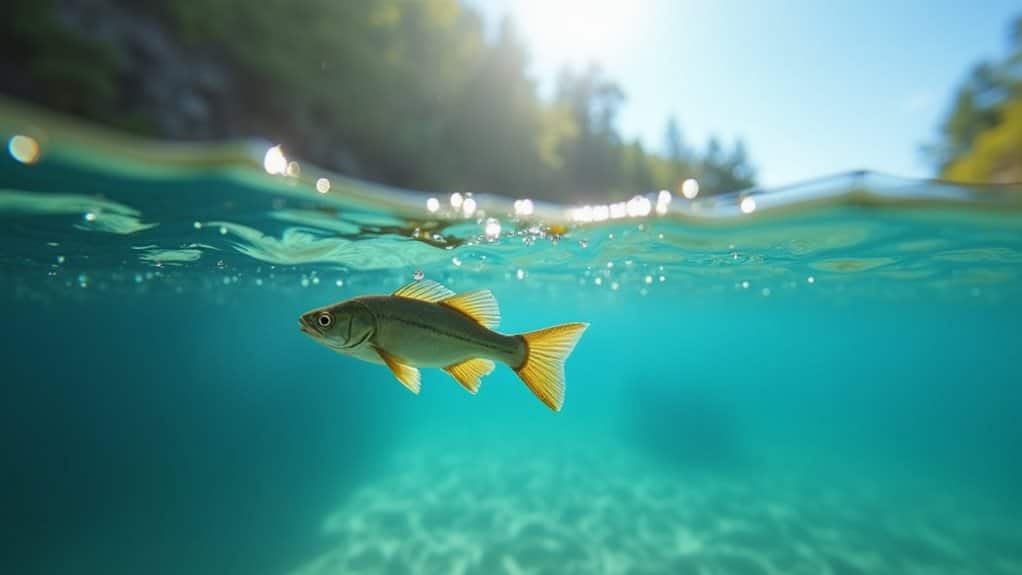
Minimizing line visibility in clear water is essential for increasing your chances of successful catches, as fish are often more cautious and aware of their surroundings.
Use fluorocarbon lines as leaders for invisibility, and tie short fluorocarbon sections to braided line for stealth.
Coloring the line’s last feet and choosing water-blending line colors help reduce line visibility and improve your stealth.
Final Note
In clear water, fish rely heavily on their vision, making line visibility a key factor in your success. Using low-contrast, stealthy lines like fluorocarbon, along with effective leaders and color strategies, can substantially reduce the chances of spooking fish. Remember, environmental factors and your fishing techniques also influence detection. By choosing the right line and adopting stealthy practices, you enhance your chances of a successful catch while maintaining an ethical approach to fishing.


