
Lakes can develop waves without wind due to natural and external factors that transfer energy to the water. Temperature fluctuations cause expansion and contraction, creating surface disturbances. Underwater events like earthquakes, landslides, or volcanic activity displace large water volumes, generating waves. Human activities such as boating or splashing also introduce ripples, while water currents and convection move energy within the lake. Exploring these processes provides a clearer understanding of how lakes stay lively even without wind.
TLDR
- Underwater seismic events like earthquakes and landslides displace water, generating surface waves independent of wind.
- Temperature fluctuations cause water expansion and contraction, creating waves through thermal movement.
- Natural phenomena such as seiches result from atmospheric pressure shifts and underwater disturbances.
- Human activities like boating and splashing produce ripples and waves on the lake surface.
- Vertical water movements from convection and environmental factors transfer energy, forming waves without wind.
How Do Water Movements Occur Without Wind in Lakes?
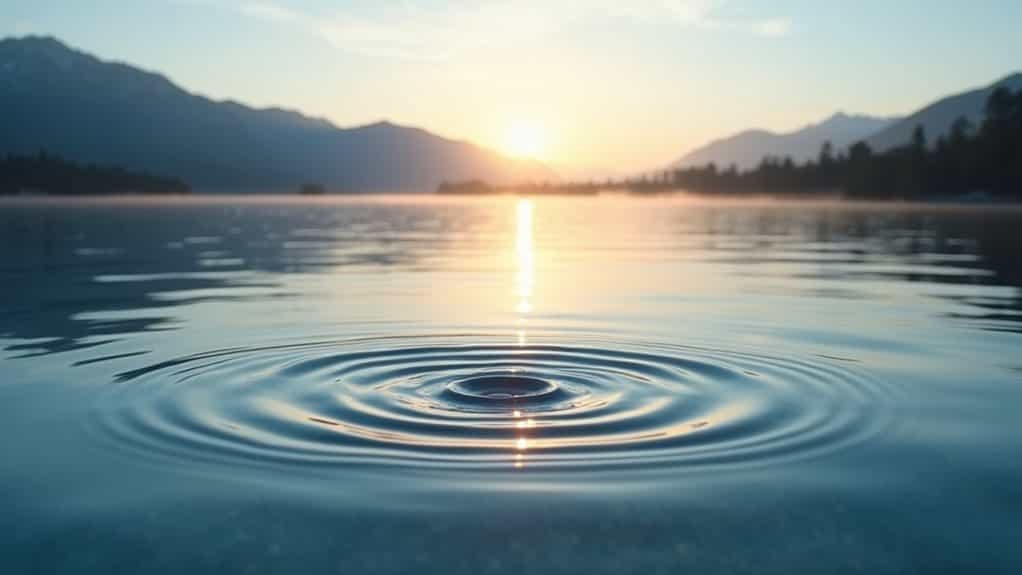
Even when the wind is calm, lakes can still exhibit movement and generate waves due to several natural phenomena. Seiches, caused by shifts in atmospheric pressure or underwater disturbances like earthquakes or landslides, displace water and create wave-like motions. Additionally, local wildlife and environmental factors can influence water movement, contributing to the dynamic nature of lakes. These processes demonstrate how natural forces beyond wind influence lake water, offering a lively environment driven by Earth’s subtle, yet powerful, movements.
How Do Temperature Changes Cause Waves on Lakes?
Temperature changes in a lake can cause waves to form even without wind, as variations in heat affect the water’s density and movement. During the day, heating causes water to expand, creating uneven layers and triggering waves. At night, cooling contracts the water, causing surface disturbances and small waves, driven by thermal expansion, contraction, and pressure differences within the lake. These temperature-driven movements are similar to atmospheric effects like thermal expansion, which can influence how distant mountains appear bluish through changes in water and air density.
How Do Underwater Events Generate Surface Waves?
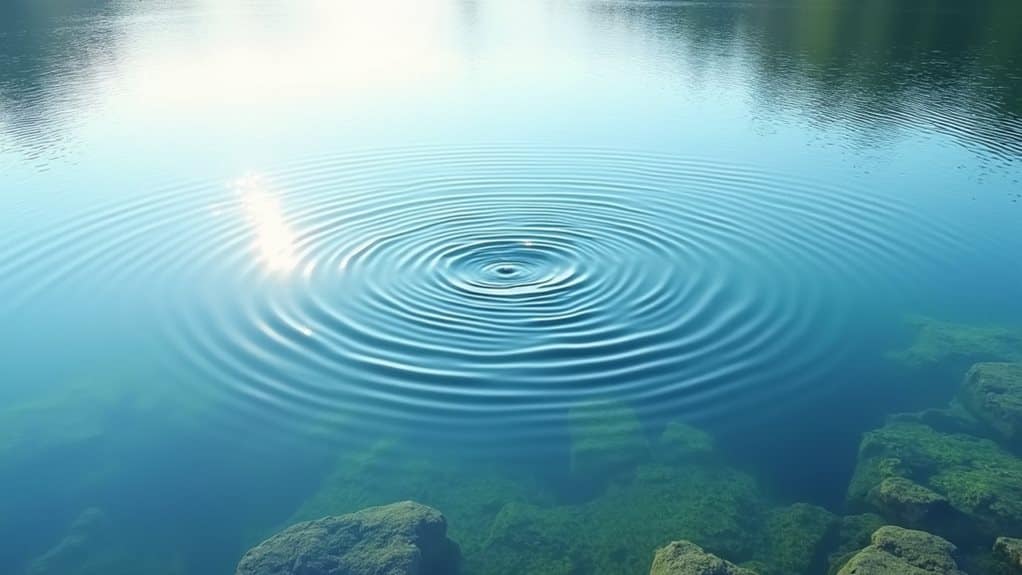
Have you ever wondered how underwater events can create waves that travel across oceans? When earthquakes, landslides, or volcanic eruptions occur, they displace large water volumes, transferring energy from seafloor movements to the water. This energy transfer generates surface waves, called tsunamis, which can be tall, powerful, and capable of crossing entire ocean basins without wind influence. The magnitude and impact of these waves depend on the seafloor displacement caused by such geological events.
How Do Human Activities Create Waves on Lakes?
Human activities such as boating, water skiing, and swimming actively disturb the surface of a lake, creating a variety of waves and ripples.
The movement of boats generates wake waves that travel across the water, while splashing from jumping or playing adds smaller ripples.
Increased human presence, especially in smaller lakes, amplifies wave activity, shaping the lake’s ever-changing surface.
Can Seismic Activity and Tidal Forces Generate Lake Waves?
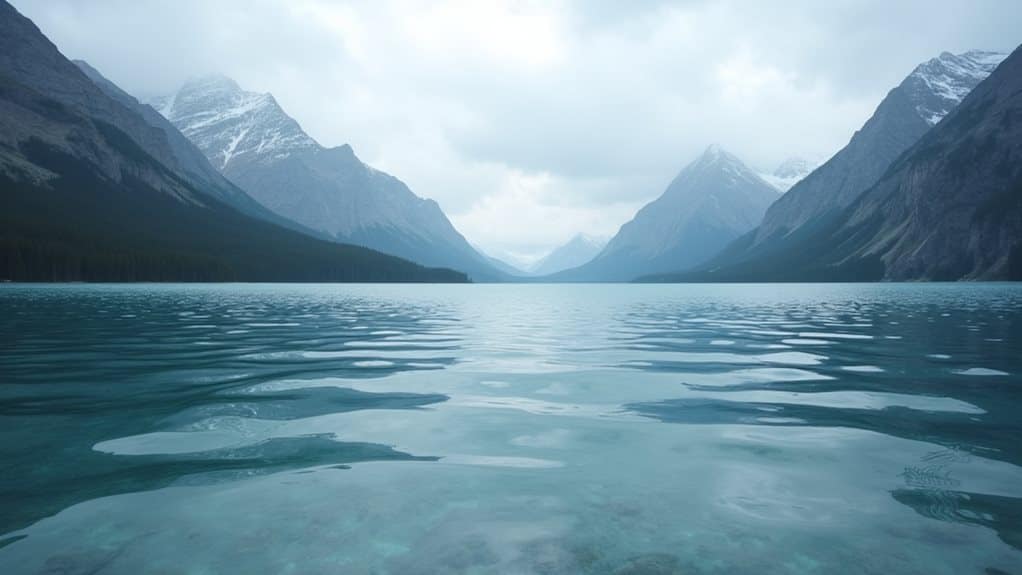
Seismic activity, such as earthquakes, can generate waves in lakes by suddenly displacing large amounts of water, creating phenomena known as seiches. A low-impact, joint-friendly activity like kayaking can also be a safe way to observe these natural water movements in nearby lakes. Tidal forces, however, are too weak to produce significant waves in lakes, since their influence is primarily on larger bodies of water like oceans. These seismic-induced waves can cause rapid water level changes, sometimes reaching several meters.
How Do Water Currents and Convection Contribute to Wave Formation?
Water currents and convection play significant roles in shaping wave activity within lakes, even when the surface remains calm and windless. These processes cause surface disturbances through vertical water movement, driven by temperature differences and uneven heating.
As these currents flow and convection occurs, they transfer energy within the water, generating localized waves without any wind, creating a constantly changing underwater environment.
How Do Splashing Objects Trigger Localized Waves?
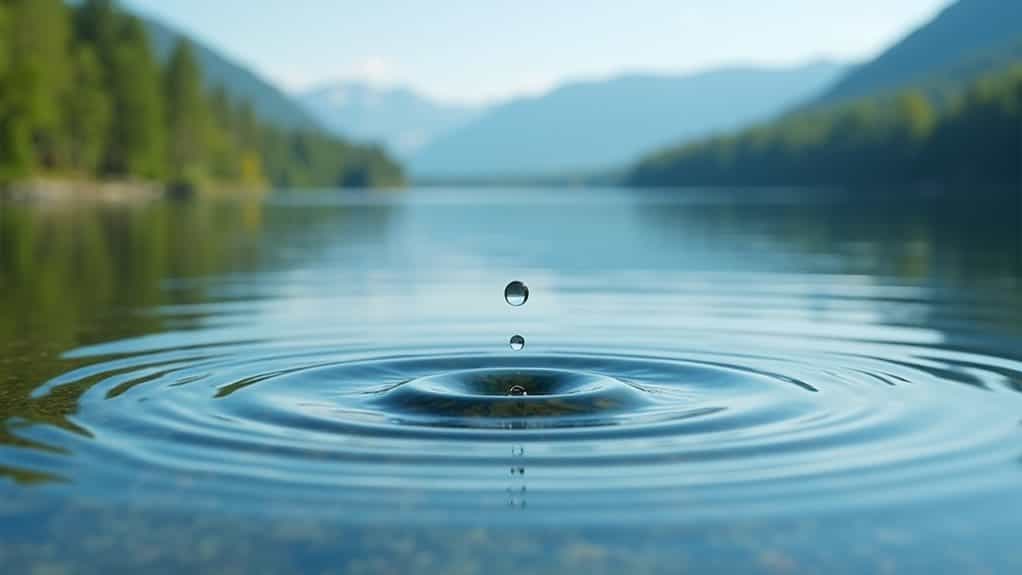
When an object splashes into a lake, it disturbs the calm surface and creates localized pressure disturbances that lead to the formation of tiny waves called ripples. These splashing objects transfer energy to the water, generating waves that spread outward. Larger splashes produce bigger ripples, which can develop into more significant waves, especially near shoreline objects or boats. Additionally, the shape and size of the object can influence the size and energy of the resulting waves, similar to how kayak design impacts performance on the water.
What Are the Differences Between Wind-Driven Waves and Other Lake Movements?
Have you ever wondered how different movements in a lake occur and what causes them? Wind-driven waves form when energy transfers from moving air to surface water, creating ripples and larger waves based on wind speed and fetch.
In contrast, lake movements like seiches or internal waves result from atmospheric pressure, seismic activity, or density differences, not wind. Ground contact can also influence water temperature and movement, especially in shallow lakes, further affecting wave formation and behavior.
When Are Waves Likely to Form in Lakes Without Wind?
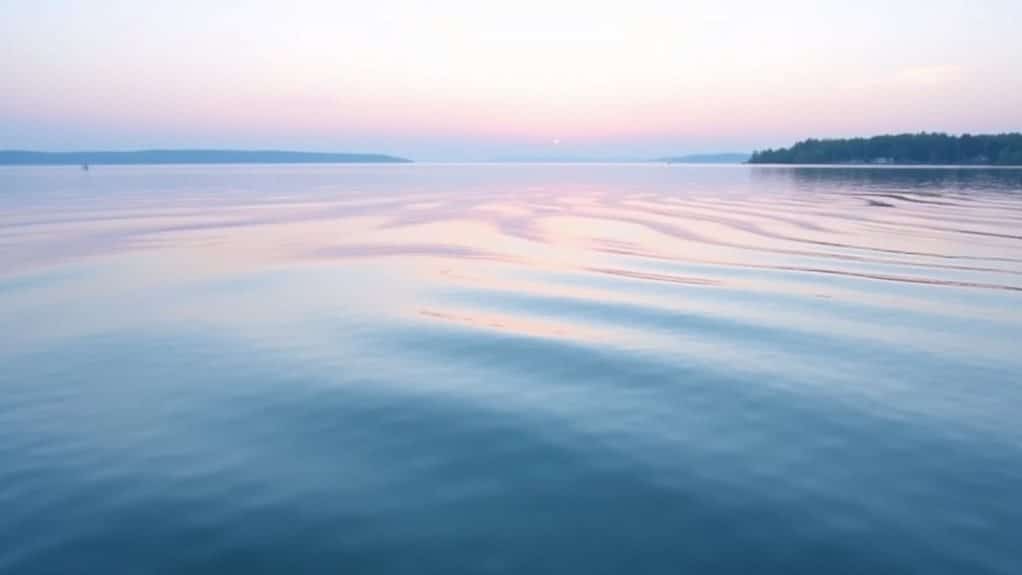
Though wind is a common driver of surface waves, lakes can also develop waves under calm conditions due to natural forces. Seismic activity, like earthquakes, causes water displacement, while pressure differences from storms or tectonic movements generate waves. Underwater landslides and volcanic activity further disturb water, creating waves even when the wind remains still. Additionally, environmental assessment of the lake can help identify these natural wave-forming events.
Final Note
In conclusion, lakes can develop waves without wind through various natural and human-induced processes, such as temperature fluctuations, seismic activity, and water currents. These mechanisms can create surface movements that are often mistaken for wind-driven waves. Understanding these factors helps you recognize different wave sources and predict when lakes might be calm or active. By paying attention to environmental changes and activity patterns, you can better interpret the complex ways water moves in lakes beyond just the influence of wind.


