You can sleep safely on the ground in a sleeping bag if you add proper insulation, keep your spine in a neutral position, and protect against heat loss and wildlife. Use a closed‑cell foam pad or an insulated air mattress to block conductive cold, and consider a thin pillow under your knees for alignment. Seal your site from drafts, keep food sealed, and use a bear bell or avoid high‑risk areas. Follow these steps and you’ll stay warm, comfortable, and safe while camping.
TLDR
- Direct ground contact increases conductive heat loss, making you colder, especially on cold or damp surfaces.
- A thin insulating barrier (foam pad or air mattress) reduces heat loss and adds cushioning for comfort and joint protection.
- Without a barrier, you lack protection from wildlife, insects, and moisture, raising safety and health risks.
- Firm ground can improve spinal alignment, but initial stiffness may occur; a pillow under knees or lower back can help.
- For safe, warm sleeping, pack a rated bag, an insulated pad (R‑5+), and a reflective tarp or shelter to shield from wind and ground cold.
How Ground Sleeping Affects Comfort and Body Health
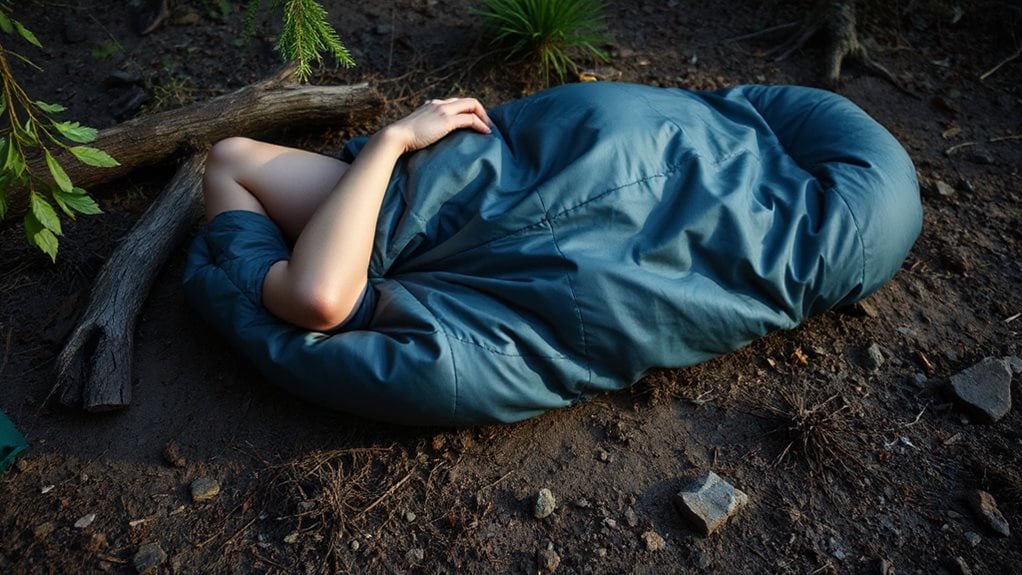
Often, you’ll notice that sleeping directly on the ground changes how your body feels compared to a mattress, because the firm surface eliminates the “hammock” effect of sagging cushions and can keep your spine closer to a neutral alignment. You may feel initial stiffness, especially first nights, but a thin pillow under knees or lower back can ease pressure. Over time, your body often adapts, reducing joint strain and improving circulation, though side sleepers might need extra cushioning at shoulders and hips. Some people also report that direct contact with the earth may reduce inflammation and improve overall well‑being. When camping for extended periods, insulate from the cold ground with natural materials or a pad to preserve body heat.
How Ground Sleeping Increases Heat Loss
When you shift from focusing on spinal alignment to the thermal side of ground sleeping, the biggest factor is heat loss through conduction.
The earth acts as an unflagging heat sink, pulling warmth from your body via direct contact; solid ground transfers energy far more efficiently than air.
Large contact areas, hip‑shoulder points, and compressed insulation amplify this effect, draining heat even if ambient temperatures seem mild.
Using an insulating pad or other barrier can significantly reduce conductive heat loss by keeping your body off the cold ground and preserving trapped air layers, especially when water temperatures are comparable to those that trigger migratory fish like spring spawning.
Choosing the Right Gear for Ground Sleeping: Foam Pad or Insulated Air Mattress
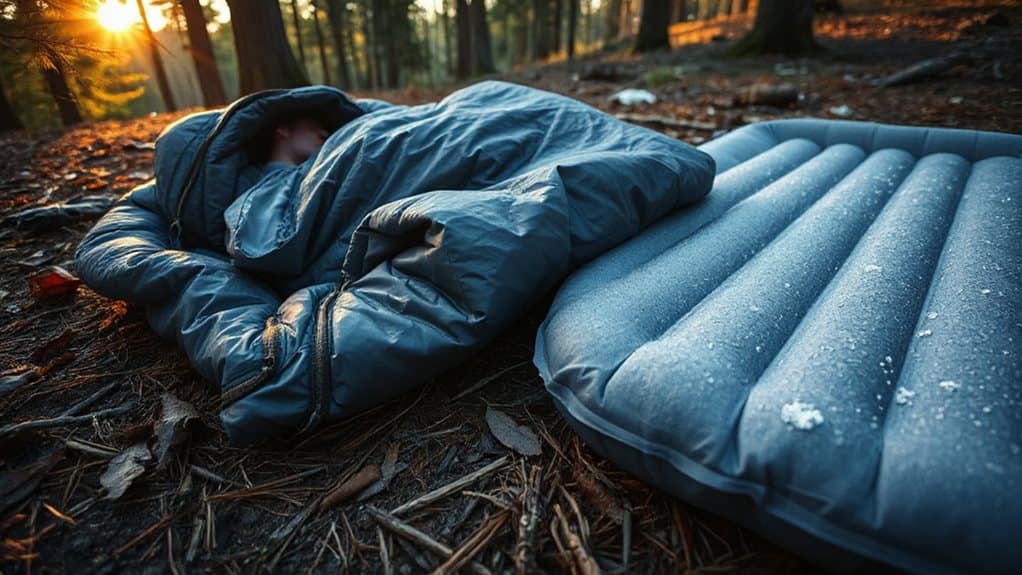
If you’re deciding between a closed‑cell foam pad and an insulated air mattress, start by considering how each handles heat loss, comfort, and packability.
Foam pads trap dead air, stay warm when punctured, and weigh little, but they’re bulky and firm.
Air mattresses can be inflated for adjustable softness, pack compact, and often boast higher R‑values, yet they risk leaks and need inflation time.
Choose based on climate, sleeping position, and how much gear you can carry.
Also consider how a mattress’s pressure relief can affect spinal alignment and overall comfort while ground sleeping.
Ground‑Sleeping Wildlife Risks and How to Mitigate Them
Sleeping on the ground removes the protective barrier a tent provides, so you become more visible and accessible to nocturnal wildlife. Choose a spot away from trails and dense vegetation, keep food sealed, and leave no trash, as bears, raccoons, and snakes are attracted to scent, not sleepers.
Use a bear bell, make occasional noise, and avoid sleeping near riparian zones to reduce encounters with insects, scorpions, and small predators. Store all food and scented gear in bear‑proof canisters kept well away from sleeping areas to minimize attractants.
What to Pack and How to Set Up a Safe, Warm Ground‑Sleeping Site
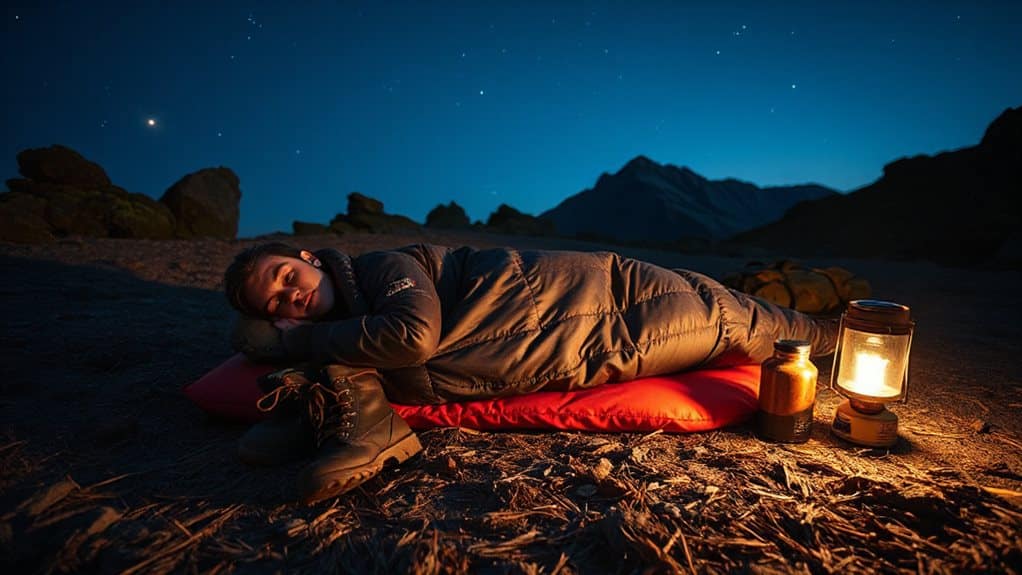
Choosing the right gear and preparing the site correctly are the foundations of a warm, safe ground‑sleeping experience.
Pack a rated bag, an insulated pad (R‑5+ for cold), a closed‑cell foam underlay, and a reflective tarp.
Clear debris, choose flat, slightly raised ground, use natural windbreaks, stake the shelter securely, seal drafts, and bring dry layers, a headlamp, and a repair kit.
Consider balancing weight and protection when selecting a shelter by choosing an appropriate ultralight tent or tarp system that fits your trip.
And Finally
By staying aware of heat loss, choosing the right insulation—foam pad or insulated air mattress—and taking simple steps to keep wildlife at bay, you can turn a ground‑level night into a safe, comfortable experience. Pack a reliable sleeping bag, a quality pad, and a shelter or tarp, and set up a clean, level spot away from animal trails. With these basics covered, sleeping directly on the ground becomes a practical, low‑cost option that protects your body and your rest.