
Campfires produce sparks and embers because burning wood releases tiny, hot particles that can become airborne, especially with resinous or dry wood. These sparks are most likely when wood is dry, seasoned, or resinous, and can easily ignite nearby fuels. Wind and weather conditions greatly influence their travel, sometimes carrying embers over long distances, creating fire risks far away from the original site. Understanding these factors helps you recognize when a campfire becomes dangerous and how to keep it safe.
TLDR
- Resinous woods like pine produce more sparks and embers during combustion.
- Dry, windy conditions increase the likelihood of sparks escaping and igniting new fires.
- Sparks are generated when small particles are ejected from burning wood, especially if it’s resinous or dry.
- Unattended or improperly extinguished campfires can release sparks and embers, leading to wildfires.
- Hidden underground embers can reignite fires even after surface flames are out, posing ongoing danger.
How Do Campfires Generate Sparks and Embers : and How Can You Prevent Them?
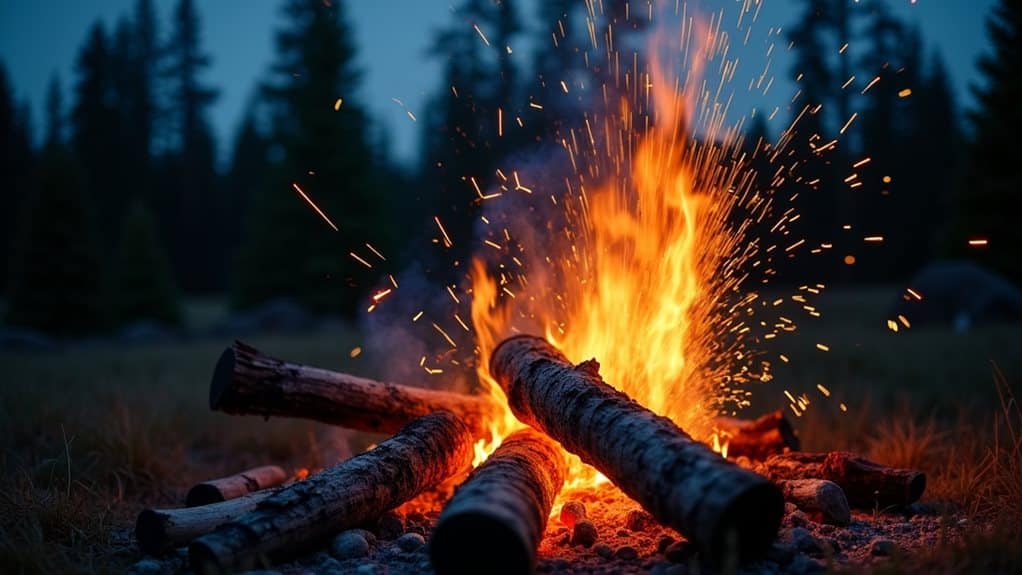
Campfires generate sparks and embers mainly through the combustion process when wood burns, producing small, hot particles that can become airborne and potentially cause fires if not managed carefully. To guarantee fire safety, build controlled, well-sized fires, avoid resinous woods like pine, and always fully extinguish the fire by drowning and stirring ashes to prevent lingering embers from reigniting. Additionally, understanding the risks of dry firing a bow highlights the importance of inspecting and maintaining your fire setup to prevent accidental sparks or embers from causing wildfires.
Why Do Embers Travel and Start Fires Far From the Original Site?
Embers can travel significant distances because wind and air currents lift and carry them away from the original fire.
When strong gusts blow, these tiny burning pieces can land in dry fuels, igniting new fires far beyond the initial site.
Understanding how wind influences ember movement helps you better assess wildfire risks and take appropriate safety precautions.
Additionally, line management techniques can reduce the likelihood of embers escaping and starting unintended fires.
Embers Lift and Travel
Wind plays an essential role in carrying tiny burning pieces, known as embers or firebrands, over long distances—sometimes more than a mile from the original fire.
These embers can land in dry fuels, igniting spotting fires far ahead of the main blaze.
Rising heat from underground fires can loft embers, increasing their travel distance and the risk of re-ignition.
Wind and Air Currents
Air currents and the movement of hot air above a fire substantially influence how embers travel through the environment. Wind can carry embers over a mile, causing spotting that ignites new fires far from the original site.
Strong air currents increase distance, making fires harder to control, especially in windy, drought-prone conditions where embers land on dry fuels.
How Wind and Weather Conditions Make Wildfires Worse?
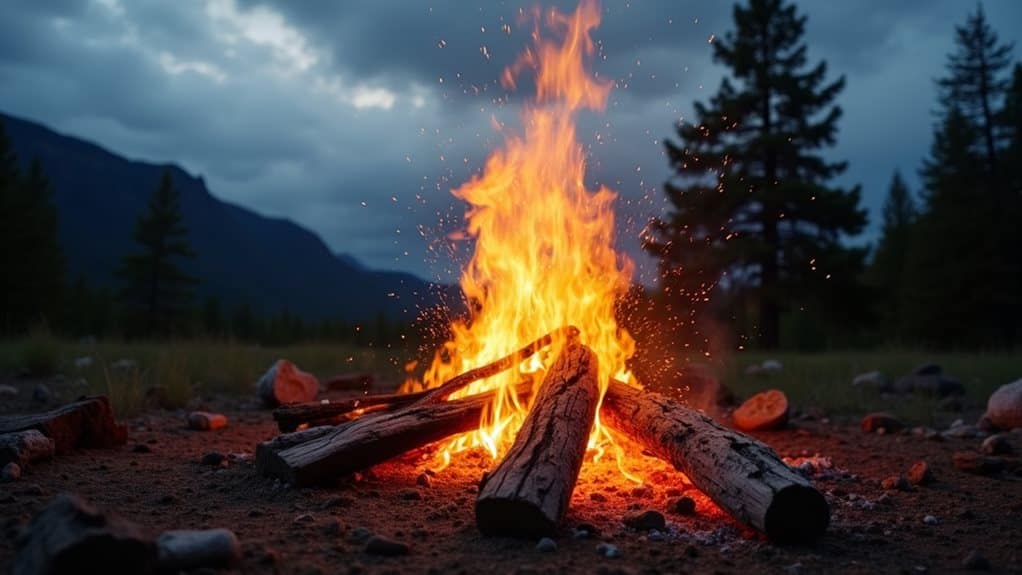
When weather conditions become windy and dry, the risk of wildfires escalating dramatically increases. Wind can carry sparks over a mile, igniting new fires, while dry fuels are more prone to ignition. High winds and low humidity create a cycle that fuels rapid, unstoppable wildfire growth, making it essential to understand how wind and weather conditions worsen these dangerous fires. Additionally, wind chill effects can intensify fire spread by quickly drying out vegetation and reducing moisture content, further increasing flammability.
The Hidden Dangers of Smoldering Roots and Underground Fires
Underground fires can hide within roots and soil layers, making them difficult to spot and extinguish completely. A LifeStraw-like physical filtration approach can be used to understand how contaminants are blocked by physical barriers, similar to how smoldering roots can contain heat and embers below the surface. Smoldering embers can remain active for days or even weeks after surface fires are out, posing a risk of rekindling new flames. To prevent these dangers, thorough extinguishing methods, including stirring and soaking, are crucial to guarantee no residual heat persists beneath the surface.
Hidden Fire Sources
Have you ever considered that a campfire’s danger mightn’t be fully gone even after the flames die out? Hidden fire sources, like underground fires smoldering in roots or organic layers, can reignite long after you’ve extinguished the visible flames.
These underground fires travel through decaying material, making detection difficult and risking future flare-ups or reignition.
Long-lasting Smoldering Embers
Even after a campfire seems fully out, smoldering embers can linger beneath the surface, posing a hidden danger.
Underground fires and smoldering roots can persist for days or weeks, traveling through organic matter.
To prevent reignition, you must thoroughly extinguish all embers, stir the ashes, and cool the entire area, including roots and soil layers.
Difficult Detection Methods
Detecting smoldering roots and underground fires can be particularly challenging because they often produce little to no visible signs like smoke or heat.
Underground fires hide beneath the surface, making them hard to spot without specialized equipment.
Proper extinguishing techniques, including thorough dousing and stirring of ashes, are essential to prevent these fires from reigniting and causing future surface wildfires.
Common Human Mistakes That Lead to Wildfire Ignitions
Many human mistakes can considerably increase the risk of wildfires, especially when it comes to campfire safety. Leaving a campfire unattended or not fully extinguishing it with water allows sparks and embers to escape, igniting nearby vegetation. Building a larger fire or on dry ground, and ignoring fire restrictions, further raises the chances that wildfires start. Proper fire safety procedures are essential to prevent accidental ignitions and protect natural landscapes.
How Environmental Factors Influence Fire Behavior
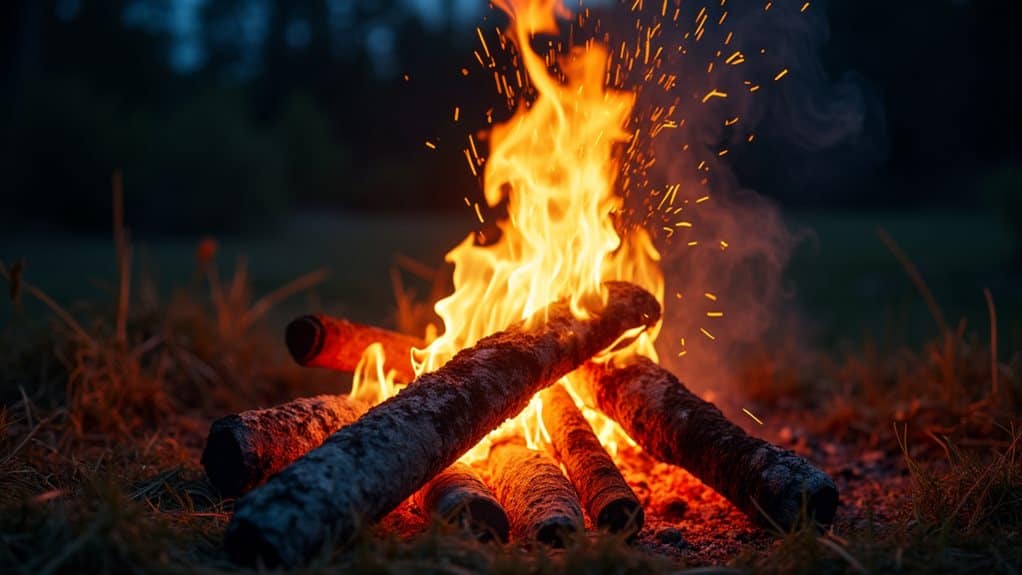
Environmental factors play a crucial role in determining how fires start and spread. Dry vegetation with low moisture content ignites easily, especially under windy conditions that carry sparks over long distances.
Low humidity dries out fuels further, making them highly susceptible to ignition. These conditions accelerate fire behavior, increasing the risk of rapid, uncontrollable wildfires.
Tips for Building and Managing a Safe Campfire Site
Building a safe campfire starts with selecting the right location, ideally a cleared, mineral-soil area free from vegetation and overhanging branches to reduce fire safety risks.
Keep fires small and manageable, never larger than necessary.
Always have water, a shovel, or a fire extinguisher nearby, and fully drown and cool embers before leaving to manage fire effectively.
Using appropriate tent materials can also help prevent accidental fires by reducing the risk of sparks igniting surrounding areas.
Final Note
Understanding how campfires produce sparks and embers, along with the influence of wind and underground fires, helps you manage risks effectively. By choosing the right site, controlling fire behavior, and being mindful of weather conditions, you can greatly decrease the chance of wildfires. Always prioritize safety, stay alert to environmental factors, and follow proper fire-building practices. Doing so guarantees your outdoor experience remains enjoyable while minimizing the potential for unintended fires.


