
You suck water through the LifeStraw, and its hollow fiber membrane traps bacteria, parasites, and microplastics in tiny 0.2-micron pores—no batteries or chemicals needed. It filters up to 1,000 gallons, removing 99.999999% of harmful bacteria like E. coli. Standard models don’t remove viruses, but purifier versions with 0.02-micron filters do. Some models also reduce lead, chlorine, and pesticides using carbon and ion exchange. Keep it clean by backwashing regularly, and learn how different models can match your specific needs.
TLDR
- LifeStraw uses mouth-powered suction to pull water through a 0.2-micron hollow fiber membrane, filtering bacteria and parasites without batteries.
- Microscopic pores in the fibers block contaminants like E. coli and Giardia, while allowing clean water to pass through.
- Purifier models use 0.02-micron ultrafilters to remove 99.999% of viruses, making water safe without boiling.
- Activated carbon and ion exchange reduce lead, chlorine, PFAS, and pesticides, improving taste and safety in select models.
- Regular backwashing extends filter life, with some models lasting up to 1,000 gallons before replacement.
How Does LifeStraw Work Without Batteries?
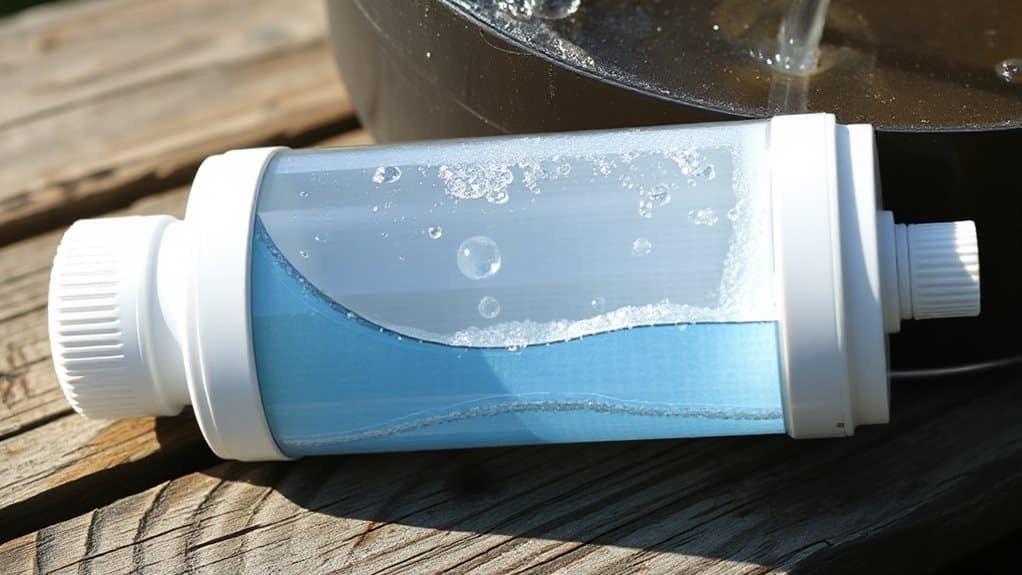
Just take a sip, and let the LifeStraw do the work—no batteries, no power, just smart, simple mechanics.
You create suction with your mouth, pulling water through microscopic pores that block bacteria and parasites. These hollow fibers trap contaminants physically, while clean water flows through.
No pumps, no electricity, no hassle—just pure, safe hydration wherever you go. Boiling water or using a portable stove is still recommended when possible for additional safety.
The hollow fiber membrane uses an absolute pore size of 0.2 microns to effectively remove bacteria, parasites, and microplastics from water.
The Hollow Fiber Membrane: How It Filters Water
You’re using a bundle of tiny, straw-like fibers every time you drink through a LifeStraw, each one packed with microscopic 0.2-micron pores.
These pores let water pass through but block bacteria, parasites, and microplastics because they’re simply too big to fit.
It’s physical filtration at its simplest—no chemicals, no batteries, just clean water on demand.
LifeStraw’s hollow fiber membrane can filter up to 1,000 gallons of water before needing replacement, making it a long-lasting option for many hikers and travelers with 1,000 gallons of service life.
Hollow Fiber Structure
Envision a bundle of microscopic straws working together to clean your water—this is the heart of LifeStraw’s hollow fiber membrane.
You’ll find these tiny fibers packed tightly, each with pores smaller than 0.2 microns.
Made from advanced polymers like PVDF or PES, they form a durable, selective barrier that lets water through while trapping bacteria, parasites, and microplastics effectively and reliably.
Size-Based Contaminant Removal
Because it relies on physical filtration at a microscopic level, the hollow fiber membrane in your LifeStraw effectively blocks harmful contaminants by size alone.
You pull water through pores as small as 0.015 microns, trapping bacteria, parasites, microplastics, and debris. Nothing larger passes through—no chemicals needed.
It’s simple, reliable protection that keeps you free to discover with confidence, anywhere.
What Contaminants Does LifeStraw Remove?
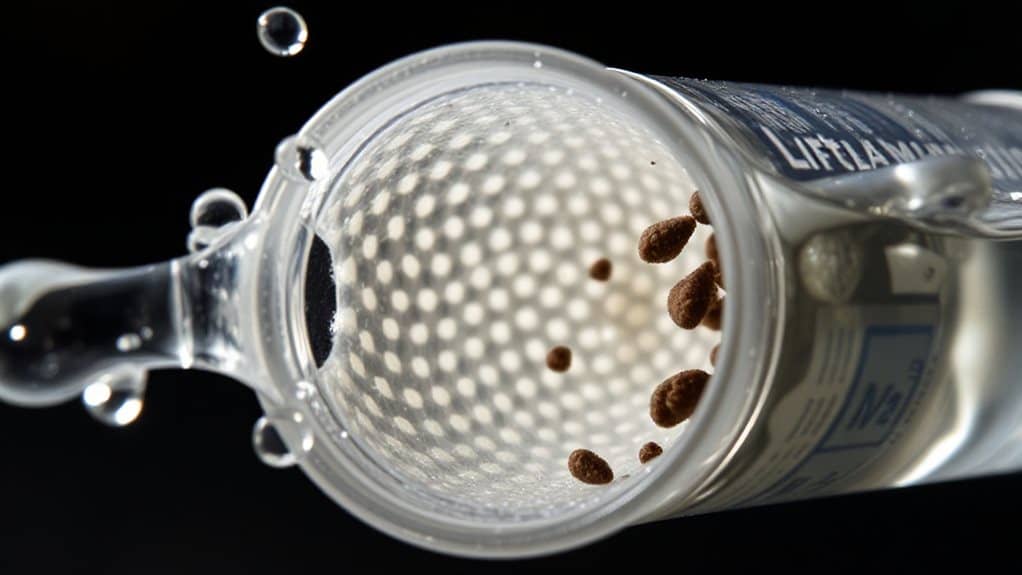
You can count on your LifeStraw to remove harmful bacteria and parasites like E. coli, Giardia, and Cryptosporidium, thanks to its 0.2-micron hollow fiber membrane.
It also cuts through microplastics and reduces lead, mercury, PFAS, and chlorine, using activated carbon and ion exchange tech.
While it doesn’t remove viruses, it’s built to handle a wide range of contaminants you might find in untreated water.
Bacteria And Parasites Removed
Pull a sip of water from nearly any stream or puddle, and LifeStraw’s ultrafiltration technology goes to work immediately, blocking harmful bacteria and parasites before they reach your mouth.
It removes 99.999999% of bacteria like E. coli and 99.999% of protozoa including Giardia, thanks to its 0.2-micron pores—small enough to stop threats, yet porous enough for easy sipping.
Viruses And Chemicals Filtered
Now that you know how LifeStraw stops bacteria and parasites with its 0.2-micron filter, it’s worth exploring what else it can handle—especially when it comes to viruses, chemicals, and other invisible threats.
While it doesn’t filter most viruses, it removes lead, mercury, chlorine, PFAS, pesticides, microplastics, and more—giving you cleaner, safer, better-tasting water without stripping essential minerals like magnesium and potassium.
Can LifeStraw Filter Viruses? It Depends on the Model
While not all LifeStraw models protect against viruses, the right one can make a critical difference depending on your water source.
Choose purifiers like Family, Mission, or Escape—they remove 99.999% of viruses with 0.02-micron ultrafilters.
Standard models, like the Personal, don’t filter viruses.
For backcountry safety where risks are unknown, go with a purifier or pair filtration with chemical treatment.
Bring waterproof clothing and sturdy boots for protection and to stay safe when collecting water in wet environments protective gear.
What LifeStraw Removes: E. Coli to Microplastics
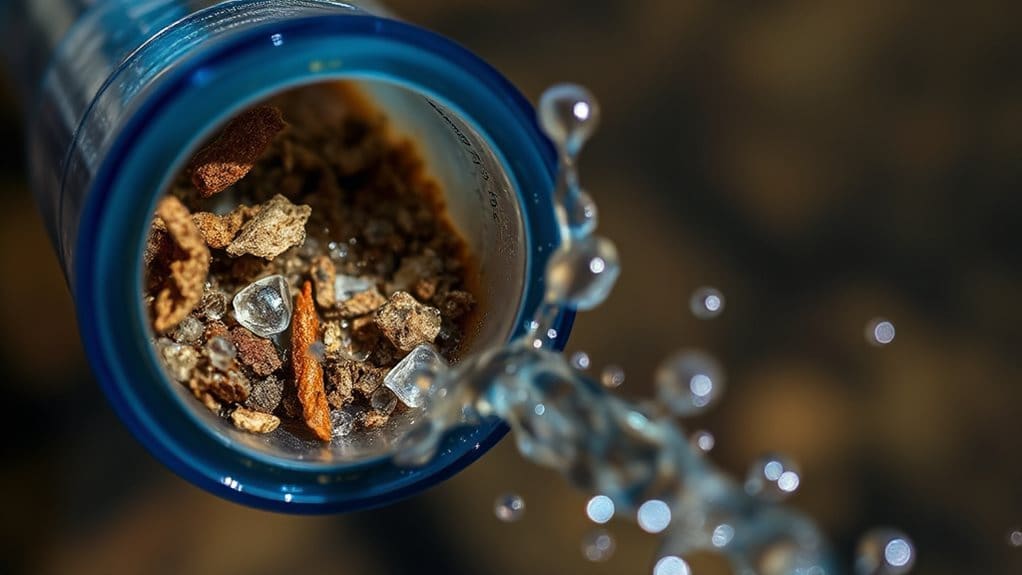
When it comes to what’s lurking in your water, LifeStraw filters don’t just skim the surface—they go deep, tackling threats from bacteria like *E. coli* to tiny microplastics you can’t see.
You’ll block 99.9999% of bacteria, including *Salmonella*, and remove nearly all parasites.
With 0.2-micron pores, your filter crushes microplastics down to 1 micron, giving you cleaner, safer water wherever you roam.
Activated Carbon and Ion Exchange: Removing Chemicals
You’ll find activated carbon in your LifeStraw filter grabbing onto chlorine, odors, and organic chemicals, making your water taste and smell better.
It works hand in hand with ion exchange, which swaps harmful metals like lead and cadmium for safe ions, reducing dangerous contaminants.
Together, they tackle a wide range of chemicals—including PFAS and pesticides—so you get cleaner, safer drinking water with every sip.
Smart chargers also often include automatic float/maintenance modes to prevent overcharging and extend battery life, a key feature of many high-quality deep cycle chargers.
Activated Carbon Function
A single, advanced filter can remove more than 30 different contaminants from your water, and it starts with activated carbon.
You get cleaner, better-tasting water as tiny pores in the carbon trap chemicals like chlorine, pesticides, and PFAS. These pores, created through special treatment, capture impurities while letting healthy minerals like calcium and magnesium pass through—giving you safe, great-tasting water with every sip.
Ion Exchange Mechanism
How does a filter actually capture heavy metals without stripping your water of beneficial minerals? You rely on ion exchange resins that swap harmful ions like lead and cadmium for safe ones.
The fibers trap toxins but let sodium, calcium, and magnesium pass. Paired with activated carbon, it removes chemicals while keeping water tasty, clean, and safe—without compromising the nutrients you need.
Chemical Contaminant Reduction
Beyond tackling heavy metals through ion exchange, your filter takes on chemical contaminants using a powerful combination of activated carbon and ion exchange technology.
It absorbs chlorine, benzene, PFAS, and pesticides, while reducing odors and improving taste. The fiber-based carbon lasts longer and performs better, trapping organics and VOCs so you can drink freely, knowing your water’s safer, cleaner, and better tasting—all without sacrificing performance or peace of mind.
Best LifeStraw for Hiking, Camping, and Travel
When you’re deep on the trail or finding your way through remote destinations, having a reliable water filter can make all the difference—and LifeStraw’s lineup delivers smart, lightweight options customized to hikers, campers, and travelers.
Choose the Peak Series Solo for ultralight simplicity, or the Straw for higher volume needs. Both screw onto bottles, filter 99.999% of bacteria and parasites, and need no chemicals—just pure, safe hydration wherever you roam. Place the unit in direct sunlight when possible to help preserve battery-free functionality and ensure long-term durability with proper care, and remember that keeping parts clean improves performance and lifespan of the filter keep solar panels.
Using LifeStraw During Boil Water Advisories
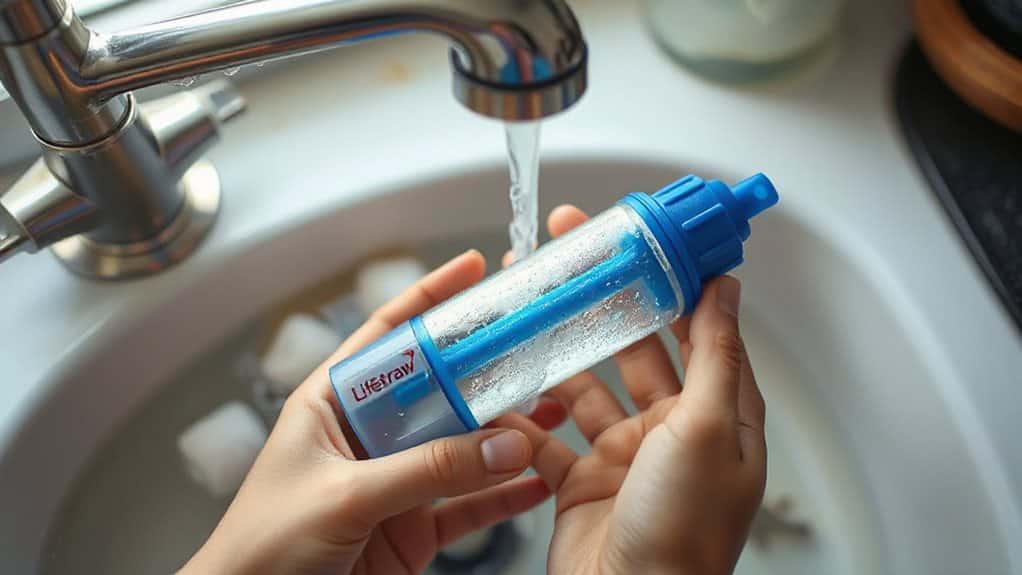
If you’re facing a boil water advisory, you might wonder whether your LifeStraw can keep you safe—good news, it depends on the model you’re using.
LifeStraw filters, like the Home or Go Series, remove bacteria and parasites but not viruses. If viral contamination is possible, stick to boiling or use a LifeStraw purifier—models like Mission or Max remove viruses, too, giving you safe, clean water without boiling.
LifeStraw for Families and Groups: What to Know
You’ve seen how individual LifeStraw filters and purifiers can protect you during boil water advisories, especially when viruses are a concern—now let’s expand that protection to your whole household or group. You can rely on LifeStraw Family and Community models to deliver clean water without electricity, using gravity-fed ultrafiltration.
With pore sizes as small as 0.02 microns, these systems remove nearly all bacteria, viruses, protozoa, and microplastics. Designed for durability, they’re ideal for homes, schools, or remote use—giving you freedom from unsafe water, no matter where you are.
When LifeStraw Can’t Remove Viruses or Chemicals
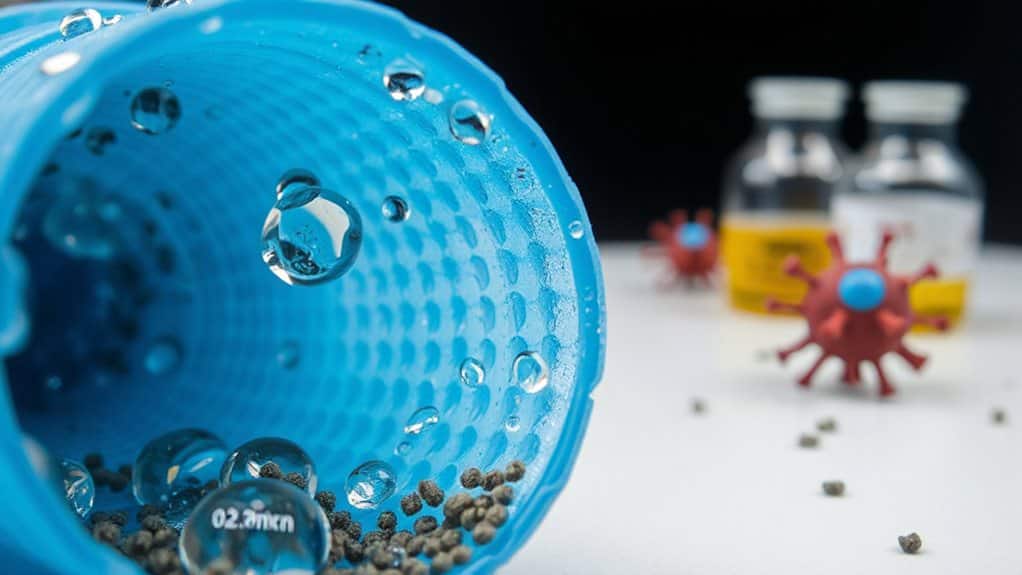
While LifeStraw products excel at filtering out harmful bacteria and parasites from water, they aren’t all built to tackle every threat—especially viruses and chemicals.
Standard models, like Go or Flex, don’t remove viruses due to larger pores, so you’ll need purifiers or tablets where viruses are a risk.
They also can’t filter heavy metals or chemicals—pair with carbon-based filters or avoid contaminated sources to stay safe and free on your journeys.
How to Backwash and Extend Your Filter’s Life
To keep your LifeStraw performing at its best, regular backwashing is essential—think of it as a quick reset that clears trapped particles and restores flow.
Do it daily, after filter changes, or when flow slows. Use the syringe for Escape models, or rotate the dial on Max systems.
Flush with clean water, and for long-term care, use a bleach solution, then rinse well.
Final Note
You now know how LifeStraw works—no batteries needed. Its hollow fiber membrane physically filters out bacteria, parasites, and microplastics, making water safer to drink. Most models don’t remove viruses or chemicals, so check your specific version. It’s ideal for hiking, travel, or emergencies, but isn’t a cure-all. Backwash regularly to extend its life. For families, consider larger systems. Stay informed, stay safe, and trust the science when every sip counts.


