
You’re probably wondering if a fish feels pain when a hook bites, and the answer is yes—fish have polymodal nociceptors in their mouths, lips and head that fire to sharp pressure, extreme heat and irritating chemicals, sending sharp signals through the trigeminal nerve to the brain. The tear creates inflammation, releases cortisol and adrenaline, and drives rapid heartbeats, frantic darting and mouth‑rubbing, a stress response that can last long after the line is cut. Quick‑release hooks, minimal air exposure and wet handling cut the harm, while analgesics like morphine have shown measurable relief. If you keep going, you’ll uncover the full range of evidence‑based practices and ethical implications.
TLDR
- Fish possess polymodal nociceptors in mouth, lips, and head that detect mechanical pressure, extreme heat, and irritating chemicals, signaling to brain regions beyond simple reflexes.
- Hook penetration tears oral tissue, activates these nociceptors, and triggers immediate trigeminal nerve signaling, followed by inflammation and cortisol spikes.
- After release, the wound remains, causing persistent nociceptor firing, elevated stress hormones, and prolonged physiological stress such as rapid heart rate.
- Observable stress behaviors include frantic darting, mouth‑rubbing, reduced feeding, abnormal posture, and hiding, indicating pain‑motivated avoidance.
- Mitigation strategies—quick‑release hooks, minimal air exposure, wet handling, and analgesics—reduce tissue damage and stress but do not eliminate the pain experience.
Fish Pain: What Science Says About Nociceptors
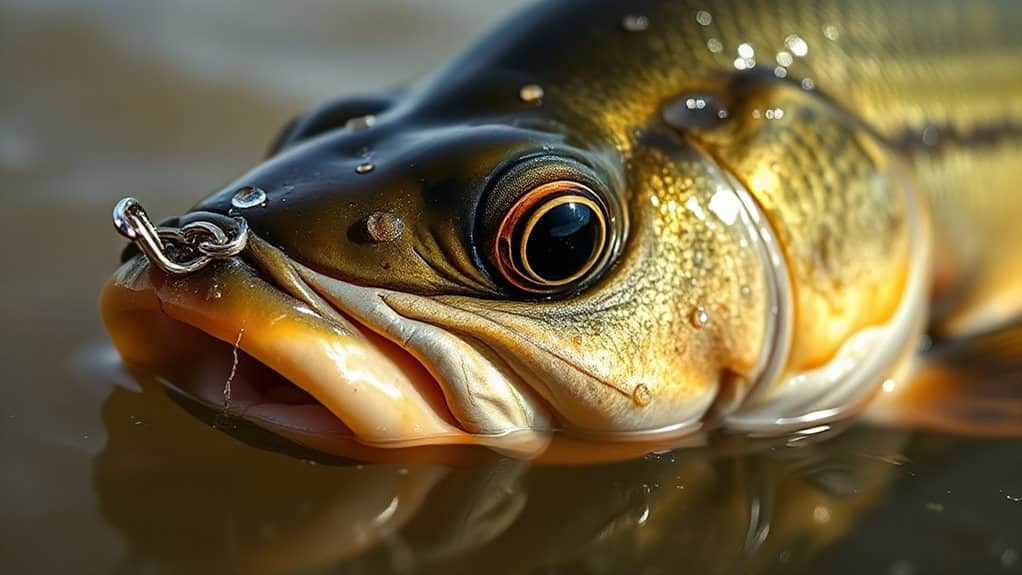
If you look at a trout’s head under a microscope, you’ll see nociceptors that are strikingly similar to those in mammals, detecting mechanical pressure, extreme heat, and irritating chemicals like acetic acid.
These polymodal receptors appear across the face and fins, fire at temperatures above 40 °C, and send signals to the cerebellum, tectum, and telencephalon, indicating a neural network that goes beyond simple reflexes. Moreover, studies have shown that acid‑injected zebrafish will choose analgesic‑rich water over enriched environments, demonstrating pain‑motivated behavioral change.
How a Hook Triggers Fish Pain in the Mouth
When a hook pierces your fish’s mouth, it tears soft tissue, activates nociceptors, and sends sharp nerve signals straight to the brain.
That immediate wound triggers inflammation and a cascade of chemical messengers, making the fish feel pain and start a stress response.
You’ll see the fish shake, rub the area, or stop feeding—clear behavioral signs that it’s in distress.
Spring spawning tidal freshwater areas concentrate shad and other prey, increasing hooking encounters during peak migration.
Nociceptor Activation in Mouth
Because the hook lands in a fish’s mouth, the trigeminal nerve—its fifth cranial nerve—immediately carries the signal to the brain, and that pathway is packed with nociceptors that detect mechanical pressure, extreme heat, and irritating chemicals.
Those polymodal receptors fire instantly when the hook presses, burns above 40 °C, or contacts acidic saliva, sending rapid alerts that trigger stress‑related breathing, rubbing, and delayed feeding, proving the mouth’s nociceptors are functional and pain‑relevant.
Hook Penetration Causes Tissue Damage
Hook penetration does more than just snag a fish—it tears tissue, severs vessels, and damages nerves, creating a cascade of pain signals that the animal immediately feels.
You’ll see a ragged puncture in soft oral tissue, often in the lip or throat, where barbs hold the hook and blood vessels, nerve fibers, and muscle are cut.
Bacterial contamination adds inflammation, swelling persists, and removal can worsen the wound if done roughly.
Behavioral Indicators of Painful Distress
Ever wondered how a simple hook can turn a fish’s mouth into a source of intense distress?
You’ll see it rub its jaw against surfaces, dart erratically, and hide, all while breathing faster and heart pounding.
Cortisol spikes, appetite drops, and escape attempts surge.
These behaviors—self‑grooming, agitation, reduced feeding—signal conscious pain, not just reflex.
Behaviors That Reveal Fish Pain After Hooking
When a fish is hooked, its immediate reactions often betray more than a simple reflex; rapid darting, twisting, and violent struggling signal a strong avoidance response that aligns with what we recognize about nociception in vertebrates. You’ll notice frantic swimming, mouth‑rubbing against surfaces, reduced feeding, abnormal posture, and a tendency to hide, all indicating lingering pain and discomfort. Many anglers also use a slip bobber to present bait at controlled depths and reduce additional stress on hooked fish.
Stress Hormones, Heart Rate, and Breathing After Hooking
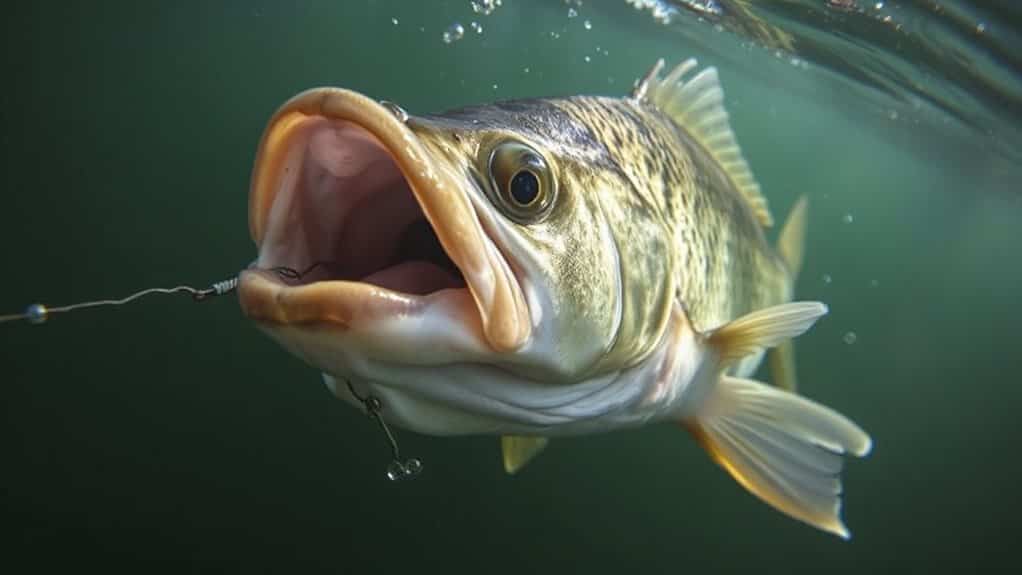
If you’ve ever watched a fish thrashing after a hook, you’re seeing more than a reflex; the animal’s stress hormones, heart rate, and breathing all spike in a coordinated response.
Within seconds, adrenaline and noradrenaline surge, driving rapid heartbeats and ventilation spikes, while cortisol climbs over minutes, lingering longer in colder water.
These changes signal intense physiological stress, not just a simple twitch.
Regular exposure to natural environments has been shown to lower cortisol and heart rate, which contrasts with the acute stress response seen in hooked fish; this highlights how green spaces can promote physiological relaxation.
Why Catch‑and‑Release Doesn’t Eliminate Fish Pain
You may think releasing a fish ends its suffering, but the hook wound stays in the tissue, and the pain can persist long after the fish swims away.
The stress you add by keeping it out of water, handling it roughly, or extending the fight time further inflames the injury and can lead to exhaustion, infection, or delayed death.
Better gear—like barbless hooks, quick‑release tools, and wet, minimal‑contact handling—can reduce the harm, yet it can’t completely erase the pain you’ve already caused.
Hook Injury Persists
Although you release a fish immediately after it’s hooked, the injury doesn’t simply disappear; the wound remains, tissue damage continues, and the fish’s nervous system stays activated, meaning pain can persist long after the line is cut.
Hook punctures damage muscles and gills, trigger inflammation, and keep nociceptors firing.
Even as you watch it swim away, the fish experiences ongoing discomfort, compromised respiration, and slower healing, which can affect its survival and behavior for days.
Stress Extends Beyond Release
Even after you gently set a fish back into the water, its body is still racing from the fight, and the physiological stress response doesn’t just stop at the surface.
Raised cortisol, rapid heartbeats, and lactic acid linger, depleting oxygen and weakening muscles.
Warm water or low oxygen amplifies fatigue, making predators easier to catch and disease more likely, so release isn’t a full reset.
Mitigation Requires Better Gear
When you choose the right gear, you can cut down the pain a fish feels even if you plan to release it, but better equipment doesn’t erase the wound or the stress of the fight.
Circle hooks, barbless designs, and smaller, corrosion‑resistant hooks limit deep tissue damage; heavy line and low‑angle pressure shorten fights.
Wet hands, swift de‑hooking tools, and rubberized nets preserve slime and reduce handling trauma, yet each hook still inflicts injury.
How Fight Time and Air Exposure Amplify Fish Pain
Often the longer a fish struggles on the line, the more its body is taxed, and the harsher the subsequent air exposure becomes.
You’ll feel the stress spikes as oxygen demand soars, gills collapse, and lactate builds, while cortisol rises.
Add air time, and exhausted fish linger in pain, especially in warm water, so shortening fights and keeping them wet dramatically eases suffering.
Proper handling and minimizing air exposure can significantly reduce injury and aid recovery.
Longline Fishing and the Consequences of Prolonged Fish Pain
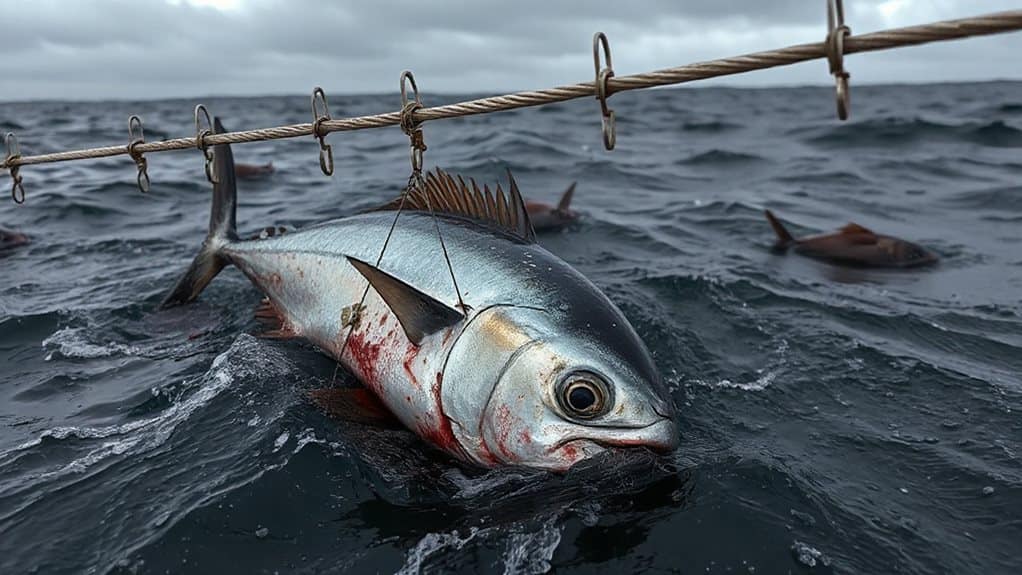
The stress spikes you saw on a fighting fish become even more pronounced in longline fisheries, where a single haul can hold thousands of hooks stretched over dozens of miles.
You’ll notice monofilament lines spanning up to 62 miles, branch lines every 100 feet, and up to 10 000 hooks per set.
Circle hooks lessen throat injuries, yet prolonged soak times still cause exhaustion, tissue damage, and heightened pain for captured fish, while massive bycatch adds ecological strain.
Using circle hooks can reduce gut hooking and improve survival rates during catch and release.
Analgesic Experiments Show How to Alleviate Fish Pain
Typically, researchers test analgesics on fish by measuring changes in ventilation, feeding latency, and activity after a noxious stimulus, and they’ve found that morphine consistently dampens pain‑related behaviors across species such as rainbow trout, zebrafish, and goldfish.
You’ll see morphine at 5–6 mg/kg reduces ventilation spikes and shortens recovery, while fentanyl, lidocaine, and carprofen offer modest relief, though results vary by species, dose, and delivery method.
10 Evidence‑Based Practices to Reduce Fish Pain
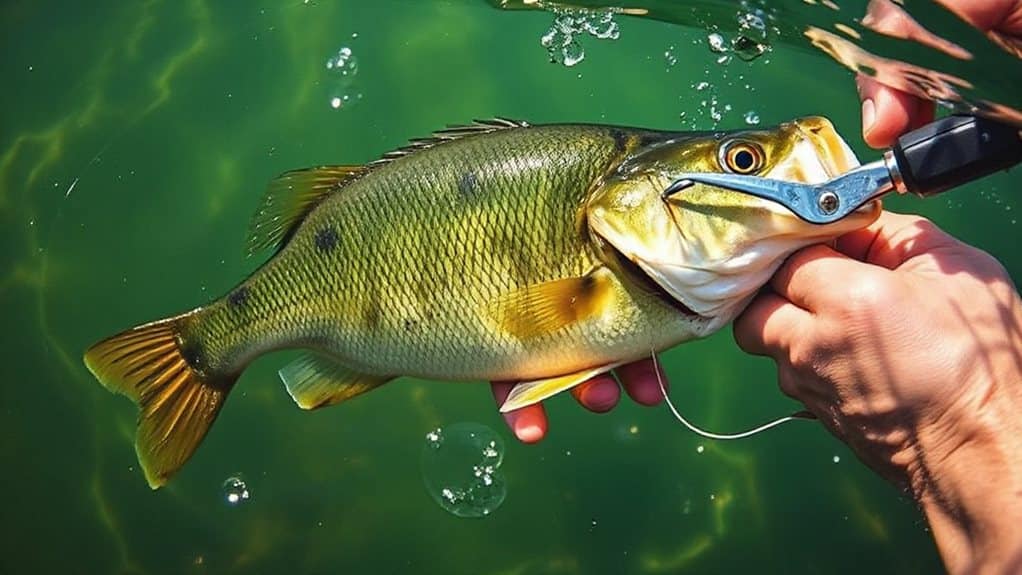
You can reduce pain by choosing quick‑release hook designs that let the fish escape with minimal tissue damage, and by keeping it out of the water for as short a time as possible.
When you handle a fish, wet your hands, use knotless nets, and avoid air exposure that can cause prolonged distress.
These simple steps, combined with species‑specific protocols, help guarantee a more humane experience.
Quick‑Release Hook Designs
When you choose a quick‑release hook, you’re not just cutting down handling time—you’re actively reducing tissue damage and stress for the fish. These hooks feature angled grooves and self‑releasing mechanisms that lock and disengage smoothly, minimizing tearing and bleeding.
Studies show 87 % of fish are released without direct handling, and bare‑hand removal speeds extraction, strengthening post‑release survival and preserving the freedom of the water.
Minimal Air‑Exposure Handling
Because fish can’t breathe out of water, even a brief stint in the air spikes stress and cuts off oxygen, so minimizing exposure is essential for their welfare.
Keep fish in water while you unhook, use wet hands, and choose rubber landing nets to preserve mucus.
Limit total air time under 60 seconds, remove fish only when necessary, and release promptly once equilibrium returns.
Ethical Implications for Fish Welfare and Angling
Although fish have nociceptors in the mouth, lips, and head—areas that hooks often penetrate—they don’t just react reflexively; they experience stress, fear, and behavioral changes that raise serious ethical concerns for anglers.
You should choose barbless or debarb hooks, shorten fight times, keep fish in water during unhooking, and avoid rough handling, because minimizing pain and stress respects their sentience while preserving the freedom you enjoy on the water.
And Finally
You’ve learned that fish possess nociceptors, that a hook can trigger genuine pain, and that physiological signs—elevated stress hormones, altered heart rate, rapid breathing—confirm it. Even quick catch‑and‑release doesn’t erase the suffering, especially with longline methods. Analgesic studies show relief is possible, and the ten evidence‑based practices you can adopt will minimize harm. By applying this knowledge, you’ll fish responsibly, respecting fish welfare while still enjoying the sport.


