
You’re losing power because tiny phantom loads—like slide‑out sensors, TV standby, or inverter chargers—draw 50‑100 mA continuously, and aging cells increase internal resistance, reducing capacity. Under‑charging from a weak converter or mis‑set solar controller, extreme temperatures, and high‑draw appliances such as a 12 V refrigerator add to the drain, while improper wiring can create unexpected leaks. By checking for parasitic draws with a multimeter, fixing fuses, grounding the generator, and keeping your charger set to the correct voltage, you can stop most losses; the next sections will show you how to troubleshoot further.
TLDR
- Phantom loads (50‑100 mA) from standby circuits or slide‑outs continuously drain the battery; isolate or disable them.
- Aging cells increase internal resistance and reduce capacity; replace batteries before sulfation cuts usable amp‑hours below 20 %.
- Faulty wiring, corroded connections, or a failing converter can cause constant low‑voltage draw; check fuses and voltage output regularly.
- High‑draw appliances (refrigerator compressors, AC, furnaces) run long periods; use efficient models and limit usage when off‑grid.
- Maintain proper charging (13.6 V for AGM, correct solar controller settings) and use a trickle charger to prevent deep discharge and sulfation.
Why Your RV Battery Keeps Draining Fast

Why does your RV battery seem to drain faster than it should?
Small phantom loads—like carbon monoxide detectors, radio memory, fridge boards, step sensors, and standby electronics—pull 50‑100 mA continuously, enough to empty a 100 Ah battery in a few days.
Aging cells increase internal resistance, reducing capacity, while under‑charging, converters, or extreme temperatures further accelerate loss, leaving you short‑changed on power. Improper wiring can also cause unexpected drain. A good RV surge protector can prevent electrical faults that contribute to battery drain by protecting against low voltage.
DIY Test for RV Battery Parasitic Draw & Faulty Wiring
After you’ve identified that your RV’s battery is losing charge faster than expected, the next step is to pinpoint the source of the parasitic draw.
Disconnect shore power, shut off all loads, and close every light.
Plug a digital multimeter in series on the negative cable, start on 10 A, wait for sleep mode, then pull fuses one by one, watching for a drop below 100 mA to locate the faulty circuit. Ground the generator to a copper rod driven into the earth to reduce stray currents and improve overall electrical safety grounding rod.
Parasitic Loads That Cause RV Battery Drain
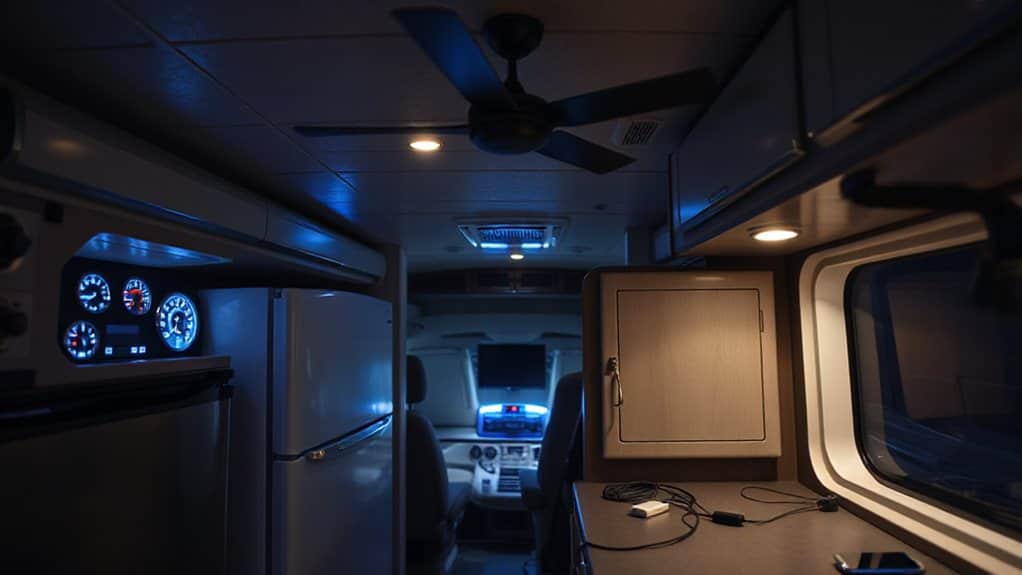
Ever wondered why your RV’s battery seems to lose power even when everything’s turned off? Parasitic loads—tiny draws from slide‑out modules, TV standby, inverter chargers, LP‑tank solenoids, and ECMs—keep sipping energy for minutes or hours.
Ten 20 mA loads can halve capacity in ten days.
Disconnect switches, remove fuses, or use trickle chargers to halt those phantom drains.
Many anglers recognize the cinematic depiction of fly fishing’s beauty in A River Runs Through It, which similarly highlights how small, continuous actions can have large effects over time.
RV Battery Age, Sulfation, and Capacity Loss
You’ll notice your RV’s runtime shrinking as the battery ages, because the chemical breakdown inside the cells reduces the amount of active material that can store energy.
When the battery stays partially discharged, sulfate crystals form on the plates, raising internal resistance and further cutting capacity.
Keeping the battery fully charged and avoiding long periods of low charge will slow both aging and sulfation, preserving the power you need.
Use a charger designed for LiFePO4 or lead-acid chemistries to ensure the proper charging profile and prolong battery life.
Battery Age Reduces Capacity
Battery age chips away at capacity, so a brand‑new RV battery that once gave you 100 % of its rated amp‑hours may only hold a fraction—sometimes as low as 20 %—after several years of use.
As years pass, amp‑hour ratings become misleading; reserve capacity tells the real story.
Flooded lead‑acid lasts six to eight years, AGM eight to ten, lithium up to fifteen.
Expect reduced cranking power, dim lights, and slower appliances, especially in cold weather, and plan replacements before failure.
Sulfation Increases Internal Resistance
When a lead‑acid RV battery spends too much time undercharged, soft lead‑sulfate crystals begin to harden on the plates, and those crystals raise the battery’s internal resistance.
Those hard crystals shrink the active surface, forcing current through a more resistive path, so voltage drops faster under load and charging becomes inefficient.
Keep the battery fully charged, avoid short trips, and use regular equalization to prevent hard sulfation and preserve power for your journeys.
RV Battery Under‑Charging: Converter & Solar Checks
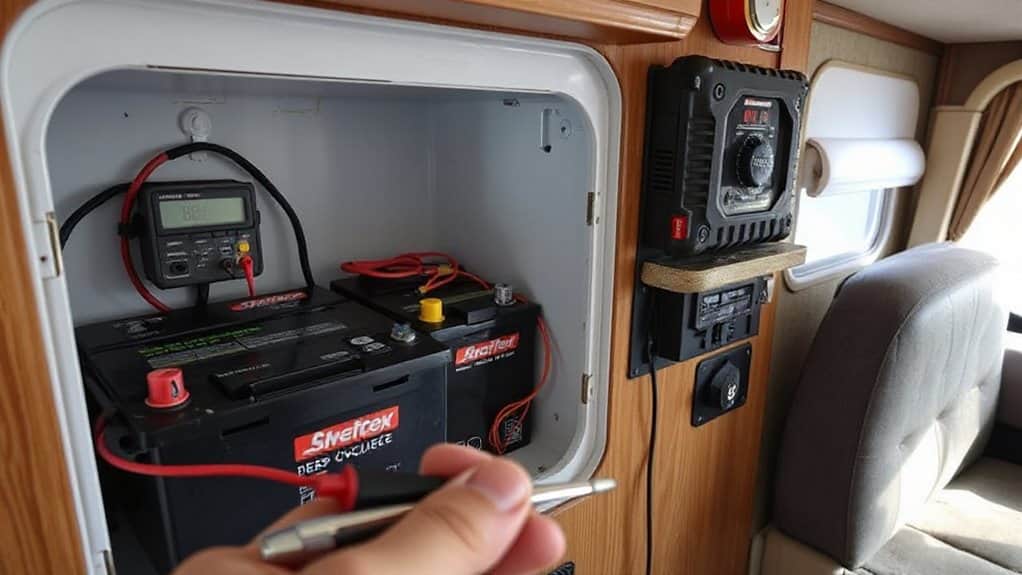
If your converter isn’t providing the proper 12‑volt output, the battery bank will never reach a true full charge, and a mismatched solar controller can further limit the current you receive from the panels.
Check the converter’s voltage reading with a multimeter, verify that the solar controller’s settings match your battery chemistry, and inspect all connections for looseness or corrosion.
Also, remember to sanitize and refill your freshwater system regularly, as stagnant water can develop odors and contaminants within two weeks if not maintained, so plan regular tank cleaning into your RV maintenance routine.
Converter Output Voltage
In most RVs the converter takes 120 V AC from shore power and steps it down to roughly 12 V DC.
But its true job is to increase that voltage to the 13.6‑14.4 V range needed for proper battery charging.
Check the multimeter at the battery terminals; 13.6 V signals normal charging, while readings below 12.3 V or 0 V point to fuses, wiring, or converter failure.
Adjustable converters may sit at 13.0‑16.5 V, but stay within the 13.6‑14.4 V sweet spot to avoid under‑charging or over‑charging.
Solar Controller Settings Meeting
Solar controller settings are a common source of RV battery under‑charging, especially after you swap batteries or upgrade the system, so checking the controller’s chemistry selection, voltage targets, and charge‑stage parameters should be your first step.
Verify you’ve set lead‑acid, AGM, gel, or lithium correctly; adjust absorption voltage and duration, make sure float isn’t too low, and confirm panel wiring and voltage‑drop are minimal for full, free‑spirit power.
RV Battery Over‑Charging Risks & Heat Damage
When you let an RV battery stay above its safe charging voltage—14.6 V for AGM cells—the excess energy quickly turns into heat, and that heat can trigger a cascade of problems. Overcharging warps plates, accelerates electrolyte loss, and sparks thermal runaway, shortening lifespan and raising explosion risk.
Adjust voltage for temperature, monitor gauges, and use smart chargers to keep power reliable, your journeys safe.
High‑Draw RV Appliances That Drain Your Battery?
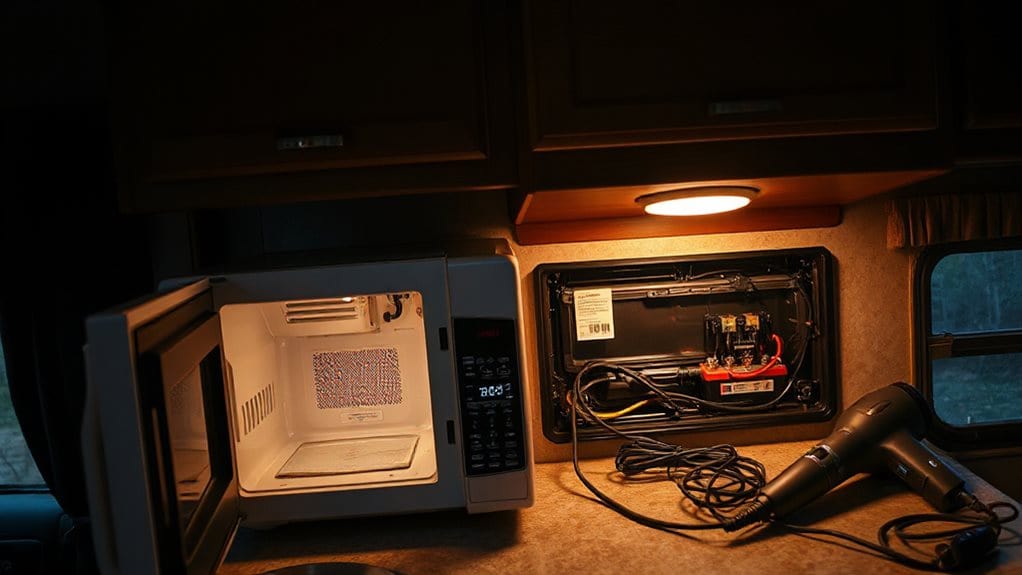
High‑draw RV appliances are the primary culprits behind rapid battery depletion, and understanding which devices consume the most power is essential for preserving your energy reserves.
Your 12 V compressor refrigerator runs 4‑8 amps nonstop, while furnaces and AC units gulp huge currents when you need heat or cooling.
Standby TVs, stereos, and detectors add phantom loads, and water pumps and heaters draw bursts of amperage.
Even an idle inverter bleeds power, so turn it off when not in use.
When to Upgrade Your RV Battery: Lithium vs. Lead‑Acid
A good time to review swapping your RV’s battery is when you notice that your power needs outgrow what your current lead‑acid setup can reliably deliver, especially if you’re adding more appliances, solar panels, or longer off‑grid stays.
Lithium gives 80‑100% usable capacity, lighter weight, faster charge, and 3‑6 k cycles, while lead‑acid stays cheap, heavy, and limited to 50% depth of discharge.
Choose lithium if you crave longer trips, higher loads, and low‑maintenance freedom.
And Finally
By regularly checking for parasitic draws, keeping your battery properly charged, and avoiding over‑charging, you’ll extend its life and prevent sudden loss of power. Replace aging or sulfated cells, upgrade to lithium if your power needs demand it, and monitor high‑draw appliances to stay in control. With these practical steps, your RV’s electrical system will stay reliable, letting you focus on the road ahead rather than battery worries.


