
Most quality camping tents can survive heavy rainstorms when equipped with features like full-coverage rainflies, sealed seams, and durable waterproof fabric. Proper setup, including using ground tarps, positioning vents for airflow, and setting on an inclined surface, also helps prevent leaks. Regular maintenance, such as resealing seams and applying waterproof spray, extends your tent’s weatherproof capabilities. Understanding these tips can make a significant difference, and continuing helps you prepare for even the toughest weather.
TLDR
- High-quality tents with full-coverage rainflies and taped seams are better equipped to withstand heavy rainstorms.
- Proper setup, including sealing seams and placing a groundsheet, enhances a tent’s rain resistance.
- Tents with high hydrostatic head ratings and durable waterproof materials are more reliable in heavy rain.
- Regular maintenance, such as resealing seams and applying waterproof spray, extends a tent’s waterproof capabilities.
- Choosing the right location and proper elevation reduces water intrusion risks during storms.
How Do Tents Keep You Dry During Heavy Rain?

When heavy rain begins, a well-designed tent works to keep you dry through several key features. Waterproof tents have full-coverage rainflies that extend to the ground, preventing water entry.
Taped seams at corners and floors block leaks, while high hydrostatic head ratings guarantee fabric resists water.
Raised, tub-style floors and proper ventilation further protect against moisture.
What Features Make a Tent Waterproof and Storm-Ready?
To guarantee your tent can withstand heavy rain and stormy conditions, several key features are essential. Look for excellent waterproofing, such as high hydrostatic head ratings, full-coverage rainflies, sealed seams, and elevated floors.
A roll-top closure or secure sealing system can also help prevent water ingress during intense weather. Proper ventilation with waterproof vents and sturdy, wind-resistant poles also enhance storm readiness, ensuring your shelter remains dry and secure during intense weather.
How to Set Up Your Tent for Maximum Rain Resistance
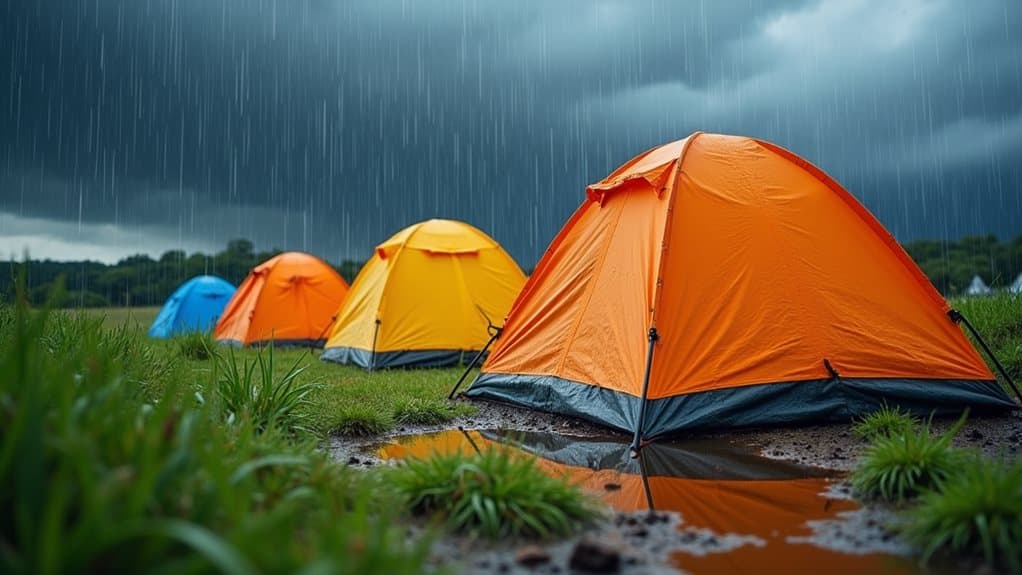
Setting up your tent properly can make a significant difference in how well it resists heavy rain. Make certain your tent has a full-coverage rainfly that extends to the ground, seal all seams with waterproof tape, and place a groundsheet or tarp underneath. Additionally, positioning vents and windows carefully can help manage moisture buildup inside. Set the tent on a slight incline with the door facing away from wind to stay dry, ensuring optimal site selection for drainage and shelter from splash.
Which Waterproof Tents Perform Best in Heavy Rain? (Tested Models)
Among the many tents available, certain models stand out for their exceptional performance during heavy rain. The North Face Wawona 6, with a hydrostatic head rating of 1,200mm on the rain fly and 1,500mm on the floor, proved highly waterproof, surviving three days of heavy rain. Well-sealed seams and full-coverage rainflies are key for reliable rain resistance. Additionally, choosing a tent with durable materials can enhance its longevity and performance in harsh weather conditions.
How to Maintain and Improve Your Tent’s Waterproofing Over Time
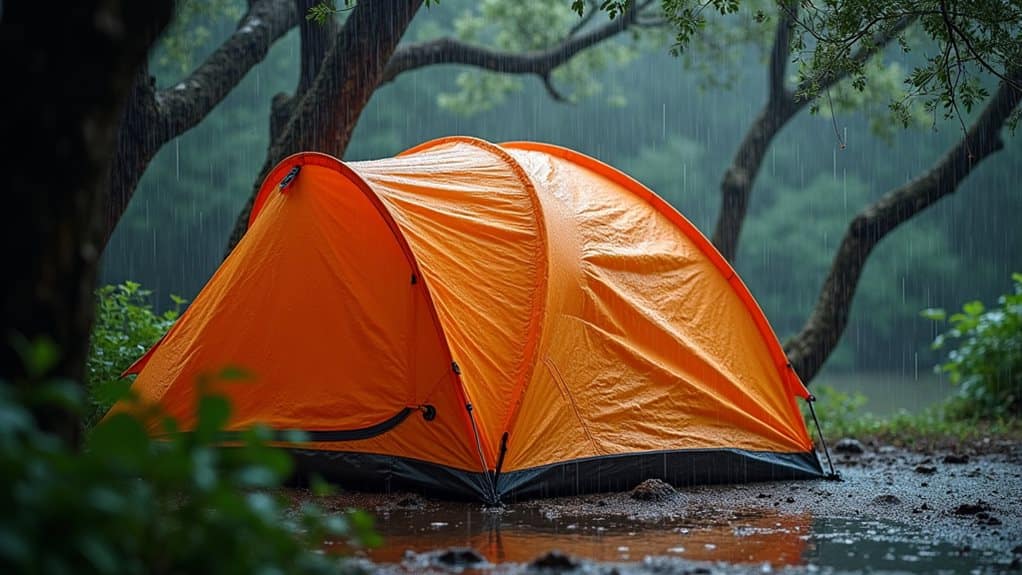
To keep your tent reliably waterproof, it’s important to regularly inspect and reseal the seams with a specialized tent seam sealer, especially after heavy rain exposure.
Cleaning your tent thoroughly to remove dirt and debris guarantees that waterproof treatments stay effective and prevents leaks.
Additionally, applying a waterproofing spray annually or after storage helps restore water repellency and prolongs the tent’s overall durability.
Regular Seam Sealing
Over time, the seams of your camping tent can become less effective at keeping water out, especially after exposure to heavy rain or prolonged use. Regular seam sealing, using a suitable waterproof sealant, helps maintain your tent’s integrity.
Before resealing, make certain the seams are clean and dry, allowing the sealant to adhere properly and prevent leaks during storms.
Proper Cleaning Practices
Maintaining your tent’s waterproofing requires regular cleaning practices that help preserve its protective coatings and prevent leaks. You should clean the tent fabric gently with non-abrasive soap and water to remove dirt and mold, which can weaken waterproof layers.
Reapplying waterproofing spray annually or after heavy rain, and ensuring the tent dries completely before storage, also enhances durability.
Common Mistakes That Cause Tents to Leak in Heavy Rain
Many common mistakes can lead to tent leaks during heavy rain, such as failing to properly seal seams or neglecting to tape them before a storm hits. Inadequate rainfly coverage or setting up on uneven ground without proper elevation can also allow water to seep inside. Additionally, not using a groundsheet or tarp underneath your tent increases the risk of moisture from the ground penetrating the fabric. To prevent leaks, it’s also important to check the weather forecast and select a suitable location to ensure your tent remains dry during heavy rainstorms.
Poor Seam Sealing Practices
Poor seam sealing practices are a common cause of leaks in tents during heavy rainstorms. If you neglect to re-seal factory-taped seams or use inadequate sealing compounds, water can seep through during downpours.
Proper seam sealing, with compatible waterproof sealants, guarantees your tent maintains its waterproof integrity. This gives you the freedom to camp confidently in any weather.
Inadequate Rainfly Coverage
Have you ever noticed how even a small gap in your rainfly can turn a heavy rainstorm into a leak-filled nightmare?
Inadequate rainfly coverage, such as partial or short rainflies, leaves gaps that let water seep inside.
Ensuring your rainfly fully extends to the ground and overlaps properly is essential to prevent leaks and keep you dry during heavy downpours.
Improper Ground Tarp Use
Using a ground tarp that’s smaller than your tent footprint is a common mistake that can lead to leaks during heavy rain.
If the tarp isn’t secured tightly or extends beyond the tent edges, water can pool or seep in through seams and zippers.
Proper tension, sealing edges, and matching tarp size to your tent help prevent water infiltration and keep you dry.
Final Note
To guarantee your tent withstands heavy rain, choose models with quality waterproof coatings and sealed seams. Proper setup, including angled rainflies and adequate staking, enhances protection, while regular maintenance like cleaning and reapplying waterproofing treatments prolongs effectiveness. Avoid common mistakes such as neglecting seam sealing or using damaged gear. By understanding these key factors, you can confidently camp in heavy rain, staying dry and comfortable regardless of the weather conditions.


