
Your bicycle frame starts rusting outdoors because moisture, oxygen, and environmental elements like dirt and salt easily attack steel, especially if paint chips or coatings fail. High humidity, rain, snow, and temperature changes cause condensation, speeding up corrosion. Steel’s porous surface allows moisture to penetrate deeper, unlike aluminum, which forms a protective oxide layer. By understanding these factors, you can find ways to prevent rust; keep exploring for practical tips to keep your bike protected longer.
TLDR
- Exposure to moisture and oxygen causes steel bicycle frames to oxidize and form rust.
- Paint chips or coating failures expose steel to moisture, accelerating rust formation.
- High humidity, rain, snow, and condensation increase internal and external moisture.
- Salt from winter roads or coastal air speeds up electrochemical corrosion.
- Lack of regular cleaning and maintenance allows dirt and moisture to promote rust.
Why Do Bicycle Frames Rust Outdoors?
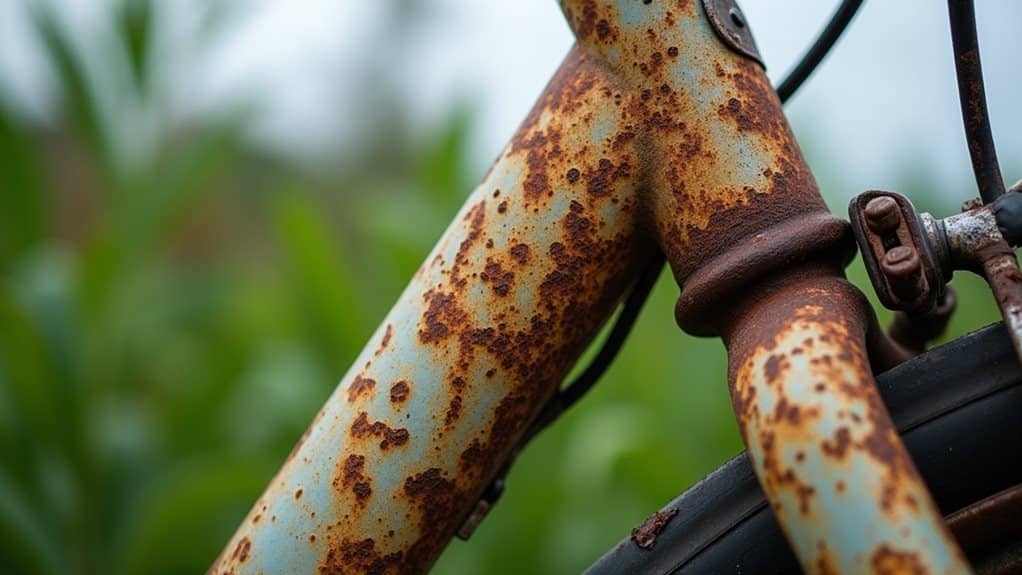
Have you ever wondered why bicycle frames tend to rust more quickly when left outdoors? Rust forms when exposed steel reacts with moisture and oxygen, especially in humid or salty environments. When paint chips or protective coatings fail, exposed steel becomes vulnerable, accelerating rust. Without regular cleaning or coatings, moisture stays, promoting faster rust development on your bike’s frame. Proper maintenance, such as inspecting and reapplying protective coatings, can help prevent line slippage and prolong the life of your bicycle.
How Environmental Conditions Speed Up Rusting
Environmental conditions like rain, snow, and high humidity introduce moisture that speeds up rust formation on your bike’s frame.
Salt from winter roads or coastal air greatly accelerates corrosion when combined with moisture.
Fluctuating temperatures cause condensation that promotes rust.
Additionally, dirt and dust containing salts can trap moisture against the frame, increasing the likelihood of corrosion over time.
Using protective coatings or paint can also help shield the metal from line selection and environmental exposure.
Moisture and Humidity Levels
High humidity levels considerably accelerate the rusting process on bicycle frames by increasing the amount of moisture in the air around them. Excess moisture, especially in foggy or dewy environments, promotes condensation inside frame tubes.
This condensation inside the tubes leads to internal rust. Persistent humidity creates ideal conditions for oxidation, causing the metal to corrode faster and compromising your bike’s durability and freedom.
Salt and Pollutant Exposure
Salt and pollutants in the environment can considerably speed up the rusting process on your bicycle frame.
Salt from road de-icing or ocean spray accelerates electrochemical reactions, while pollutants like sulfur dioxide and nitrogen oxides create acidic deposits that corrode steel.
Together, they trap moisture, maintaining a humid environment that promotes ongoing rust development.
Why Are Steel Frames More Prone to Rust Than Aluminum?
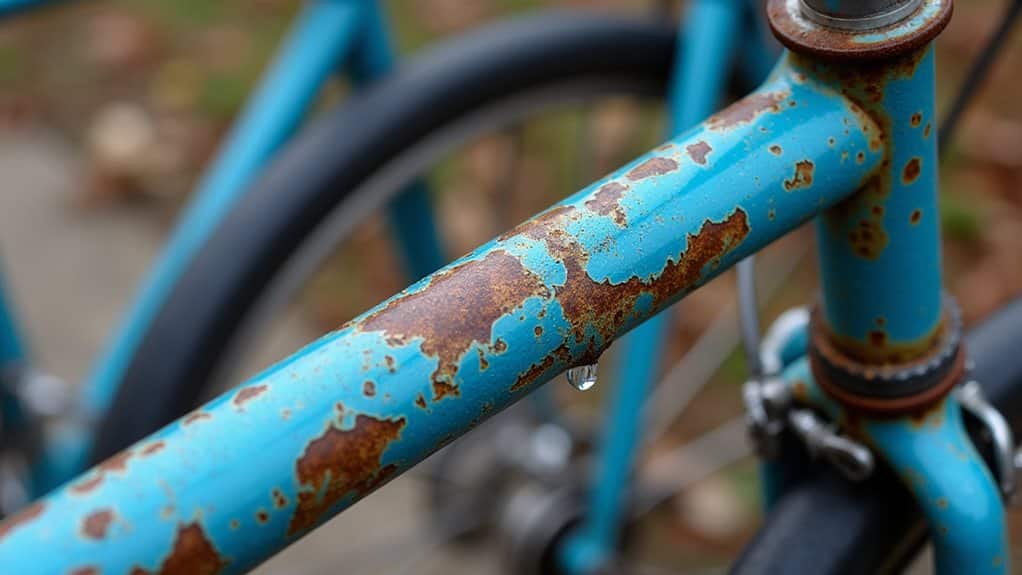
Steel frames are more prone to rust because they’re made from ferrous metals that easily react with moisture and oxygen, forming rust over time. In contrast, aluminum develops a protective oxide layer quickly, which prevents further corrosion, making it more resistant outdoors. Additionally, steel’s porous surface allows water and salts to penetrate deeper, accelerating internal rusting, especially if protective coatings are damaged. Regular maintenance and choosing rust-resistant coatings can help prolong the lifespan of steel frames outdoor exposure.
Material Composition Differences
Because of their different material compositions, steel and aluminum frames respond differently to outdoor conditions. Steel frames, containing iron, easily react with moisture and oxygen, leading to surface rust and corrosion.
Aluminum naturally forms a stable oxide layer, providing better corrosion resistance. This makes aluminum more durable outdoors, while steel often needs protective coatings to prevent rust formation.
Corrosion Resistance Properties
Have you ever wondered why some bike frames resist rust better than others? Steel bikes lack natural corrosion resistance because iron reacts readily with moisture, forming rust, especially outdoors.
Aluminum alloys, on the other hand, develop a stable oxide layer that shields the metal, making them more resistant to corrosion and ideal for outdoor riding.
How to Prevent Rust: Protective Coatings and Maintenance Tips
To effectively prevent rust on your bicycle when it’s stored outdoors, applying protective coatings and following maintenance tips are key.
Use products like Framesaver or Boeshield inside the frame tubes for internal protection.
Regularly clean, dry, and inspect your bike.
Apply touch-up paint or sealants to shield exposed areas.
Keeping drainage holes clear also helps prevent internal water retention, supporting rust prevention.
Additionally, choosing the right kayak brand and understanding its quality can ensure your equipment withstands outdoor conditions better.
Best Storage and Covering Practices to Keep Your Bike Rust-Free
Proper storage and covering practices are essential for keeping your bicycle rust-free when kept outdoors. Use a fitted, breathable cover designed for bikes to allow moisture to escape while protecting against rain and dust. Securing the cover tightly prevents wind displacement. Adding vapor corrosion inhibitors like Zerust can further reduce rust, ensuring your bike stays protected and ready for your next ride. Incorporating proper covering techniques can significantly extend the lifespan of your bike’s components.
How to Spot Rust Damage and When to Repair or Replace Your Bike
Identifying rust damage early is essential to maintaining your bike’s safety and longevity. Regularly inspect areas like paint chips, welds, and inside tubes for orange or brown flaky spots. Using the correct attachment, placement, and knot techniques can help prevent some types of damage that lead to rust formation. Surface rust can often be repaired easily, but deep rust causing bubbling, pitting, or holes indicates significant weakening. When rust spreads extensively, replacing the frame is the safest choice.
Final Note
To keep your bike in top condition, regularly inspect for rust and apply protective coatings as needed. Store it in a dry, sheltered place or use a high-quality cover to shield it from moisture and environmental elements. Understanding how different materials react to outdoor conditions helps you make informed choices about maintenance and storage. Consistent care guarantees your bike remains rust-free, prolonging its lifespan and maintaining its performance for years to come.


