
After long hikes, back pain often results from muscle fatigue, poor posture, or uneven load carried during the activity. Repetitive movement and overuse weaken supporting muscles, causing strain and even tiny tears that lead to discomfort. If you carry heavy gear, especially if not fitted properly, or don’t engage your core, your back becomes more vulnerable. Understanding these factors can help you prevent and manage discomfort—continue exploring to find effective strategies for relief and injury prevention.
TLDR
- Muscle fatigue and overuse from prolonged exertion weaken supporting muscles, leading to back pain.
- Poor posture and improper technique during hiking increase lumbar strain and discomfort.
- Carrying heavy or poorly fitted gear creates uneven pressure, causing back strain and microscopic muscle tears.
- Tight muscles and limited flexibility in hips and hamstrings contribute to compensatory movements and back pain.
- Sudden movements or wildlife encounters can cause muscle strain or injury, resulting in post-hike back discomfort.
Why Does My Back Hurt After a Long Hike?

After a long hike, your back may hurt because your muscles have become fatigued from sustained exertion. Repetitive movements place continuous strain on the lower back muscles. Poor posture during hiking further increases stress on your lumbar spine, leading to lower back pain. Overuse without adequate rest can also contribute, causing soreness and discomfort after extended walking. Additionally, carrying a heavy load or improper gear setup can exacerbate back strain, making it important to maintain proper hiking technique and equipment adjustments.
How Muscle Fatigue and Overuse Lead to Back Discomfort
When you hike for a long time, your lower back and core muscles can become fatigued from overuse, leading to soreness and discomfort. This strain causes tiny tears and inflammation, which contribute to post-hike back pain. Without proper pacing or rest, your muscles lose their ability to support your spine effectively, increasing the risk of back discomfort. To prevent further strain, it’s important to recognize signs of muscle fatigue and address them early, such as by incorporating proper rest and recovery techniques.
Muscle Fatigue Effects
Muscle fatigue occurs when your muscles become overworked during extended hiking, leading to a decline in their strength and endurance.
This fatigue weakens supporting muscles, making it harder for them to stabilize your spine.
As a result, you experience post-activity discomfort, soreness, and strain, since fatigued muscles can’t absorb shock effectively or maintain proper posture during long treks.
Overuse and Strain
Overuse and strain on your lower back and core muscles during prolonged hiking can considerably cause discomfort and pain.
Repeated muscle strain leads to microscopic tears and inflammation, resulting in post-hike soreness.
Overexertion without proper pacing or rest increases muscle exhaustion, making your back more vulnerable to injury and prolonging recovery from persistent overuse.
How Your Posture and Technique Affect Your Back During Hiking
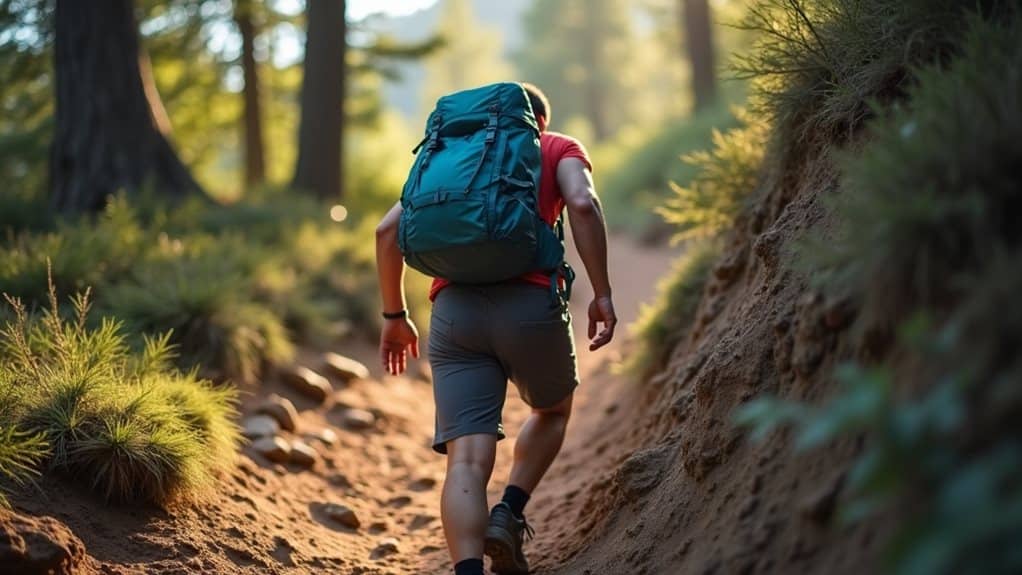
Your posture during hiking plays a vital role in preventing back pain, as keeping your chest open and shoulders relaxed helps distribute weight evenly. Proper foot placement maintains balance and reduces unnecessary strain, while using trekking poles correctly can support your back by improving stability. Additionally, carrying a well-fitted backpack positioned close to your spine minimizes uneven pressure and helps protect your lower back from fatigue. Incorporating appropriate RV types and understanding your gear needs can also contribute to a more comfortable and strain-free hiking experience.
Proper Posture Maintains Balance
Maintaining proper posture while hiking is essential for keeping your balance and preventing back pain, especially over long distances. Good posture promotes spinal alignment and evenly distributes weight, reducing strain.
Engaging your core and keeping shoulders relaxed help stabilize your spine.
Upright posture with trekking poles supports balance, ensuring you stay comfortable and avoid unnecessary fatigue during your hike.
Pack Weight Distribution
Proper pack weight distribution plays a crucial role in maintaining good posture and preventing back pain during hikes.
By ensuring proper packing, with heavy items close to your spine and evenly distributed, you minimize strain.
Adjusting shoulder straps and hipbelts snugly helps maintain alignment, reducing back discomfort caused by uneven weight distribution and improper posture on extended walks.
Foot Placement Matters
Since your foot placement directly influences how weight is distributed across your body, paying close attention to your walking technique can make a significant difference in preventing back pain during hikes.
Focus on proper foot placement, land heel-to-toe smoothly, and keep your posture upright.
Engaging your core muscles with each step supports spinal stability and reduces lumbar strain.
Why a Weak Core Makes Your Back Vulnerable

A weak core leaves your back more vulnerable during long hikes because it can’t provide the necessary stability to support your spine effectively. Without strong core muscles, your lower back compensates for instability, leading to fatigue and back pain. Strengthening your core improves spinal support, reduces strain, and helps prevent discomfort during extended distances. Additionally, engaging the upper body with hiking poles can further distribute weight and enhance overall stability to protect your back.
How Backpack Weight and Packing Strategies Impact Your Back
The way you pack your backpack can considerably affect your back health during a hike. Proper weight distribution, with heavier items close to your spine and higher up, helps reduce strain on your lower back. Using adjustable straps and organizing your gear efficiently also plays a key role in maintaining balance and preventing discomfort. Additionally, understanding region-specific wildlife activity can help you plan your hike during times when animals are less active, reducing the need for sudden movements or distractions that might throw off your balance.
Proper Weight Distribution
Have you ever noticed how the way you pack your backpack can make a big difference in how comfortable your hike feels? Proper weight distribution involves placing heavier items high and close to your spine, ensuring your backpack fitting supports your back.
This reduces back pain, improves balance, and minimizes strain by transferring weight efficiently to your hips.
Effective Packing Techniques
Ever wonder how your packing strategies directly influence your comfort and back health during a hike? Proper packing, with careful weight distribution—placing heavy items high and close to your spine—and ensuring your backpack fit is correct, helps prevent strain.
Using a hipbelt and cushioning with soft items can stabilize your load, reducing back discomfort over long distances.
What Flexibility and Mobility Limitations Cause Back Pain?

Limited flexibility and mobility in key areas of your body can significantly contribute to back pain after hiking.
Reduced hip mobility, lumbar flexibility, and muscle tightness—particularly in the hamstrings, piriformis, and back extensors—force your lower back to compensate during movement.
Improving these areas through stretching helps maintain proper posture, reducing strain and discomfort on the trail.
How to Recognize Overexertion and Prevent Injuries on the Trail
Recognizing overexertion early can make a significant difference in preventing back injuries during long hikes. Pay attention to persistent soreness, sharp pain, or difficulty maintaining proper posture, as these indicate overexertion. Acknowledging signs of muscle fatigue and addressing them promptly can help avoid more serious injuries. To prevent injuries, pace yourself, take regular rest breaks, stay hydrated, and listen to your body—stopping when you experience pain helps avoid serious back pain.
Simple Ways to Relieve Back Pain After Hiking

After a long hike, relieving back pain involves simple, effective strategies that promote recovery and reduce discomfort.
Gentle stretching of your lower back, hips, and hamstrings eases muscle tension.
Applying ice packs decreases inflammation.
Resting, elevating your legs, and using foam rollers help release tight muscles and improve flexibility.
These steps support faster relief from lower back pain.
Additionally, being aware of the wildlife in the area, such as bears or wild boars, can help prevent unexpected encounters that might contribute to muscle strain or injury.
When Should You See a Doctor About Your Back Pain?
Knowing when to seek medical advice for back pain after hiking can make a significant difference in your recovery.
If you experience persistent pain that worsens despite rest, nerve issues like numbness or tingling, or sudden loss of bladder or bowel control, it’s time for medical attention.
Don’t delay if pain limits daily activities or causes severe discomfort.
How to Prepare Your Body for Longer, More Comfortable Hikes

Preparing your body for longer, more comfortable hikes involves a combination of targeted exercises, proper gear, and gradual progression.
Focus on core strengthening through planks or bridges, incorporate flexibility routines like hamstring and hip stretches, and perform warm-up activities to loosen muscles.
Use proper hiking gear, such as supportive footwear and well-fitted backpacks, to minimize back strain and enhance comfort.
Final Note
To prevent back pain after hiking, focus on strengthening your core, maintaining proper posture, and using appropriate packing techniques. Listen to your body for signs of overexertion, and take breaks to rest and stretch. Proper preparation and awareness can markedly reduce discomfort and injury risk, making your hikes more enjoyable. If pain persists or worsens, consult a healthcare professional to address underlying issues. Prioritizing these strategies guarantees healthier, more comfortable hiking experiences.


