
The amount of food you need for camping depends on your daily calorie requirements, which vary based on activity level, terrain, and weather conditions. Generally, plan for about 1.5 pounds of food per person per day for short trips, increasing for more strenuous or cold-weather outings. Focus on high-calorie, lightweight, nutrient-dense foods like dehydrated meals, trail mix, and energy bars. Adjust quantities as needed based on your trip’s specifics, and exploring further guarantees you’re well-prepared for any journey.
TLDR
- Calculate daily calorie needs based on activity level, terrain, weather, and personal factors to determine total food requirements.
- Plan for approximately 1.5 pounds of food per person per day for typical trips; adjust for exertion and conditions.
- Prioritize lightweight, high-calorie foods like dehydrated meals, trail mix, and energy bars to meet energy demands efficiently.
- Increase food quantities by 30-50% in cold weather or high-altitude conditions to compensate for higher energy expenditure.
- Balance meals with carbs, proteins, and fats, and include easy-to-carry snacks to support sustained activity and morale.
How Do I Calculate My Daily Calorie Needs for Camping?
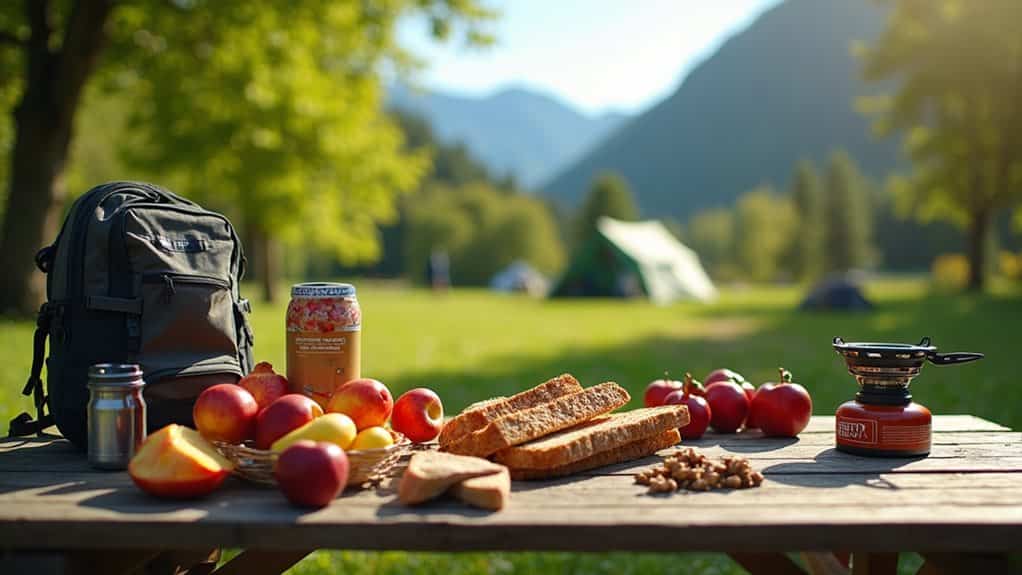
Calculating your daily calorie needs for camping involves considering both your personal characteristics and the specifics of your trip. Your caloric needs depend on energy expenditure, which varies with effort, terrain, and weather. Knowing your calories per day helps determine the right food to bring, balancing caloric density and daily calories to meet your energy demands accurately. Additionally, factoring in personal sweat rate can help you estimate how much additional energy and hydration you might require during your hike or outdoor activity.
How Much Food Should I Pack Per Person Based on Trip Duration?
When planning how much food to pack for a camping trip, the trip duration influences your food per person per day and total pack weight. For shorter trips, around 1.5 pounds daily may suffice, while longer trips need calorie-dense dehydrated meals or resupply points. Adjust quantities based on energy needs, trail difficulty, and meal variety to stay fueled without overpacking. Incorporating no-cook foods like energy bars and dried fruits can also help reduce weight and simplify meal preparation.
What Are the Best High-Calorie, Lightweight Foods for Backpacking?
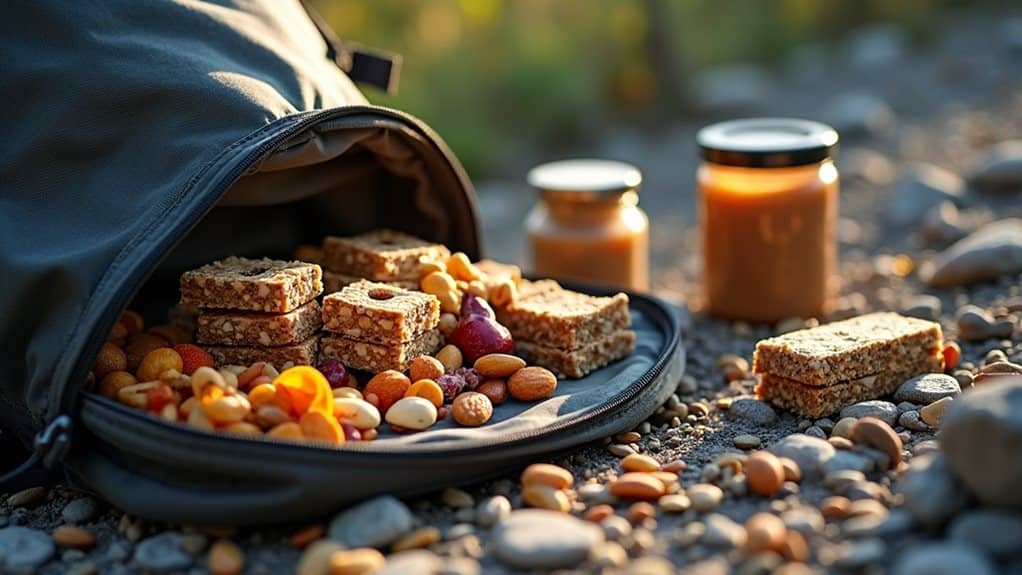
Choosing the right high-calorie, lightweight foods is essential for maximizing energy while minimizing pack weight on your backpacking trip.
Focus on dehydrated meals, trail mix, and energy bars that pack concentrated calories.
Olive oil packets and dried fruits add dense energy without bulk, ensuring you stay fueled through your journey with efficient, lightweight meals customized for freedom and mobility.
Additionally, including properly stored and prepared foods helps prevent spoilage and maintains food safety during extended trips.
How Can I Adjust Food Quantities for Different Activity Levels and Weather?
Adjusting your food quantities based on activity levels and weather conditions is essential for maintaining energy and ensuring comfort on your trip. In cold weather or at high altitudes, increase calorie intake by about 30-50% to meet energy expenditure. For strenuous activities, consume high-calorie foods to maximize energy while reducing weight. Regular food adjustment based on experience helps optimize your intake. Additionally, considering kayak fishing essentials can help ensure you stay energized during longer trips.
How Do I Create Balanced Meals and Snacks for Long Hikes?
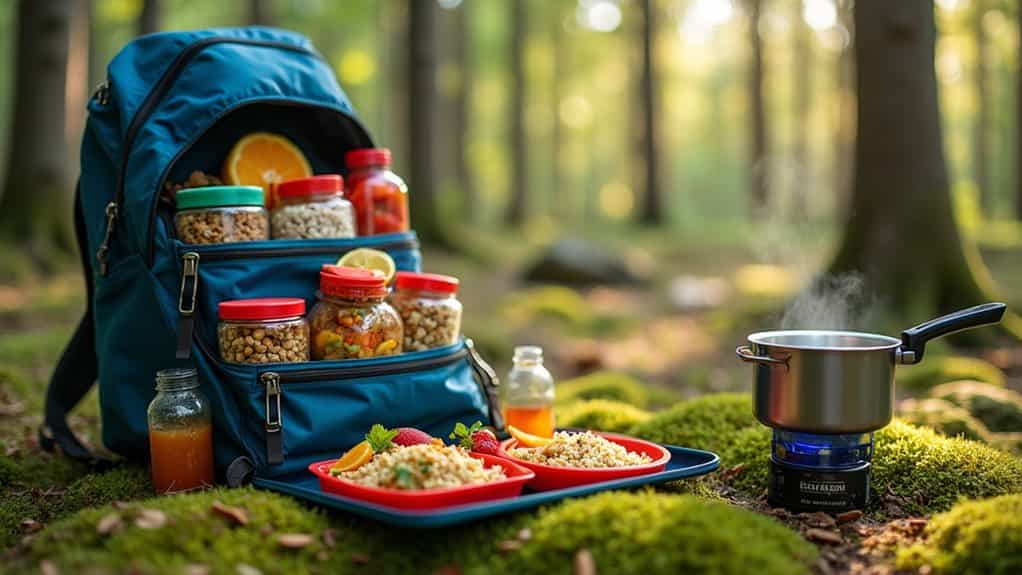
Creating balanced meals and snacks for long hikes involves combining a variety of nutrients, including carbohydrates, proteins, and fats, to maintain energy and aid recovery. Focus on portable, energy-dense foods like nuts, trail mix, and dehydrated meals that are lightweight and easy to prepare. Incorporate flavorful, nutrient-rich snacks such as dried fruits and cheese to enhance morale and provide quick energy when needed. Additionally, choosing affordable fishing reels that are lightweight and durable can inspire confidence during outdoor activities, ensuring your gear doesn’t weigh you down.
Nutrient Balance and Variety
Balancing nutrients and ensuring variety in your meals and snacks is essential for maintaining energy and supporting recovery during long hikes.
Focus on a nutrient balance of carbs, protein, and fats, including nutrient-dense, high-calorie ingredients.
Effective meal planning involves combining complex carbs, proteins, and fats to create a balanced diet that sustains you without excess weight.
Portable, Energy-Dense Snacks
When planning for long hikes, selecting portable, energy-dense snacks can make a significant difference in maintaining your stamina without adding unnecessary weight to your pack.
Dried fruits, trail food, and high-calorie snacks like nuts provide energy with favorable calories per ounce.
Combining these with jerky, cheese, or dark chocolate guarantees balanced, satisfying options to keep you fueled on the trail.
What Gear and Storage Tips Keep Food Safe and Reduce Waste?
Proper gear and storage methods are crucial for keeping your food safe and minimizing waste during a camping trip. Use food storage solutions like odor-proof bags or hard-sided bear canisters to deter wildlife and guarantee food safety.
Hang bear bags at least 12 feet high and 6 feet from the trunk. Always pack out waste, and keep food away from sleeping areas. Incorporate safety features, such as secure closures and proper hanging techniques, to further protect your provisions.
How Should I Repackage and Organize My Food for Easy Camping Cooking?
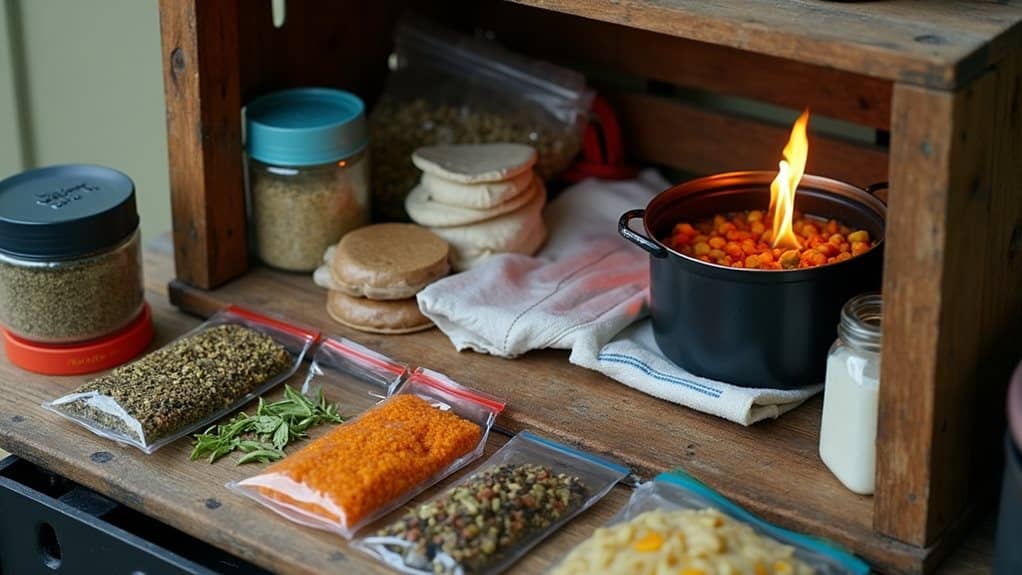
To make cooking easier during your camping trip, repackage your meals into resealable bags or containers, clearly labeling each with meal names and rehydration instructions.
Use a kitchen scale to measure portions accurately, reducing waste and optimizing space in your pack.
Organize your supplies in a waterproof container, grouping meals, snacks, and gear for quick access and efficient packing.
Additionally, consider using proper storage methods to keep your food fresh and prevent spoilage during your trip.
Pre-Portion Meals Efficiently
Repackaging your camping meals into individual, labeled resealable bags is an effective way to stay organized and simplify cooking on the trail.
Pre-portion meals using a kitchen scale to measure precise servings, including rehydration instructions and cooking times on each bag.
This method enhances meal organization, guarantees portion control, and streamlines your cooking process, giving you more freedom outdoors.
Label and Organize Clearly
Organizing your camping food efficiently begins with clear and consistent labeling. Use labeling and proper packaging to streamline meal prep and portion control, making meal planning easier.
Group foods by meal type, store them in dedicated sections, and keep perishable items moisture-proof. This organization guarantees quick access, helps prevent spoilage, and keeps your journey smooth and stress-free.
Final Note
By understanding your daily calorie needs, selecting lightweight, high-calorie foods, and organizing your meals efficiently, you can guarantee a successful camping experience. Adjust food quantities based on activity level and weather conditions to prevent shortages or waste. Proper storage and packaging help keep your food safe and accessible, making meal prep straightforward. With careful planning and attention to detail, you’ll stay energized and well-nourished throughout your trip, making your outdoor journey more enjoyable and stress-free.


