
Yes, you can sleep in a hammock outdoors every night if you take proper safety measures, such as securing supports to stable structures, using weather-resistant accessories, and inspecting hardware regularly. Ensuring your hammock is hung no more than 18 inches above the ground and choosing sheltered locations help improve safety and comfort. While outdoor hammock sleeping offers benefits like better sleep quality and connection with nature, addressing weather, wildlife, and terrain challenges is essential. Keep exploring to learn more about making it safe and enjoyable.
TLDR
- Yes, with proper setup, weather protection, and safety precautions, outdoor hammock sleeping can be sustainable for long-term use.
- Regularly inspect and maintain hammock hardware and accessories to ensure safety and durability.
- Adapt to weather conditions with appropriate tarps, insulation, and shelter to stay comfortable and healthy.
- Choose sheltered, elevated spots away from wildlife and hazards to minimize risks.
- Long-term outdoor hammock sleeping requires acclimatization and consistent environmental management for quality rest.
Is Sleeping Outdoors in a Hammock Every Night Safe and Practical?
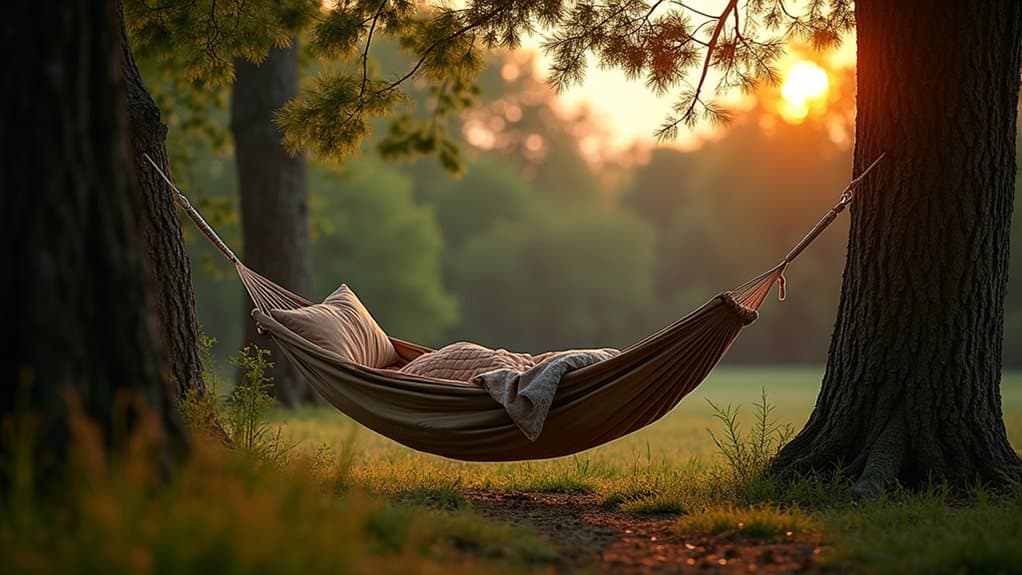
Sleeping outdoors in a hammock every night can be safe and practical if you take the right precautions. Ensuring hammock safety involves proper setup, securing supports to stable structures, and regularly checking hardware for wear. Using rain flies and bug nets protects you from weather and insects, making long-term outdoor hammock sleeping both feasible and enjoyable for those seeking freedom. Additionally, it’s important to adopt a safe camping mindset by staying aware of your surroundings and trusting your instincts to recognize potential hazards.
How Do You Set Up Your Hammock for Long-Term Outdoor Sleep?
Setting up your hammock properly is crucial for comfortable and safe long-term outdoor sleep, especially when you plan to use it night after night. Use sturdy, high-quality tree straps or supports that distribute weight evenly. Hang your hammock no more than 18 inches above the ground, and make certain proper tension to avoid sagging. Regularly inspect your setup and add weather-resistant accessories for protection. Incorporating reinforced stitching can enhance durability and ensure your hammock withstands frequent use.
What Are the Main Benefits of Sleeping in a Hammock Outdoors?
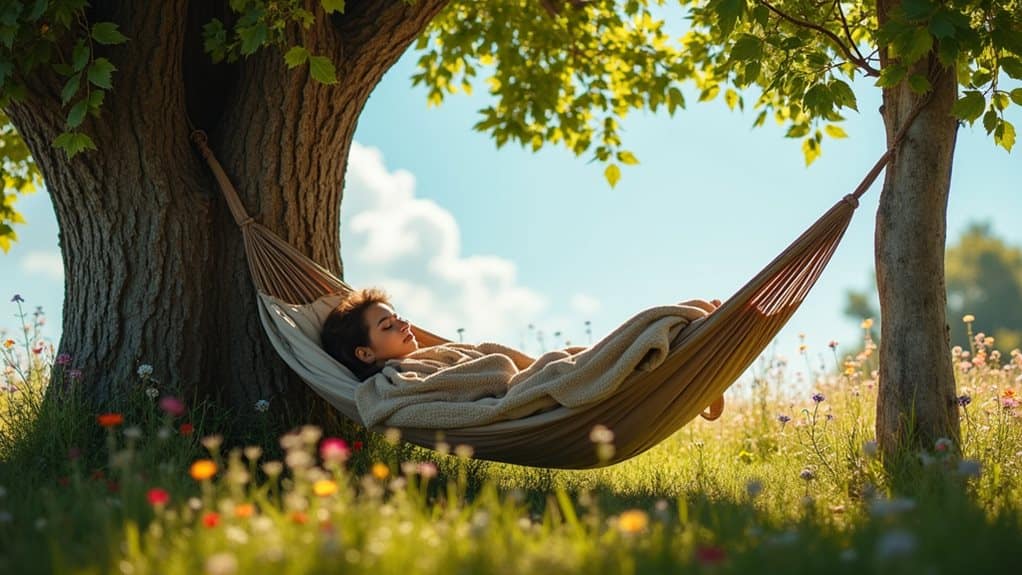
Sleeping in a hammock outdoors offers enhanced comfort and support, helping to reduce pressure points and promote better spinal alignment. It can also improve sleep quality by allowing for better airflow and temperature regulation throughout the night. Additionally, spending nights beneath the stars encourages a stronger connection with nature, which can enhance mental well-being and reduce stress. Incorporating a suitable sleep setup can further optimize comfort and safety during outdoor nights.
Enhanced Comfort and Support
Because of their flexible design, hammocks mold to your body’s natural curves, providing enhanced comfort and support that traditional beds often lack. This contouring reduces pressure points and offers excellent back and spine support, helping you feel more relaxed and less discomforted.
The gentle rocking motion further promotes natural relaxation, making outdoor hammock sleeping both freeing and comfortably supportive.
Improved Sleep Quality
Have you ever wondered why sleeping in a hammock outdoors can lead to better rest? The gentle rocking promotes deeper, more restorative sleep by helping you shift more smoothly into slumber.
The flexible surface molds to your body’s curves, reducing pressure points.
Exposure to fresh air and natural surroundings also enhances relaxation, contributing to overall improved sleep quality.
Connection With Nature
Sleeping outdoors in a hammock provides a unique opportunity to deepen your connection with nature, which can have significant benefits for your mental and emotional well-being.
By sleeping in hammocks, you’re exposed to natural surroundings, fresh air, and natural light. All of these support healthy circadian rhythms and cultivate mindfulness.
This connection enhances relaxation and promotes a sense of freedom and exploration.
What Accessories Make Outdoor Hammock Sleeping More Comfortable?
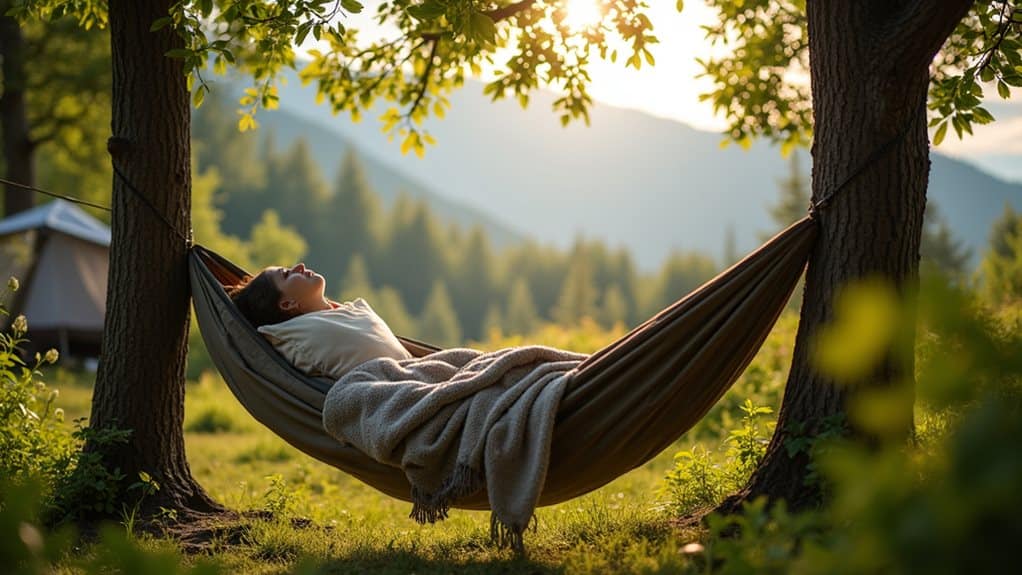
To make outdoor hammock sleeping more comfortable, you should consider accessories that improve weather protection and overall comfort. Items like rain flies or tarps shield you from rain and wind.
While under-quilts or sleeping pads enhance insulation during colder nights.
Additionally, quality pillows, bug nets, and secure suspension systems contribute to a more restful and protected sleep experience. Using a proper suspension system can help ensure your hammock stays stable and comfortable throughout the night.
Weather Protection Options
Ensuring a comfortable night outdoors often depends on choosing the right accessories to protect against unpredictable weather conditions. Rain flies and other weather protection gear shield you from rain, wind, and UV rays, making outdoor hammock sleeping more enjoyable.
These essentials help you stay dry and comfortable, so you can welcome your outdoor freedom without worry about changing weather.
Comfort Enhancements
Adding the right accessories can make a significant difference in how comfortable your outdoor hammock experience is. Using a high-quality, padded under-quilt or sleeping pad enhances insulation and comfort.
A supportive hammock pillow helps maintain proper neck alignment. Incorporating a rain fly, bug net, and choosing a diagonal hang position further enhances overall comfort and restful sleeping outdoors.
What Are the Biggest Risks and Challenges of Sleeping Outdoors in a Hammock?
Sleeping outdoors in a hammock presents several significant risks and challenges that you should consider before making it a regular habit. Exposure to weather can cause discomfort, health issues, or dehydration.
The risk of falling increases if the hammock isn’t properly secured. Poor setup on uneven terrain or in windy conditions adds to safety concerns, demanding careful attention.
How Do You Protect Yourself From Weather and Wildlife When Sleeping Outdoors?
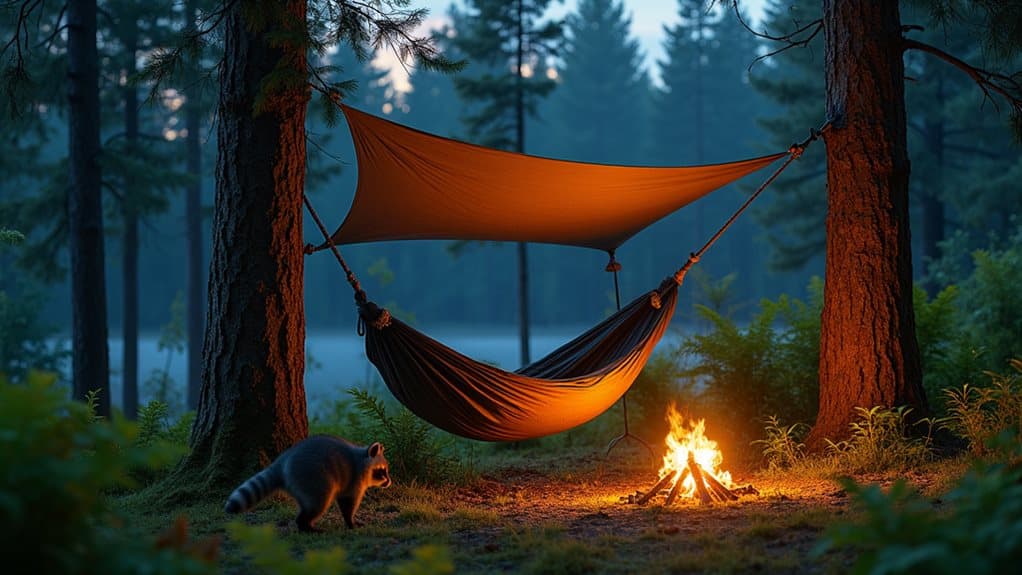
Protecting yourself from weather and wildlife while sleeping outdoors requires careful planning and preparation. Use a high-quality tarp or rain fly to shield your hammock from rain, wind, and dew, keeping it dry.
Choose sheltered, raised spots, stay clear of animal trails, and secure your gear in wildlife-resistant bags.
Regular weather checks help you adapt and stay safe overnight. Additionally, understanding the types of fishing reels available can help you select appropriate gear for outdoor adventures and ensure you have reliable equipment in case of unexpected situations.
Is Full-Time Outdoor Hammock Sleeping Suitable for Everyone?
While full-time outdoor hammock sleeping can be rewarding for many, it isn’t suitable for everyone without proper preparation and adaptation. If your body has adjusted to hammock ergonomics and you use a proper hammock setup, it can work well. A well-designed yurt offers environmentally friendly benefits and a more stable shelter, which can be advantageous for those considering long-term outdoor sleeping arrangements. However, those with health issues like back pain or joint problems may find long-term outdoor hammock sleeping uncomfortable or unsuitable.
How Can You Improve Your Sleep Quality by Sleeping in a Hammock Every Night?
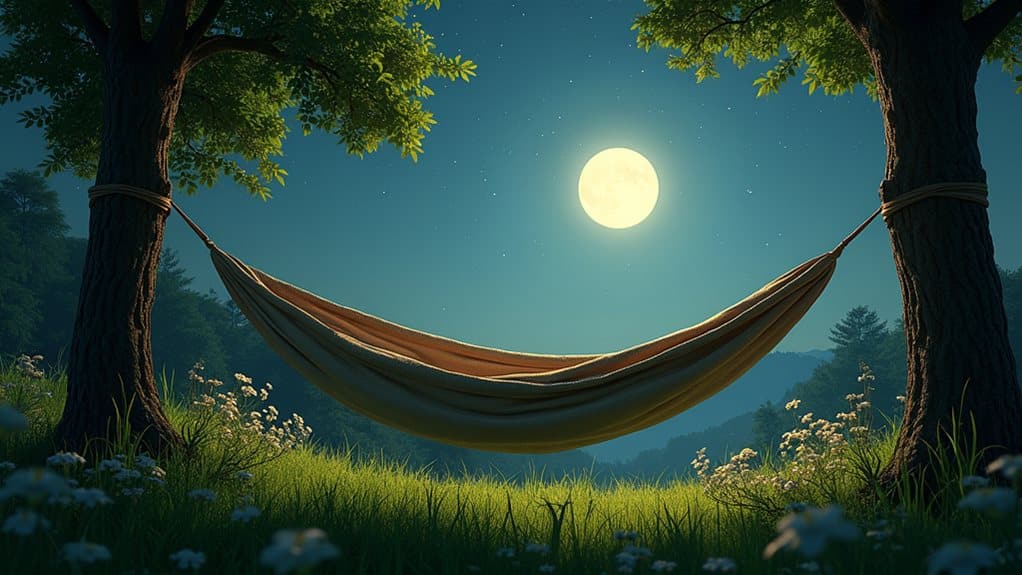
Enhancing your sleep quality by sleeping in a hammock every night involves paying attention to several key factors that promote comfort and health. Proper hammock setup, including diagonal sleeping and supportive accessories like pillows, can substantially improve sleep quality.
Exposure to fresh air and natural surroundings, along with maintaining a clean environment, helps regulate sleep rhythms and reduces stress, improving your overall outdoor sleep experience.
Final Note
Sleeping in a hammock outdoors can be practical and beneficial if you prioritize safety and proper setup. By choosing the right gear, protecting yourself from weather and wildlife, and understanding the potential risks, you can enjoy restful nights in nature. Keep in mind that full-time outdoor hammock sleeping isn’t suitable for everyone, so assess your comfort and health needs carefully. With proper planning, hammock camping can enhance your outdoor experience and improve your sleep quality.


