
Winds over 15 mph can considerably compromise kayaking safety, making control difficult and increasing the chance of capsizing. Gusts exceeding 20-30 mph can generate large, uncontrollable waves, creating unstable conditions that threaten your safety. As wind strength rises, so does the risk of unpredictable water movements, which make paddling more challenging. If you want to understand how to recognize dangerous conditions and prepare accordingly, keep exploring for essential safety tips and guidelines.
TLDR
- Winds over 15 mph significantly increase control loss and safety risks while kayaking.
- Gusts exceeding 20-30 mph create large waves and instability, making kayaking dangerous.
- Winds above 15 mph can cause waves over 3-4 feet, challenging stability and paddling control.
- Strong winds combined with cold water temperatures heighten hypothermia and safety hazards.
- Always assess environmental cues and use tools; postpone trips if wind speeds exceed safe thresholds.
How Do Wind Speeds Affect Kayaking Safety?
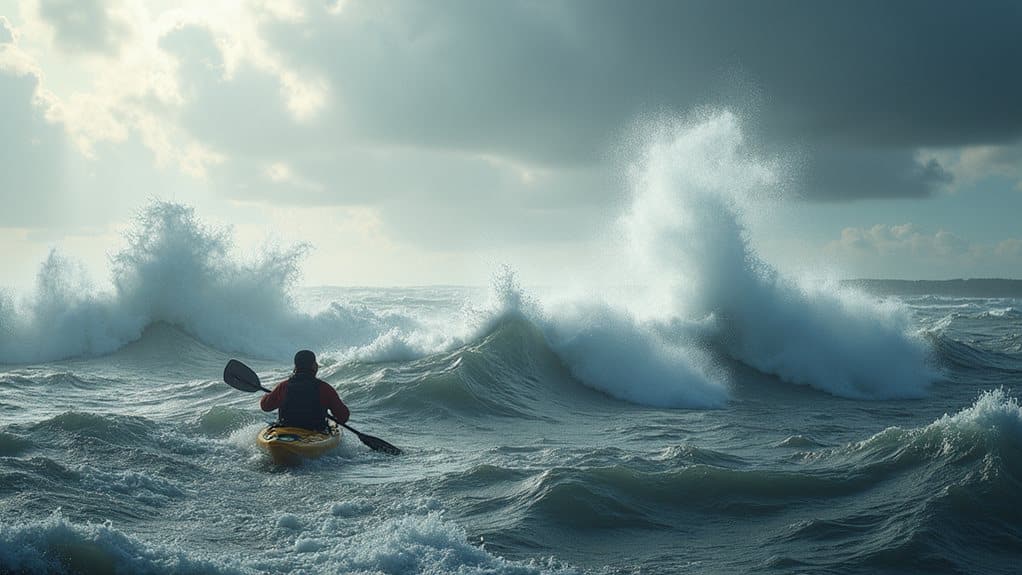
Wind speeds play an essential role in determining the safety of your kayaking experience, especially on open water. Higher wind speeds, particularly over 15 mph, can reduce control, create large waves, and increase capsizing risks.
This is especially true in colder water temperatures. Understanding these factors helps you assess conditions and stay safe while enjoying your freedom on the water.
How to Tell When Wind Conditions Are Too Dangerous for Paddling
Knowing when conditions become unsafe for paddling involves more than just checking the wind speed; it requires observing both the environment and your own comfort level.
If the wind exceeds 15 mph or gusts over 20-30 mph, large waves and loss of control can occur.
Watch water choppiness and use an anemometer to assess whether conditions are too dangerous for safe kayaking.
Additionally, having offline navigation tools can help you stay on course and make informed decisions in remote areas where mobile reception is limited.
What Wind Gusts and Wave Heights Mean for Your Paddle
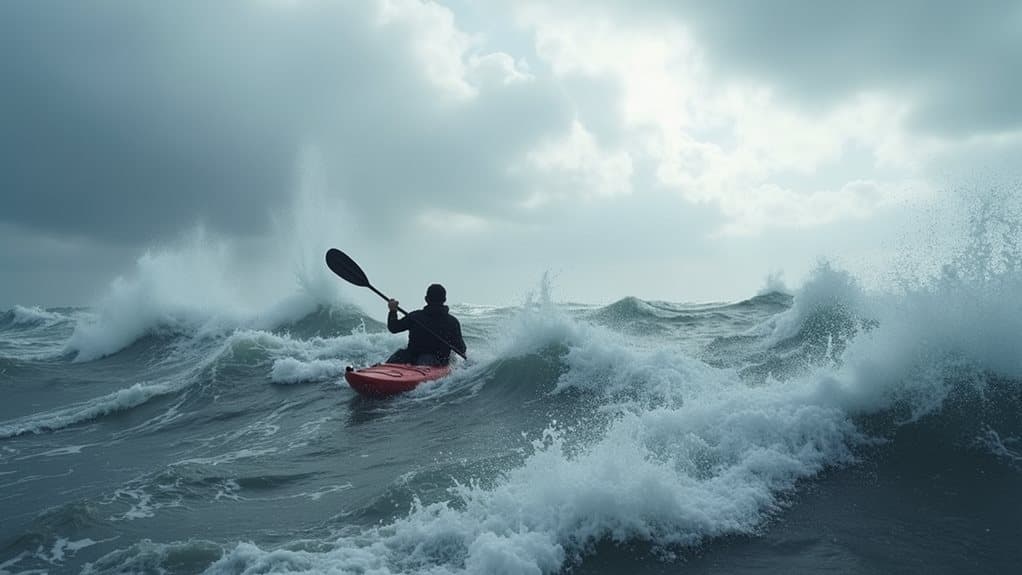
When wind gusts increase beyond 15-20 mph, your kayak’s stability can be compromised, making control more difficult and increasing the risk of capsizing. Larger waves driven by stronger winds can also challenge your ability to steer and maintain balance. Understanding how these conditions affect water movement helps you make safer choices before heading out. Being aware of weather forecasts can help you avoid dangerous conditions and plan your trip more effectively.
Wind Gusts and Stability
Strong gusts of wind can quickly turn calm waters into a challenging and unpredictable environment for kayakers.
When wind gusts exceed 20 mph, kayak stability decreases markedly, making paddling more difficult and increasing the risk of capsizing.
Winds over 30 mph can produce dangerous, unpredictable water conditions, compromising your control and safety on the water.
Wave Heights and Control
Have you ever wondered how wind speeds translate into wave heights and affect your control while kayaking? When gusts exceed 20-25 mph, waves can rise over 3 feet, reducing stability and making paddling difficult.
Larger waves, especially above 4-5 feet, considerably hinder your control and safety, creating unpredictable conditions that challenge balance and steering.
How to Recognize Storms, Lightning, and Other Weather Hazards
Recognizing approaching storms and weather hazards is essential for safe kayaking, especially when you notice signs like darkening skies, increasing wind, or distant thunder. Monitoring weather warnings and alerts can provide critical early notice of changing conditions, helping you make timely decisions. Staying alert to these cues allows you to respond quickly and avoid dangerous situations on the water. Being aware of real-time lightning alerts can help you act immediately at specific warning thresholds and seek shelter or exit the water before lightning strikes occur.
Recognizing Thunder and Lightning
Being able to identify signs of an approaching storm while kayaking is essential for safety, as weather conditions can change rapidly.
Listen for thunder, which occurs about five seconds after lightning, indicating the storm is within a mile.
Visible signs like darkening skies and increasing wind also warn of danger.
Always seek shelter if you see lightning or hear thunder.
Monitoring Storm Warnings
Monitoring storm warnings while kayaking is essential for your safety, especially since weather conditions can change rapidly on the water.
Pay attention to signs like darkening skies, sudden shifts in wind directions, or increased thunder, which can signal an approaching storm.
Recognizing these cues early helps you seek shelter before lightning strikes or dangerous winds develop, ensuring your freedom to investigate safely.
Signs It’s Not Safe to Kayak Due to Weather Conditions
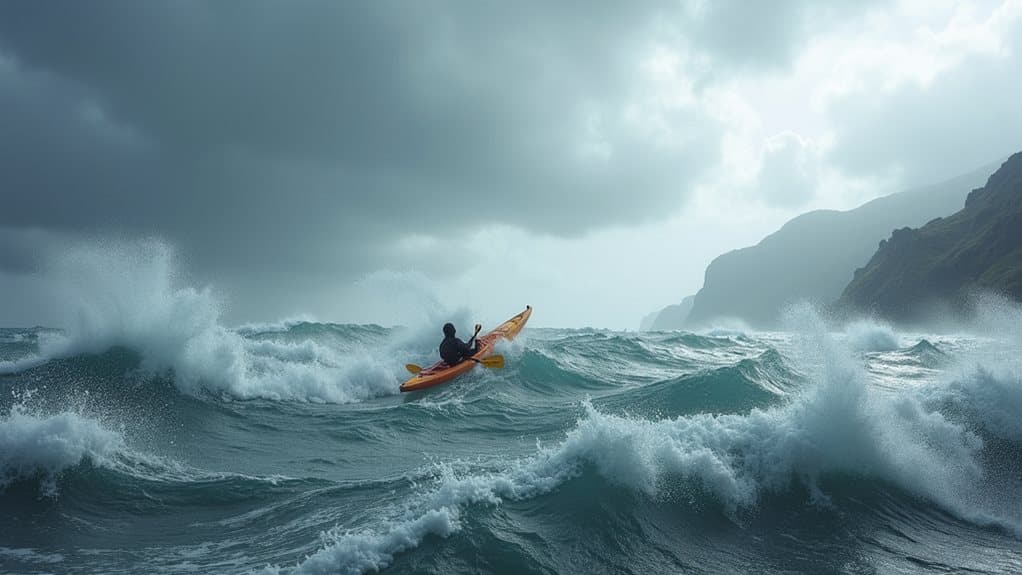
Certain weather conditions serve as clear indicators that it’s unsafe to go kayaking. If wind speeds reach 15 mph or more, especially with gusts over 20-30 mph, control becomes difficult, and waves grow dangerous. Storms with thunder, lightning, or heavy rain are immediate hazards. Dense fog and cold water temperatures further increase risks, signaling it’s time to postpone your expedition. Properly assessing weather conditions and understanding weather warning signs can help prevent accidents on the water.
Tools and Tips to Measure Wind Conditions Before Paddling
Before heading out, it’s important to use reliable tools like anemometers to measure wind speed accurately. However, keep in mind they need proper calibration and batteries.
You can also estimate wind conditions with the Beaufort scale or check real-time forecasts on websites like windfinder.com to plan your trip safely.
Additionally, observing visual clues such as ripples, whitecaps, or the movement of trees and flags can provide helpful, immediate understanding into current wind strength. Regularly monitoring weather conditions can further ensure a safe kayaking experience.
Using Anemometers Effectively
Using an anemometer effectively can make a significant difference in evaluating wind conditions before you head out on the water.
With these devices, you get precise wind speed readings, helping you decide if conditions are safe for kayaking.
Combining anemometer data with the Beaufort scale or real-time forecasts from websites like windfinder.com guarantees informed, confident decisions about your journey.
Recognizing Wind Telltale Signs
Recognizing wind telltale signs in your environment can be a highly effective way to assess wind conditions before you set out on the water.
Look for ripples on the surface, which indicate light breezes, or whitecaps forming as wind intensifies.
Observing drifting debris or the movement of trees also helps gauge whether conditions are safe for kayaking.
How Tides and Water Features Interact With Wind Risks
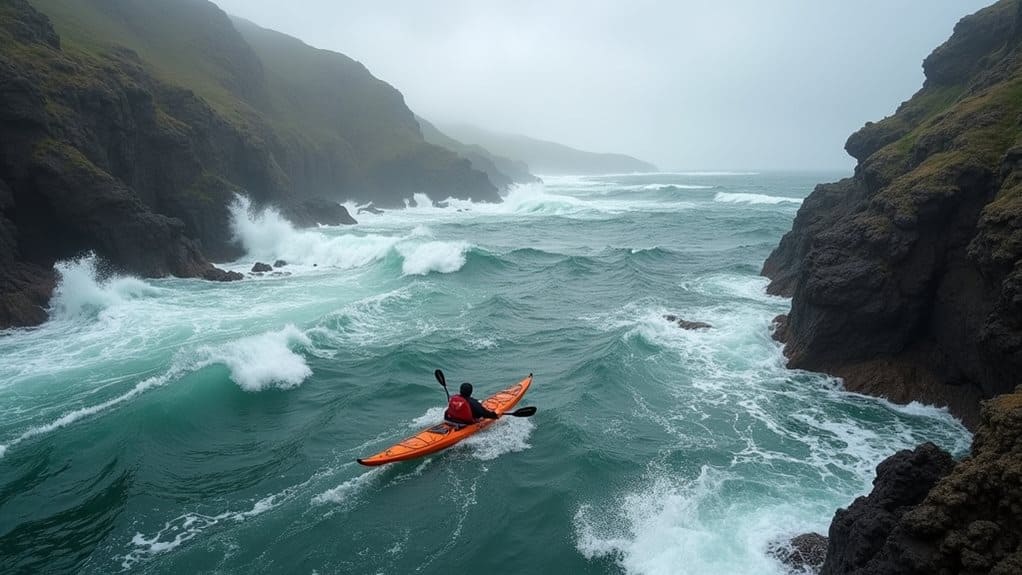
Tides and water features play a significant role in shaping the conditions you encounter while kayaking, especially when combined with wind.
Wind can amplify turbulence around shoals, sandbars, and narrows, creating larger waves and unpredictable currents.
During tide changes, these water features interact with wind, increasing risks like rip currents and eddies, making steering more hazardous.
What Actions to Take When Wind Conditions Turn Dangerous
When wind conditions become hazardous, taking swift and deliberate actions can prevent accidents and guarantee your safety on the water.
If wind exceeds 15 mph or gusts over 20 mph, stop paddling and seek shelter.
During a storm, leave immediately for safe ground.
If conditions shift suddenly, reevaluate, and head to protected areas to avoid being pushed into dangerous waters.
How to Prepare Your Gear and Plan Your Trip for Wind Safety
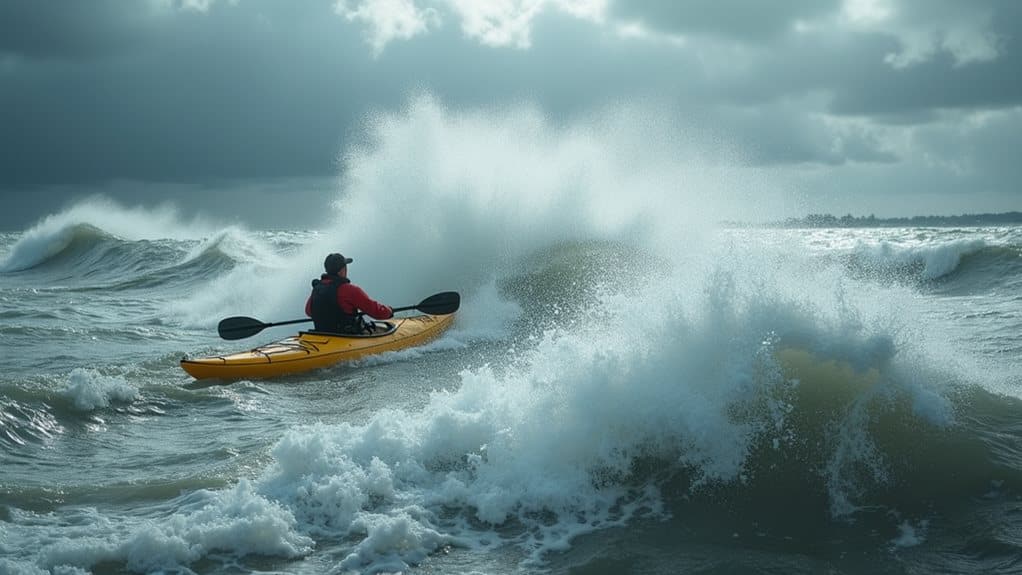
Preparing your gear and planning your trip thoroughly can make a significant difference in ensuring your safety when kayaking in windy conditions. Check weather forecasts and use a wind gauge or observe environmental signs like wave height. Incorporate appropriate safety equipment such as a sturdy PFD, and select routes through sheltered waters to minimize wind exposure and enhance safety.
Knowing Your Limits: When to Call Off a Kayaking Trip
Recognizing your limits is essential when deciding whether to proceed with or postpone a kayaking trip, especially in windy conditions.
Winds over 15 mph increase risks, with gusts above 20 mph raising wave heights and difficulty.
Water temperatures below 60°F combined with strong winds heighten hypothermia risk, making it wise to call off the trip and stay safe.
Additionally, high winds can destabilize your balance and make paddling more challenging, especially for those less experienced with stability and balance on the water.
Final Note
Understanding wind conditions is crucial for safe kayaking. Recognize how wind speed, gusts, and weather patterns impact water safety, and always monitor forecasts before heading out. If wind speeds exceed safe thresholds or storms approach, it’s best to postpone your trip. Preparing your gear and knowing your limits can prevent accidents. Remember, prioritizing safety over exploration guarantees enjoyable paddling experiences without unnecessary risks.


