
You feel exhausted after camping because travel leaves you with sleep debt, the hike and gear‑handling on uneven ground demand extra calories, and the hard, uneven sleeping pad strains muscles overnight. Light at the campsite disrupts your circadian rhythm, while temperature extremes and dehydration sap energy. Skipped meals or low‑iron, low‑protein foods prevent proper recovery, and constant movement keeps your body from repairing. If you keep going, you’ll uncover more ways to bounce back.
TLDR
- Sleep deprivation and disrupted circadian rhythms from late‑night campfires, lanterns, and variable daylight reduce restorative sleep.
- Inadequate caloric and nutrient intake, especially protein, iron, and electrolytes, leaves energy reserves depleted after strenuous activities.
- Continuous low‑grade physical exertion (tent pitching, uneven‑terrain hiking, carrying gear) exceeds daily energy expenditure, creating a large calorie deficit.
- Hard, uneven sleeping surfaces cause muscle strain and pressure points, preventing full overnight muscle repair and leading to morning stiffness.
- Dehydration and low fluid intake, combined with heat or altitude stress, impair circulation and amplify fatigue the next day.
Travel Fatigue That Fuels Camping Fatigue
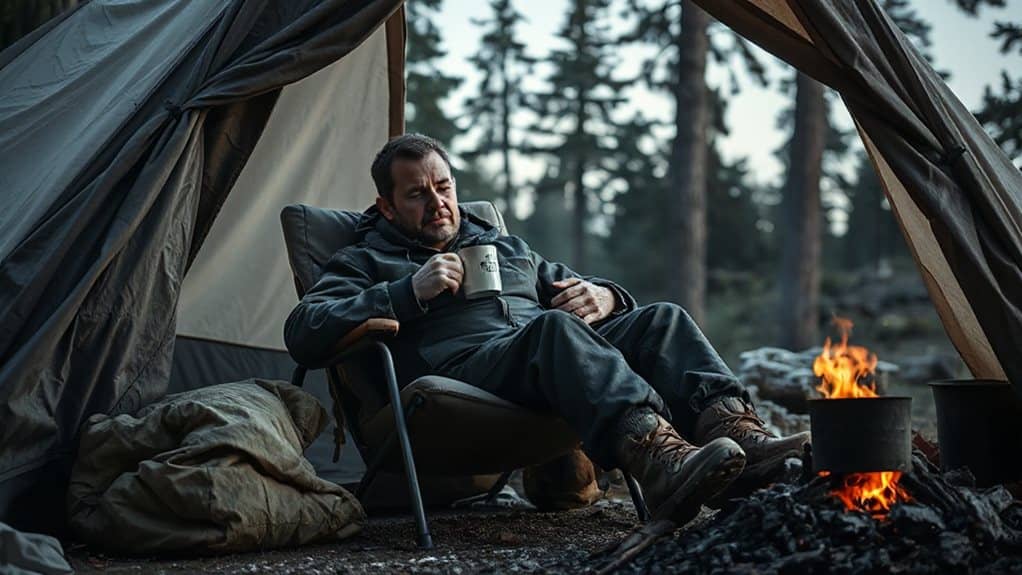
If you’ve just finished a long drive, a red‑eye flight, or a cross‑country train ride, the fatigue you feel isn’t just from the trip itself—it’s a cascade of sleep disruption, dehydration, and irregular eating that primes your body for a tougher first day at camp.
Lack of sleep builds a debt that lingers, while dry cabin air or low fluid intake leaves you sluggish, and missed meals deprive muscles of protein, vitamins, and steady energy, making every early‑morning task feel harder. Constant movement can further exacerbate this exhaustion. Turning on airplane mode when you hit the trailhead can help preserve phone battery for navigation and reduce the stress of constant connectivity.
Physical Exertion and Extra Work While Camping
You’ll notice that setting up a tent, staking it, and hanging a tarp demand repeated muscle work, especially in your legs, core, and shoulders, and breaking everything down later adds even more strain.
Walking on uneven trails with a loaded pack pushes your cardiovascular system and forces constant stabilization, so the energy you spend on the terrain quickly adds up.
Because you keep moving from one task to the next without proper rest, your body can’t fully recover, leaving you exhausted by the next morning.
Using hiking poles can help reduce joint stress and improve stability on uneven ground, so consider bringing hiking poles to conserve energy and protect your knees.
Setup‑Heavy Physical Labor
A campsite that demands heavy setup work can spike your daily energy demand far beyond a typical hike, because unloading gear, hauling water, pitching tents, and arranging food and shelter all count as non‑walking activity that burns calories.
You’ll lift and carry coolers, firewood, chairs, and kitchen bins, turning short chores into sustained, low‑to‑moderate exertion.
Gross energy use can top 4,900 kcal, while food intake often lags under 2,200 kcal, creating a deficit that leaves you exhausted the next morning.
Uneven‑Terrain Energy Expenditure
Uneven terrain spikes the energy cost of every step you take around camp, turning a simple walk to the water or fire pit into a workout that burns far more calories than strolling on a smooth trail.
Even modest bumps add 28 % metabolic demand, similar to a 2 % incline, and a loaded pack magnifies it.
Uphill, downhill, and quick obstacles force constant balance corrections; faster paces on sand, ice, or gravel raise effort sharply.
Those repeated micro‑efforts accumulate, leaving you exhausted the next morning.
Hard or Uneven Sleeping Surfaces That Worsen Camping Fatigue

You’ll feel the impact of rock‑hard ground and uneven terrain as they concentrate pressure on your shoulders, hips, and knees, turning a night’s sleep into a series of tosses and turns.
Without enough mattress‑like support, your spine can slip into awkward positions, creating muscle strain, soreness, and a chill that pulls heat away through the cold earth.
Choosing a pad that’s thick, wide, and properly inflated gives you the cushioning and insulation you need to keep sleep fragmentation and next‑day fatigue at bay.
Consider upgrading to an extra wide cot like the TETON Sports Outfitter to improve support and reduce nighttime tossing.
Rock Hard Ground
Hard ground bites into your sleep system, turning a night under the stars into a restless, achy experience.
You’ll need Y‑shaped aluminum stakes, titanium rods, or screw‑in pegs, plus a mallet or rock hammer, to pierce frozen soil; a T‑shaped peg cross‑check adds grip.
Lay a Tyvek groundsheet under the tent floor to protect against abrasion, and choose a sloped, well‑drained spot to avoid pressure points that sap energy.
Uneven Terrain Pressure
Even if you’ve nailed the right stakes and a protective groundsheet, the shape of the terrain itself can still sap your energy.
Sloped or lopsided ground forces you to micro‑reposition all night, fragmenting deep sleep and creating pressure hotspots on hips, shoulders, and back.
Those constant adjustments keep muscles tensed, reduce breathing comfort, and leave you stiff, sluggish, and less alert when sunrise arrives.
Mattress Support Deficiency
When the ground beneath you is too hard or uneven, your body spends the night fighting for proper alignment instead of resting.
A thin, overly firm pad flattens natural spinal curves, while a soft, low‑density mat lets hips and shoulders sink, creating pressure points.
Choose a medium‑firm, high‑density foam pad that balances support and cushioning, matching your sleep position to keep muscles relaxed and wake up refreshed.
How Campsite Lighting Messes With Your Body Clock?
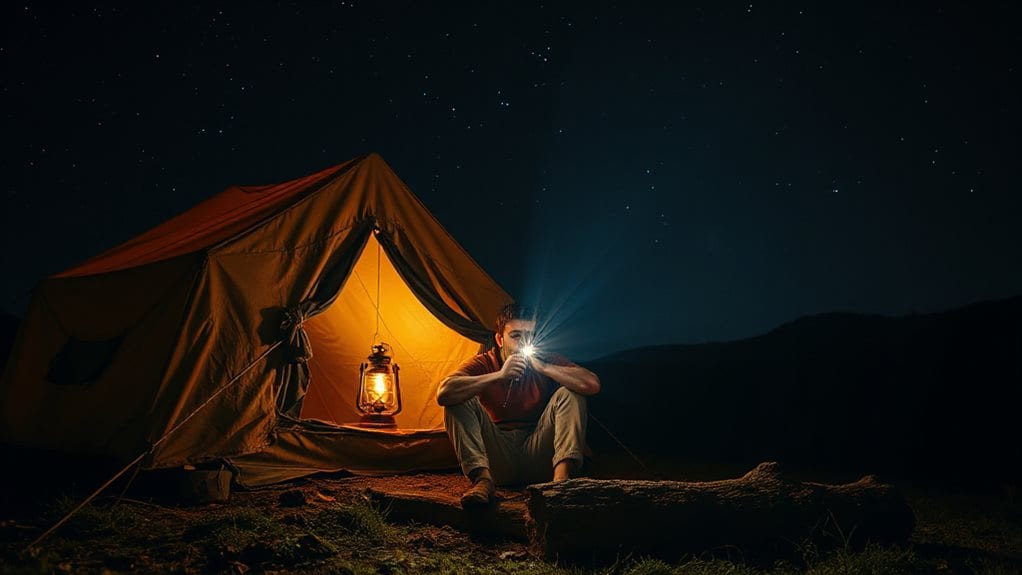
Under the bright canopy of a campsite, the shift from artificial indoor lighting to natural daylight can throw your body’s internal clock off balance.
You’ll absorb four‑times more daylight in summer, thirteen‑times more in winter, so photoreceptors fire intensely, melatonin drops earlier, and sunrise cues wake you sooner.
Evening lanterns linger, yet natural light dominates, quickly syncing your circadian rhythm and preventing social jetlag.
Camping at night also exposes you to unfamiliar soundscapes and lighting that can disrupt sleep, so practice preserve natural quiet to help rest.
Nutrition Gaps That Intensify Camping Fatigue
After you’ve balanced your sleep with the campsite’s light, the next hidden culprit behind next‑day sluggishness is what you put on your plate.
Low iron from limited red meat or beans reduces oxygen delivery, while B‑12 and B‑vitamin gaps blunt energy conversion.
Skipping protein spikes carbs, causing crashes; dehydration and missing electrolytes sap stamina.
Enhance iron, B‑12, protein, and electrolytes for steadier vigor.
Monitor body‑mass loss to detect dehydration early by tracking changes of ≥2% and comparing morning and post‑exercise weigh‑ins with a portable scale (body‑mass loss can indicate fluid deficits).
Temperature Extremes That Add to Camping Fatigue
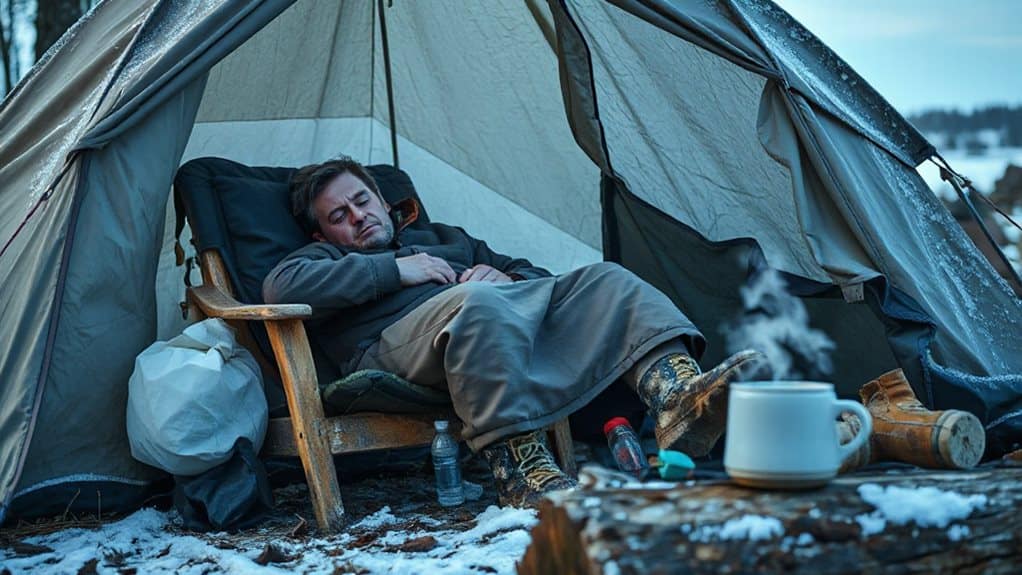
If the temperature climbs past comfortable levels, both your sleep and daytime energy can suffer. Heat traps you in the tent, causing night sweats, fragmented rest, and sluggish mornings.
During the day, dehydration and exhaustion set in, especially above 95°F, while humidity worsens cooling. Drink extra water, replace electrolytes, and seek breezy spots; otherwise, recovery stalls and fatigue lingers.
Sensory Overload That Compounds Camping Fatigue
When you step into a campsite, the familiar rhythm of home gives way to a flood of new sounds, sights, and sensations that can quickly overload your nervous system, and that overload often turns into lingering fatigue.
Unpredictable noises, bright firelight, and constant movement tax your brain, while disrupted routines heighten anxiety, draining energy.
Quiet breaks, earplugs, and previewing the environment help reduce overstimulation, preserving stamina for the next day.
How Stacked Camp Tasks Cause Next‑Day Sluggishness?
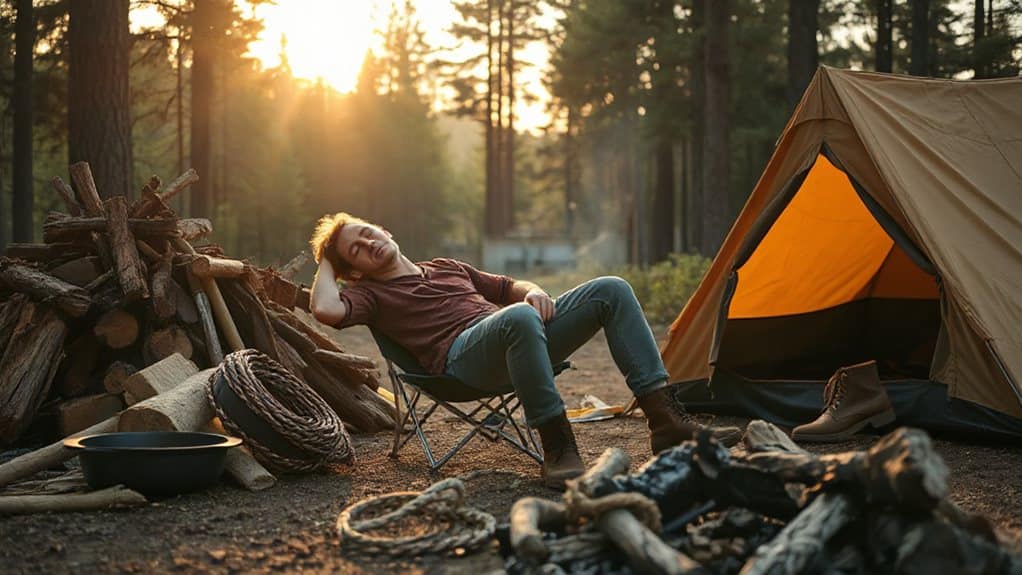
Even though you might think a day of camping chores is just a series of small tasks, stacking them back‑to‑back creates a cumulative workload that your body can’t fully recover from until the next morning.
You lug gear, pitch tents, chop firewood, cook, and pack, all without breaks, so muscles stay inflamed, glycogen depletes, and dehydration worsens.
The nonstop motion prevents overnight repair, leaving you stiff, foggy, and low‑energy when sunrise arrives.
Simple Strategies to Recover Faster After a Camping Night
After a night of setting up tents, cooking over a fire, and hauling gear, your body is primed for recovery, and the choices you make in the first few hours can dramatically reduce next‑day fatigue.
Sip water and electrolytes in small bursts, grab a banana or protein bar, stretch briefly, take a light walk, and finish with a cool shower or gentle self‑massage to keep muscles loose and circulation flowing.
And Finally
By understanding that travel stress, physical effort, uneven sleep surfaces, lighting, nutrition, temperature, sensory overload, and stacked tasks all combine to sap your energy, you can target each factor. Prioritize a comfortable mattress, regulate light and temperature, stay hydrated, eat balanced meals, and spread chores over the day. These practical steps let your body recover faster, so you’ll wake refreshed rather than sluggish after a night under the stars.


