
Keep your RV fridge between 34 °F and 40 °F (3 °C–5 °C) for food safety, aiming for the sweet spot of 37 °F–38 °F. Start with the dial or digital control in the middle, then use a reliable thermometer placed in the center to verify the temperature after a few hours. If it climbs above 40 °F, turn the dial one notch colder (or lower the digital set point); if items start to freeze, move one notch warmer. Check the thermometer regularly, especially when ambient heat rises, and adjust as needed—later you’ll learn more tips for seasonal efficiency.
TLDR
- Keep the RV fridge between 34 °F and 40 °F (1 °C – 4 °C) for food safety.
- Aim for a “sweet spot” of 37 °F – 38 °F (2 °C – 3 °C) to balance freshness and avoid freezing.
- Use a reliable thermometer; adjust the dial or digital setting one notch/degree, then wait several hours for stabilization.
- In hot ambient conditions, lower the setting (colder) to maintain the 34 °F – 40 °F range; ensure the RV is level and vents are clear.
- Verify the temperature on a middle shelf, away from walls and vents, to confirm it stays within the safe range.
RV Fridge Temperature: The Safe Range for Food
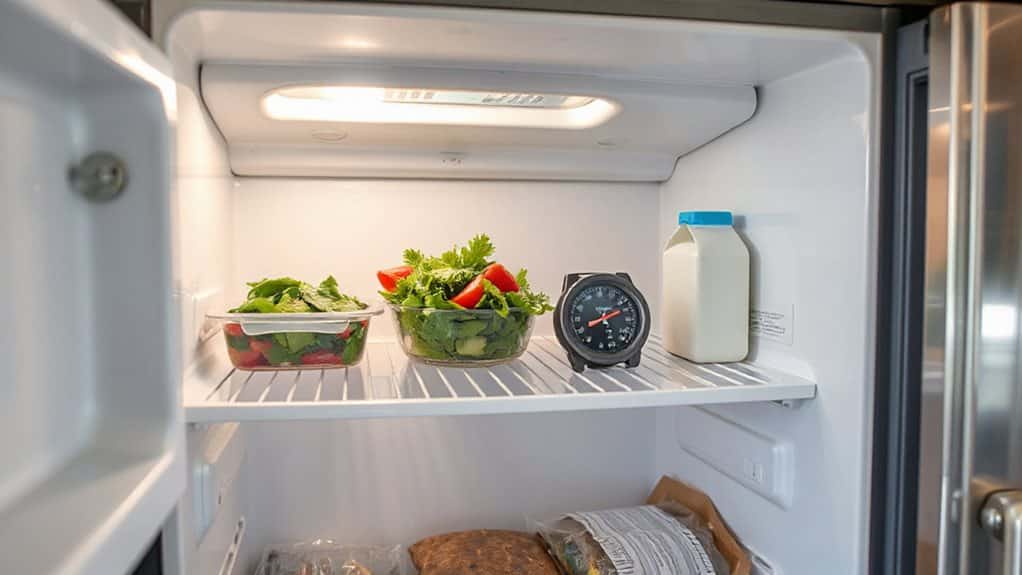
When you’re on the road, keeping your RV fridge between 34°F and 40°F is essential for food safety, and most experts recommend aiming for the sweet spot of 37°F‑38°F to stay comfortably within the USDA’s safe zone.
This range prevents bacterial growth, keeps meat, dairy, leftovers, and produce fresh, and avoids freezing delicate items.
Stay within 34‑40°F, especially 37‑38°F, for reliable, safe storage. Absorption fridges can run on propane, electricity, or both.
Regular maintenance of your RV’s systems, including sanitizing the freshwater tank every few months, helps prevent cross-contamination and supports overall food safety by reducing tank contamination.
Setting RV Fridge Temperature With Dial or Digital Control
You’ll find that a numbered dial lets you tweak the cooling output in small steps, but the numbers aren’t the same across brands, so start in the middle and give each change a few hours to settle.
If your fridge has a digital thermostat, you can simply enter the desired temperature, and the unit will cycle on and off to keep that set point, which makes repeatable adjustments much easier.
In either case, use an accurate thermometer, make one change at a time, and allow enough stabilization time before fine‑tuning again.
Many RV refrigerators can also operate on propane gas, so be aware of power source restrictions and safety recommendations when setting temperatures.
Control Dial Settings
Where does your RV fridge’s dial actually take you? Start at the middle setting, then let the thermometer tell you if you’re above 40°F—move one notch colder.
If fresh foods freeze, shift one notch warmer.
Remember higher numbers usually mean colder, but check your manual.
Small, incremental changes keep the cabin stable, even when weather or load varies.
Digital Temperature Adjustment
If your RV fridge has a digital control panel, you can set the temperature just as precisely as you’d with a manual dial, but you’ll need to rely on the built‑in thermostat and a separate thermometer for verification.
Adjust one setting at a time, wait 24 hours, then check a middle‑shelf thermometer; aim for 34‑40°F.
Use wireless displays to monitor without opening doors, and keep the thermistor clear of walls for accurate regulation.
How Ambient Heat Changes RV Fridge Temperature
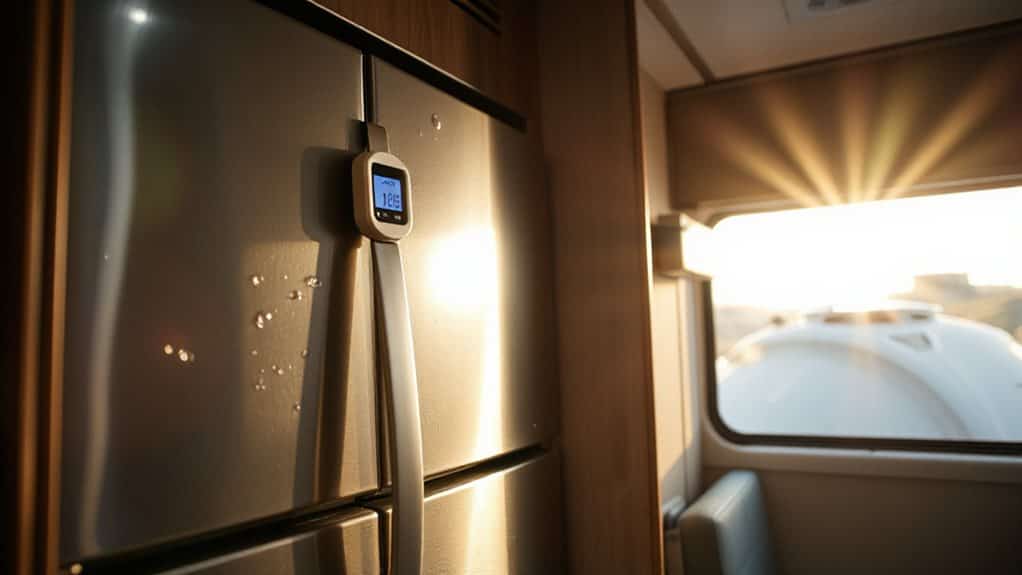
When the outside temperature climbs, the fridge’s interior naturally drifts upward, so you’ll notice a higher reading even if the dial stays the same.
To keep food safe you should lower the setting by a couple of degrees during hot months, aiming for 3 °C–5 °C instead of the usual range.
Monitoring the actual temperature with a thermometer lets you fine‑tune the adjustment and avoid spoilage.
Also ensure the RV is level and vents are clear to maintain proper cooling and airflow, as proper ventilation is essential.
Ambient Heat Increases Internal Temperature
Even on a scorching summer day, the temperature outside directly affects how well your RV fridge can keep food safe.
Higher ambient heat narrows the cooling margin, forcing the system to work harder while heat builds around the cabinet, especially if airflow is blocked or sunlight hits the vents.
This raises internal temperature, creates hot spots, and slows recovery after door openings, risking unsafe food zones.
Adjust Settings for Seasonal Variations
The heat that builds up around your fridge on a hot day doesn’t just raise the internal temperature—it also forces the cooling system to work harder, which means the thermostat setting you use in summer should be lower than the one you keep in cooler months.
In summer, drop the dial a few clicks, park in shade, and enhance ventilation to keep the compartment between 34°F‑40°F.
In milder weather, raise the setting slightly, monitor with a thermometer, and avoid over‑cooling to preserve fresh produce.
How to Spot a Fridge That’s Too Warm or Too Cold?
Often, the first clue that your RV fridge is out of balance appears in the food itself—if dairy, leftovers, or meats start spoiling faster than usual, or ice cream softens while the freezer stays only mildly chilled, the compartment is likely too warm; conversely, if lettuce wilts into a frosty mess, drinks become slushy, or the refrigerator dips below 32°F (0°C) and freezes fresh produce, the unit is too cold. Check for condensation, uneven shelf temperatures, or frost accumulation; notice if items near vents freeze while others stay warm, and pay attention to slow recovery after door openings, all of which signal a temperature mismatch that needs adjustment. For trips, consider pre-cooling the fridge the night before by setting it to its coldest setting and placing bags of ice inside to help it stay cold while driving.
How to Use a Thermometer for Quick RV Fridge Temperature Checks
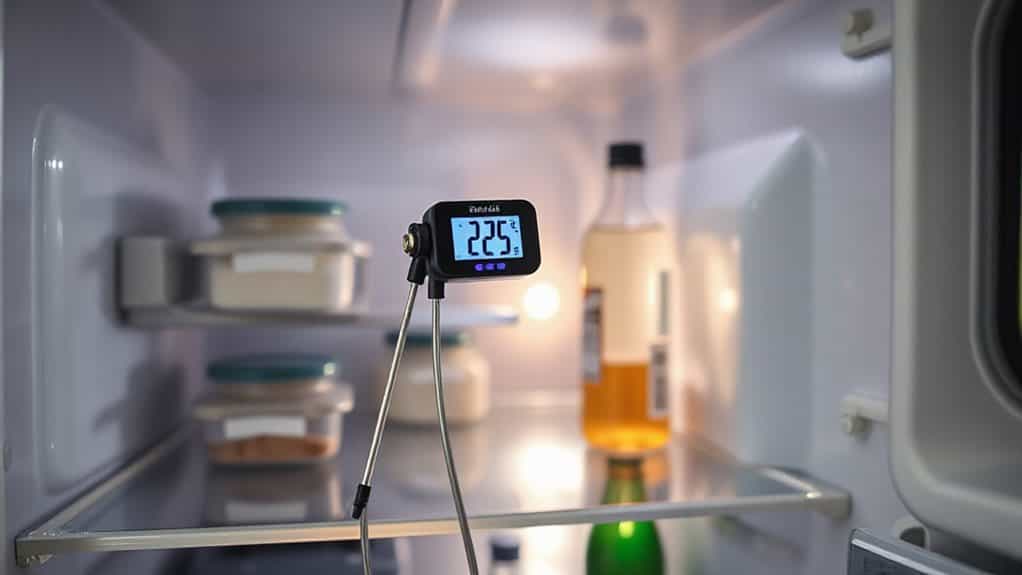
When your RV fridge’s food starts spoiling or freezing unexpectedly, the next step is to verify the actual temperature with a thermometer rather than guessing from the dial.
Slip a digital or analog thermometer into the compartment’s center, avoid walls and vents, leave it undisturbed a minutes, then read the display.
Compare the result to the 34‑40 °F safe range, repeat after loading groceries, and keep a dedicated freezer probe for 0 °F checks.
Consider also using a portable surge protector to ensure stable power to your RV’s fridge, especially when plugged into campground electricity, as it can protect against low voltage and other electrical issues.
Seasonal RV Fridge Temperature Adjustments for Energy Efficiency
Adjust your RV fridge settings as the seasons change to keep food safe and energy use low. In spring, start with a middle dial, then trim a notch as mild air eases cooling load; summer demands a higher setting, shade, vent covers, and pre‑chilled items to combat heat; fall calls for small reductions to avoid overcooling; winter may need lower settings to prevent freezing, always watching the thermometer and minimizing door openings.
And Finally
Keep your RV fridge between 35°F and 40°F (1.5°C–4°C) to protect food safety and energy use. Adjust the dial or digital setting as ambient temps shift, and use a thermometer for quick checks. Watch for signs of over‑ or under‑cooling, like frost buildup or soggy produce, and fine‑tune settings seasonally. By monitoring and tweaking the temperature, you’ll preserve freshness, avoid waste, and keep power consumption in check.


