
Mold builds up inside campers and RVs mainly because moisture from water leaks, high humidity, and temperature changes creates the perfect environment for it to grow. Poor ventilation traps this moisture, while darkness and lack of sunlight allow mold spores to settle and thrive. Long-term storage without proper air circulation can also lead to hidden mold behind walls or under floors. If you want to learn more about keeping your space mold-free, keep exploring these common causes and solutions.
TLDR
- Poor ventilation traps moisture, creating humid conditions ideal for mold growth inside campers and RVs.
- Water leaks from roofs, windows, or plumbing introduce moisture that promotes mold development.
- Temperature fluctuations cause condensation on surfaces, encouraging mold spores to settle and grow.
- Limited sunlight and darkness provide a favorable environment for mold spores to thrive and proliferate.
- High indoor humidity levels, combined with trapped moisture, lead to hidden mold behind walls and under floors.
How Moisture Gets Trapped in Your RV and Causes Mold
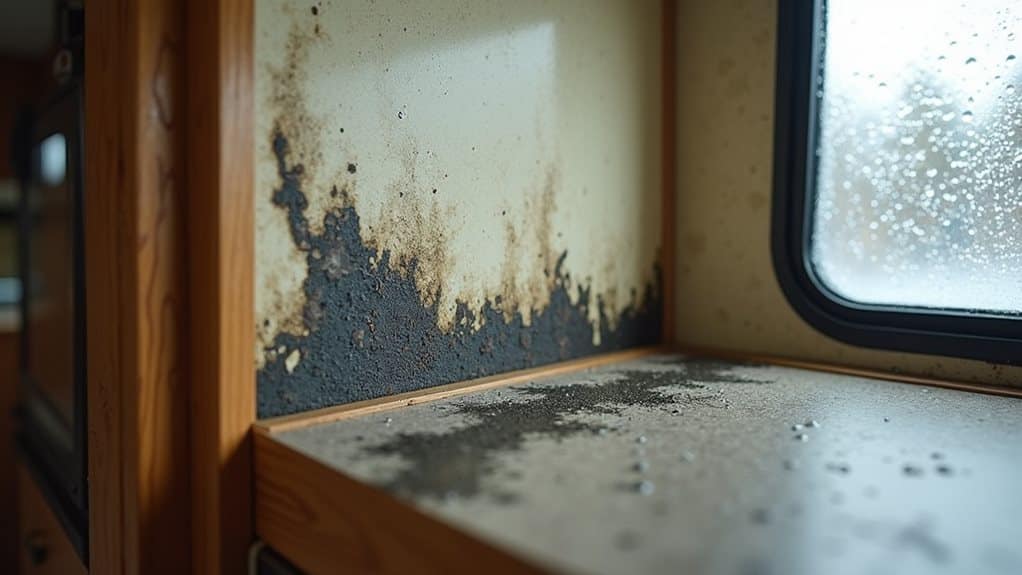
Moisture can easily become trapped inside your RV through several common sources, especially if you’re not careful about ventilation and sealing. Poor ventilation prevents moist air from escaping, leading to increased humidity and dampness. Reversing the polarity of electrical connections or improper wiring can also introduce moisture issues by causing electrical faults that lead to condensation. When vents, seams, or openings aren’t sealed properly, outside moisture seeps in, further raising moisture levels and creating ideal conditions for mold growth inside your camper.
Water Leaks and Intrusions That Lead to Mold Growth
Water leaks from roof seams, windows, or plumbing fittings can allow moisture to enter your camper, creating perfect conditions for mold to grow. Signs of intrusion include damp walls, musty odors, or water pooling, especially after rain or snowmelt. A continuous presence of moisture can also lead to damage to materials, further promoting mold development. If these leaks aren’t addressed, they can cause structural damage that worsens over time, further increasing the risk of hidden mold growth.
Common Leak Sources
Identifying common sources of leaks in your camper or RV is essential for preventing mold growth. Water intrusion can occur through roof leaks from damaged seals or missing shingles, cracked windows and door frames, plumbing leaks from faulty fittings, or exterior damage around vents and skylights.
Addressing these leak sources keeps moisture out and helps maintain a dry, mold-free environment.
Water Intrusion Signs
Detecting signs of water intrusion early is crucial to preventing mold growth inside your camper. Watch for water leaks around roof seams, windows, or plumbing fittings.
Be alert to hidden water intrusion behind walls or under flooring. Persistent condensation on cold surfaces also indicates ongoing water intrusion, which can lead to mold if left untreated.
Structural Damage Risks
Have you ever considered how small leaks can lead to significant structural problems inside your camper? Water leaks from roof seams, windows, or plumbing can saturate insulation and wooden structures, weakening the camper’s integrity.
This structural damage increases the risk of mold growth, especially when leaks go unnoticed. Making regular inspections and prompt repairs essential for maintaining your freedom and safety.
Why Poor Ventilation Makes Mold More Likely
When ventilation is poor, the air inside your camper becomes stagnant, which can lead to higher humidity levels that support mold growth.
Without enough airflow, moisture condenses on surfaces like windows and walls, creating damp spots where mold spores can settle and thrive.
Limited air exchange also traps airborne mold spores, increasing the risk of them settling and spreading throughout the interior.
Ensuring proper rigging techniques and ventilation can significantly reduce the likelihood of mold development inside your camper.
Stagnant Air Promotes Growth
Why does poor ventilation make mold growth more likely in campers and RVs?
Stagnant air traps humidity levels inside, creating the perfect environment for mold spores to settle and grow.
Without fresh airflow, moisture accumulates on surfaces like walls and windows, increasing condensation.
This trapped humidity promotes mold development, especially in dark, enclosed spaces.
Limited Air Exchange
Limited air exchange in campers and RVs considerably increases the risk of mold growth because it prevents the effective removal of moisture and indoor pollutants. When ventilation is limited, humidity rises, condensation forms on surfaces, and indoor pollutants, including mold spores, accumulate.
This trapped environment encourages persistent dampness, making proper airflow essential to keep your space dry, fresh, and mold-free.
How Temperature Changes Create Condensation Inside Your RV
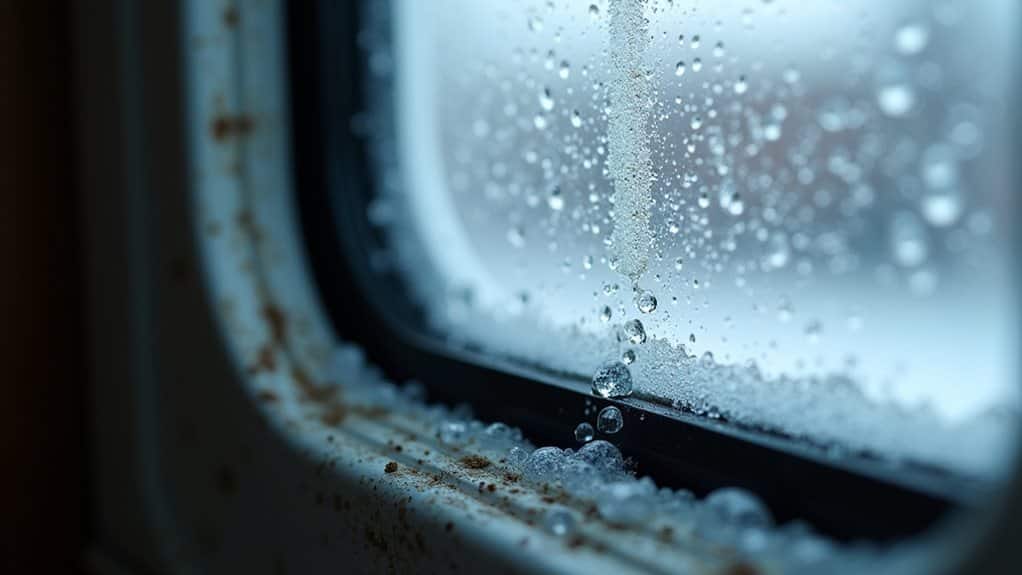
Temperature swings inside your RV can lead to condensation forming on interior surfaces, especially when warm, moisture-laden air contacts cooler walls or windows. These temperature fluctuations cause water vapor to condense, creating droplets that can promote mold growth. Using proper materials like insulation and moisture barriers can help mitigate this issue. Poor insulation and rapid cooling during colder seasons increase the likelihood of this moisture buildup, impacting your freedom to enjoy your camper.
Why Long-Term Storage Can Cause Moisture Buildup
When a camper sits unused for an extended period, moisture can build up inside, creating an environment ripe for mold growth.
For full-time RV owners, trapped humidity from ambient air, cooking, and breathing increases moisture buildup.
Without proper ventilation, temperature fluctuations cause condensation, turning your stored camper into a humid space that promotes mold development over time.
Regularly inspecting and storing gear properly can help prevent this moisture buildup and protect your camper from long-term damage.
How Plumbing Leaks Contribute to Mold Problems
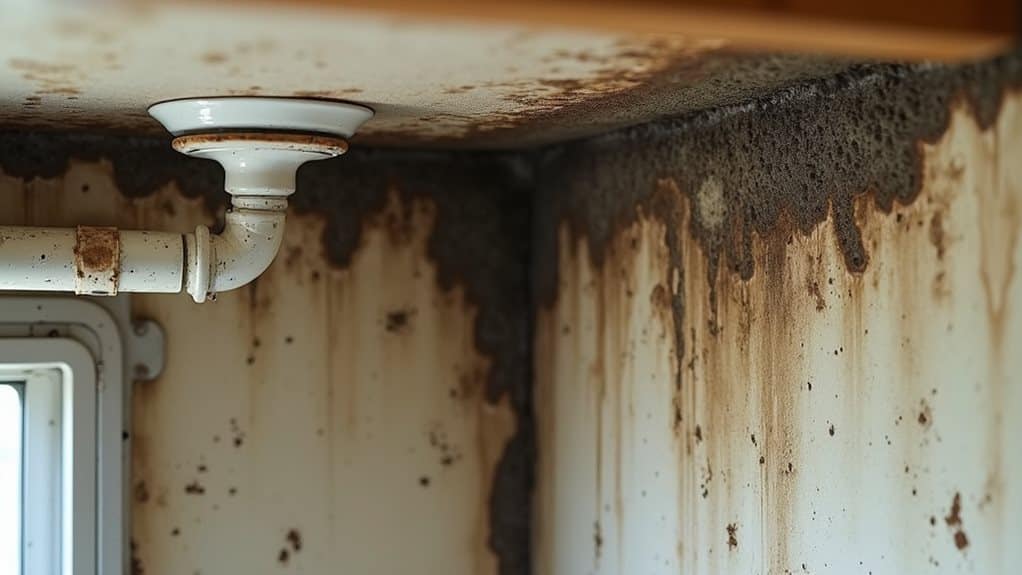
Plumbing leaks are a common but often overlooked cause of mold problems in campers and RVs. Hidden mold can develop behind walls or under floors where leaks from sinks, toilets, or water heaters cause persistent dampness. A proper inspection and maintenance routine can help identify potential leak sources early before mold begins to grow. Regular inspection and prompt repairs are essential to prevent water buildup. Even small leaks create the moisture that promotes mold growth in these confined, poorly ventilated spaces.
The Role of Darkness and Lack of Sunlight in Mold Development
Dark environments in your camper or RV create ideal conditions for mold to grow because mold spores thrive where sunlight doesn’t reach. Without exposure to UV rays, these spores are less likely to be killed or kept in check, allowing colonies to develop more easily. A jig selection that matches the conditions can help reduce moisture buildup and discourage mold growth.
Regular sunlight helps dry surfaces and reduces moisture, which is essential for preventing mold in shaded, low-light areas.
Darkness Promotes Mold Growth
Lack of sunlight creates an ideal environment for mold to grow and spread inside campers and RVs. Darkness allows mold spores to settle and thrive, as UV rays that kill spores are absent.
This moisture-laden setting encourages mold proliferation, making shaded, poorly lit areas more susceptible. Without sunlight, humidity persists, fueling ongoing mold development and spread.
Sunlight Kills Mold Spores
Sunlight plays a crucial role in controlling mold growth inside campers and RVs because its ultraviolet (UV) rays have natural germicidal properties that can kill mold spores.
Regular exposure to sunlight helps dry damp surfaces and makes conditions less favorable for mold to develop.
Without sunlight, moisture persists, allowing mold spores to thrive and multiply.
Lack of UV Exposure
Have you ever wondered why mold seems to flourish more easily in enclosed, shaded areas? Lack of UV exposure allows mold spores to settle and grow, since sunlight naturally inhibits mold growth through UV radiation.
Without the sterilizing effects of sunlight, moisture and spores thrive in dark, unventilated spaces inside campers and RVs, increasing mold development risk.
How High Humidity Levels Promote Mold in Small Spaces
When humidity levels rise above 60%, the conditions inside your camper or RV become highly conducive to mold growth.
High humidity in small spaces traps moisture from activities like cooking, showering, and breathing, especially with limited ventilation.
This increase in indoor humidity accelerates mold development, making it essential to control moisture and maintain ideal humidity levels for a healthier environment.
Hidden Areas Where Mold Can Grow Behind Walls and Under Floors
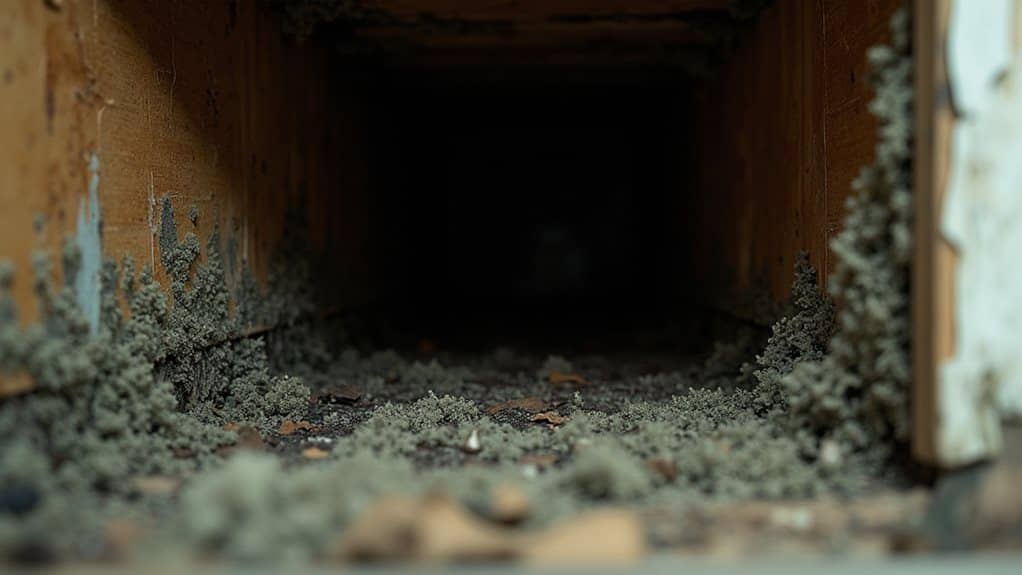
Mold can often develop in hidden areas within your camper or RV, making it difficult to detect until it causes noticeable problems. Behind walls and under floors, trapped moisture from leaks, spills, or high humidity creates ideal conditions for mold.
Poor ventilation and limited airflow prevent drying, allowing mold spores to thrive unnoticed in these concealed spaces.
Simple Tips to Prevent Moisture and Keep Mold Away
Controlling moisture inside your camper or RV is essential for preventing mold growth, especially since small changes in humidity and airflow can affect air quality.
To trap moisture and keep mold away, regularly ventilate by opening windows and vents, use dehumidifiers, and maintain indoor humidity between 30-50%.
Promptly repair leaks and keep surfaces dry to create an environment less conducive to mold.
Final Note
To prevent mold buildup in your camper or RV, focus on controlling moisture through proper ventilation, fixing leaks promptly, and managing humidity levels. Regularly inspect hidden areas like behind walls and under floors, especially if storing long-term. Keep the interior dry, well-ventilated, and exposed to sunlight when possible. By maintaining these practices, you’ll reduce the risk of mold growth, ensuring a healthier and more comfortable environment during your travels and storage.


