
Fish can suddenly stop biting during trips due to environmental changes such as shifts in water temperature or tidal movements, which influence their feeding behavior. Fish also learn to recognize and avoid repeated bait or lure patterns, becoming more cautious over time. Additionally, signs like quick escapes or silence indicate they’re spooked or cautious. Understanding these factors can help you adapt your approach—keep going for more knowledge on how to turn the bite back on.
TLDR
- Sudden changes in water temperature or tidal flow can temporarily decrease fish activity.
- Fish may become cautious after repeated disturbance or boat noise, leading to reduced bites.
- Spooked or wary fish often retreat to cover, making them less likely to bite.
- Fish activity naturally declines during midday or extreme temperature periods.
- Altered fishing tactics or times can help re-engage fish when they stop biting.
Why Do Fish Suddenly Stop Biting?
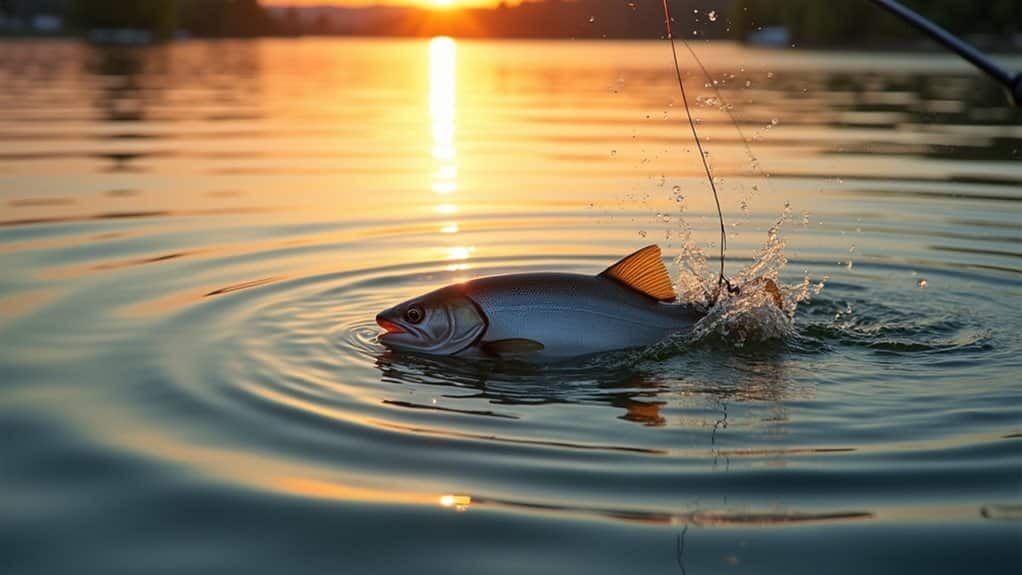
Fish can suddenly stop biting for a variety of environmental reasons that influence their feeding behavior. Changes in water temperature, the time of day, or shifts in fish behavior can signal that they’re less active or feeling cautious.
These factors cause fish to move to different depths or areas, reducing their interest in bait and affecting feeding patterns.
How Fish Learn to Avoid Baits: And What You Can Do About It
Repeatedly catching fish on the same types of bait or lures can teach them to recognize and avoid these familiar signals, especially in heavily pressured waters. Fish learning about bait avoidance leads to behavioral adaptations, making them more cautious. To counter this, try varying your fishing techniques, changing lure colors, or presentation methods to re-engage wary fish and overcome their learned avoidance. Adjusting your rod action to better match the lure and technique can also improve sensitivity and effectiveness in eliciting strikes from cautious fish.
How Water Temperature and Tides Impact Fish Activity
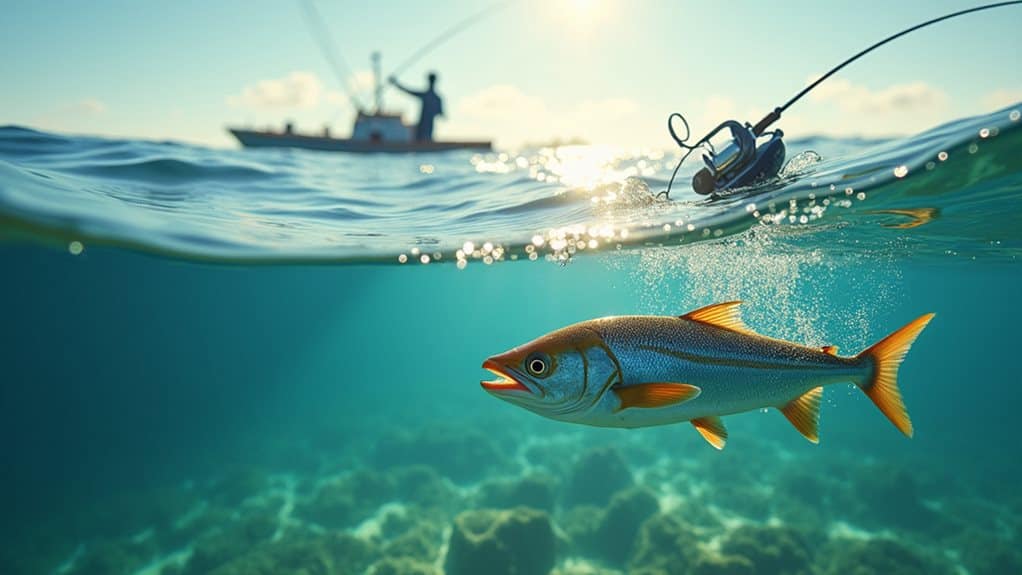
Water temperature considerably influences fish activity, with most species feeding best within a moderate range, like 65-75°F.
Tidal movement also plays a key role; strong flows during rising or falling tides tend to concentrate bait and trigger feeding, while slack tides often see fish becoming less active.
Sudden changes in either temperature or tide can cause fish to temporarily stop feeding, affecting your chances of a good catch.
Additionally, understanding regional lifespan differences can help anglers identify when fish are more likely to be actively feeding based on the typical conditions of that area.
Water Temperature Effects
Changes in water temperature, often influenced by tides, play an essential role in determining fish activity levels. Fish activity and feeding behavior shift with temperature fluctuations, as rising or falling tide effects bring in warmer or cooler water.
Sudden temperature changes can cause fish to become inactive or move, impacting your chances of a successful trip.
Tidal Movement Influence
Tidal movement plays a significant role in shaping fish activity, as the shifting of water levels and currents directly affects their feeding patterns and behavior.
During slack tides, when water movement is minimal, fish tend to reduce feeding, decreasing bite rates.
Strong tidal currents can either stimulate or suppress feeding, depending on whether prey is brought in or fish seek shelter.
Signs That Fish Are Spooked or Cautious
When fish suddenly stop biting or retreat from your area, it’s often a sign they’ve been spooked or are feeling cautious. Look for behaviors like quick escapes, refusing to bite after being disturbed, or lingering near cover, which indicate heightened alertness. Recognizing these signs can help you adjust your approach to improve your chances of a successful catch. Sometimes, the presence of noise or vibrations can disturb their environment, making them more hesitant to bite, so observing water resistance and disturbances can be crucial.
Signs of Fish Caution
Fish often give subtle signals that they’re cautious or spooked, especially when they sense danger or disturbances nearby.
Reduced bite activity, behavior changes like hiding or lingering in cover, and a sudden halt in feeding indicate fish caution.
Spooked fish detect vibrations and chemical cues, leading to increased wariness and decreased feeding, signaling you to adjust your approach.
Fish Behavior Changes
Sudden noises, rapid movements, or shadows can quickly alert fish to potential danger, causing them to change their behavior considerably.
When fish are spooked, their fish behavior shifts—ceasing biting, retreating from water disturbance, or locking their jaws despite tempting bait.
Recognizing these signs helps you understand when fish are cautious and adjusting your approach becomes essential.
When Are Fish Most Likely to Bite? Timing and Tides Explained

Timing plays a crucial role in successful fishing, as most fish are most active during specific parts of the day that align with their natural feeding routines. A good understanding of rigging techniques and how they influence presentation can help anglers capitalize on these feeding windows. Peak feeding times occur in early morning and late evening, influenced by tides. Fish activity drops during midday or in extreme temperatures, so understanding tides and seasonal patterns helps target prime fishing windows.
Practical Tips to Break Fish Caution and Get Bites Again
When fish become cautious or hesitant to bite, adjusting your approach can make a significant difference. Changing your lure type, size, or color can help attract more fish to bite. A sophisticated braking system can also improve casting accuracy and prevent backlash, making your presentations more precise. Slowing your retrieval and using stealthy presentations can reduce spooking nearby fish. Moving to a different location and avoiding fishing at the wrong time also increases your chances of success.
Final Note
Understanding why fish stop biting involves recognizing changes in water conditions, fish behavior, and environmental cues. By observing signs of caution, adjusting your bait or timing, and considering water temperature and tides, you can improve your chances of success. Consistently applying these perspectives helps you adapt to fish’s changing habits. With patience and informed strategies, you’ll increase your likelihood of catching fish, turning quiet trips into productive fishing experiences.


