
Always plan ahead by checking trail conditions and packing the 10 essentials, including reusable gear to cut down on waste. Stick to durable surfaces like rock or packed dirt, stay on marked trails, and camp at least 200 feet from water. Pack out all trash, food scraps, and personal waste—leave nothing behind. Yield to others on the trail, keep pets leashed, and use quiet, shielded lighting after dark. You’ll find even more ways to enjoy the outdoors responsibly with a few simple habits.
TLDR
- Always stay on marked trails and durable surfaces to protect vegetation and prevent soil erosion.
- Pack out all trash, including food scraps and sanitary waste, to keep nature clean and safe for wildlife.
- Camp at least 200 feet from lakes and streams to minimize impact on water sources and riparian zones.
- Be respectful to others by keeping noise low, using headphones, and following designated quiet hours.
- Yield to hikers and horses, pass on the left, and keep your group small to reduce trail congestion.
Plan Ahead: The First Leave No Trace Principle
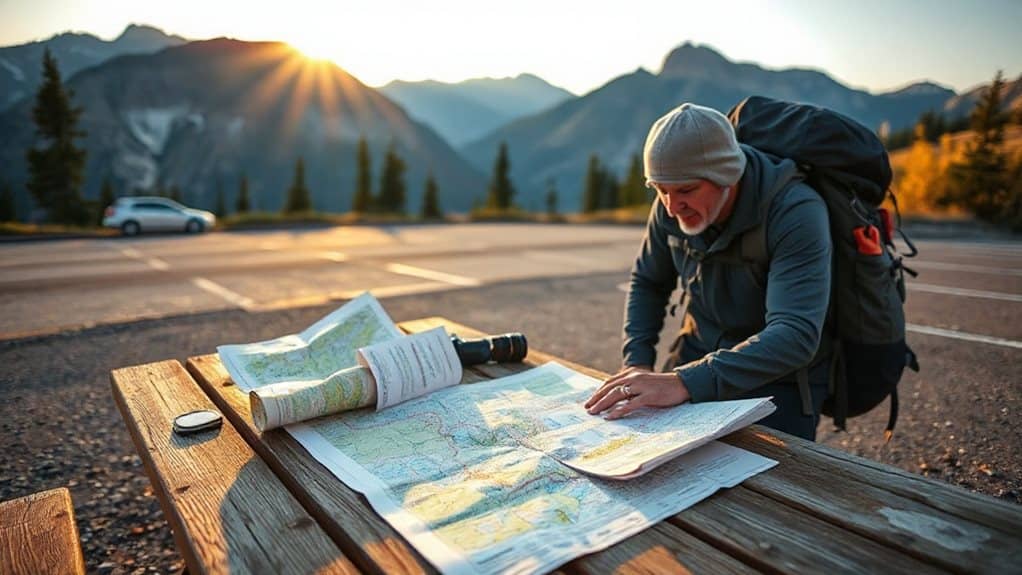
Before you hit the trail, taking time to plan ahead sets the foundation for a safe, enjoyable, and low-impact outdoor experience.
Research area rules, weather, and trail conditions, then pack the 10 essentials.
Share your itinerary, choose less crowded times, and know how to store food and manage waste.
Smart prep means you stay free to discover responsibly.
Proper planning helps minimize your impact on the environment and ensures safety for everyone involved, reinforcing the Leave No Trace mission. Consider traveling in small groups to reduce trail erosion and campsite impacts.
Stay on Durable Surfaces to Protect Ecosystems
You’ve done your homework—checked the weather, packed the essentials, and shared your plans—so now it’s time to hit the trail with care.
Stick to established paths and durable surfaces like rock, gravel, or dry grass to protect fragile soils and vegetation. Avoid shortcuts, walk single file, and camp at least 200 feet from water.
Every step matters—your choices keep nature intact for others to uncover freely. Be sure to follow Leave No Trace principles to minimize your impact on the environment.
Pack Out Everything: Leave No Trace of Waste
Leaving nature as you found it starts with carrying out every bit of waste you bring in—and some you don’t.
Pack all trash, food scraps, and litter, including micro-trash. Bury toilet paper only if necessary, but pack it out in arid areas. Always pack out wipes, tampons, and pads.
Disperse strained wastewater 200 feet from water sources.
Plan ahead, minimize waste, and leave each place cleaner than you found it.
Use reusable containers and utensils to minimize waste and reduce single-use trash on the trail, which supports sustainable hiking practices and cuts down landfill contributions.
Share the Trail Courteously With All Users
When you hit the trail, making space for others isn’t just polite—it’s essential for safety and enjoyment for everyone.
Yield to hikers and horses, keep right, and pass on the left with a clear “On your left.”
Slow down on blind corners, stay aware, and step aside when stopping.
Share the trail with respect, and you’ll keep it open, safe, and welcoming for all.
Always carry a basic first aid kit and know how to use it to handle common injuries like cuts and sprains first aid kit.
Preserve Natural Quiet and Night Skies
Turn off unnecessary lights and use warm-colored, shielded lighting below 3000 K to keep the night sky visible and protect wildlife.
Speak softly, use headphones, and avoid loud noises so you don’t disrupt animals or other visitors enjoying the quiet.
Consider using park shuttles or carpooling to reduce emissions and traffic impact, which helps preserve natural areas and visitor experience with park shuttles.
Minimize Light Pollution
Think of the night sky as a shared resource—one that’s quickly fading from view thanks to the steady glow of artificial light.
You can help by using fully shielded, downward-facing fixtures that reduce skyglow. Choose warm-colored, low-brightness lights (3000 K or less), and install timers or motion sensors to limit use.
Shielding, smart color, and control cut wasted energy, protect wildlife, and keep stars visible—simple steps that make a real difference.
Respect Natural Soundscapes
While you’re out hiking, camping, or simply enjoying a quiet moment in nature, remember that sound travels farther than you might think—carrying your voice, music, or gear noise well beyond your immediate surroundings.
Keep your voice low, avoid playing music on speakers, and minimize loud gear noises. Respect quiet hours, use earbuds, and let natural sounds dominate.
You’ll protect wildlife, preserve solitude for others, and help keep wild places truly wild.
Keep Nights Dark And Quiet
When you’re out under the open sky, the sounds of nature aren’t the only thing worth preserving—so is the darkness. Use red or amber lights, keep beams low and shielded, and turn off lights when not needed.
Avoid bright screens and white LEDs—they ruin night vision and stargazing for everyone. Point camp lights downward, skip string lights, and respect quiet, dark spaces.
Store Food the Leave No Trace Way
Keep your camp safe and wildlife wild by storing food the Leave No Trace way—because a well-secured campsite protects both you and the animals. Store food, smellables, and trash in bear canisters or hang them properly 200 feet from camp.
Repackage meals, pack out all waste, and follow local rules to keep nature wild and free.
Camp Responsibly: Fires, Pets, and Site Care
Choose an established campsite and keep your tent, gear, and activities within designated areas to protect the surrounding environment.
Build fires only in approved rings, keep them small, and never leave them unattended—always extinguish them completely with water and dirt.
Keep your pet leashed, away from flames, and clean up after them to guarantee a safe, respectful camp experience for everyone.
Camp Within Boundaries
While enjoying the peace and beauty of the outdoors, you play a key role in preserving it by camping only where it’s allowed and following site-specific rules.
Stick to designated sites, obey all signs, and respect setbacks from water and trails.
Keep pets leashed, control noise and light, and avoid expanding your footprint—this protects nature and guarantees everyone, including wildlife, can enjoy the wild freely and safely.
Manage Fires Wisely
When you’re out in the backcountry, a campfire can be a welcome source of warmth and light, but it also carries real responsibility—one that starts with understanding both the risks and the rules.
Keep fires small, 25 feet from tents and trees, and use existing rings. Clear a 10-foot zone, drown flames completely, and always pack a shovel and water.
Leash And Clean Pets
You’ll usually find that keeping your pet leashed and your campsite clean isn’t just about following rules—it’s about respecting nature and other visitors while ensuring a safe, enjoyable experience for everyone.
Keep your dog on a six-foot leash, clean up waste promptly with packed poop bags, and never leave pets unattended.
Use ID tags, stay updated on vaccinations, and dispose of waste properly to protect the environment and fellow campers.
Minimize Group and Gear Impact
Keep your group tight and your footprint smaller by sticking to established limits and practices that protect the places you love to uncover.
Follow group size rules, stay on durable surfaces, and keep gear off trails.
Move single file when passing, pack out all trash, and avoid loud noises.
Choose less crowded routes and times, use existing campsites, and keep lights and colors low to blend in.
Final Note
You’ve got the basics down, and that puts you ahead. By planning ahead, staying on trails, packing out waste, and respecting others, you protect nature and enhance everyone’s experience. Remember to keep noise low, store food properly, and camp wisely. Small choices add up—your actions matter. Follow these simple rules, and you’ll leave places better than you found them, every time. Happy exploring!


