
You see animals out at dusk because the low‑light twilight lets them dodge the heat of day and the peak hunting times of many predators while still seeing enough to move. Their eyes, rich in rods and sometimes a tapetum lucidum, pick up dim silhouettes, and their dark fur or feathers blends into the shadows, making them harder to spot. Insect swarms also peak at sunset, providing abundant prey for birds and bats, and the cooler temperatures reduce metabolic costs. If you keep going, you’ll uncover even more about how moonlight and temperature shape these patterns.
TLDR
- Dusk offers lower temperatures and reduced heat stress, allowing animals to conserve energy while remaining active.
- Dim light blurs outlines, giving prey better camouflage and reducing predators’ visual precision, creating a safety buffer.
- Many species have rod‑rich retinas or tapetum lucidum, enhancing low‑light vision and enabling efficient foraging at twilight.
- Insect swarms peak at sunset, providing abundant prey for predators that synchronize their hunting with this resource surge.
- Competition is minimized because diurnal animals rest and nocturnal species are still inactive, granting crepuscular animals exclusive access to food and habitat.
What Does “Crepuscular” Mean and Why Does It Matter?
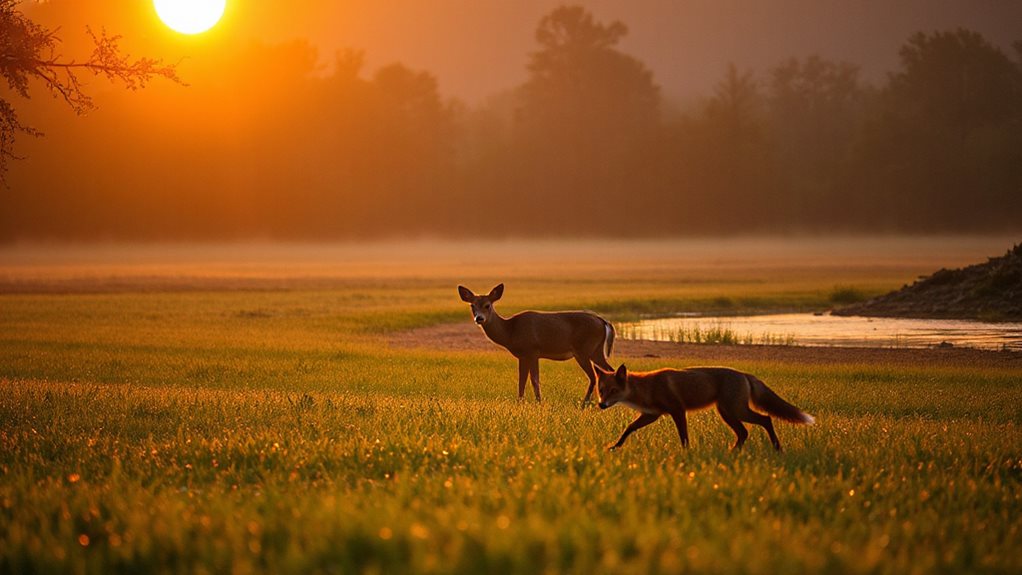
What does “crepuscular” actually mean, and why should you care? It describes activity that peaks during dawn and dusk, the twilight windows between full day and night. You’ll notice matutinal (dawn) and vespertine (dusk) patterns, sometimes both, as animals exploit low‑light conditions. This timing avoids midday heat, sidesteps peak predator hours, and utilizes superior twilight vision, giving you freedom to observe nature when it’s most active yet least disturbed. Crepuscular behavior often serves as an anti‑predator adaptation. Many crepuscular species also time movements to coincide with optimal foraging and habitat use informed by structure and cover, similar to how anglers match gear to conditions using a Texas rig.
Why Twilight Offers a Safety Net From Predators
Ever wonder why many animals sprint out of sight just as the sun dips below the horizon? You’ll find twilight creates a safety net because dim light blurs outlines, letting prey blend into shadows while predators lose visual precision.
Activity shifts to these low‑light windows, reducing overlap with peak hunting times, lowering competition, and offering brief, cooler periods where vigilance can be maintained without constant threat. Many species also time activity to coincide with shifts in prey availability, such as increased feeding in shallow bays where cover and forage concentrate.
How Dim Light Balances Vision and Stealth for Hunters and Prey
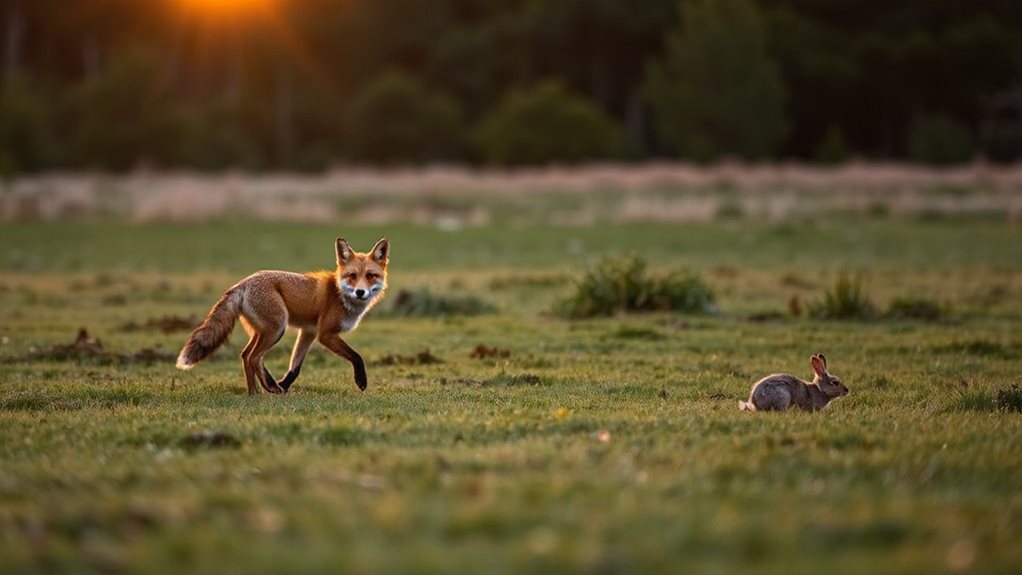
You’ll notice that dim light lets hunters see enough detail to track prey while still keeping them hidden, because the low photons illuminate both camouflaged fur and subtle movements.
Your eyes, like those of many nocturnal mammals, gather more light through a tapetum and rod‑rich retina, giving you a clear image at only a fraction of daylight intensity.
This balance lets predators time their approach and lets prey time their escape, syncing their actions with the brief moments when light is just enough to guide but not to reveal.
Low-Optimized Vision
How does dim light shape the way hunters and prey see each other at dusk?
You’ll notice rodents, cats, owls and deer rely on rod‑dense retinas that turn scarce photons into black‑and‑white silhouettes, sacrificing color for motion detection. Their large pupils and tapetum lucidum bounce light back, amplifying faint cues. After twenty minutes of darkness, rhodopsin peaks, letting them track subtle shifts while staying stealthy.
Camouflage Through Dim Light
Low light turns the night into a game of silhouettes and motion, where hunters and prey both rely on a delicate balance of vision and stealth. Your eyes use rod‑heavy retinas, vertical slits, and tapetum lucidum mirrors to gather and recycle every photon, sharpening edges while blurring color. This lets you spot movement, stay hidden, and thrive in dusk’s dim glow.
Predator‑Prey Timing Sync
Ever wonder why dusk feels like a secret meeting place for hunters and their quarry? You’ll see predators and prey syncing their schedules, because dim light lets hunters spot moving targets while keeping them partly hidden, and it forces prey to balance foraging with stealth. This twilight balance maximizes hunting success, reduces predation pressure, and creates a rhythmic dance that sustains both sides.
Why Twilight Lowers Competition for Crepuscular Species
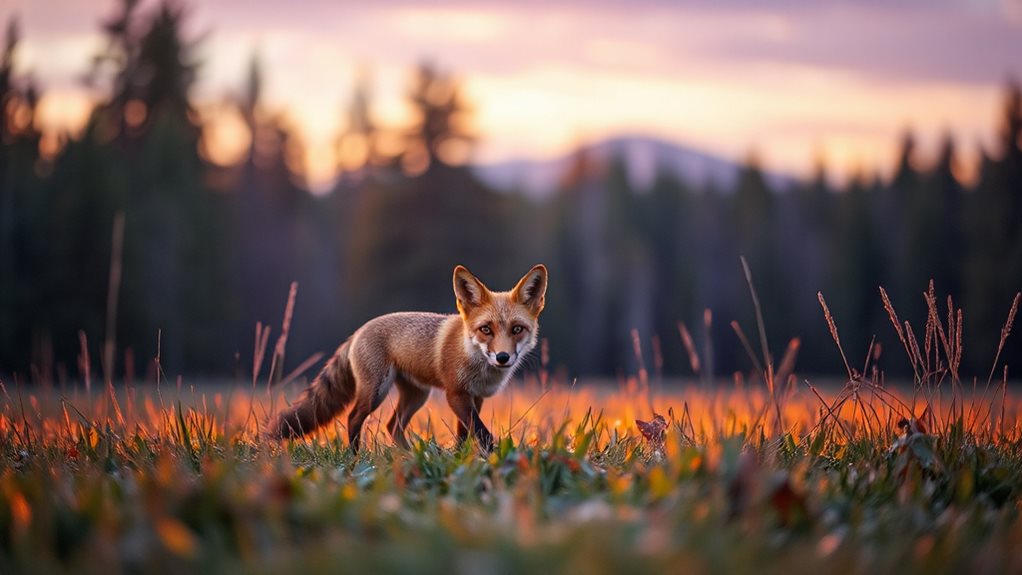
Why does twilight give crepuscular species a competitive edge? You find diurnal rivals already resting, nocturnal opponents still asleep, and predators shifting focus elsewhere, so you avoid peak hunting hours. The dim light cloaks you, while your eyes adapt to low‑light vision. Resources become yours with less interference, temperatures stay comfortable, and wind remains mild, letting you forage freely and efficiently. Kayaks are often lighter and easier to transport, making them popular for recreational access to remote waterways and recreational kayaks for beginners.
How Insect Peaks at Twilight Drive Predator Foraging
You’ll notice that insect swarms surge at dusk, creating a dense cloud of prey that predators can exploit.
By syncing their hunting schedule with this twilight bounty, hunters like nightjars and bats maximize energy efficiency, catching more food with less effort.
This timing alignment means you predator see a clear link between the insect peak and the predators’ foraging success.
Lighter foraging strategies also help predators conserve energy during the hunt, a principle similar to how lightweight design benefits backcountry ski travel.
Insect Swarms at Dusk
Most insect swarms erupt at dusk, when the fading light, mild temperatures, and low wind create perfect conditions for males to gather in dense, synchronized clouds above visual landmarks such as ground markers, water pools, or hilltops.
You’ll notice them peaking within two hours, their tight formation shifting with sudden light changes, while low wind and dimming light keep them stable, enhancing mating chances and ensuring survival under twilight’s calm.
Predator Timing Synchronization
How do predators know when to strike? You watch insect twilight peaks, then align your hunting.
to dusk’s surge of mosquitoes, moths, and beetles.
Nightjars and bats concentrate foraging when aerial biomass spikes, using circadian cues that amplify CO₂ persistence.
Crepuscular timing reduces competition, syncs with prey activity, and maximizes success while preserving freedom to roam.
Energy Efficiency in Foraging
Capture the surge of twilight insects, and you instantly see why predators flock to the dusk sky. You notice that insects peak at sunset, offering abundant, visible prey, so nightjars, bats, and Myrmecia increase foraging by 50‑70% compared with darkness. This timing maximizes capture efficiency, cuts energy per bite, and lets colonies stock up before nocturnal competitors fade.
How Moon Phases and Streetlights Change Twilight Schedules
Ever wonder why the sky seems to dim or brighten at different times of night? Moon phases shift twilight schedules; a full moon lights plains, letting wildebeests venture out, while new moons force them into safe zones. Streetlights mimic lunar glow, confusing predators and prey alike. You’ll notice gazelles sprint after moonrise, zebras stir before it, and urban lights blur natural cues, reshaping crepuscular rhythms. Camping choices like using portable stoves and staying on designated sites can reduce artificial light and protect nighttime habitats.
How Temperature at Dawn and Dusk Benefits Crepuscular Animals
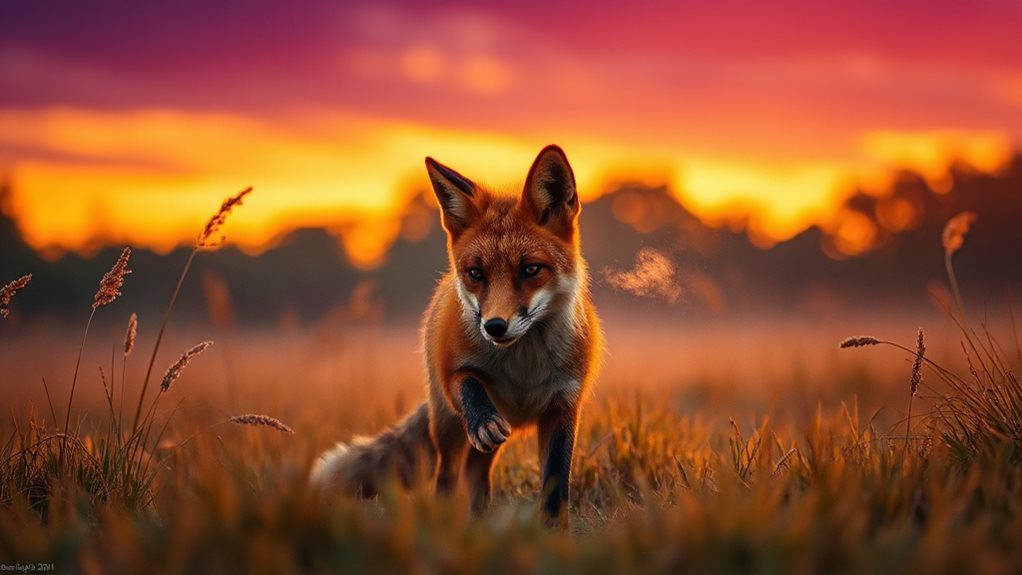
Why do many animals choose the thin line between night and day to move about?
You’ll find that dawn and dusk bring moderate warmth that avoids scorching midday heat, letting crepuscular species forage without overheating.
Cooler air lowers metabolic costs, so mule deer, beetles, and peccaries conserve energy while still seeing enough light.
This thermal sweet spot also reduces predation risk and adapts to climate shifts.
Final Note
You’ve learned why many animals choose dusk: the dim light offers a safety net from predators, balances vision and stealth, reduces competition, and aligns with insect activity that fuels their diet. Moon phases and streetlights can shift these patterns, while cooler temperatures at sunrise and sunset make foraging more comfortable. Understanding these factors helps you appreciate the subtle reasons behind crepuscular behavior, revealing how nature fine‑tunes timing for survival.


