
Fresh air carries aroma compounds straight to your olfactory receptors, so you taste herbs, citrus, and vinaigrette more distinctly, while light breezes keep temperature balanced and prevent palate fatigue. Natural daylight makes colors pop, enhancing visual cues that signal flavor and nutrition, and the bright spectrum preserves true hues. A relaxed, low‑stress outdoor mood lowers cortisol, sharpening taste buds and amplifying sweetness. Novel settings boost attention and memory encoding, making flavors feel richer, and soft ambient sounds reduce distraction, letting you focus on each bite. Continue for deeper insights.
TLDR
- Fresh air dilutes indoor odors and carries aromas directly to the olfactory receptors, making flavors taste more distinct.
- Natural daylight enhances food colors, which heightens appetite and perceived flavor intensity.
- Outdoor settings lower cortisol and boost dopamine, sharpening taste perception and increasing hedonic enjoyment.
- Novel or multisensory environments heighten attention and mindfulness, allowing subtle flavors to be noticed.
- Light breezes and moderate temperatures improve aroma evaporation and prevent palate fatigue, keeping bites crisp and vibrant.
How Fresh Air Enhances Outdoor Dining Flavor
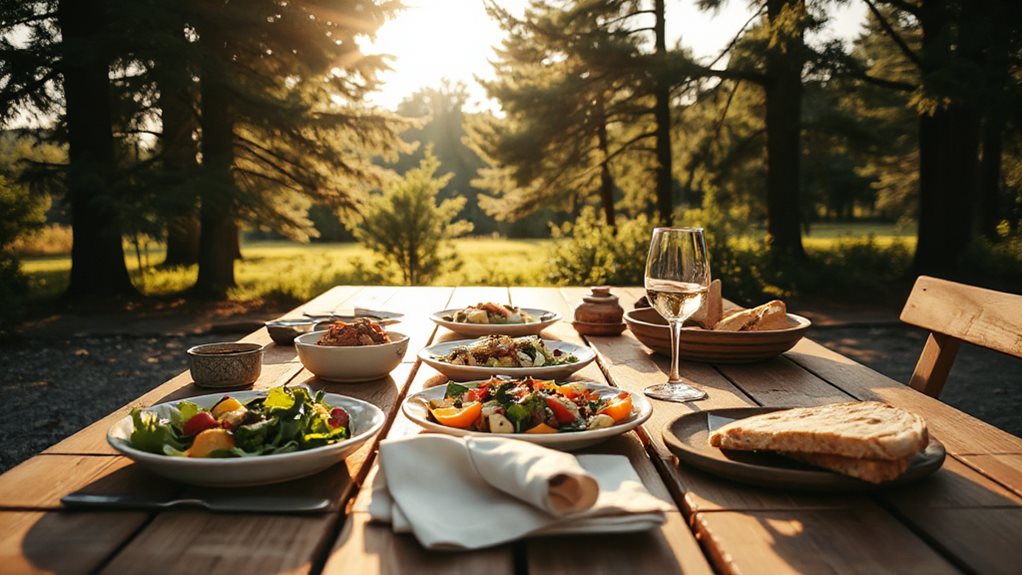
Ever wonder why a simple salad feels more lively when you eat it on a patio? Fresh air carries subtle aromas, dilutes indoor odors, and stimulates your olfactory receptors, letting you taste herbs, citrus, and vinaigrette more distinctly. Light breezes also keep temperature balanced, preventing palate fatigue, so each bite stays crisp, vibrant, and satisfying. The cabin’s noisy environment can dull sweet flavors while enhancing umami, showing how ambient sound influences taste perception. Turning off constant device syncing by using airplane mode can also help you stay present and notice flavors more keenly.
How Natural Light Improves Food Appearance and Taste
When you eat under natural daylight, the brighter colors of the food stand out, making your appetite rise and your mind anticipate richer flavors.
The sun’s spectrum preserves the true hues of each dish, so your brain receives accurate color cues that link to perceived nutrition and taste.
Even subtle shifts in light intensity can tweak how strongly you perceive flavor, helping you enjoy the meal more fully.
Brighter Colors Enhance Appetite
Why do meals seem more appetizing under bright daylight? You notice colors pop, true hues shining without distortion, so your brain registers freshness and quality. Natural light preserves vibrancy, making vegetables look crisp and desserts appear richer, which triggers stronger cravings.
Outdoor brightness contrasts artificial dimness, enhancing saturation and reinforcing healthy choices, while morning sun aligns circadian cues, subtly boosting your appetite.
Light Influences Flavor Perception
Bright daylight doesn’t just make colors pop; it reshapes how your brain interprets flavor. Warm, natural light—around 2700 K—softens glare, enhances sweetness in chocolate, and makes apples taste richer, while dimmer settings focus your senses, heightening gustatory intensity.
Outdoor illumination mimics these ideal conditions, so you enjoy deeper taste perception more vivid appearance, and a relaxed, inviting dining experience.
How Positive Mood Boosts Outdoor Dining Flavor
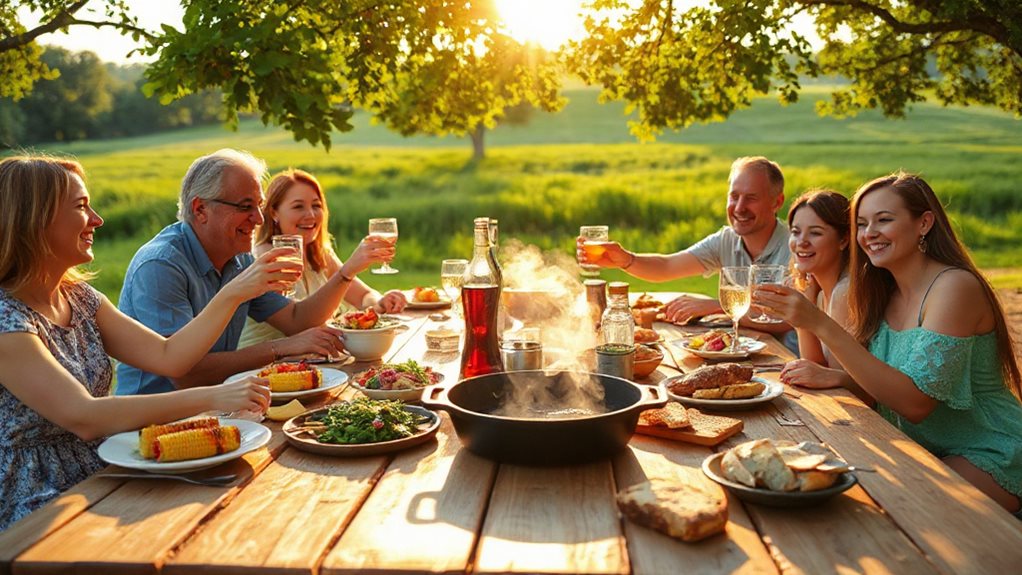
When you sit outside and feel relaxed, playful, and free, your brain releases dopamine and serotonin, which sharpen your taste buds and make flavors pop.
The lower cortisol you experience in nature lets you sense subtle aromas and textures that indoor settings often mute.
This upbeat, stress‑reduced state acts like a lens that amplifies every bite, turning a simple meal into a richer, more satisfying experience.
Soaking footwear briefly in water can also enhance comfort by softening straps and molding sandals to your feet, improving overall enjoyment of outdoor dining when you’re on the move and wearing comfortable sandals.
Dopamine‑Rich Mood
How does a sunny patio or a breezy park turn a simple salad into a taste sensation? When you relax outdoors, dopamine spikes, sharpening your taste buds and amplifying aroma. This neurochemical surge makes flavors feel richer, while serotonin lifts sensory awareness, letting you notice subtle notes. Fresh air carries scent compounds, natural light enhances visual appeal, and the playful setting deepens your enjoyment.
Stress‑Reduced Sensitivity
Why does a sunny terrace make a simple vinaigrette taste richer? You feel calmer when the breeze carries birdsong, and that reduced stress lets your palate notice subtle acidity and herbaceous notes. Studies show 20‑minute nature exposure drops cortisol, lowers heart rate, and eases muscle tension, so you experience food more vividly, savoring flavors without mental clutter.
Playful Emotional Lens
Do you notice that a sunny patio makes a dessert feel sweeter? When you’re relaxed, your brain amplifies sweet signals, so a lemonade tastes brighter and a berry tart feels richer. Warm daylight, playful chatter, and familiar scenery trigger positive affect, which boosts hedonic ratings and reduces perceived bitterness. Embrace those moments; the mood you carry outdoors directly flavors every bite.
How Novelty Increases Cognitive Engagement and Flavor
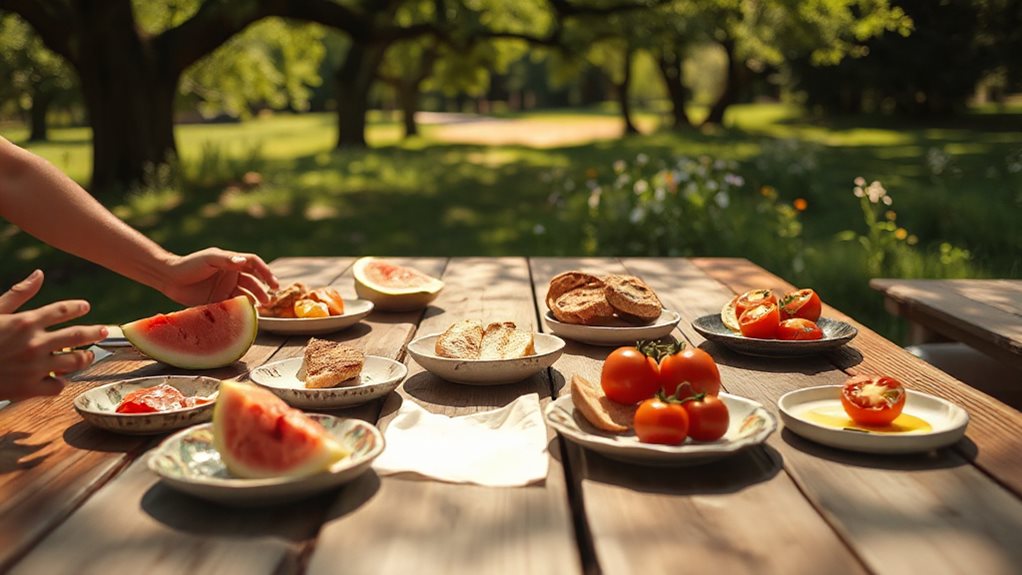
Ever notice how a new setting can make a familiar dish feel more exciting? Novelty cues sharpen your attention, so you notice flavors you’d otherwise miss. Unfamiliar packaging or a fresh backdrop triggers mindfulness, increasing sensory accuracy and memory encoding. Your brain’s sensory cortex and hippocampus fire, slowing time perception and deepening engagement, which translates into richer, more vivid taste experiences. Outdoor dining in places like Moab can amplify these effects by pairing unique scenery with memorable activities.
How Ambient Sounds Elevate Outdoor Meal Enjoyment
What role do ambient sounds play when you’re dining al fresco?
Soft background music sets a relaxed tone, masking distant traffic and chatter, letting you focus on flavors and conversation.
Light classical notes add a luxurious feel, while gentle jazz or upbeat pop matches a casual vibe.
Proper volume balances chatter and clinking glasses, extending your stay and enhancing mood, so the meal feels richer and more enjoyable.
Barrel swivels, with their smooth rotation and corrosion resistance, are an example of durable outdoor gear that can withstand exposure to the elements and maintain performance when left near dining areas barrel swivels.
How Outdoor Air Carries Aroma Directly to Your Nose
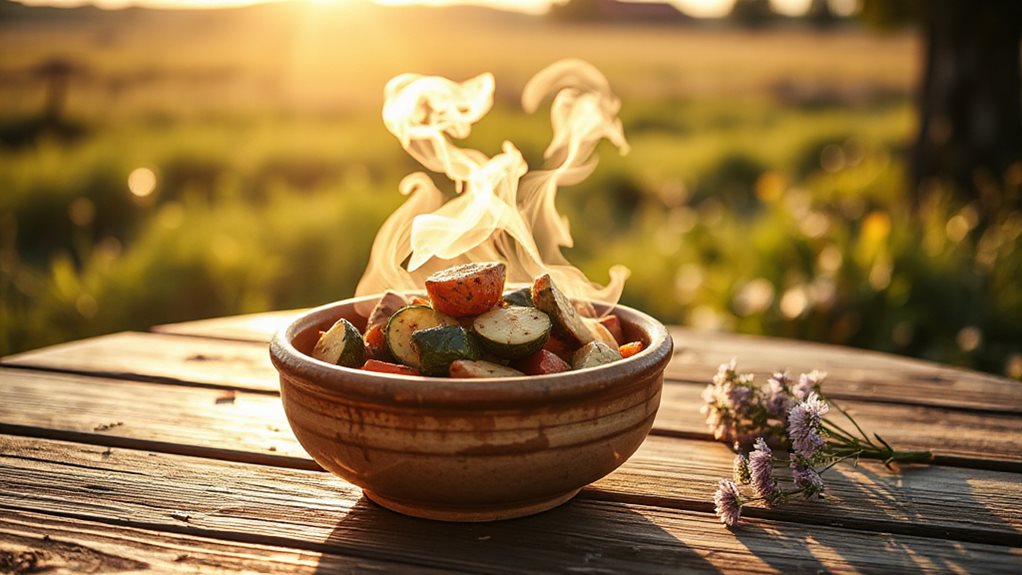
How does the breeze outside deliver a dish’s scent straight to your nose? The wind lifts volatile compounds, whisking them past your turbinates and straight into the olfactory epithelium, where they bind receptors faster than indoor air ever could.
Higher temperatures and lower humidity enhance evaporation, while constant airflow prevents stagnation, so you perceive richer, more immediate aromas with every breath.
Solo campers often carry essential gear like a first aid kit and water purification supplies to stay self-sufficient and safe while enjoying meals outdoors.
How Plate Texture Alters Sweetness Perception Outdoors
Why does a smooth plate make your dessert taste sweeter when you’re dining outdoors? You’ll notice that biscuits, hot chocolate, and coffee all rate sweeter on rounded, smooth surfaces, because the tactile uniformity reduces perceived crunch and bitterness, letting sweetness shine. Rough or angular plates introduce texture contrast, dampening sweetness and boosting intensity. Light‑colored or white plates also amplify dessert sweetness, while velvet‑like haptic textures can enhance wine’s perceived sweetness, giving you more freedom to shape flavor experiences.
How Outdoor Sunlight Beats Indoor Fluorescent Lighting for Taste
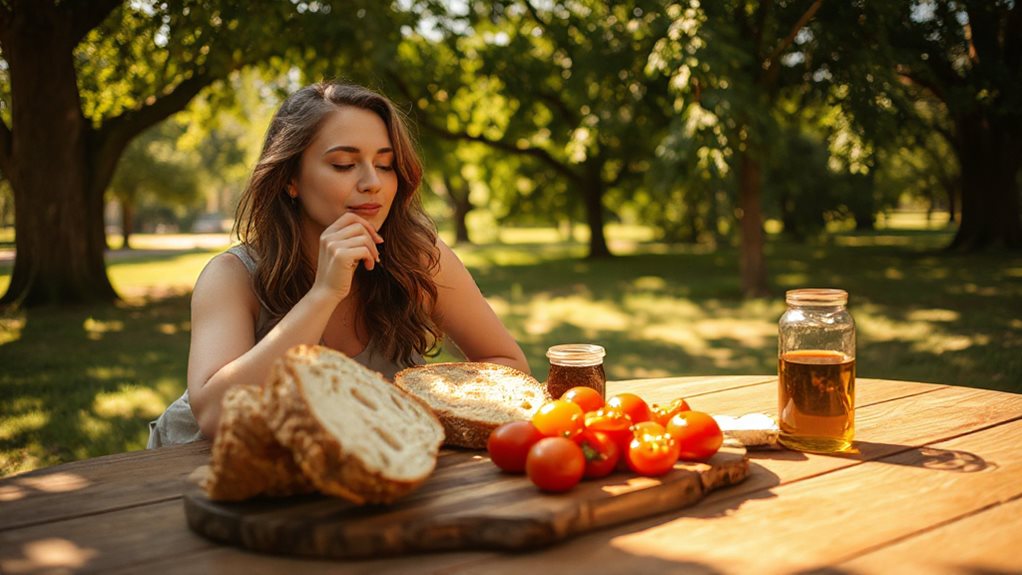
Ever notice how a bite of fresh fruit feels brighter under a sunny sky than at a kitchen table lit by fluorescent tubes?
Sunlight’s broad spectrum triggers natural oxidation, enhancing flavor depth, while fluorescent lights emit UV and visible rays that degrade proteins, create off‑odors, and flatten taste.
Outdoor light preserves visual appeal, keeps sugars vivid, and avoids the “sunlight‑taste” off‑flavor that indoor lighting induces.
How to Recreate Outdoor Sensory Benefits at Home
Ever wonder how you can bring the vivid sights, sounds, and scents of a garden into your kitchen? Hang string lights, play curated nature soundtracks, and diffuse earthy or floral essential oils while you cook. Add textured placemats, use fresh herbs for visual pop, and move around the space—stretch, reach, lift—to engage proprioception. These simple cues replicate outdoor multisensory richness, boosting taste and relaxation.
Final Note
By savoring meals outdoors, you tap into fresh air, natural light, and ambient sounds that sharpen perception, elevate mood, and carry aromas straight to your nose, all of which amplify flavor. The subtle changes in plate texture and sunlight versus fluorescent lighting further enhance sweetness and overall taste. Replicating these sensory cues at home—opening windows, using daylight lamps, and playing gentle background sounds—can give you a comparable lift, letting you enjoy a richer, more engaging dining experience wherever you are.


