
You notice sunsets feel richer in nature because the open horizon lets the sky’s colors spread without artificial light pollution, and surrounding trees, water, or terrain enhance contrast, making the hues appear up to 30% more vivid than in a city. Evolutionary, suggest early humans paused at dusk for safety cues and dopamine rewards, reinforcing the habit; today, late‑day light also triggers vitamin D production and stress‑relieving hormones, while unobstructed vistas add measurable property value and dominate social‑media posts, so you’ll see why the experience feels uniquely rewarding, and more you explore you’ll uncover practical tips to maximize it.
TLDR
- Natural horizons provide unobstructed views, allowing the full spectrum of colors to emerge without artificial interference.
- Open outdoor settings enhance dopamine release, reinforcing the evolutionary habit of watching dusk for safety and well‑being.
- Exposure to late‑day light boosts vitamin D and serotonin, improving mood and physiological health during sunset.
- Sunset vistas increase property and experiential value, as studies show higher market premiums for nature‑linked views.
- Social media data reveal a strong preference for sunset images, indicating collective enjoyment of natural sunset experiences.
Why Our Ancestors Valued Dusk Light – Evolutionary Roots of Sunset Awe
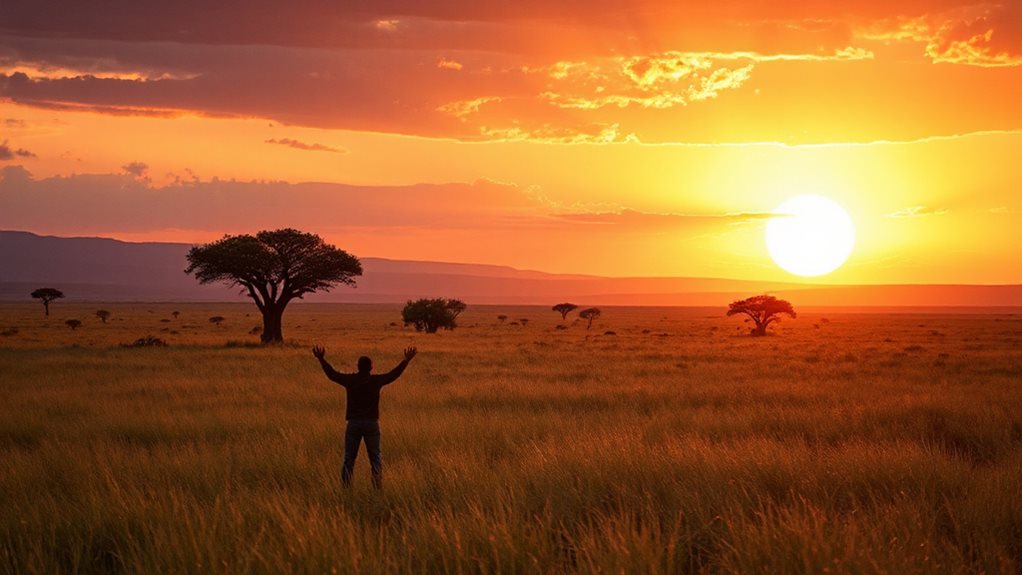
Why did early humans pause at dusk, letting the sky’s fire‑kissed hues wash over them? You sensed red sunsets as safety signals, a bright cue that high‑pressure weather was coming, so returning to camp felt rewarding. That glow released dopamine, reinforcing the habit. Your ancestors linked the view to health, fertility, and survival, making dusk a natural, freeing ritual. The evolutionary aesthetic of sunsets likely arose because the red sky signaled a stable environment conducive to camp safety. Choosing camp sites on higher ground reduced flood risk and reinforced the safety association.
Science of Well‑Being: Vitamin D, Stress Relief & Mental Health
Ever you step into the late‑day light, your skin begins a cascade of biochemical reactions that not only enhance vitamin D but also ease stress and lift mood. A brief midday sun dose—just minutes on exposed skin—boosts serum 25(OH)D, which regulates serotonin, reduces cortisol, and supports mental resilience.
Avoid glass, heavy sunscreen, or high latitudes in winter; instead, enjoy brief, regular outdoor moments for natural, cost‑free well‑being. Helmets also matter for outdoor safety, as wearing one can reduce head injury risk by up to 85%.
Economic Premium for Sunset Views – Willingness to Pay & Valuation
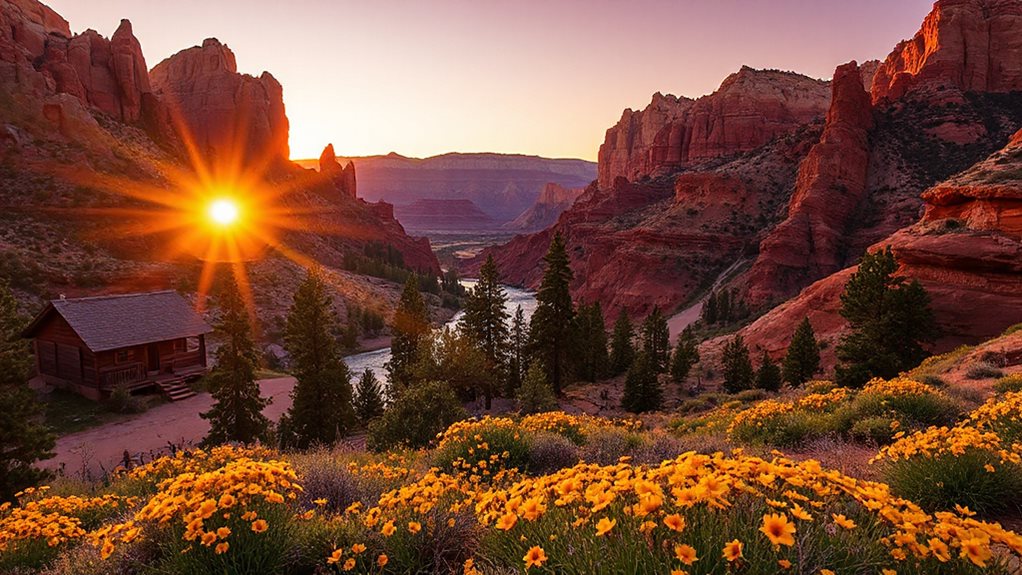
Do you realize that a sunset view can add a measurable premium to a property’s market price? You’ll pay 44 % more for nature overlooks, 30‑50 % extra for unobstructed hill vistas, and up to 75 % for top‑of‑hill panoramas. Elevation enhances value 9‑12 %, while partial obstructions cap it at 10‑30 %. Scarcity and exclusivity, especially near water, further inflate willingness to pay. Proper care and protection—like storing gear in cool, dark places to avoid UV damage—can significantly extend the life of outdoor equipment and preserve views.
Social Media Evidence of Sunset Popularity – Posts vs. Sunrises
Property premiums for sunset views illustrate that visual appeal translates into tangible market value, and the same appeal shows up vividly on social platforms. You’ll see Flickr’s 2.9 : 1 sunset‑to‑sunrise ratio and Instagram’s even higher 3.7 : 1, with millions of posts clustering near coasts and peaking at local sunset times. This data confirms that sunsets dominate online, giving you clear evidence of their popular pull. Regularly inspecting and maintaining outdoor gear, including checking tent poles for dents and cracks, helps ensure more reliable—and picturesque—nature outings.
How to Time Your Walks and Choose Sunset‑Friendly Locations for Maximum Mood Boost
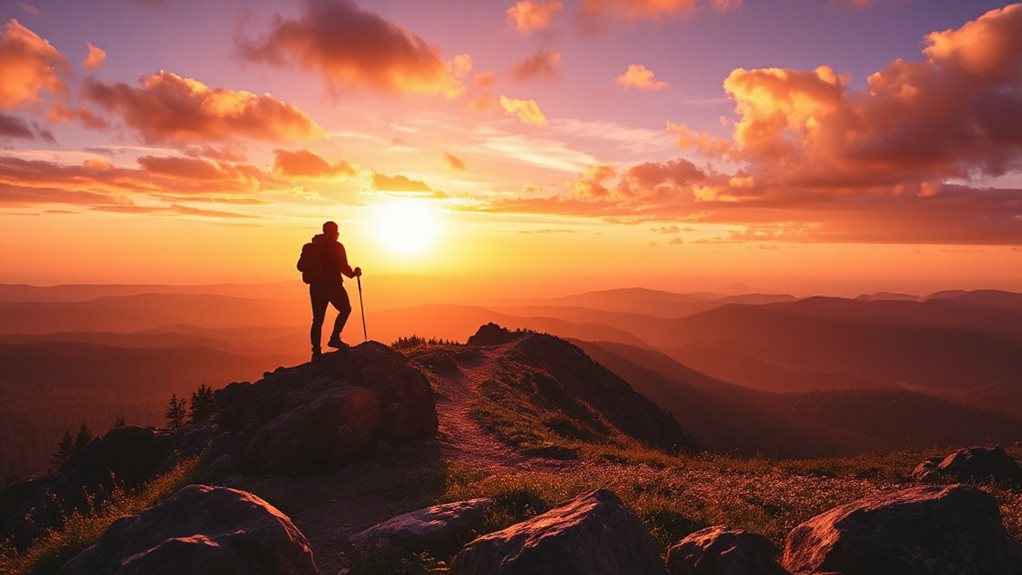
When you plan a walk to catch the sunset, aim to start 30–60 minutes before the sun dips below the horizon so you can experience the golden hour’s soft, warm light that enhances mood and photography alike.
Choose west‑facing paths—Hudson River Greenway at 72nd, Pier 64, or New River Gorge overlook—and arrive early to secure a spot.
Adjust for season, aim for 10‑15‑minute routes, and seek elevated vistas like Top of the Rock or Glacier National Park’s Sun Point for the best mood elevate.
Regular maintenance of gear, such as using a diamond-coated file for sharpening tools, helps ensure your equipment performs reliably on outdoor excursions.
Comparing Sunset vs. Urban Experiences – Awe, Value & Accessibility
Why compare sunset experiences in nature to those in the city? In natural settings, you’ll notice higher beauty scores, stronger awe, and a willingness to pay a premium for the view, especially where lakes or historic backdrops amplify the scene. Urban sunsets still impress, but they rank lower in wonder and value, and access often depends on geography, skyline constraints, and seasonal weather patterns.
Integrating Sunset Exposure Into Daily Wellness Routines
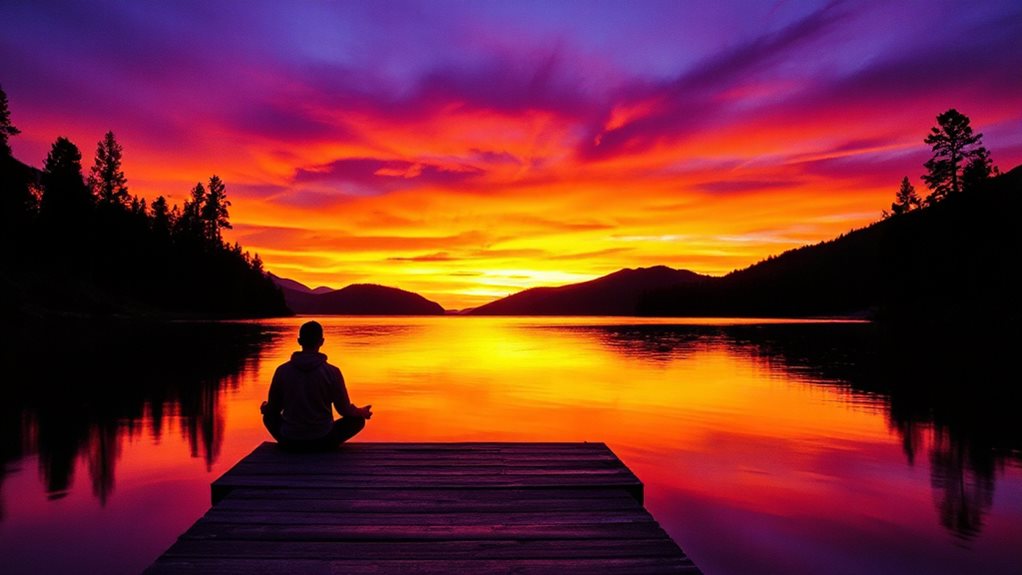
After exploring why natural sunsets outshine city skylines in awe and perceived value, let’s turn to how you can weave those golden moments into everyday wellness.
Spend 10‑15 minutes each evening under shade‑free dusk light, protect skin with SPF 15, a hat, and a shirt, then pair it with a morning walk.
This simple rhythm balances melatonin, elevates serotonin, and supports vitamin D, enhancing sleep, mood, and metabolic health.
Final Note
By embracing sunset walks, you tap into an ancient, evolutionary cue that calms the nervous system, enhances mood, and even supports vitamin D synthesis. The economic premium people pay for sunset vistas confirms their measurable value, while social‑media trends show a clear preference for dusk over dawn. Choose open, natural spots and time your stroll about 30 minutes before sunset to maximize the visual spectacle and health benefits. Integrating this simple ritual into daily life offers a low‑cost, high‑impact nudge to well‑being.


