
You hear a campfire crackle because moisture trapped in the wood’s cells vaporizes into steam, expands quickly, and bursts the cell walls, while the heat also breaks down cellulose, lignin, and resin, releasing gases that ignite in tiny pops; these rapid expansions act as impulsive sound sources that resonate mainly between 115 Hz and 345 Hz, giving the soothing, rhythmic “pop‑pop” you associate with fire, and if you keep exploring you’ll discover how wood type, seasoning, and fire layout further shape that sound.
TLDR
- Pyrolysis of wood’s cellulose and lignin releases gases that ignite, creating snapping sounds.
- Trapped moisture vaporizes into steam, building pressure that ruptures cell walls and produces pops.
- Rapid gas expansion during combustion acts as impulsive monopole sources, generating the crackling noise.
- Resin, sap, and volatile oils in woods like pine and cedar add extra steam‑driven snaps.
- Higher wood moisture (green wood) yields louder, more frequent crackles, while seasoned wood burns steadier with fewer pops.
The Science Behind a Campfire’s Crackle
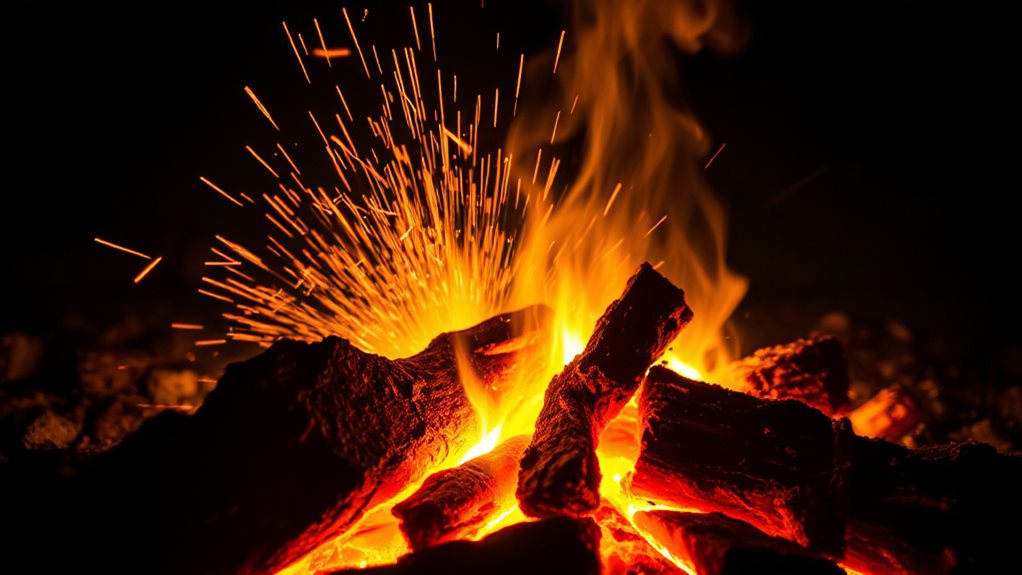
Ever wonder why a campfire crackles as it burns? You hear it because cellulose and lignin undergo pyrolysis, releasing gases that snap into orange flames, while trapped moisture turns to steam, building pressure that bursts into sharp pops. Rapid expansion of gases during combustion creates impulsive monopole sound sources that contribute to the crackling. Seasoned, kiln‑dried wood holds less water, so fewer steam pockets form, and efficient airflow burns the fuel cleanly, reducing crackling embers. Proper drying and storage of wood also limit moisture and prevent corrosion that can affect metal tools used around the fire.
How Rapid Gas Expansion Creates Campfire Crackle Pops
When the fire’s heat climbs, the gases trapped inside the wood’s cells expand at break, turning a quiet ember into a sharp pop.
You feel the pressure surge as carbon dioxide, carbon monoxide, and volatile compounds inflate 1,600‑fold, rupturing cell walls.
The sudden burst launches a pulse of air, vibrating the surrounding wood and producing a crisp, audible pop that punctuates the fire’s rhythm.
Early warning signs like shivering show how rapid physiological changes can signal danger, so small cues often precede bigger events.
How Moisture and Steam Bursts Produce Crackling
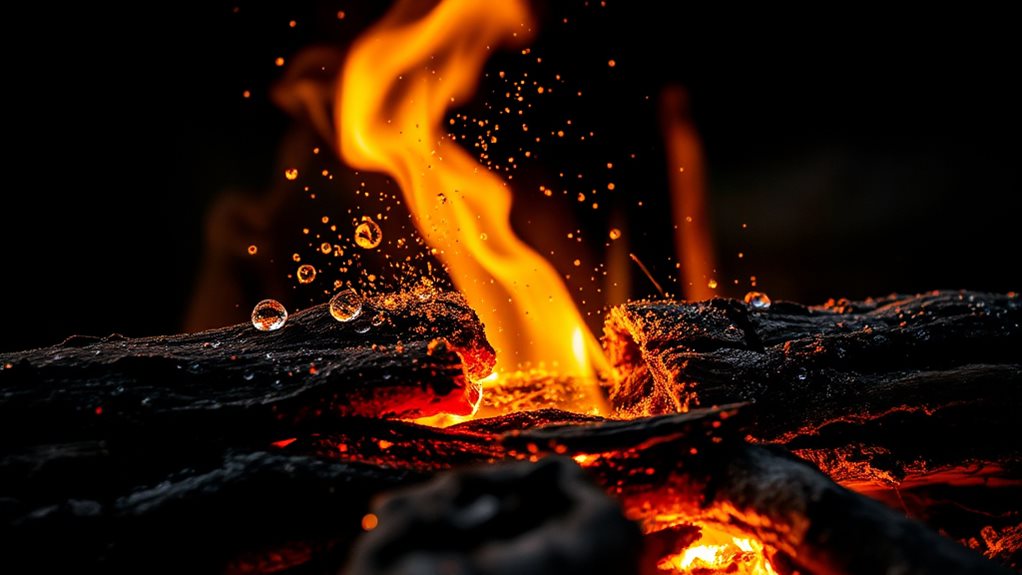
Why does a campfire sometimes sound like a crackling orchestra of tiny explosions?
You feel the heat, water trapped in wood pores turns to steam, expanding 1,600‑fold, pressure builds inside microscopic cells, and when the wood walls can’t hold it, they burst, releasing steam in a mini‑explosion.
The wetter the log, the more frequent and louder the pops, so drying wood reduces the crackle.
Some outdoor anglers report clear, open waters like those around Lake Cochituate make it easier to enjoy the sound of crackling fires while fishing.
Why Green Wood Crackles Louder Than Seasoned Wood
What makes green wood crackle louder than seasoned wood? You hear louder pops because its 50% moisture vaporizes rapidly, turning water into steam bursts that slam against the wood’s cells.
Seasoned wood, with under 20% moisture, burns hotter and steadier, producing fewer steam eruptions.
The extra creosote and cooler flame from green wood also cling to the flue, amplifying the crackle.
How Wood Cell Structure Amplifies Campfire Crackle
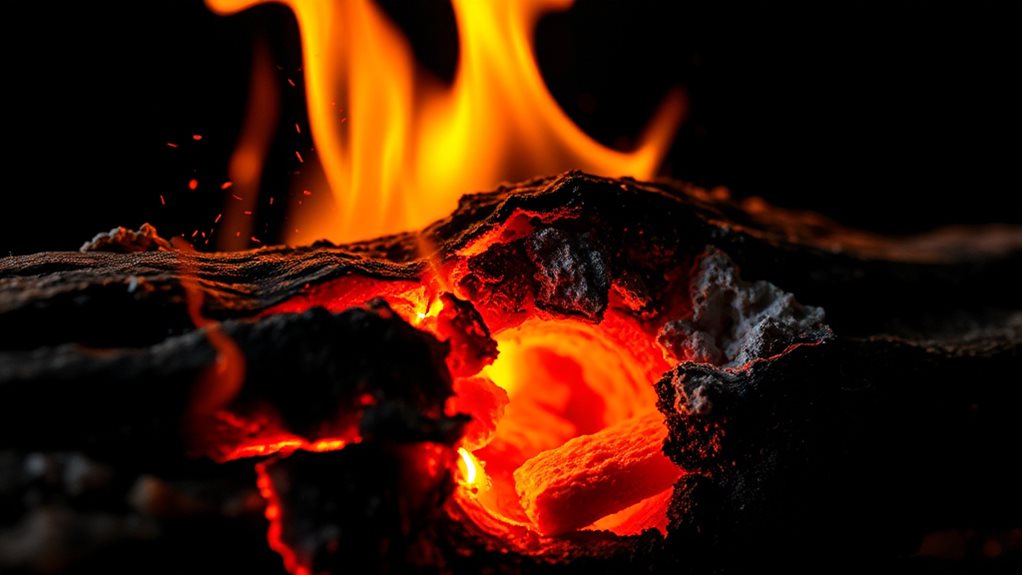
Green wood’s louder crackle isn’t just about moisture; the very designer of the wood’s cells turns that steam into audible pops.
You feel the layered fibers and capillaries acting like tiny pressure chambers, trapping water deep within pores.
When heat hits, steam expands, bursts cell walls, and releases gases.
Each rupture creates a pop, and neighboring cells follow, amplifying the crackle into a lively, freeing rhythm.
Try boots late in the day when feet are swollen to ensure a proper fit and prevent discomfort on the trail, especially when paired with merino wool socks.
What Frequency Range Makes Fire Crackle Soothing?
Ever wonder why a campfire’s crackle feels instantly calming? You’ll find the soothing zone sits between 115 Hz and 345 Hz, the range that syncs with alpha brain waves and promotes meditative focus.
A high‑pass filter around 150‑200 Hz trims low rumble, while gentle EQ preserves the crisp pops.
This band, especially 432 Hz, deepens relaxation without harsh hiss.
Inspect the speaker and audio gear after heavy use to check for internal damage that could affect sound quality.
How Resin and Sap Add Extra Snap to Campfire Crackle
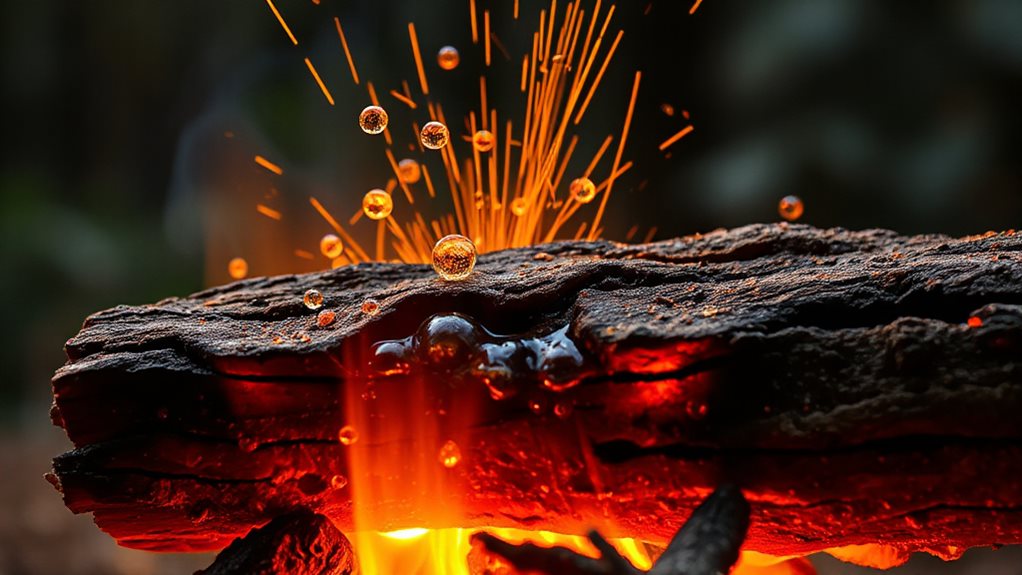
When you light a pine log, the resin inside heats up, turns into steam, and builds pressure until it bursts, creating that sharp snap you hear. The sap trapped in the wood fibers does the same, vaporizing quickly and adding extra pops as the steam forces its way out.
Because resin‑rich wood releases steam more often, you’ll notice a higher snap frequency compared to drier, low‑resin hardwoods.
Resin Boiling Snap
Why does a campfire sometimes crackle louder after you add boiled resin?
When you boil a 50/50 wax‑resin mix, the heat forces volatile terpenes and oils to vaporize, expanding inside wood fibers.
Those pressure bursts burst into audible snaps, and the high‑viscosity resin soaks uniformly, making each ignition pop.
This rapid vapor release, distinct from sap bursts, intensifies the crackle you hear.
Sap Vapor Burst
What makes a campfire crackle louder after you toss in sap‑rich wood is the sudden vapor burst that occurs when moisture‑laden sap and its embedded resin heat up so.
The sap vaporizes, pressure spikes, cell walls burst, and resin‑derived gases ignite, creating sharp snaps.
Pine’s resin‑dense pockets amplify the effect, while fresh cuts elevate intensity.
The rapid expansion produces pressure waves that sync with the flame, delivering that exhilarating crackle.
Snap Frequency Boost
Ever notice how a fire loaded with pine sap seems to snap and pop more often? The resin’s volatile oils ignite instantly, creating rapid oxidation bursts that crack into sharp pops. High‑resin species like Eastern white pine release spark‑filled bursts, extending the crackle rhythm.
Their sticky, moisture‑repelling sap burns hotter, sustaining snaps longer, so you hear a lively, free‑spirited blaze that feels truly untamed.
How Different Wood Types Change Crackling Character
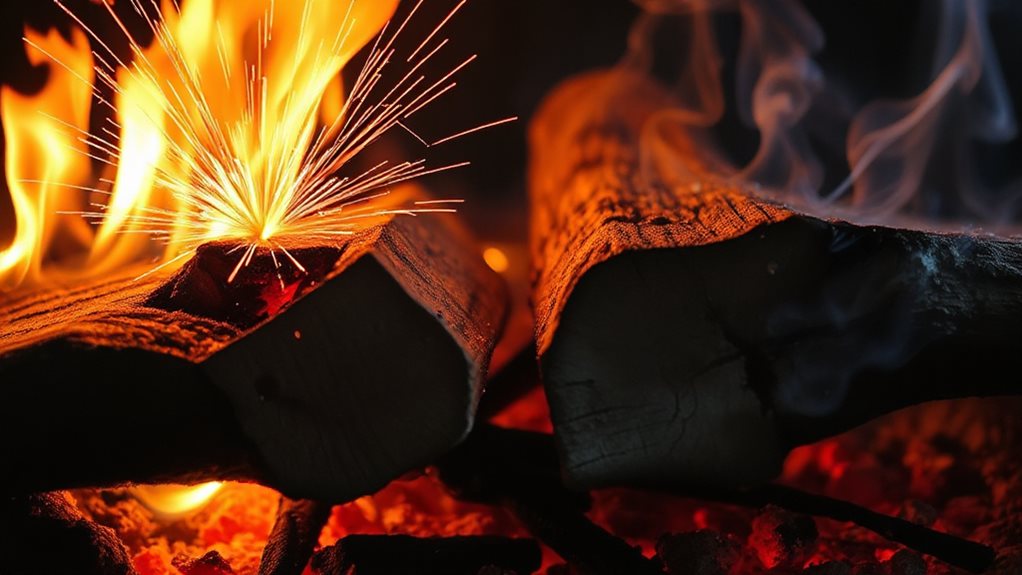
Which wood you choose determines how loudly your fire will speak, because each species brings a unique combination of density, resin, and moisture that shapes its crackling character. Oak and beech give steady, low‑pop flames; maple stays dense, birch offers bright sparks. Pine, cedar, and fir crack resin‑fuelled pops, while larch and dry hardwood keep smoke low and crackle minimal, letting you tailor your campfire’s voice.
Why Campfire Crackle Soothes the Body and Mind
How does a campfire’s crackle calm you? The rhythmic pop and hiss lower blood pressure, warm your muscles, and trigger serotonin, dopamine, and endorphins. You feel security as flickering light and sound merge, inviting a meditative state that eases stress. Evolution wired us to associate fire with safety, so you relax instinctively, while shared crackling sparks conversation, reducing loneliness and fostering belonging.
How to Maximize Crackle for a Cozy Campfire
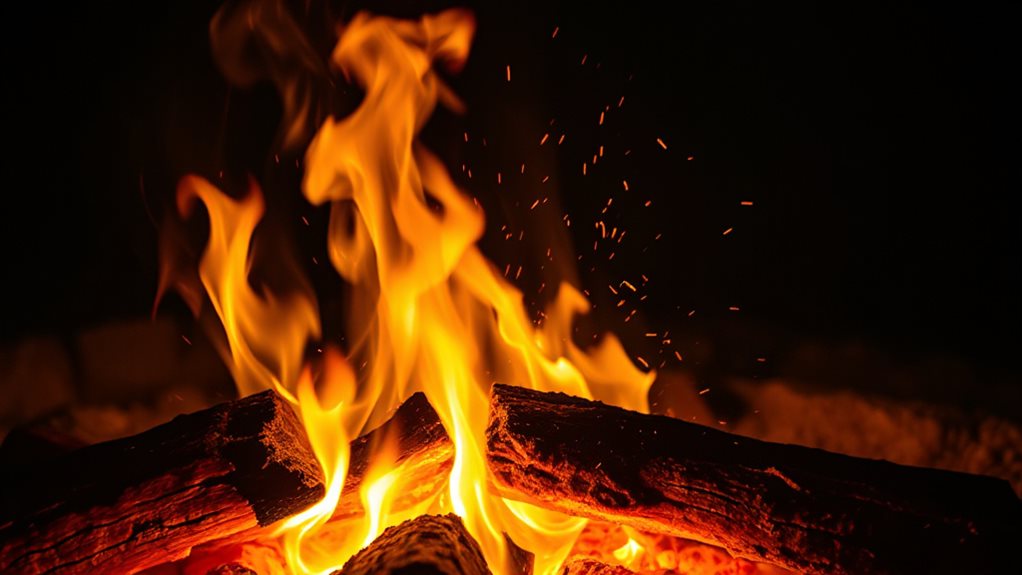
The soothing crackle you felt last night isn’t just a by‑product of heat; it’s a signal that the fire is burning efficiently, and you can amplify it with a few deliberate choices.
Use seasoned hardwood and pine, arrange a teepee or log‑cabin for airflow, bundle dry tinder, add kindling atop an upside‑down stack, and keep gaps for oxygen. Adjust as needed, and the crackle will stay rich and steady.
Common Misconceptions About Campfire Crackling
Ever wondered why the crackle of a campfire seems to carry so many myths? You might think louder pops forecast rain, or that only moisture creates the sounds, but wood’s internal moisture, trapped air pockets, and volatile resins all contribute.
Both hardwoods and softwoods crackle when damp, and the noise isn’t a safety signal—it’s just physics, not a weather or relaxation guarantee.
Final Note
Now’ve learned that a campfire’s crackle comes from rapid gas expansion, steam bursts, and the wood’s cellular structure, especially when green or resinous wood burns. Different species and moisture levels shape the sound, while the rhythmic pops can calm the mind and body. By choosing dry, seasoned wood, arranging logs for airflow, and adding occasional small sticks, you can amplify the soothing crackle, turning any fire into a cozy, sensory experience.


