You feel seasick because a boat’s rolling and swaying send rapid, multidirectional accelerations to your vestibular system while your eyes see a relatively stable cabin, creating a sensory mismatch that triggers nausea. The roll motion, especially at 0.8–0.4 Hz, overwhelms the inner ear, and the lack of a steady visual reference worsens the conflict. To prevent it, focus on the horizon, sit mid‑ship facing forward, stay upright, breathe fresh air, and consider scopolamine patches, ginger, or Sea‑Band wristbands; staying hydrated and avoiding strong odors also helps. If you keep these tips in mind, you’ll unearth even more ways to stay comfortable.
TLDR
- Sensory conflict arises when the inner ear senses boat roll while the eyes see a stable cabin, triggering nausea.
- Rolling (0.8–0.4 Hz) creates rapid, multidirectional accelerations that overwhelm the vestibular system.
- Fixing gaze on the horizon, sitting upright mid‑ship, and facing forward align visual and vestibular cues.
- Scopolamine patches, ginger, light starchy snacks, and hydration reduce physiological triggers.
- Avoid strong odors, stay cool, and use Sea‑Band wristbands to lessen anxiety and heat‑related motion overload.
Why Do You Get Seasickness on a Boat?
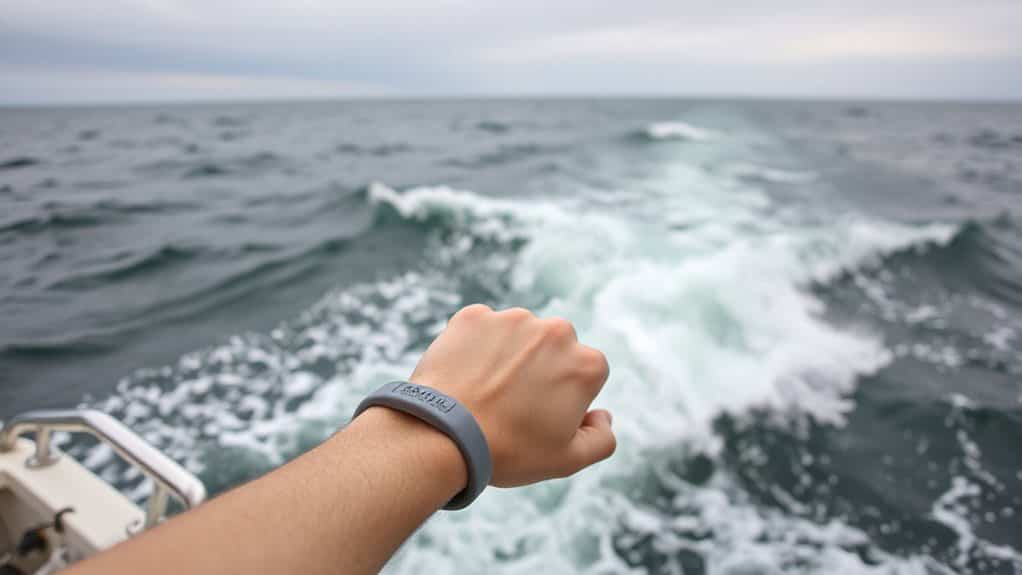
Why does a boat make you feel queasy? Your inner ear senses the ship’s rolling and accelerating while your eyes see a still cabin, creating a sensory conflict that triggers nausea.
Waves often match the boat’s natural roll period, amplifying motion beyond the wave’s modest angle.
Hormonal shifts, fatigue, strong odors, and anxiety can heighten the response, especially if you’ve been sick on other rides.
Roll is the motion that most strongly triggers seasickness because it produces rapid, constant head accelerations.
Shivering or other signs of cold stress can worsen discomfort at sea, so seek warmth and shelter if you start showing early hypothermia symptoms.
Why Do Rolling and Swaying Motions Cause Seasickness?
When a boat rolls or sways, your inner‑ear vestibular system receives rapid, multidirectional accelerations that clash with what your eyes see, and this sensory mismatch triggers the nausea you feel.
The semicircular canals detect fluid slosh, turning wave‑frequency rolls (0.8‑0.4 Hz) into conflicting head‑velocity signals.
Pitch, roll, and heave combine, overwhelming the brain’s ability to reconcile motion, especially when visual reference points are missing.
This overload sparks the queasy feeling.
Recertified tanks can be valid for 5, 7, or 12 years depending on the recertification method.
How Can You Align Your Senses to Beat Seasickness?

Can you keep your senses in sync while the boat rocks? Fix your gaze on the horizon, a steady visual anchor that matches the ship’s motion, and avoid looking at moving decks or waves.
Sit upright, face forward, or lean into the sway, preferably mid‑ship where motion is gentler. Wear polarized sunglasses, breathe fresh air, and consider snug P6 acupressure bands for added stability.
Who Is Most Prone to Seasickness and Why?
If you’ve ever felt the sea’s sway turning into nausea, you’re not alone—certain groups are simply more prone to seasickness, and the reasons are rooted in biology and experience.
Children aged 2‑12, especially 7‑12, feel it most because their vestibular systems are still maturing.
Women, due to hormonal shifts, and those with family history, migraine, or prior motion‑sickness experience also rank high, while vestibular disorders and poor balance further amplify vulnerability.
Ticks can survive for weeks or months without a host, making them resilient survivors in many environments.
What Gear and Strategies Effectively Prevent Seasickness?

Because the sea’s motion can quickly overwhelm your inner‑ear balance, the most effective prevention combines the right gear with smart strategies.
Apply a scopolamine patch behind your ear at least eight hours before departure, keep skin clean, and wash hands after.
Pair it with ginger tea, light starchy snacks, and stay hydrated.
Choose a mid‑ship, low‑deck spot, breathe fresh air, watch the horizon, and wear a Sea‑Band wristband correctly for added relief.
Watch for early signs of heat-related stress like rapid heartbeat in hot, sunny conditions and take breaks in the shade if needed.
And Finally
By staying aware of how your inner ear, eyes, and body interact, you can keep motion sickness at bay. Choose a stable spot, focus on the horizon, and use proven remedies like ginger or medication when needed. Hydrate, avoid heavy meals, and consider motion‑sickness bands for extra support. With these practical steps, you’ll enjoy smoother sailing and feel confident steering through any boat’s motion.