If lightning strikes your tent, the surge will jump to the highest point—often a pole or metal hook—and travel along any conductive hardware, scorching or melting nylon or polyester fabric, warping or shattering poles, and frying electronics inside. The strike creates step‑potential on the ground, so even without a direct hit you can receive a painful shock by standing on wet soil, and side‑flashes may jump to nearby people or gear. Staying inside with an insulated pad reduces exposure, and after the storm you should wait at least 30 minutes before moving, check for damage, and follow safety steps to prevent future incidents.
TLDR
- Lightning can melt, scorch, or puncture tent fabric, destroying rainfly and seams.
- Metal poles may warp, blacken, or snap, compromising structural integrity.
- Electrical side‑flash can injure occupants and damage gear inside the tent.
- Ground‑current can create dangerous step voltage for anyone standing nearby for minutes after the strike.
- After a strike, stay away for at least 30 minutes, then inspect and repair damaged components before re‑using the shelter.
Describe Lightning’s Path Through a Tent
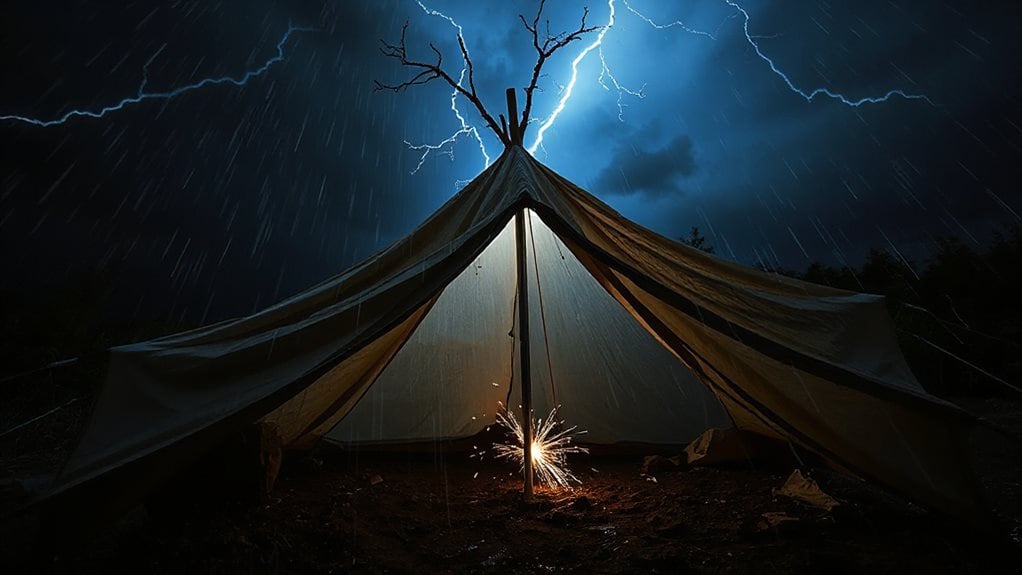
If lightning strikes your tent, it usually latches onto the highest, most exposed point—often a pole tip, ridge line, vent, or any metal hardware that sticks out.
The surge then darts along conductive parts, jumps across damp fabric, and may branch to stakes or wet seams.
It can side‑flash to you, travel through wet gear, or exit into the ground, creating a brief, intense, high‑risk current path. Be aware that nearby trees can also attract strikes and create secondary hazards from falling limbs.
Avoid pitching the tent on a ridge top where it becomes the highest point in the area.
Explain Why Tent Materials and Poles Don’t Stop a Lightning‑Tent Strike
When a bolt heads for the sky, it doesn’t care about the fabric or poles of your tent—it simply follows the path of least resistance, and the materials you’ve chosen offer almost none.
Nylon or polyester walls are thin, non‑conductive barriers, while aluminum, fiberglass, or carbon‑fiber poles are too small to dominate a strike.
Lightning jumps through wet air, gaps, and conductive hardware, ignoring “armor.”
Your safety hinges on site choice, not tent construction.
Seek sturdy shelter well before storms arrive and follow real‑time lightning alerts so you can evacuate to a safe building or vehicle in time.
What Gets Burned or Broken When Lightning Hits Your Tent
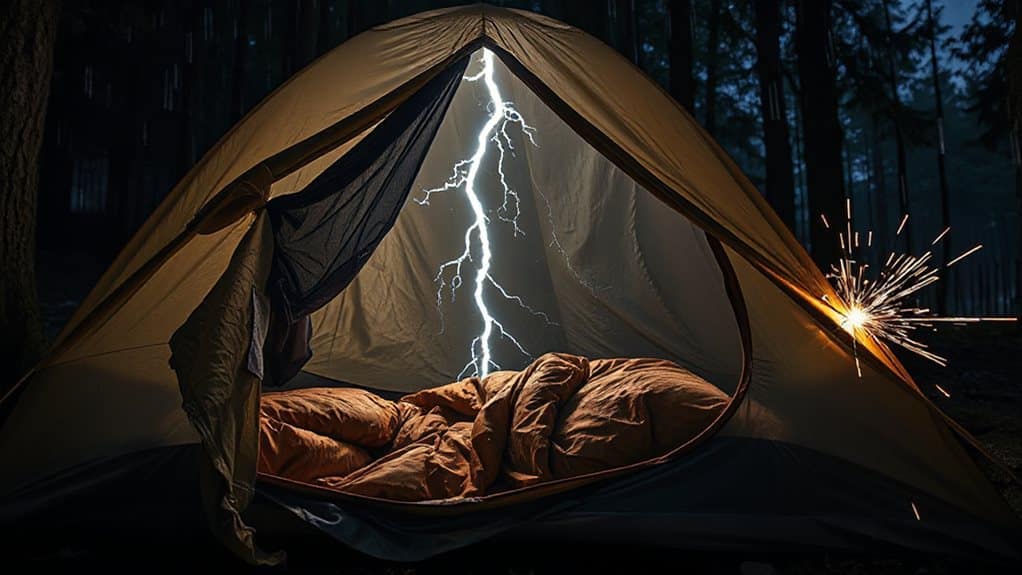
Lightning doesn’t just flash through a tent; it delivers a sudden surge of heat, pressure, and electrical energy that can instantly ruin the shelter’s components.
Your nylon or polyester fabric may scorch, melt, or develop holes; rainfly can shred, and seams may blister.
Metal poles can warp, blacken, or snap, while zippers fuse, clips crack, and fasteners melt.
Electronics, batteries, and gear inside can fry, vent, or become soot‑stained.
Always maintain a safe distance from the campfire and surrounding vegetation and clear a three-foot safety zone to reduce the risk of fire spreading if an ignition occurs.
How Ground Current Can Hurt You Even Without a Direct Hit
Even if the bolt never hits your tent directly, the energy that spreads through the ground can still give you a nasty shock.
Lightning creates step voltage, so if you stand, kneel, or lie across two points of differing ground potential, current will flow through you.
Wet soil and conductive gear amplify the risk, and a larger distance between your feet raises the voltage gradient, potentially causing severe injury or cardiac arrest.
Wearing insulating footwear and avoiding standing on high-ground during storms can reduce risk, and choosing proper footwear and gear helps lower your chance of ground-current injury.
Side‑Flash and Jump‑Over Risks to Your Tent
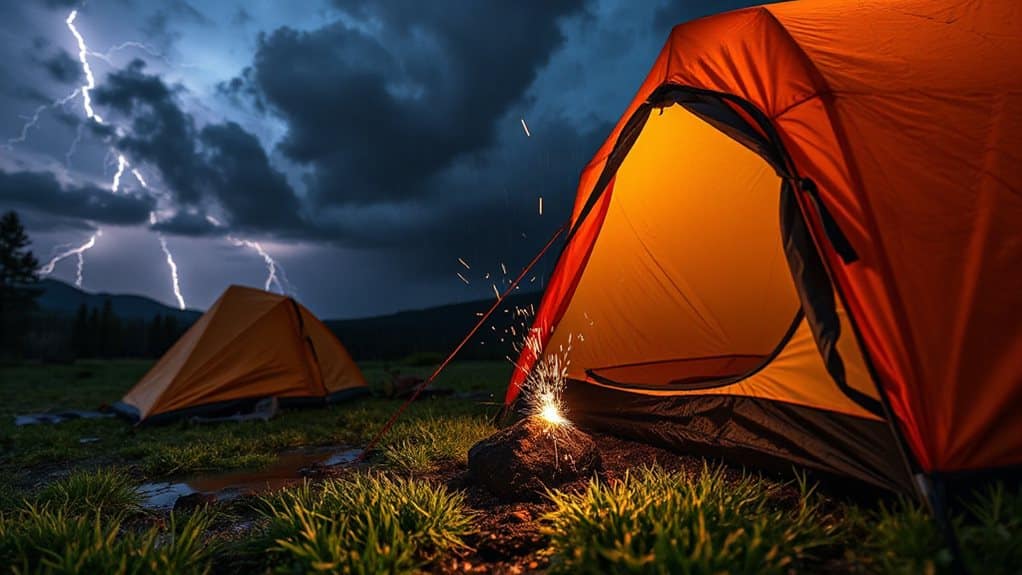
Ground currents may already be a concern, but the next hazard you need to watch for is side‑flash—an unexpected jump of electricity from a struck object, like a tall tree, to anything nearby, including your tent.
Keep tents at least 20 feet from isolated trees, avoid metal poles, and choose low‑lying, open terrain; this limits conductive pathways and reduces the chance of lightning leaping onto your shelter.
Start early and descend to lower elevations by mid-morning to reduce thunderstorm exposure and the risk of a strike to your campsite, especially when summit exposure increases lightning danger.
Why Staying Inside the Tent Can Be Safer Than Running Into Open Terrain
You’ll find that the tent’s insulated floor and fabric already cut down the ground‑current voltage that can reach you, so staying inside gives an immediate shelter advantage.
Even though the poles may conduct some current, the structure keeps you away from the direct strike zone that an open field would expose you to.
Ground Current Exposure
When lightning strikes near your campsite, the biggest threat isn’t the flash itself but the ground current that spreads outward from the point of impact.
You stay inside the tent, but on an insulated pad or cot, reducing direct contact with the conductive soil.
Open terrain makes you the tallest object, increasing exposure to side‑flash and step‑potential, so staying low and insulated minimizes risk.
Immediate Shelter Advantage
If a storm rolls in while you’re already inside your tent, staying put can often be the safest move, because the fabric and frame provide a modest barrier that keeps you from becoming the tallest object in an open field.
The tent still lowers exposure, especially if it’s in low ground, and avoids the extra risk of sprinting across exposed terrain.
While it isn’t a lightning‑proof shelter, it offers a temporary shield until you can reach a building or vehicle, reducing the chance of becoming the tallest nearby object of lightning.
How Can I Reduce Ground‑Current Exposure Inside My Tent?
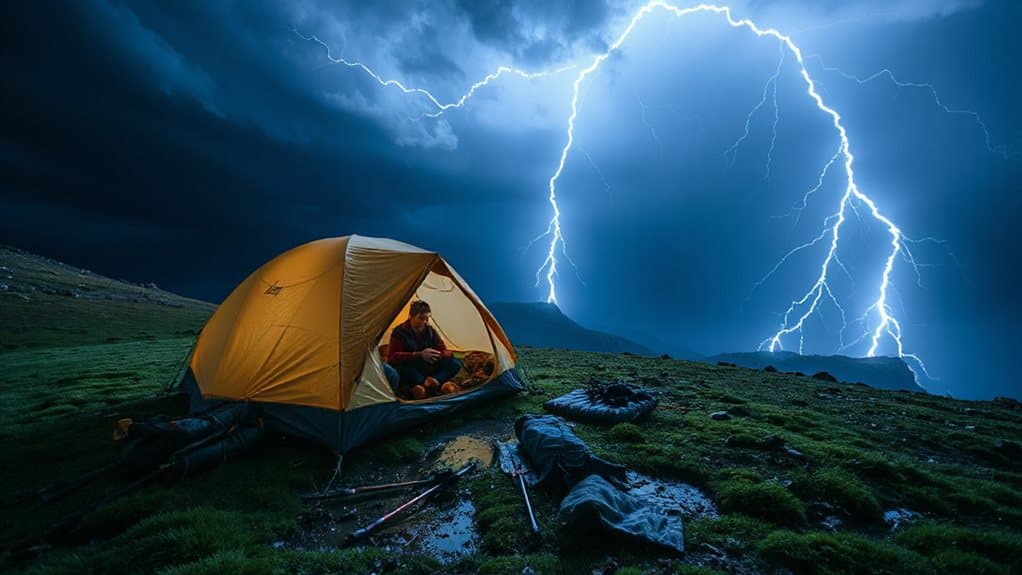
You can keep the ground‑current risk low by raising your sleeping area off the floor, which adds distance between you and any voltage that might travel through the earth.
Adding an insulating ground pad beneath your mattress or sleeping bag further breaks the conductive path, so any stray current is less likely to reach you.
Together, these simple steps give you a safer, more comfortable night even if lightning strikes nearby.
Elevate Sleeping Surface
Elevating your sleeping surface is a simple yet effective way to cut down on ground‑current exposure when lightning strikes nearby. Use a cot or raised platform, keeping it centered away from tent walls and poles, and choose dry, non‑conductive supports.
Keep the area high, stable, and clear of puddles, ensuring you stay insulated from wet soil while preserving freedom of movement.
Use Insulating Ground Pad
Raising the sleeping surface already cuts down on ground‑current exposure, but adding an insulating ground pad takes protection a step further.
Choose closed‑cell foam, preferably EVA, with at least 1 cm thickness; it resists water, stays durable, and limits electrical flow.
Stack a ground tarp, foam layer, tent floor, then a secondary pad.
Full coverage, proper placement, and occasional replacement keep current pathways long and your night safe.
Perform Safety Checks and First Aid After a Strike
After the thunderstorm passes, you’ll need to assess the scene quickly but thoroughly before anyone steps back into the tent.
Check for lingering lightning, fire, smoke, or melted gear; keep people away from wet metal poles and puddles.
Verify responsiveness, start CPR if breathing stops, treat burns with clean dry cloth, control bleeding, keep the victim warm, and call emergency services immediately.
When and How to Move to Safer Shelter After the Storm Passes
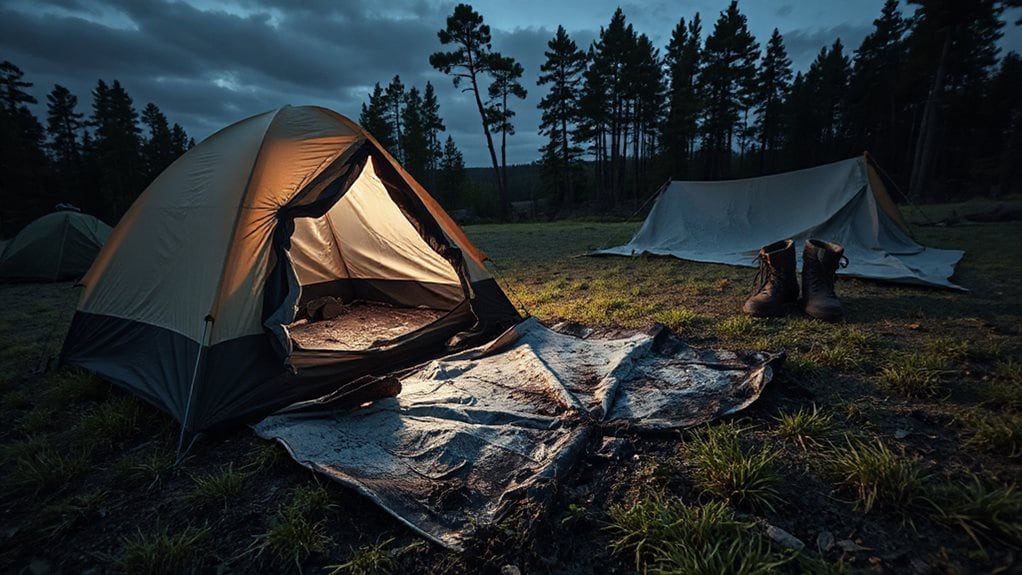
After the thunder stops, check how close the strike was to your ground and decide which nearby structure offers the most complete enclosure—ideally a solid building, then a hard‑topped vehicle with windows up.
Wait at least 30 minutes after the last flash before you even consider moving, and only head for the chosen shelter when the sky is clear of fresh lightning and you can see a safe path.
Keep your route short, avoid isolated trees, metal fences, and open water, and stay low and spaced if you must travel through exposed terrain.
Assess Ground‑Strike Proximity
Usually, you’ll want to stay put until the thunderstorm’s lightning activity has truly subsided, because ground‑current danger can linger for minutes after the last flash.
Gauge proximity by counting flash‑to‑thunder seconds; fewer than 25 seconds means risk remains.
Keep a 15‑minute buffer after the last nearby strike, stay away from wet ground, metal objects, and uneven terrain, and move only when the storm’s audible thunder is distant.
Identify Safer Shelter Options
When you hear thunder or see lightning close enough to strike, you need to leave the tent immediately and head for a safer shelter.
Choose a fully enclosed building with plumbing and wiring—homes, offices, or campground reception—because its metal roof and grounded systems divert charge.
If none are nearby, enter a hard‑top vehicle with windows up.
Avoid open‑sided structures; they offer little protection.
Timing Re‑Entry After Storm
If you hear the last rumble of thunder, start counting the minutes—because the 30‑minute wait begins only after that final sound, not after the last flash you saw.
Keep sheltering for the full interval; any faint rumble restarts the timer.
Verify silence, watch clouds clear, check radar, then safely re‑enter, inspecting gear before resuming camp life.
Repairing and Preventing Future Lightning Damage
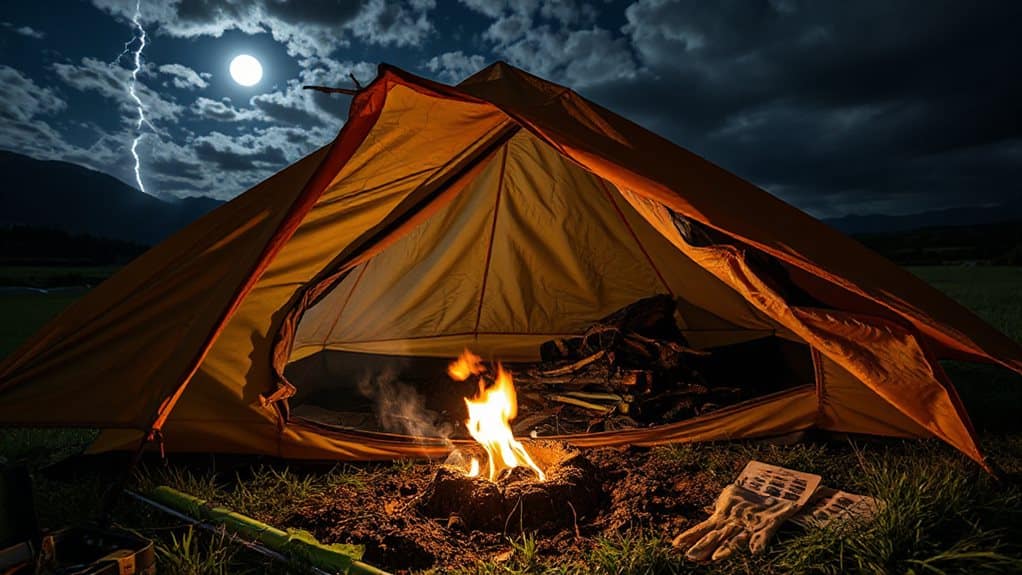
Even after a lightning strike, the first thing you should do is assess the damage before you start any repairs, because wet fabric can become conductive and metal poles may have been compromised, leaving the structure vulnerable to further electrical hazards.
Use duct tape or fabric patches for quick fixes, apply sealant, re‑waterproof repaired sections, replace bent poles with sleeves or professional kits, and choose low‑lying sites to reduce future lightning exposure.
And Finally
Remember, lightning ignores a tent’s fabric and poles, so the current can travel through the ground and side‑flash into you even without a direct hit. By keeping a safe distance from metal poles, staying low, and moving to solid shelter when the storm eases, you dramatically cut your risk. After a strike, check for damage, administer first aid if needed, and repair or replace compromised gear before your next expedition. Stay alert, stay grounded, and your camping trips stay safe.