
Check the forecast early, start before noon, and treat any approaching thunderstorm as a cue to descend to low‑lying, forested ground. Spot dark, towering cumulonimbus clouds, a sudden temperature drop, or loud thunder, then drop metal gear, keep your feet on the balls, and crouch low with a 100‑foot gap between hikers. Seek shelter under a grove or depression, stay dry, and protect electronics in waterproof bags. After the last crack, wait 30 minutes before moving; the next section explains post‑storm checks and safety.
TLDR
- Seek low, forested terrain or a valley; avoid ridges, open fields, and isolated tall trees.
- Crouch low with feet together, head between knees, and maintain at least 100 feet spacing from others.
- Drop metal gear and stay away from conductive objects; keep electronics in waterproof bags.
- Listen for thunder, estimate distance by counting flash‑to‑thunder seconds, and wait 30 minutes after the last strike before moving.
- Dress to retain heat, stay dry, and monitor for hypothermia while sheltering until the storm passes.
Check Forecast and Plan an Early Start for Lightning Safety
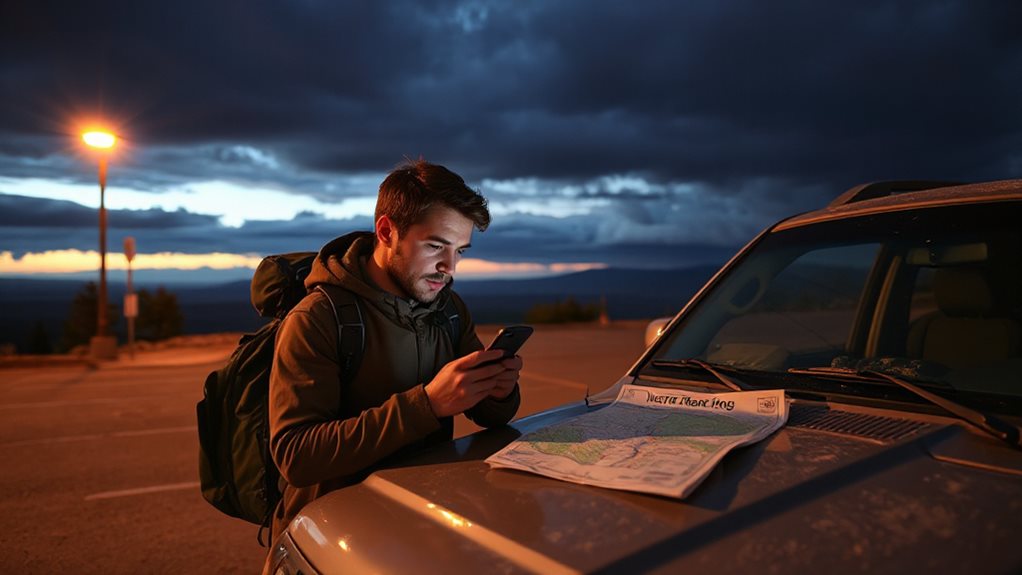
How can you stay safe when lightning threatens your hike? Check the National Weather Service forecast for your mountain route, use a Garmin or satellite communicator if cell service is spot, and listen to NOAA Weather Radio for real‑time updates. Start early—aim to summit by mid‑morning, descend to treeline by noon, especially during Colorado’s monsoon. Early starts cut thunderstorm risk dramatically. Thunder distance can be estimated by counting seconds between flash and thunder and dividing by five.
Spot the First Signs of Lightning and Act Immediately
When dark, towering cumulonimbus clouds start to roll in and the sky darkens rapidly, you should treat those visual cues as an early warning sign and begin assessing your terrain immediately. Notice sudden temperature drops, gusty winds, and distant thunder getting louder.
Feel static, hear metal crackle, see hair stand; each signal means lightning’s close, so drop gear, seek lower ground, and stay alert. Choose a campsite with good drainage to minimize hazards from heavy rain and runoff.
Move to Low‑Lying, Forested Terrain to Avoid Lightning
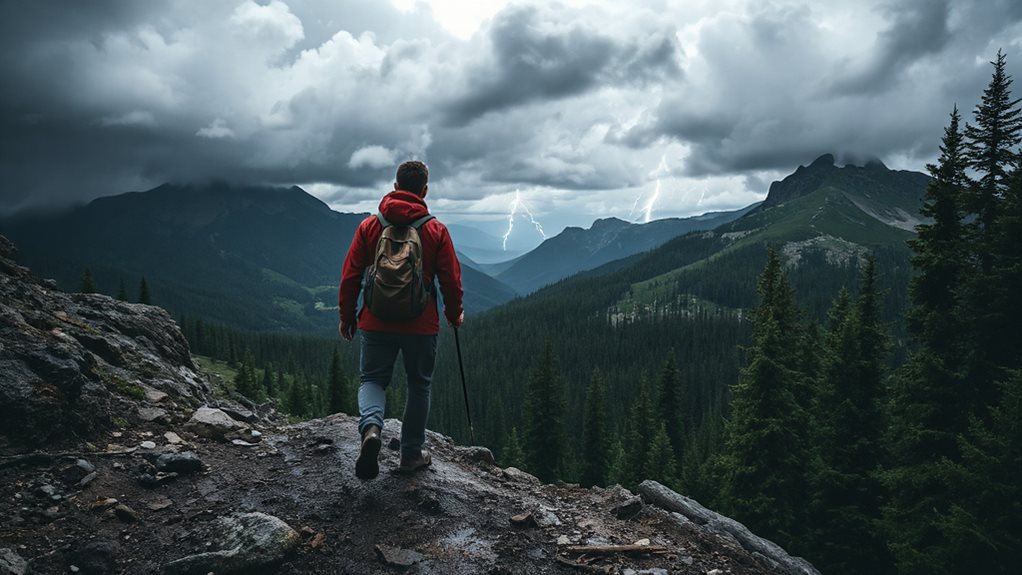
If you hear thunder rolling in and the sky darkens, head for a low‑lying spot among the trees rather than staying on a ridge or open field.
The forest cuts lightning risk by about 65 % compared to open terrain, and a valley or depression offers extra protection.
Stay away from tall trunks and isolated trees, keep a clear space, and move quickly to lower ground before the storm intensifies.
Seek shelter within about three hours in extreme conditions to maintain core temperature and reduce overall risk from exposure shelter priority.
Crouch Low and Keep a 100‑Foot Gap Between Hikers
Crouching low while keeping at least a 100‑foot gap between hikers dramatically reduces the chance that a single lightning strike will affect the whole group. You’ll spread your weight on the balls of your feet, keep your legs together, and tuck your head between your knees, covering ears with your hands. Each hiker stays 100 feet apart, so the current can’t travel through multiple bodies, and you maintain this stance until thunder subsides. Wind can increase danger by accelerating heat loss from exposed skin, so be mindful of cold and dress to reduce heat loss.
Drop Metal Items, Stay Dry, and Protect Electronics From Lightning
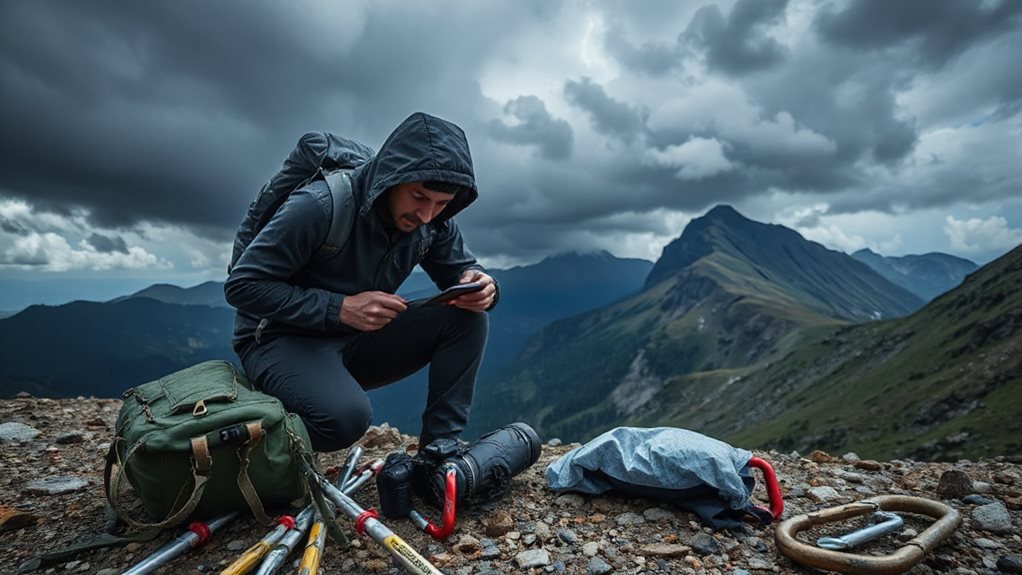
You should toss any metal gear—trekking poles, metal‑framed packs, jewelry, belt buckles—at least 20‑50 yards from your shelter before you take cover, because lightning can jump from those objects up to 20 feet away.
Keep your body dry by staying on the balls of your feet with heels together, and use a non‑conductive pad or your backpack as a thin barrier if you need to sit or crouch.
Finally, store phones, GPS units, and other electronics in a waterproof bag or keep them in your pack, away from metal, to prevent moisture damage and reduce the chance of a side‑flash.
When preparing gear, also remember to maintain consistent tension on any straps or lines to prevent them from shifting or causing snags while you seek shelter.
Drop Metal Items
When you hear the telltale buzz or see hair stand on end, drop any metal gear immediately—trekking poles, metal‑framed backpacks, belt buckles, and even jewelry—because lightning seeks the tallest, most conductive objects, not the metal itself.
Stash poles and packs at least 100 feet away, separate the group, and avoid holding any metal.
This prevents contact strikes, side flashes, and severe burns, keeping you safe while you move to shelter.
Stay Dry, Protect Electronics
Ever wondered how to stay comfortable and keep your gear safe when a storm rolls in? Pack a lightweight poncho, wool base layer, and emergency blanket, then stay under a low grove, not the tallest trees.
Drop metal gear, keep electronics away, and use a non‑metal pack. Crouch low, feet together, and wait 30 minutes after the last thunder before moving.
When to Stay Put vs. Keep Hiking During Lightning
If thunder cracks within 30 seconds of a flash, you need to stop and find shelter right away; the 30‑30 rule tells you that the storm is already within striking distance and that you should stay put for at least 30 minutes after the last thunderclap.
Descend from ridges or peaks immediately, seek low valleys or forest cover, and crouch if no shelter’s near.
Keep moving only when thunder’s absent, skies clear, and you’re safely below exposed terrain.
A compact multi-tool can be useful to repair gear or fashion emergency repairs if you must shelter unexpectedly.
Post‑Lightning Safety: Check Injuries, Re‑orient, and Prevent Secondary Hazards
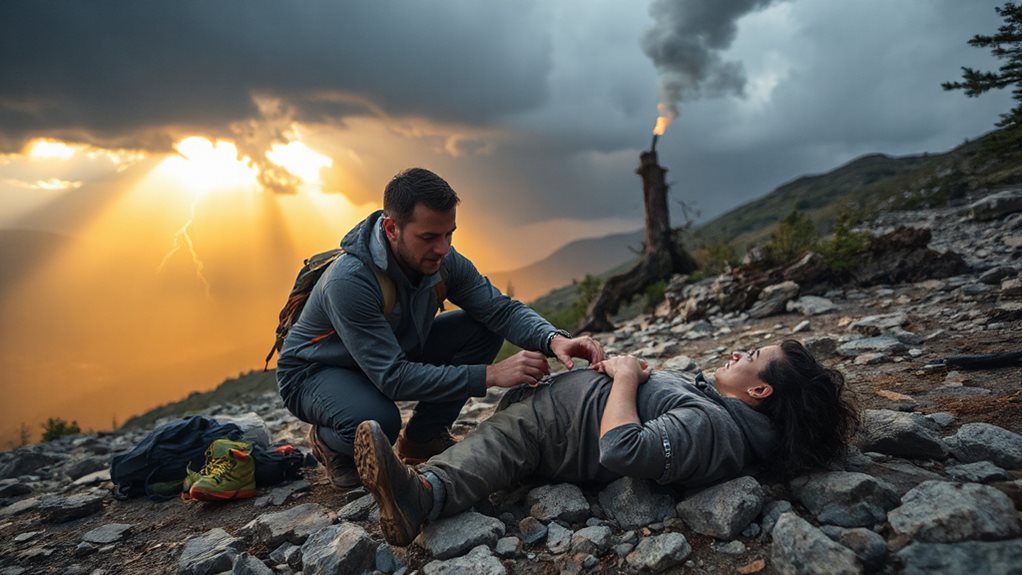
After you’ve found a safe spot and waited the 30‑minute quiet period, the next step is to make sure everyone’s okay and to get your group back on track without creating new risks.
Check burns, pulse, breathing, and neurological signs; note any fractures or seizures.
Re‑orient with map, compass, or GPS, keeping distance between hikers.
Remove wet gear, avoid metal, water, and tall trees, and stay clear of gullies.
If injuries are serious, activate a beacon and send an uninjured member for help.
Final Note
Stay alert, follow the forecast, and act quickly when you see lightning. Move to low‑lying, forested spots, keep a safe distance from others, and drop metal gear. If the storm persists, stay put; if it passes, resume hiking cautiously. After the storm, check for injuries, re‑orient yourself, and watch for secondary hazards like slippery ground or fallen debris. By following these steps, you’ll protect yourself and keep your hike safe.


