
Pick a safe spot away from tents and trees, using a designated fire ring and clearing dry debris, then set a three‑foot clearance zone and level a non‑flammable base of gravel or pavers; keep kids within arm’s reach and never leave the fire unattended, assigning an adult to watch them. Build the fire with a loose tinder pile, add a tepee of kindling for airflow, light it, and gradually add larger sticks until coals form. Extinguish completely by pouring water from the edges inward, stirring ash, adding sand or dirt, and confirming the pile is cool to the touch—continue for and you’ll discover more details.
TLDR
- Choose an established fire ring, keep it 10–25 ft from tents/trees, and clear all dry debris around it.
- Create a three‑foot safety zone, level a non‑flammable base, and ensure overhead branches are at least six feet high.
- Build the fire in stages: tinder, then kindling, then progressively larger sticks, allowing proper airflow.
- Supervise the fire continuously, keep children within arm’s reach, and store matches/lighters locked away.
- Extinguish fully with water, stir ash, add sand/dirt, and verify the pile is cool before leaving.
Pick a Safe Spot and Check Campfire Safety Rules
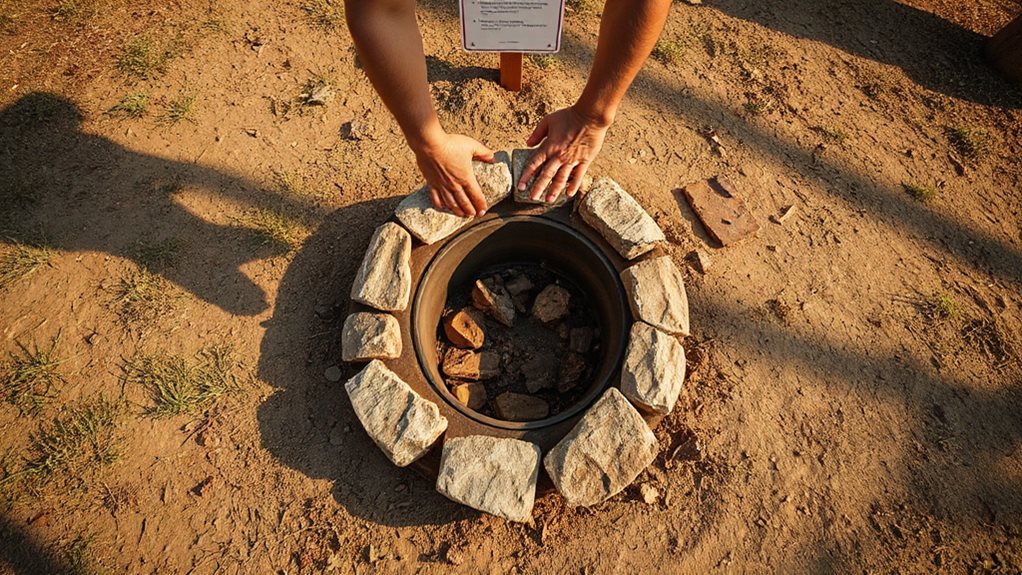
When you arrive at your campsite, start by picking a safe spot and checking the fire rules, because a well‑chosen location prevents accidents before they even begin. Use an established fire ring, keep the blaze 10‑25 feet from tents and trees, and clear dry debris. Verify park regulations, wind conditions, and any bans, then ensure gear and matches stay at least 15 feet upwind. Maintain a clear surrounding area to reduce burn risks. Inspect nearby ground and vegetation for flammable debris before building your fire.
Create a 3‑Foot Safety Zone Around Your Campfire
Why is a three‑foot safety zone essential? You keep sparks, heat, and accidental contact away from gear, pets, and kids, preserving freedom to move and enjoy the fire. Clear all dry grass, leaves, and debris within five feet, level a non‑flammable base of gravel or pavers, and keep overhead branches at least six feet high. Maintain a 25‑foot distance from tents or structures, and use a metal screen to contain embers. This simple perimeter lets you relax, knowing the fire stays controlled.
Keep Kids Safe and Never Leave the Campfire Unattended
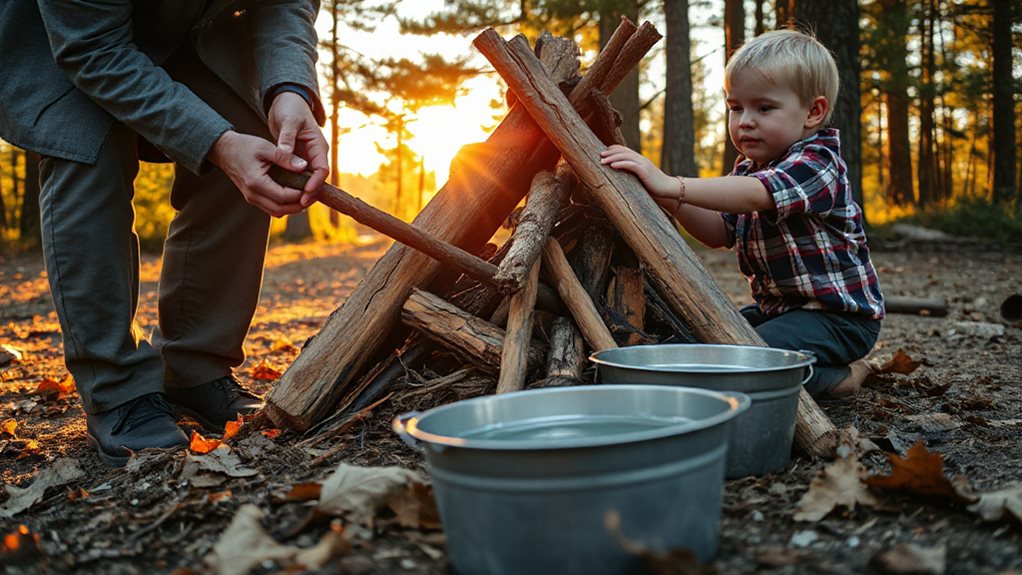
Even a brief moment of inattention can turn a cozy campfire into a serious hazard for children, so you must keep them within arm’s reach and never leave the fire unattended. Assign one adult to watch the kids, ban distractions near the pit, and keep a three‑foot safety zone clear of embers. Store matches and lighters locked away, teach stop‑drop‑roll, and intervene instantly if curiosity spikes. This vigilance prevents falls, burns, and the tragic statistics that follow. At night, use Polaris navigation as a reliable reference to help orient supervising adults when monitoring the fire.
Build the Campfire: Tinder, Kindling, Then Coals
If you gather the right tinder first—dry grass, shredded bark, dandelion heads, or even cattail fluff—your fire will catch quickly and stay steady, so start by assembling a loose pile that fits comfortably in cupped hands, about the thickness of a pencil lead but no shorter than an outstretched hand. Then lean tiny, dry twigs and cedar bark in a tepee shape, leaving gaps for airflow; light the tinder, let it ignite the kindling, and once a bright blaze forms, add larger sticks gradually, allowing the inner layers to collapse into glowing coals that sustain the fire. In cold or windy conditions consider using propane as a reliable heat source to help get the fire established.
Put Out the Campfire Completely and Verify It’s Cool Before Leaving
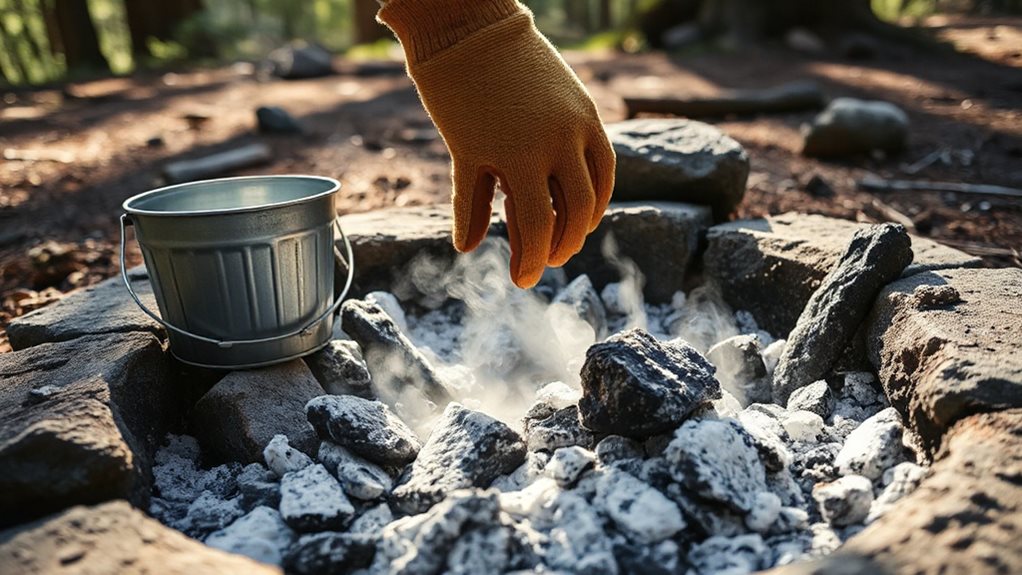
When you finish your evening around the fire, make sure you extinguish it completely before you leave the site. Pour at least twenty liters of water from the edges inward, listening for the hiss to stop, then stir the ash with a shovel, mixing water, sand, and dirt until every ember is drowned. Hover your hand over the pile; if it’s cool, the fire’s truly out. Consider nearby vegetation and structure when choosing your spot, focusing on vegetation edges that can affect fire spread and cleanup.
Final Note
By following these steps you’ll keep your campfire safe and enjoyable every time. Choose a clear spot, set a three‑foot buffer, and never leave the fire unattended, especially around kids. Build it with tinder, kindling, then coals, and always extinguish it fully—sprinkle water, stir, and check that it’s cool before you go. This disciplined routine protects people, wildlife, and the environment, ensuring a hassle‑free experience.


