
Check the forecast and pick a low‑lying, flood‑free route, then pack a moisture‑wicking base layer, an adjustable insulating mid‑layer, and a breathable waterproof shell to stay dry and warm. Set up shelter early behind natural windbreaks, secure it with a wind‑proof tarp, and use a sleeping mat with an R‑value of 3.1+ plus an insulated bag for ground protection. Eat high‑energy snacks, sip warm non‑alcoholic drinks, and watch for early hypothermia signs, adjusting layers and activity as needed; keep shelter as your top priority when weather worsens, and you’ll discover more details if you keep going.
TLDR
- Check detailed weather forecasts and postpone if temperatures may drop into the 30‑50 °F range or storms are expected.
- Dress in a moisture‑wicking base layer, an insulating mid‑layer, and a breathable, waterproof shell, adjusting layers to stay dry and warm.
- Set up shelter early in a wind‑protected spot, secure a wind‑proof tarp, and keep interior ventilation to reduce condensation.
- Insulate the ground with a high‑R‑value sleeping pad and additional foam or branches, then add a sleeping pad for extra loft.
- Carry emergency emergency equipment,, blanket and tarp tarp can blanket and in maintain shelter core in the heat.
Check the Forecast and Plan Your Route
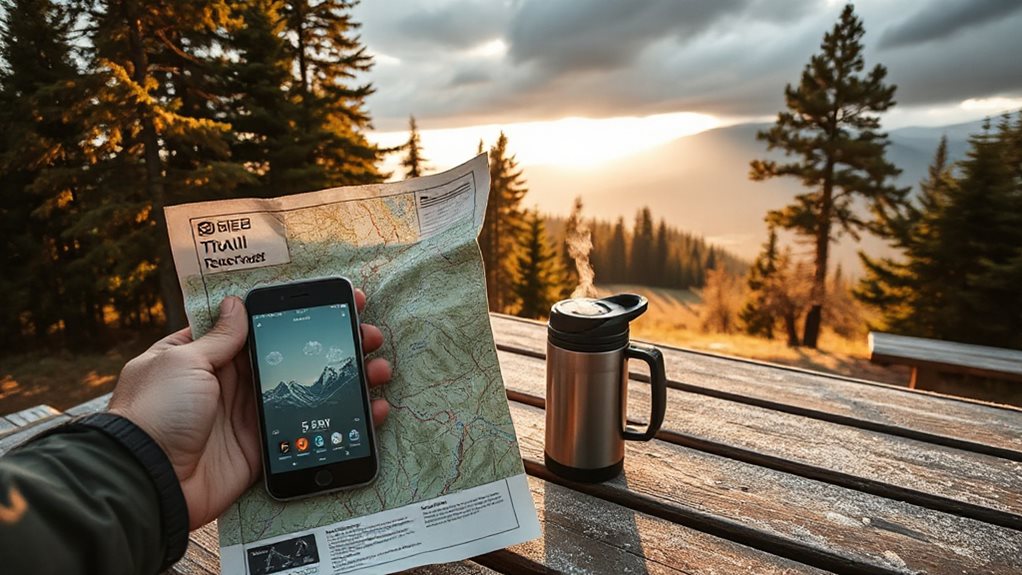
When you check the forecast before heading out, you’ll spot temperature swings, wind chill, and possible storms that could push you into the 30‑50 °F range where hypothermia risk spikes, so start by reviewing reliable sources, noting any rain or sudden changes, and sharing your itinerary and expected return time with someone not on the trip; if the predicted conditions exceed safe limits, postpone the outing, and then choose a route that avoids low‑lying, flood‑prone areas, minimizes water crossings, and takes advantage of natural windbreaks like trees, while mapping alternative paths for a quick descent if the weather turns. This proactive planning keeps you free to explore safely, lets you adjust on the fly, and ensures you always have a safe exit strategy. Quick fire readiness can also be crucial if you become wet unexpectedly. Have a basic repair kit and knowledge of bow inspection to address gear failures that could leave you stranded.
Choose a Moisture‑Wicking Layered Clothing System
Pick a moisture‑wicking base layer that pulls sweat away from your skin, then add an adjustable insulating mid‑layer you can zip or button up as the temperature shifts, and finish with a breathable waterproof shell that blocks wind while letting moisture escape. This three‑step system creates a dry microclimate, traps warm air between layers, and prevents the chilling effect of damp clothing. By swapping mid‑layers on the fly and keeping the shell vented when you’re active, you’ll stay comfortable and reduce the risk of hypothermia. Choose materials and layers that balance insulation with breathability and moisture management to maintain a dry, warm microclimate.
Selectwick Base Layers
A good base layer is the foundation of a moisture‑wicking clothing system, and it works by pulling sweat away from your skin to the fabric’s surface where it can evaporate, keeping you dry and comfortable. Choose merino wool for temperature regulation and odor resistance, or synthetic polyester/nylon blends for lightweight, quick‑dry performance. Prioritize close fits, flatlock seams, and antimicrobial finishes, and shun cotton, which traps moisture and chills you. This setup maximizes breathability, insulation, and freedom of movement.
Add Adjustable Insulating Mid‑Layers
What’s the secret to staying warm without overheating? Choose a moisture‑wicking mid‑layer like polyester fleece or synthetic insulation, then add or remove it as activity and weather shift.
Fleece traps air, dries fast, and buffers moisture, while synthetics retain heat when damp.
Layer between base shirt and shell for wind protection, and swap it out before you sweat to keep your core temperature stable.
Top With Breathable Waterproof Shell
Ever wondered how a waterproof shell can keep you dry without turning you into a sauna? Choose a three‑layer shell with a Gore‑Tex‑type membrane, DWR coating, and taped seams; the interior fabric wicks sweat while the micropores let vapor escape. This design blocks rain, prevents clammy skin contact, and stays breathable during exertion, keeping you comfortable and free.
Pack a Rain‑Proof Outer Shell and Warm Accessories
How can you stay warm when the weather turns wet and windy?
Pack a breathable, waterproof shell with a hood, then layer a merino or synthetic base and a mid‑weight fleece or down jacket. Add insulated hat, neck warmer, wool or synthetic socks, and waterproof mitts or gloves. Keep everything dry, adjust layers as you move, and you’ll stay comfortable without sacrificing freedom. Familiarize yourself with local wildlife and potential hazards to stay safe and informed, especially when planning routes and gear for the trip like sharing your plan with BC Parks.
Set Up Shelter Early to Block Wind and Water
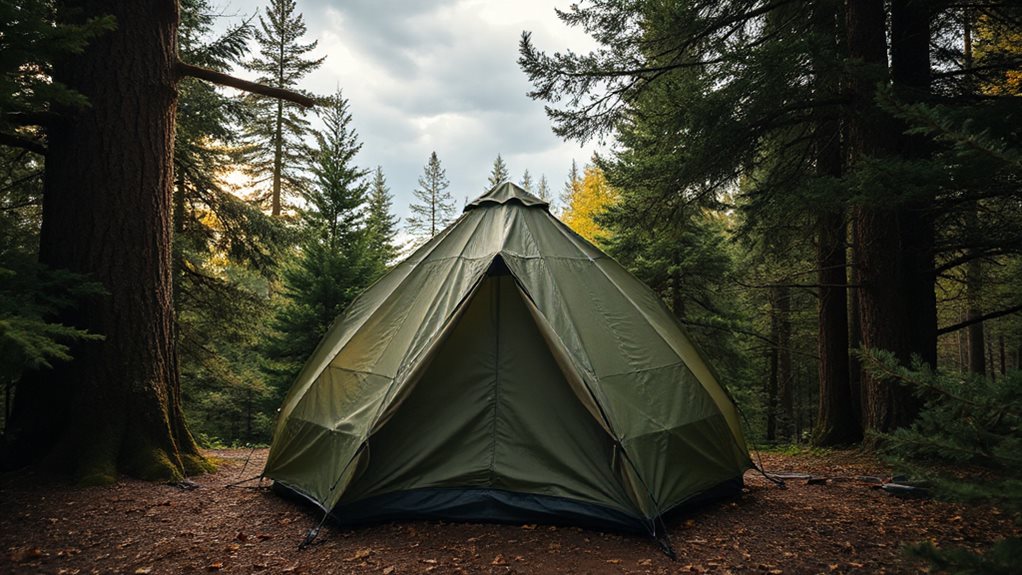
When the wind picks up and rain starts to drizzle, setting up your shelter as soon as you arrive can make the difference between staying warm and getting soaked.
Choose a spot behind a natural windbreak—trees, rocks, or dunes—while avoiding dead branches.
Pitch the tent low, face its smallest end into the wind, and secure all guy lines, stakes, and rainfly tightly for immediate protection.
Also consider using nearby terrain features as a windbreak to improve shelter effectiveness and reduce exposure.
Lay a Sleeping Mat and Insulated Bag for Ground Protection
Set your sleeping mat down before you crawl into the bag, because the ground steals heat faster than the night air. Choose a closed‑cell foam pad with an R‑value of 3.1 or higher, like Therm‑a‑Rest Ridgerest SOL, then top it with an inflatable mattress for extra loft.
Extend the foam beyond the mattress edges to block cold bridges, and use a lightweight, durable mat under 19 oz for freedom on the trail. Rotate and care for your sleeping gear regularly to preserve insulation life and prevent compression; consider using multiple pads in rotation to prolong foam performance and avoid premature breakdown, especially if you frequently camp on rough terrain and impact the pad’s durability.
Keep Sweat and Wet Clothes Out of Your Sleeping System
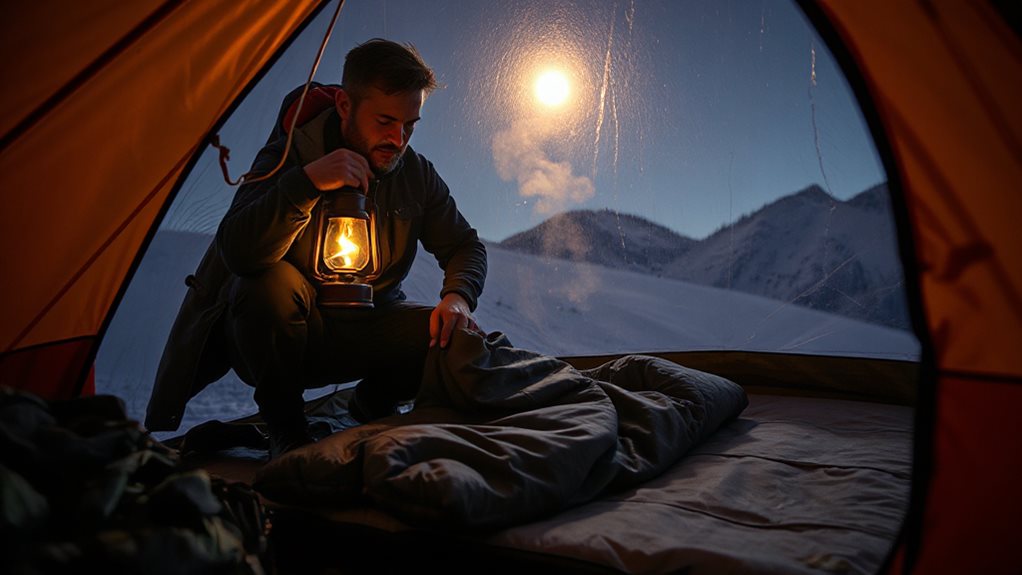
Ever notice how a single damp shirt can turn a cozy night into a freezing ordeal? Change wet clothes immediately, swapping cotton for quick‑dry synthetics that wick moisture.
Strip off sweat‑soaked layers before climbing into your bag, and dry your skin thoroughly.
Wear a windproof, waterproof shell, and keep hats, socks, and water‑resistant gloves on.
Dry, insulated base layers preserve heat, preventing evaporative cooling.
Eat High‑Energy Snacks and Sip Warm, Non‑Alcoholic Drinks
How can you keep your energy up and your core temperature steady while the night air drops? Pack calorie‑dense snacks like trail mix, dried dates, jerky, or protein bars to fuel metabolism and replace electrolytes; pair them with warm, non‑alcoholic drinks—hot chocolate, mocha, or instant tea—prepared with boiled water. Warm liquids raise internal temperature, while fats and proteins from nuts, cheese, or peanut butter sustain fullness and prevent cramps.
Watch for Early Signs of Hypothermia in Yourself and Companions

Keep an eye on your extremities—if your fingers, toes, or face feel numb, turn pale, or turn bright red, it’s a sign your circulation is dropping. Check your cognitive clarity by asking simple questions; confusion, memory gaps, or slurred speech mean your brain is already feeling the cold. Promptly notice these early cues in yourself and your companions, and take immediate steps to warm up before the symptoms progress.
Extremity Sensitivity
When you notice your fingers, toes, or even your nose turning cold and numb, it’s often the first clue that your body is redirecting blood away from the extremities to protect the core.
Numbness signals peripheral circulation dropping, while tingling or painful cold hands and feet warn you that heat loss is accelerating.
Check for loss of feeling, discoloration, and shivering intensity to catch early hypothermia before coordination wanes.
Cognitive Clarity Check
Cold fingers and numb toes are warning signs that your body is already diverting blood away from the periphery, so the next step is to tune into how your brain is coping. Watch for slurred speech, mumbled words, stumbling steps, or sudden quietness; these “umblesles” hint at early confusion. Check companions regularly, note any disorientation, and intervene before shivering stops and coordination collapses.
Adjust Layers and Activity Level to Prevent Overheating
Ever wondered how to stay comfortable without overheating while you’re on the trail? Slip on a moisture‑wicking base layer, then add a breathable fleece mid‑layer only when you pause; remove it as you hike harder.
Use a wind‑proof shell that lets sweat escape, and adjust each piece on the fly. Your activity generates heat, so fine‑tune layers to stay dry, flexible, and free.
Make Shelter Your First Priority When Weather Suddenly Worsens
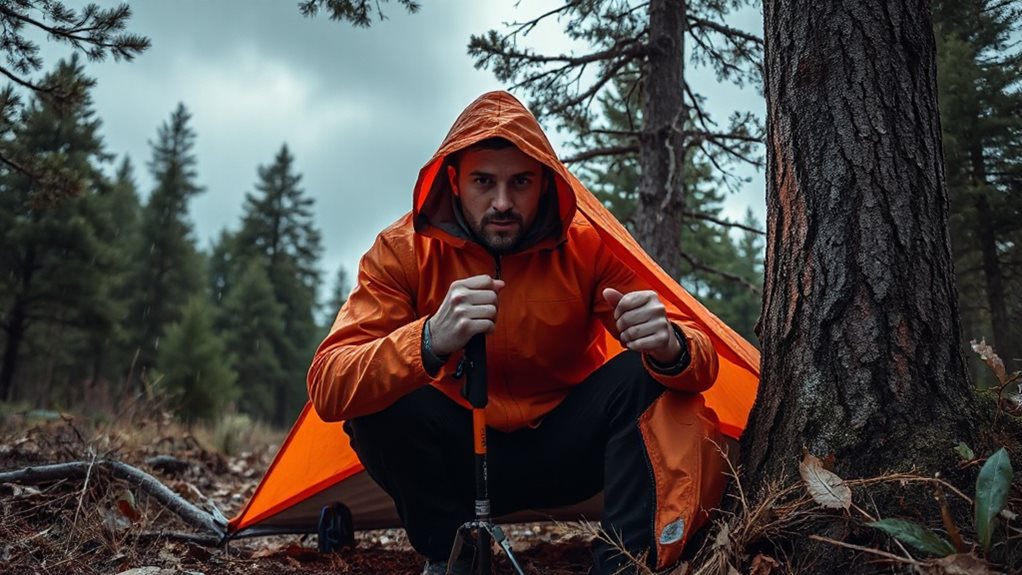
If the sky darkens and the wind picks up, your top priority is to get out of the elements and set up shelter before anything else.
Grab your emergency blanket, tarp or garbage‑bag shelter, and a sleeping pad.
Insulate the ground with branches or a mat, then cover everything with a wind‑proof tarp.
Secure the shelter quickly, stay inside, and let the cocoon keep you warm.
Final Note
By checking the forecast, dressing in moisture‑wicking layers, and packing a reliable rain‑proof shell, you’ll stay warm and dry. Set up your shelter early, block wind, and use a sleeping mat with an insulated bag to protect against ground chill. Keep high‑energy snacks and warm, non‑alcoholic drinks handy, and watch for early hypothermia signs in yourself and companions. Adjust layers and activity as needed, and always prioritize shelter if the weather worsens.


