A good running shoe gives you a snug heel and a wide toebox, with a thumb’s width of space at the toes for comfort. You’ll want breathable mesh or stretchy knit uppers, durable outsoles with rubber in high-wear zones, and cushioning that matches your weight and stride. Look for responsive foams like ZoomX or PWRRUN PB, and consider drop and stack height to suit your form—this balance keeps you supported, efficient, and ready to go further.
TLDR
- Ensure a snug heel and roomy toebox with a thumb’s width of space at the toes for optimal fit and comfort.
- Choose cushioning like ZoomX or PWRRUN PB for high energy return and impact absorption during runs.
- Select a heel-to-toe drop that supports your stride, balancing comfort and natural foot strike.
- Prioritize wide bases and stability features like medial posts to reduce overpronation and protect joints.
- Pick durable outsoles with appropriate rubber compounds to match surface type and extend shoe lifespan.
Key Features That Define a Great Running Shoe
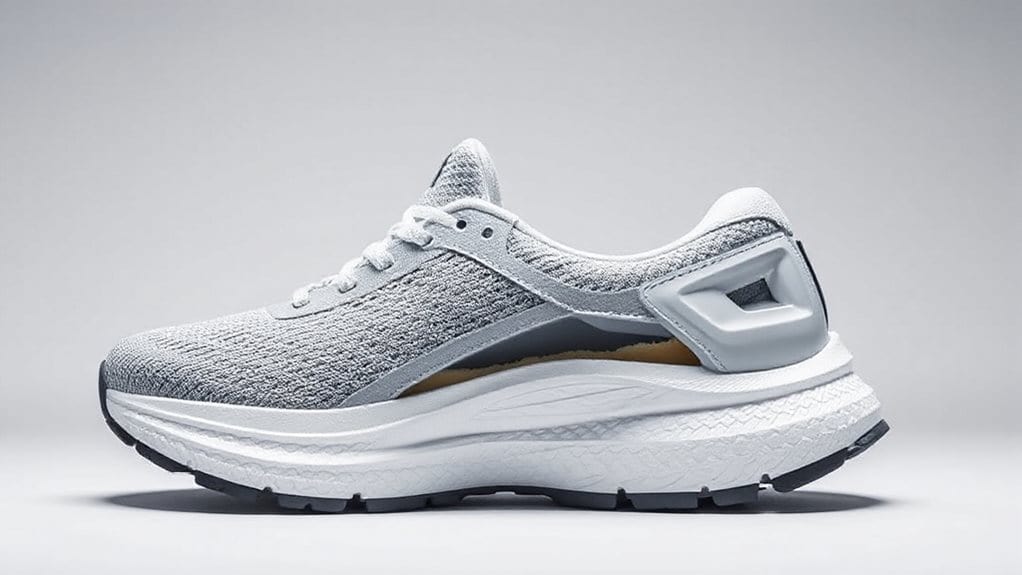
While finding the perfect running shoe might seem overwhelming, focusing on key features can simplify your decision and lead you to a pair that truly supports your stride.
Secure a proper fit with a thumb’s width of space at the toe, a snug heel, and a wide toebox. Choose breathable uppers, durable outsoles with solid traction, and midsoles offering support or flexibility based on your gait. Runners who underpronate typically need more cushioning and flexibility to compensate for reduced shock absorption. Try shoes with the socks you’ll run in and test them later in the day when your feet are naturally swollen to ensure accurate sizing.
How Cushioning in Running Shoes Affects Your Run
When you hit the pavement, the cushioning in your running shoes plays a crucial role in how your body handles each stride, absorbing impact forces that can reach two to three times your body weight with every step. It reduces joint stress, lowers injury risk, and improves running economy—giving you a smoother, more efficient run.
While maximum cushioning enhances comfort and endurance, too much can dull ground feel and alter your natural stride, so choose based on your pace, distance, and preference for responsiveness. Consider your cushioning level relative to your weight and typical running distance when selecting shoes.
Which Midsole Foams Deliver the Best Energy Return?
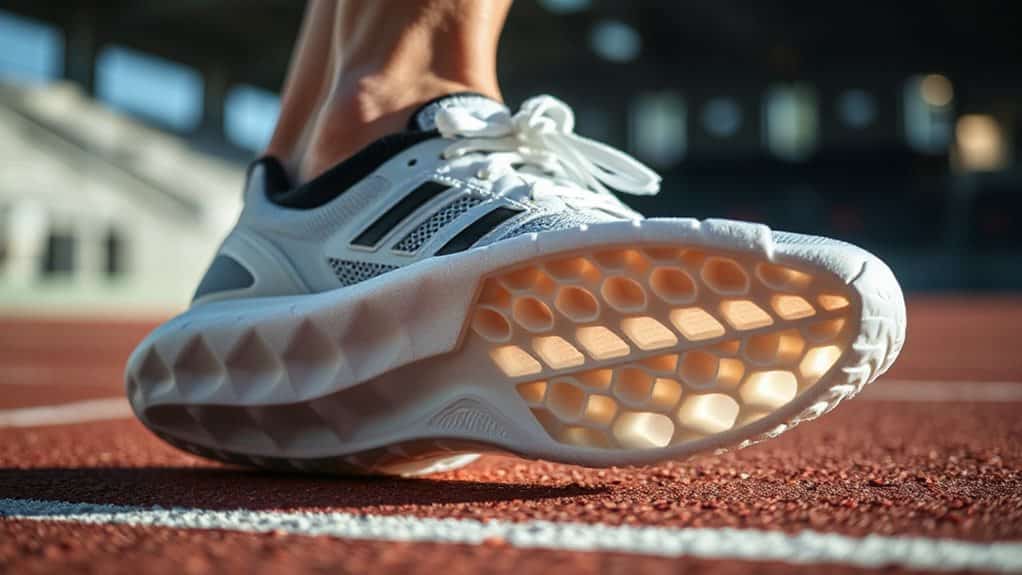
You’ll feel the difference with ZoomX foam—it’s lightweight and returns serious energy, helping you push through long runs.
PWRRUN PB gives you a resilient bounce that keeps your stride smooth, while Reactivex offers soft, responsive cushioning without sacrificing rebound.
These foams aren’t just about comfort; they’re engineered to make every step more efficient.
Bass fly fishing also benefits from choosing the right line weight to match your rod and tippet for optimal performance with 7-weight rods.
ZoomX Foam Lightweight Power
Step into a pair of Nike’s Vaporfly or Alphafly, and you’ll immediately notice the springy, almost bouncy feel underfoot—thanks to ZoomX foam, a lightweight midsole material engineered for maximum energy return.
You get 85% energy return, the highest in Nike’s lineup, so every stride feels propulsive.
Made from Pebax, it’s lighter than EVA yet soft, responsive, and ideal for fast runs, long races, or chasing personal bests with less effort.
PWRRUN PB Resilient Bounce
Nike’s ZoomX foam set a high bar with its ultra-light, bouncy ride, but another contender has emerged that’s reshaping expectations for responsiveness and durability—PWRRUN PB.
You get PEBA-based foam with pellet-shaped beads that create flex points, adapt to your stride, and deliver 78.2% forefoot rebound. It’s lightweight, durable, and maintains energy return across temps, speeds, and long miles—perfect for racing or daily training.
Reactivex Soft Responsive Cushioning
Often overlooked but essential to your stride, midsole foam plays a starring role in how energized and supported you feel mile after mile.
You’ll love ReactX foam—it returns 13% more energy than Nike React, offering soft, responsive cushioning with a supportive bounce. It’s lightweight, durable, and crafted sustainably, reducing carbon emissions by 43%.
Whether you’re running or recovering, ReactX keeps your step smooth, plush, and efficient.
How Stack Height and Drop Shape Your Stride
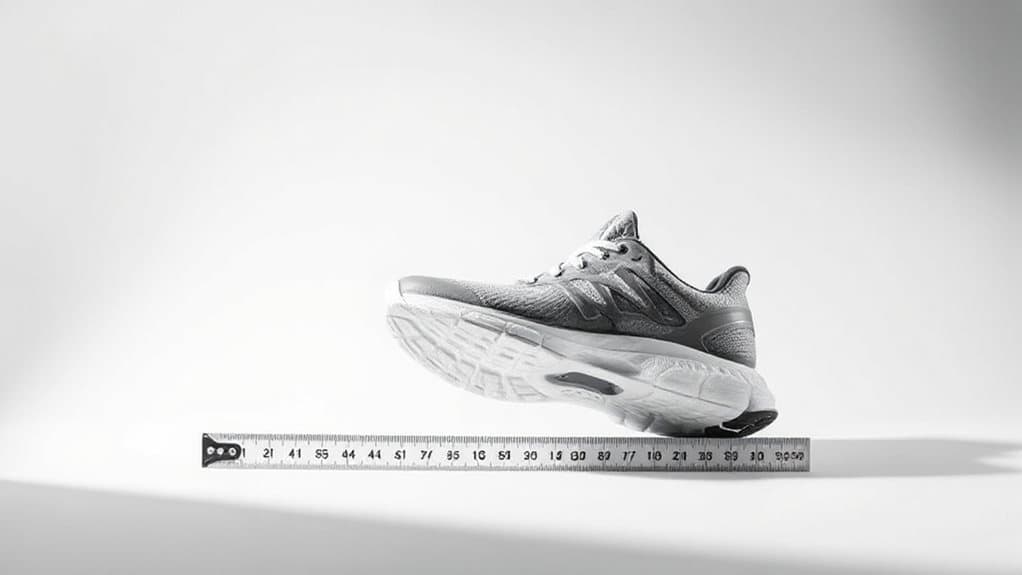
When you lace up a pair of running shoes, the thickness under your foot—known as stack height—plays a key role in shaping how you move.
Higher stacks enhance stride length and cushioning but may reduce stability and ground feel. Pair that with drop—the heel-to-toe difference—and you influence calf strain, foot strike, and rhythm. Consider also how footwear designed for uneven terrain can offer durability and traction for mixed-surface runs, like trail runners that balance protection with lighter weight.
Which Running Shoe Outsoles Last the Longest?
You’ll usually find that outsole durability varies widely across running shoes, depending on materials, design, and where you log your miles. Harder rubber lasts longer but sacrifices grip, while softer compounds wear faster.
Full rubber coverage and high-wear zone placement enhance longevity. Choose G3, XT-900, or ASICS Grip rubber for hundreds of durable miles, especially on abrasive surfaces. Lightweight models can affect performance, with many tennis shoes weighing between 300 to 450 grams per shoe.
How Upper Materials Affect Fit and Breathability
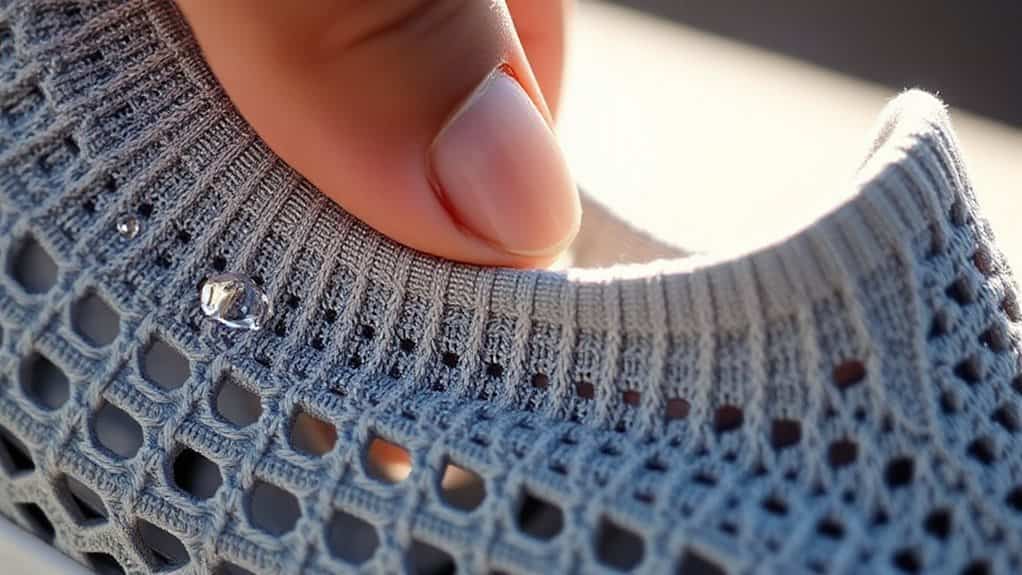
Now that you’ve considered how outsole materials stand up to mileage and surface wear, it’s time to turn your attention upward—literally. Your shoe’s upper affects fit, breathability, and comfort.
Mesh offers breathability and lightness, ideal for speed. Knit gives a sock-like fit with stretch, great for wider feet. Synthetic leather adds durability and weather resistance, while genuine leather molds to your foot over time.
Ripstop nylon brings toughness without weight, perfect for rough conditions. Choose based on your run’s demands.
How Stability Tech Protects Your Knees and Ankles
Because your feet are the foundation of every stride, how they land and move directly affects your knees and ankles—making stability technology a key player in injury prevention.
You get support from wide bases, medial posts, and firm heel counters that align your feet, reduce roll, and absorb impact.
These features work together to keep your joints protected, so you can move freely, confidently, and safely on any run.
Durability vs. Responsiveness: What Lasts Without Slowing You Down?
While you might assume the grippiest or thickest-soled shoes are automatically the most durable, the reality is more subtle—especially when speed and energy return matter just as much as longevity.
You want responsive foam like PEBA or PEBAX, which stays springy, and outsoles with quality rubber where you need it. Balance thickness, coverage, and foam resilience to keep your stride free, fast, and long-lasting without sacrificing miles for performance.
Final Note
You now know what to look for in a great running shoe. Focus on cushioning that suits your stride, a responsive midsole foam, and a stack height and drop that match your running style. Durable outsoles, breathable uppers, and smart stability features all matter. Balance durability with responsiveness, and you’ll find a shoe that supports every mile—comfortably, efficiently, and safely.