Even if you’re in top shape, the thin air at high altitude drops the oxygen your body receives, and that sudden shortage overwhelms even the most conditioned lungs and muscles, triggering headaches, nausea, and fatigue. The lower barometric pressure reduces the partial pressure of inspired oxygen, so each breath carries fewer oxygen molecules, and your body can’t instantly compensate. Rapid ascent speeds this mismatch, while higher resting metabolism in fit athletes raises oxygen demand, making symptoms appear sooner. If you keep going, you’ll uncover more ways to prevent it.
TLDR
- Thin air at high altitude reduces the partial pressure of oxygen, limiting the amount of oxygen that can enter the bloodstream regardless of fitness.
- Rapid ascent outpaces the body’s acclimatization mechanisms, creating an immediate oxygen‑demand deficit that triggers headache, nausea, and fatigue.
- Even elite endurance athletes have high resting metabolic rates, increasing oxygen consumption that thin air cannot supply.
- Fitness‑related parasympathetic dominance can delay the ventilatory response needed to compensate for hypoxia, worsening symptoms.
- Sleep deprivation at altitude, a major AMS risk factor, is common during rapid climbs and amplifies hypoxic stress for everyone.
How Altitude Sickness Works for Everyone, Fit or Not

When you climb to high elevations, altitude sickness can affect anyone—whether you’re a seasoned athlete or a casual hiker—because the thin air reduces the amount of oxygen your body receives, and the body can’t instantly compensate for that drop. Rapid ascent triggers headaches, nausea, fatigue, and sleep loss, even for fit people; acclimatization over three to five days eases ventilation, but risk remains until your system adjusts. The sleep elevation is the most significant factor influencing AMS risk. Expect weather-linked challenges like rapid temperature drops and stronger ridge winds that can worsen symptoms and complicate descent to lower ground, so monitor elevation forecasts when planning climbs.
Oxygen Availability Beats Altitude Sickness at High Elevations
You’ll quickly see that the amount of oxygen you can actually inhale, not how fit you are, sets the altitude ceiling, because the drop in barometric pressure lowers the inspired oxygen partial pressure and triggers hypoxic stress.
Even if you’re in great shape, the reduced driving pressure from your alveoli into the blood limits oxygen transfer, so the core problem remains a shortage of usable oxygen.
In short, oxygen availability determines the limits, and fitness can’t outrun the hypoxic reality at high elevations.
The decline in atmospheric pressure with altitude also reduces air molecule density, meaning there are fewer oxygen molecules per breath as you climb, which directly lowers the inspired PO₂ and worsens hypoxia for everyone, regardless of conditioning (air molecule density).
Reduced Oxygen Determines Altitude Limits
Because the air gets thinner as you climb, the real limit on how high you can go isn’t fitness but the amount of oxygen that actually reaches your lungs.
At 10,000 ft the pressure is about 30% lower, so each breath carries fewer O₂ molecules, dropping arterial saturation toward 90 %.
Your body can’t fully compensate; reduced partial pressure cuts the diffusion gradient, capping safe altitude regardless of conditioning.
Fitness Can’t Beat Hypoxic Reality
Ever wonder why a marathon‑trained runner can still feel the same headache and nausea as a couch‑potato at 12,000 ft?
Even the fittest lungs can’t create oxygen that isn’t there; reduced atmospheric pressure limits oxygen for everyone.
Your high metabolism and parasympathetic tone may actually delay breathing adjustments, and rapid ascent overwhelms any conditioning.
How Endurance Training Can Actually Raise Your AMS Risk
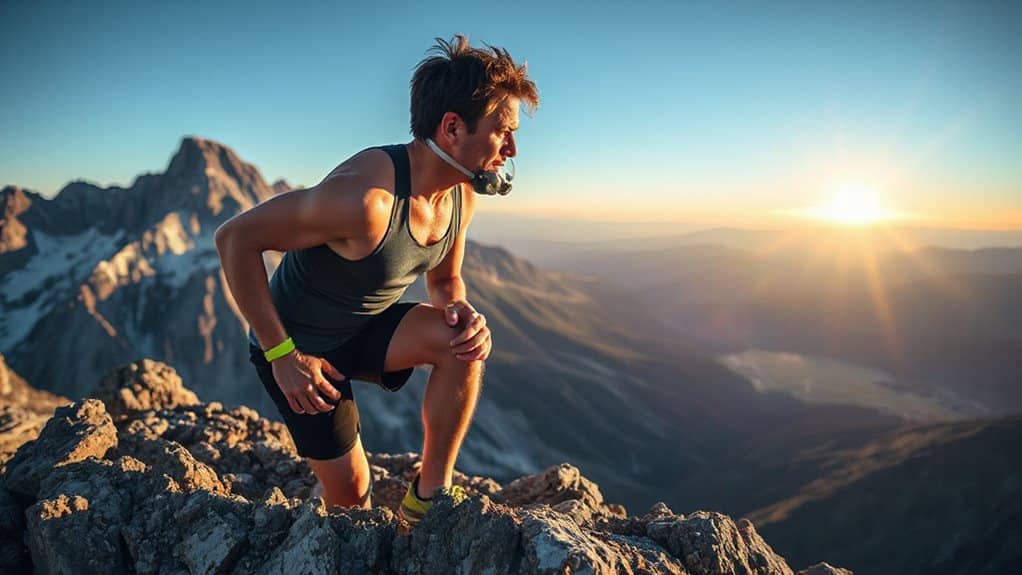
You might think your high VO₂max protects you, but it actually raises your AMS risk by increasing oxygen demand at rest.
Your training‑induced parasympathetic dominance can delay the ventilatory response you need in low‑oxygen environments, while a higher resting metabolic rate means you consume more oxygen when the air is thin.
Together, these adaptations make you more vulnerable to altitude sickness despite your fitness. Building a shelter and conserving energy with the STOP method can reduce additional oxygen demand while you acclimatize.
Higher VO₂max In Increases
When you’ve built a high VO₂max through endurance training, you might think you’re better protected against altitude sickness, but research shows the opposite can happen during a rapid ascent.
Studies reveal endurance athletes develop AMS faster and more severely on day 1 at 3450 m, likely because their parasympathetic tone and metabolic rate rise, while acclimatization time shrinks as they push harder, quicker.
Resting Metabolic Rate Rises
If you’ve spent years enhancing your VO₂max, you might assume that high fitness protects you from altitude sickness, but the opposite can happen: a rapid ascent often triggers a noticeable rise in resting metabolic rate (RMR).
At 3,500 m, endurance athletes see RMR climb about 5 % within 36 hours, increasing energy demands before you even start moving, which can tip you into a negative energy balance, fuel fatigue, and heighten early AMS risk despite your conditioning.
Parasympathetic Dominance Elevates
The rise in resting metabolic rate you just read about is only part of the scene; equally important is how your nervous system reacts to the thin air.
Your endurance training enhances parasympathetic tone, so after rapid ascent your body lags behind the needed sympathetic surge.
This delayed shift hampers oxygen delivery, making the first 24 hours especially risky for AMS, even if you’re fit.
Higher Resting Metabolism Increases Altitude Sickness Risk for Athletes
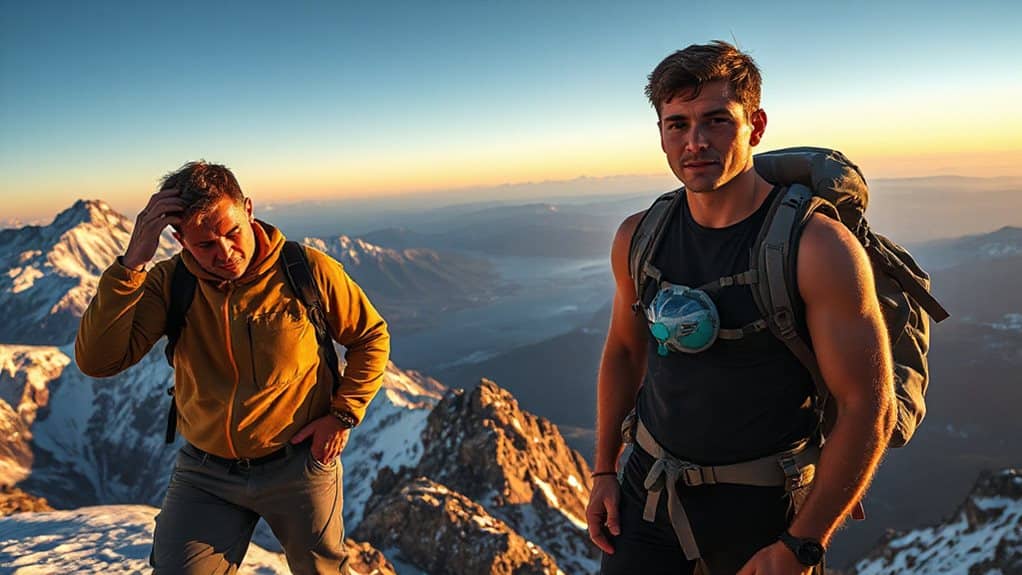
Higher resting metabolism can actually raise your risk of altitude sickness, especially if you’re an endurance‑trained athlete.
Your body already demands more oxygen at sea level, so when the air thins, the extra demand creates a supply‑demand gap, intensifying headache, fatigue, and nausea.
Studies show a42 % AMS rate in trained athletes versus 11 % in novices on day 1, confirming that enhanced RMR amplifies early hypoxic stress before acclimatization catches up.
Overexertion at Altitude Accelerates AMS Symptoms
Your enhanced metabolism already puts you at a higher risk for altitude sickness, and adding hard work on the mountain can push that risk even further.
When you push your heart rate up, oxygen demand outpaces the thin air’s supply, creating a deficit that the body can’t fix quickly.
Even fit hikers develop low blood‑oxygen levels, worsening headache, nausea, and fatigue within hours, so keep activity light until you’ve acclimatized.
Remember to watch for signs like dizziness or slowed thinking and cool down or rest if they appear, since dizziness can signal worsening symptoms.
Ascent Speed Is the Primary Driver of Altitude Sickness

When you climb too quickly, your body simply can’t keep up with the drop in oxygen, and that mismatch is the single most powerful trigger of acute mountain sickness. Rapid ascent outpaces acclimatization, so even fit hikers develop headaches, dizziness, and nausea within hours, especially above 8,000 ft.
Limiting daily gain to 500 m lets your physiology adapt, reducing risk and preserving your freedom to venture. Plan your ascent with a steady daily elevation gain to support acclimatization and reduce altitude sickness risk.
Immediate Body Reactions When Oxygen Drops
Climbing fast forces your body to confront a sudden drop in the amount of oxygen each breath carries, and the nervous system reacts within seconds.
Your carotid bodies sense low oxygen, prompting rapid, deeper breaths that lower CO₂, causing lightheadedness.
Simultaneously, your heart races, pumping faster to deliver oxygen, while blood redirects to well‑ventilated lung zones, and chemistry shifts to improve oxygen loading.
Evidence‑Based Altitude Sickness Prevention Tips for Fit Travelers

If you’re a fit traveler planning a high‑altitude trek, the best way to stay healthy is to let your body adapt gradually, and the science backs up a simple set of strategies.
Sleep at modest elevations, ascend no more than 1,500 feet per day, add rest days every 3,300 feet, hydrate double, favor carbs, avoid alcohol and heavy exercise for 48 hours, and consider Diamox after consulting a doctor.
And Finally
Remember, altitude sickness isn’t a matter of fitness alone; it’s driven by how quickly oxygen drops, how fast you ascend, and how hard you push yourself. Even well‑trained athletes can be vulnerable if they ignore gradual acclimatization, stay hydrated, and pace their exertion. By respecting ascent rates, monitoring your body, and allowing time for adaptation, you’ll reduce symptoms and enjoy high‑altitude journeys safely.