
Pace your ascent by limiting daily elevation gain to 200‑400 ft for easy, 400‑700 ft for moderate, or up to 1,000 ft for difficult hikes, and follow a 2 mph base speed plus one extra hour per 1,000 ft climbed; take rest breaks, stay hydrated by sipping water every 15‑20 minutes (about 0.5‑1 L per hour), and eat frequent high‑carb meals with electrolytes. Avoid alcohol, tobacco, and depressants above 2,500 m, consider acetazolamide 24‑48 hours before ascent, and descend 300 m if mild symptoms appear. Continue for deeper guidance.
TLDR
- Ascend slowly, limiting daily elevation gain to 300 m (≈1,000 ft) and adding rest days every 1,000 m.
- Stay well‑hydrated, sipping water or electrolyte drinks every 15–20 minutes, aiming for 0.5–1 L per hour.
- Consume high‑carbohydrate foods frequently, targeting ~60 % of calories from carbs for energy and acclimatization.
- Avoid alcohol, tobacco, and sedatives above 2,500 m; consider acetazolamide prophylaxis if prone to AMS.
- Monitor for AMS symptoms; if they appear, descend at least 300 m, rest 24 hours, and increase fluid intake.
How to Plan a Safe Daily Elevation Gain

How can you keep your daily elevation gain safe while still enjoying the hike? Check your fitness level, then match the hike’s per‑mile gain to the 200‑400 ft easy, 400‑700 ft moderate, or 700‑1000 ft difficult ranges. Stay within your activity‑level limits—Level 2, for example, caps at 2,295 ft.
Use the 2 mph base speed plus one hour per 1,000 ft rule to pace yourself, and adjust for load or terrain. This lets you explore freely without overtaxing your body. Consider also planning rest breaks and acclimatization stops to reduce risk of altitude-related issues and learn basic altitude awareness.
Understanding elevation is essential for planning safe daily gains.
How to Schedule Rest Days for Acclimatization
After you’ve set a safe daily elevation gain, the next step is to weave regular rest days into your itinerary so your body can adapt to higher altitudes without undue strain.
Take a rest day after every 1,000 m (or 3,000 ft) gained, and add an extra night every third night above 3,000 m, limiting nightly climbs to 300 m.
Rest 2‑3 days on arrival, avoid strenuous activity for the first 24 hours, and descend 70‑100 m if mild AMS appears.
This schedule lets your blood cells adjust, eases symptoms in 2‑4 days, and keeps you moving freely.
How Much Water to Drink at High Altitude?
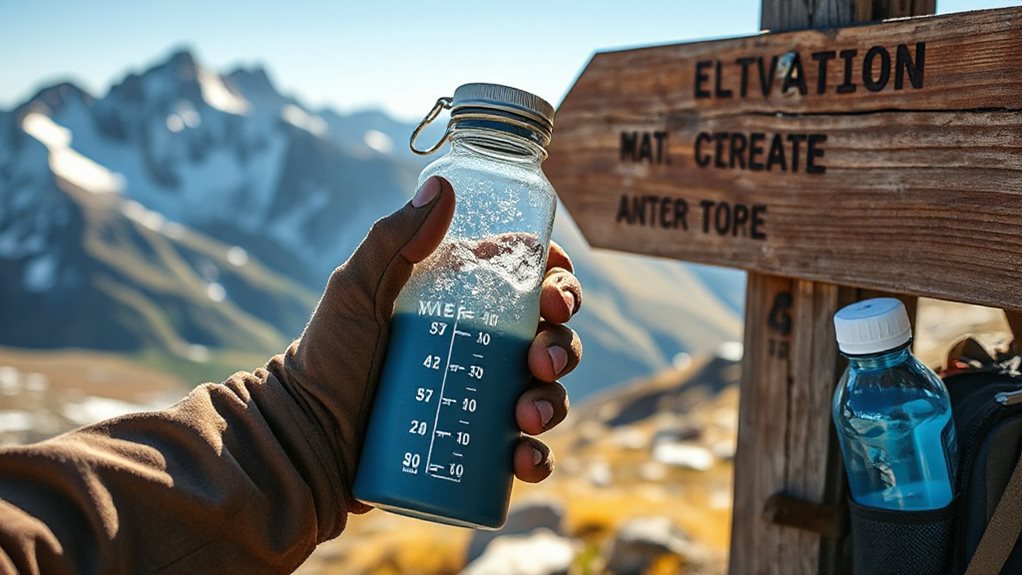
You should sip water every 15–20 minutes while hiking, aiming for about half a liter per hour under moderate effort and more when it’s hot or you’re pushing harder.
Choose electrolyte‑rich drinks or add a pinch of salt to your water, especially on long ascents, because plain water alone won’t replace the salts you lose through sweat.
Watch your urine color and any early headaches—dark urine or a throbbing head means you need to increase intake right away.
Also consider packing a reliable, shockproof compact optic if you’ll be navigating rapidly changing terrain so you can maintain situational awareness while keeping both eyes open.
Hydration Frequency and Timing
Ever noticed how a few sips every few minutes keep you feeling steady on a high‑altitude trek? Sip every 10‑15 minutes, aiming for 0.5‑1 L per hour in moderate heat, up to 1.5 L when it’s scorching or effort spikes. Use a reservoir or front‑pocket bottle to sip continuously, not gulp during breaks, and adjust if you feel thirsty or notice darker urine.
Optimal Fluid Types
Sipping regularly keeps you hydrated, but the type of fluid you choose determines how well your body replaces the salts, carbs, and calories you lose at altitude. Sports drinks with electrolytes and 0.5‑1 g sodium per liter out‑perform plain water, especially on long climbs. Add rapid‑hydration sticks or endurance mixes for calories and minerals, and remember glacier water needs extra salt. Choose carbohydrate‑electrolyte beverages at higher camps for sustained energy.
Signs of Dehydration
How can you tell when your body’s water stores are slipping away on the trail? Early signs appear as a headache, dry mouth, and increased thirst, followed by dark urine and fatigue. Later, dizziness, nausea, confusion, and muscle cramps signal serious loss. At altitude, breathing and cold dry air boost fluid loss, so sip every 15‑20 minutes, watch urine color, and stay ahead of thirst.
How to Choose High‑Carb Foods for Altitude
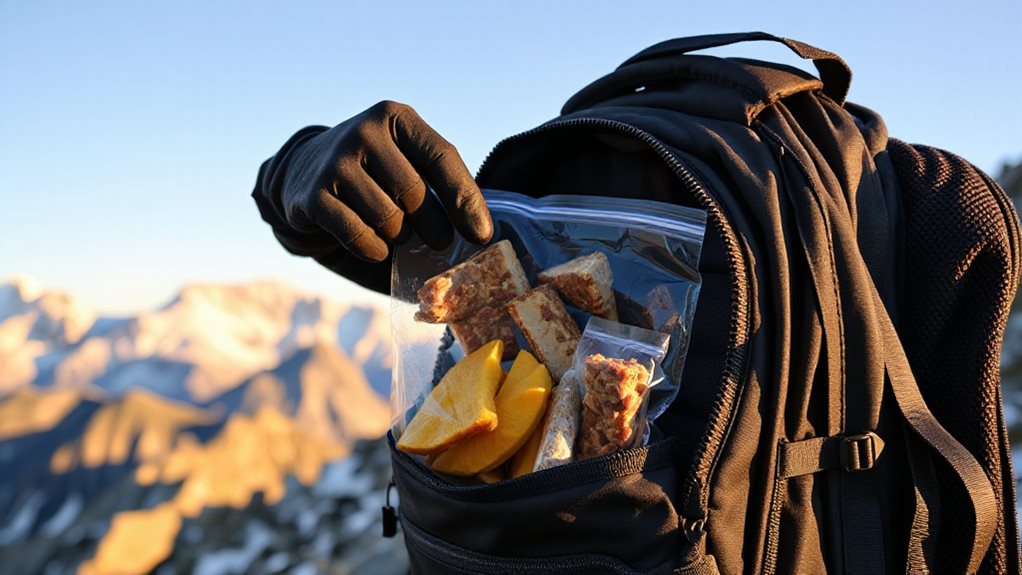
Choosing the right high‑carb foods for altitude hikes can enhance your stamina, lower oxygen demand, and help keep Acute Mountain Sickness at bay.
Pack quinoa, sweet potatoes, brown rice, oats, or pasta for steady glucose, aim for 60% of calories from carbs, eat small frequent meals, carry easy‑digest snacks, pair carbs with tolerated fats, and sip sodium‑rich sports drinks to stay hydrated. Use mapping apps to preview routes and elevation profiles before you go to match food and pace to the climb with elevation graphs for planning.
How to Balance Day Hiking and Night Sleeping
Ever wonder why you feel better after a night at a lower elevation even though you spent the day pushing higher?
You should climb a few hundred feet above camp before dinner, then descend to a sleeping spot no more than 500 m higher than the night before.
Schedule a rest day every third day above 2,500 m, and keep daytime exertion light, especially on the first high‑altitude day.
This rhythm lets your body acclimatize while preserving the freedom to explore.
For longer trips, balance weight and protection when selecting an ultralight tent to ensure safe shelter without overburdening your pack.
How to Avoid Alcohol, Tobacco, and Depressants
You’ll want to skip alcohol entirely once you’re above 2,500 m, because it dehydrates you and dulls your breathing response.
Quit tobacco before you start the ascent, since nicotine and carbon monoxide cut oxygen uptake and slow acclimatization.
And leave any depressant medications at home for the first few days at altitude, as they suppress respiration and raise the risk of mountain sickness.
Consider carrying a water bottle to stay hydrated, as seawater is not drinkable and adequate hydration aids acclimatization.
Skip Alcohol Altitude
Why risk amplifying the already‑thin air with a drink that can sabotage your ascent? At altitude, alcohol intensifies dehydration, headaches, dizziness, and fatigue, while blunting deep sleep and breathing adjustments needed for acclimatization.
Skip drinking for the first 48 hours, stay hydrated, and prioritize rest. This simple choice preserves oxygen delivery, reduces AMS risk, and keeps your trek on track.
Avoid Tobacco Use
How can you keep your lungs working efficiently when the air thins? Quit tobacco before you ascend, because smoking reduces oxygen intake, impairs endothelial function, and can delay acclimatization, even if studies show mixed AMS risk.
Use nicotine replacement if needed, discuss your habit during pre‑trip health checks, and prioritize clear airways for a freer, healthier climb.
No Depressant Medications
Quitting tobacco is only the first step; the next move is to eliminate all depressant substances—especially alcohol—before and during your ascent. Alcohol slows acclimatization, disrupts sleep, masks early sickness signs, and dehydrates you, all of which raise AMS risk. Follow CDC and Cleveland Clinic guidance: avoid any alcohol for the first 48 hours, skip sedatives, and stay hydrated to protect your freedom on the trail.
How to Use Acetazolamide and Other Preventive Drugs
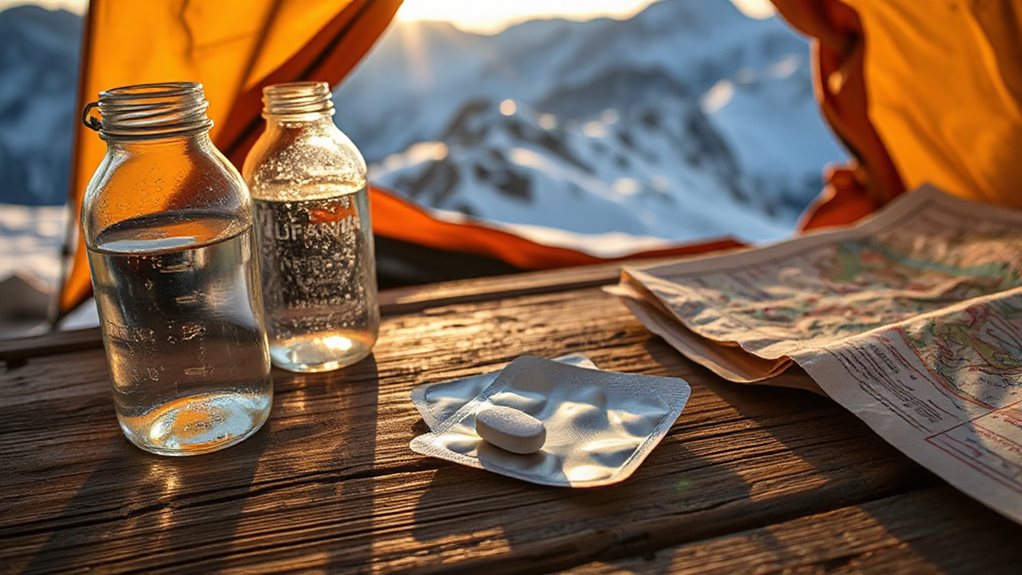
Ever wondered how to keep altitude sickness at bay with medication? Start acetazolamide 24–48 hours before you ascend, 125 mg every 12 hours (250 mg if you weigh over 100 kg). Keep this dose for the first two days at altitude, extending it for longer climbs. For severe risk, dexamethasone 2 mg every 6 hours works, though it doesn’t aid acclimatization. Stop 2–3 days after your highest point.
How to Adjust the Plan When Symptoms Appear?
When symptoms of altitude sickness show up, you need to pause the trek and reassess your plan before you keep going.
Descend at least 300 m, or more if symptoms are moderate to severe, then rest at that lower altitude for 24 hours, staying hydrated and limiting activity.
Use supplemental oxygen if available, inform companions, and only resume ascent after you’re completely symptom‑free.
Final Note
By pacing your ascent, staying hydrated, and fueling with high‑carb foods, you give your body the best chance to adapt. Schedule rest days, avoid depressants, and consider preventive medication if needed. Keep an eye on symptoms and adjust your plan promptly. With these practical steps, you’ll reduce the risk of altitude sickness, enjoy the trek safely, and reach the summit feeling strong and healthy.


