
Pick quick‑dry, moisture‑wicking fabrics like polyester‑nylon blends or merino‑polymer mixes, and choose DWR‑treated jackets and pants that shed water. After a rain shower, squeeze out excess moisture—twist, roll in a dry towel, or use a compact wringer—then hang the garments on a rain‑proof line or indoor rack, using paracord or a foldable arm for tension. Let body heat and tent airflow finish the job overnight, and keep wet items separated in storage to prevent mildew. Continue for more tips.
TLDR
- Choose quick‑dry fabrics like polyester/nylon blends, DWR‑treated outerwear, or merino‑polymer mixes to shed moisture quickly.
- Wring or roll garments in a dry towel before hanging to remove excess water and cut drying time.
- Hang clothes on a rain‑proof line or paracord with tension, using a tarp shelter or tent interior to protect from rain while allowing airflow.
- Utilize body heat and tent ventilation overnight; stuff thin layers against your torso in the sleeping bag to accelerate drying.
- Store any remaining damp items separately in a ventilated area to prevent mildew and keep the campsite dry.
Select Fast‑Dry Fabrics & Gear for Drying Wet Clothes in Rain
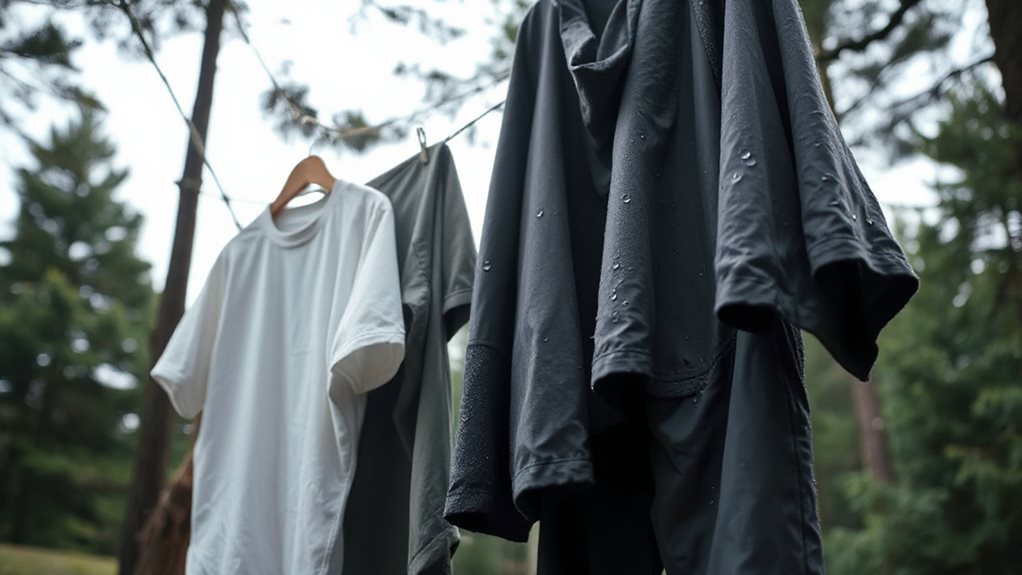
When rain shows up, choosing fast‑dry fabrics and gear can keep your clothing from turning into a soaked mess. Opt for polyester or nylon blends that absorb barely any moisture, and look for DWR‑treated pants or jackets that shed water instantly. Merino‑polymer mixes and rayon drape well while drying quickly. Test drops, check labels, and prioritize ripstop grids for durability, ensuring you stay light, free, and ready for the trail. Quick‑dry fabrics wick moisture by pulling sweat away from the skin and spreading it across a larger surface for rapid evaporation.
Squeeze & Remove Excess Water Before Hanging
If you squeeze out excess water before you hang your clothes, you’ll cut drying time dramatically and keep your campsite tidy. Twist each garment, rub between hands, and apply firm pressure from top to bottom, repeating twice or thrice.
For bulkier items, roll them in a dry towel for 20‑30 minutes, press, then re‑roll in fresh sections.
Use a compact wringer or plunger method for quick extraction, then shake vigorously, check pockets, and avoid over‑twisting delicate fabrics.
Hang a Rain‑Proof Outdoor Clothesline (or Indoor Alternatives) to Dry Wet Clothes
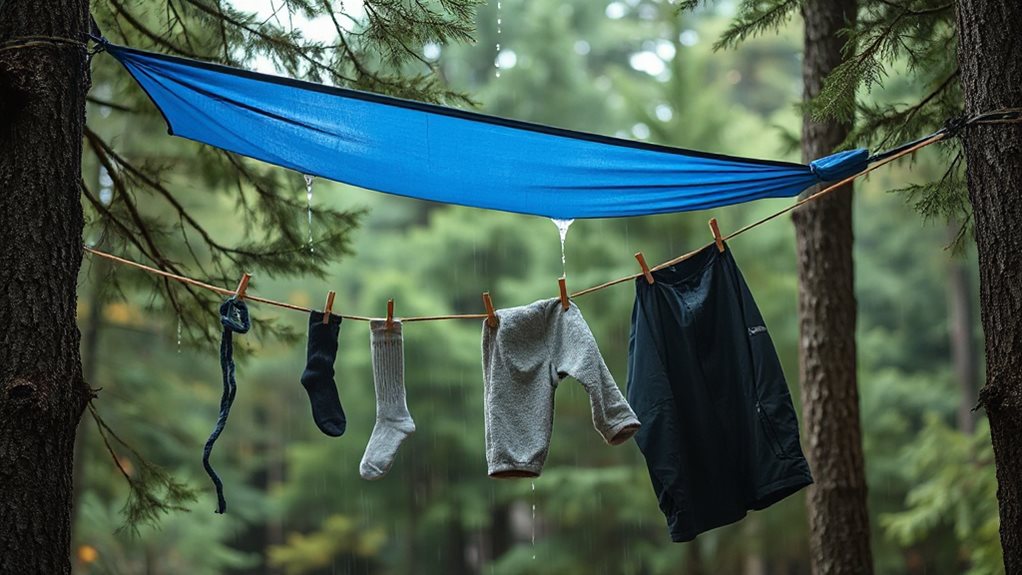
After you’ve wrung out the excess water, set up a rain‑proof clothesline to finish the drying process quickly and keep your gear protected from the downpour.
Wrap paracord around trees or poles, tension it with steel washers, and drape a nylon tarp over the line for shelter.
Use rubber‑bead cords or foldable arms to grip garments, or clamp an Extend‑A‑Line inside a tent for indoor drying.
Use Body Heat & Tent Airflow to Dry Wet Clothes Overnight
Ever wondered how a simple night’s sleep can halve the dampness in your gear? You squeeze out excess water, then stuff socks and thin base layers against your torso, thighs, or feet inside a warmed sleeping bag. Rotate items, use quick‑dry synthetics, and keep a vent open so tent airflow carries moisture away. This low‑heat method leaves clothes breathable enough for the next day. Check forecasts and site conditions to avoid pitching where flood risk could soak drying gear.
Store & Separate Wet Clothes to Stop Mildew & Keep Drying Efficient
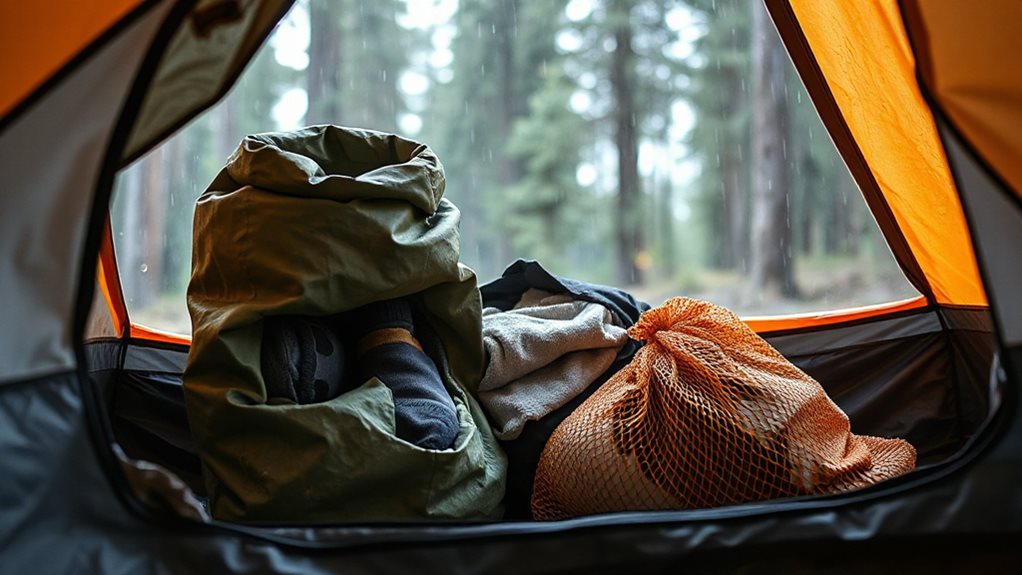
How can you keep your gear from turning into a mold‑friendly mess while you wait for a chance to dry it?
First, wring out excess water, then roll items in a dry towel to soak remaining moisture.
Pack wet pieces in dedicated mesh or Ziploc bags, separate them from dry clothes, and add a desiccant packet.
Hang breathable sacks from tent poles, elevate them off the ground, and use color‑coded bags for quick identification, ensuring airflow and preventing mildew.
Also remember that wind can speed moisture evaporation and increase cooling, so limit exposure and protect extremities with layers to reduce trans‑epidermal water loss.
Final Note
By picking quick‑dry fabrics, squeezing out excess water, and hanging clothes on a rain‑proof line or indoor rack, you’ll keep moisture from lingering. Use body heat and tent airflow at night, and store wet items separately to prevent mildew. These steps combine speed, efficiency, and simple organization, ensuring your gear stays dry even when the weather turns soggy. Follow this routine, and you’ll stay comfortable and ready for the next excursion.


