
You risk gear failure if you don’t test your tent, stove, and sleeping pad at home—do it first to catch issues early. Ignoring weather forecasts can leave you unprepared for sudden storms or freezing temps. Pitching in low spots or near water raises flood danger overnight. Running low on food or water saps energy fast, while overpacking slows you down and underpacking endangers comfort. Never skip a map or leave fires unattended—small oversights can turn serious. There’s more you can do to stay safe and prepared.
TLDR
- Skipping gear testing at home can lead to broken zippers, leaks, or missing parts ruining your camp setup.
- Ignoring weather forecasts and packing for wrong conditions increases risk of hypothermia or heat exhaustion.
- Choosing a campsite in a low spot or near water raises danger of flooding during unexpected rains.
- Failing to purify water or carry enough fluids leads to dehydration and waterborne illnesses in the backcountry.
- Overpacking or under-packing gear throws off balance, slows progress, and compromises safety and comfort.
Test Gear at Home: Or Risk Failure at Camp
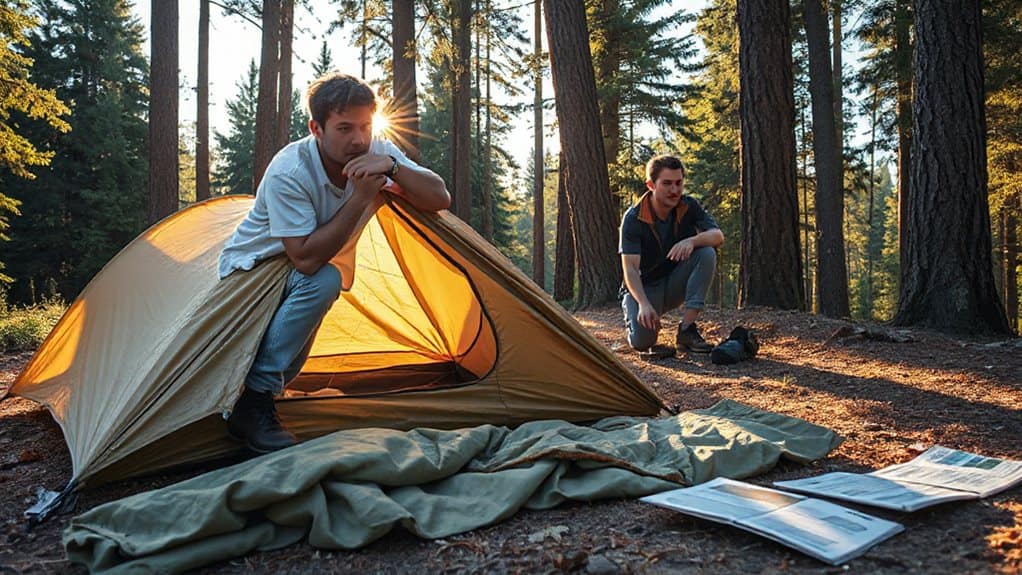
Before you hit the road, take the time to unpack and set up your gear at home—doing so could save your trip before it even begins. Pitch your tent, inflate your sleeping pad, and fire up your stove now, not at camp. You’ll catch broken zippers, weak seams, or missing stakes early, and learn smooth setup tricks. Test everything—rainfly fit, stove stability, pad inflation—so nothing surprises you under the open sky. Early detection of issues can prevent catastrophic failures in the wild, just as critical issues are flagged during product testing to avoid real-world failures. Also, check your essential navigation tools like a good map to avoid getting lost.
Ignore Weather Forecasts? Face Dangerous Surprises
You should check forecasts regularly, especially since conditions can shift quickly once you’re off the grid.
Pack for big temperature swings—mornings might be chilly, afternoons warm, and nights colder than expected, particularly at higher elevations.
Be ready for sudden storms, because afternoon thunderstorms pop up fast in the mountains and often catch unprepared campers off guard.
Choose a campsite with natural wind protection and wind blocks to reduce exposure when storms arrive.
Check Forecasts Religiously
Often, campers overlook just how quickly outdoor conditions can shift—especially when they assume a single weather check is enough. Check forecasts daily, using reliable sources like NWS or MetEye, and update them via satellite devices in remote areas.
Understand precipitation, wind, and storm alerts—they directly impact your safety. Remember, models average conditions, so expect local surprises, especially in mountains or near coasts. Stay alert, stay informed, and keep your excursion safe.
Pack For Temperature Swings
Checking the forecast gives you a snapshot of what’s coming, but it won’t protect you when temperatures swing harder and faster than expected—especially in places where days heat up under blazing sun and nights turn sharply cold.
Pack smart: wear moisture-wicking base layers, add an insulating mid-layer, and top with a breathable, wind-resistant shell.
Bring a sleeping bag rated for the lowest expected temperature, and always use an insulated sleeping pad to block ground chill.
Prepare For Sudden Storms
While weather apps give a helpful glimpse of what’s ahead, they can’t always warn you about sudden storms that roll in faster than you can zip up your tent—especially in remote or topographically complex areas where conditions shift unpredictably.
Rely on multiple sources like NOAA Weather Radio and local forecasts, download updates offline, and watch for darkening clouds, wind shifts, or distant thunder. When storms threaten, act fast: seek a hard-topped vehicle or sturdy shelter, avoid dry washes and low ground, and know your escape routes to higher terrain—your safety depends on staying alert and ready.
Pitch Your Tent in the Wrong Spot? You Could Be in Danger
You might think a flat, scenic spot near a stream is the perfect place to pitch your tent, but it could put you at risk when floodwaters rise overnight.
Watch for warning signs like debris piles in trees or damp soil at the base of slopes—these hint at hidden flood dangers, even if the sky’s clear.
Stay safe by choosing slightly higher ground with natural drainage, keeping a respectful distance from waterways and wildlife trails.
Also consider pitching on elevated ground whenever possible to prevent water accumulation around your tent.
Flood Risk At Dawn
When dawn breaks over the wilderness, the calm stillness can be deceiving—by then, floodwaters may already be on the move, rising silently from rainfall miles away.
You mightn’t hear it over the wind, and fog could hide the danger. Many flash floods strike overnight, catching campers off guard. Pitching too low? That dry riverbed might turn deadly fast—choose higher ground, always.
Hidden Hazards In Plain Sight
Just because a spot looks flat and clear doesn’t mean it’s safe—hidden dangers lurk in plain sight, and choosing the wrong place to pitch your tent can turn a peaceful night into a risky situation.
Avoid dead trees, steep slopes, and animal trails. Steer clear of ridgelines, standing water, and poison plants.
Keep tents 15+ feet from fires, 200+ feet from cooking areas, and never use stoves inside.
Running Out of Food or Water Causes Dangerous Fatigue
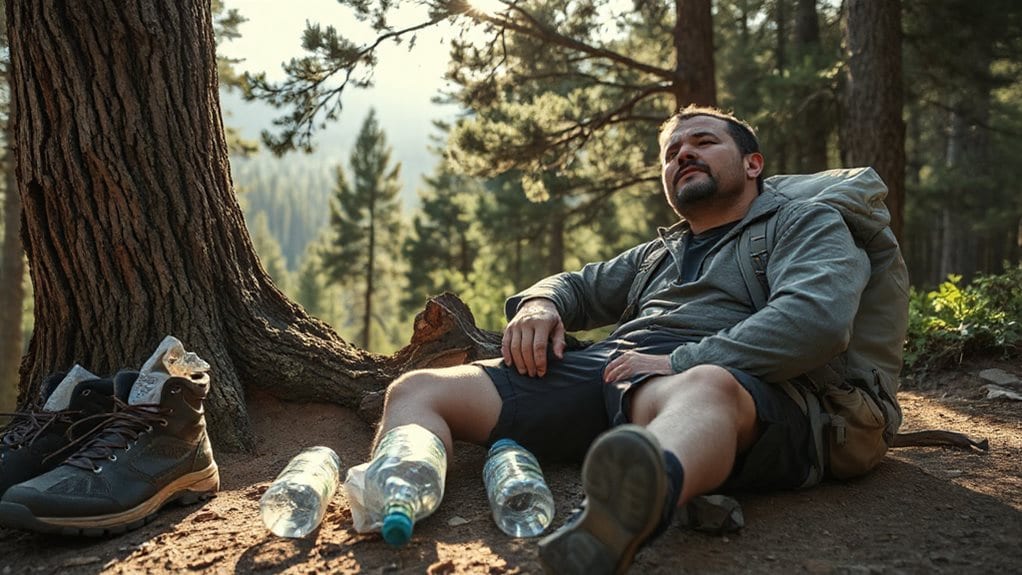
Out on the trail, where every step demands energy and focus, running low on food or water isn’t just uncomfortable—it’s a fast track to dangerous fatigue.
Even 2% dehydration impairs performance, while sustained caloric deficits drain stamina and clarity.
You’ll hike slower, think slower, and risk serious illness if untreated water introduces pathogens.
Pack enough fuel, purify all water, and carry high-calorie, lightweight foods to stay strong, safe, and free. A reliable filter like the Sawyer Squeeze can help you treat water quickly and reduce pack weight.
Overpacking vs. Underpacking: Find the Balance
Packing your bag for a camping trip can make or break your experience, so getting it right matters. Overpacking slows you down, strains your body, and crowds out essentials, while underpacking risks safety and comfort.
Use a trip-specific checklist, prioritize layers and multi-use gear, and weigh items to find balance—carry enough to stay safe and warm, but not so much that you’re burdened.
Pack smart, stay free. Consider your timeline and set a start date to focus preparations and ensure you complete necessary tasks before you go.
Unattended Fires and Missing Maps Create Emergencies
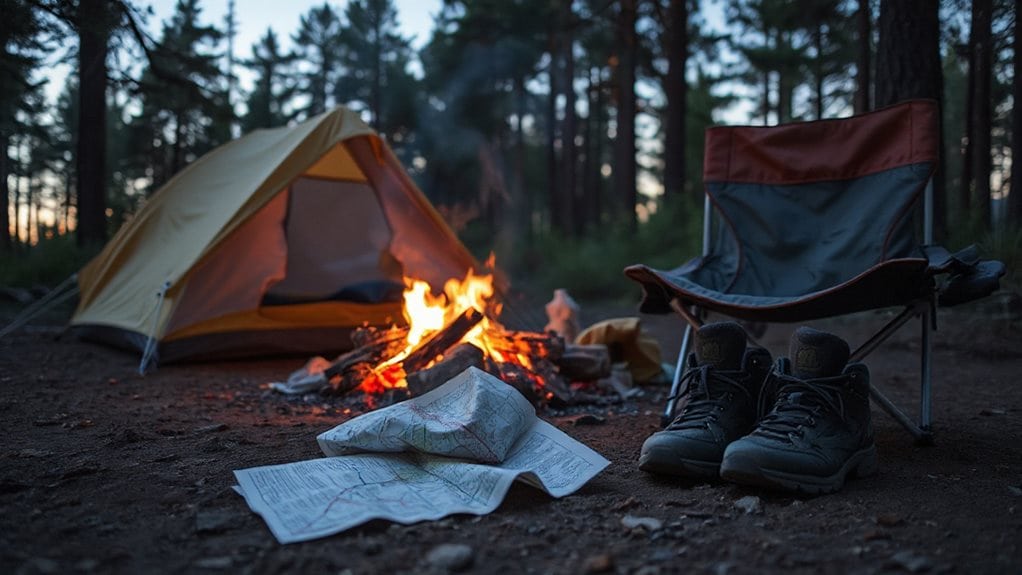
While enjoying the peace of a crackling campfire or exploring a scenic backcountry trail, it’s easy to overlook how quickly small oversights can lead to serious emergencies—especially when fires are left unattended or maps are left behind. You mightn’t see the danger in a smoldering pit, but hidden embers can reignite, sparking wildfires or burning curious kids.
Without a map, a short hike can become a survival test. Always drown fires until cold and carry a physical map—your freedom depends on staying safe, aware, and prepared in the wild.
Final Note
You’ve got this—avoiding common camping mistakes starts with smart prep. Test your gear at home, check the weather, and pick your campsite wisely. Pack balanced supplies: enough food and water, but not too much. Keep fires controlled and maps handy. With these steps, you’ll stay safe, comfortable, and ready to enjoy nature without surprises. Happy camping!


