
Check your government’s travel advisories to pick safer destinations, and always share your trip plan with someone you trust. Pack essentials like a first aid kit, power bank, and water filter, while carrying a PLB for emergencies. Stay alert—keep your phone handy but your eyes up, and know your route with offline maps. Dress like locals to blend in, trust your gut, and leave situations that feel off. You’re already making smarter choices—there’s more to get right.
TLDR
- Check your government’s travel advisories to avoid high-risk destinations and stay informed about local safety concerns.
- Share your detailed trip plan, including lodging and transport, with a trusted contact before heading out.
- Stay aware of your surroundings by minimizing phone use and trusting your instincts if something feels off.
- Carry a personal locator beacon or satellite messenger to call for help in remote outdoor areas.
- Pack essential gear like a first aid kit, water filter, headlamp, and emergency shelter for unexpected situations.
Use Travel Advisories to Pick Safer Solo Travel Destinations
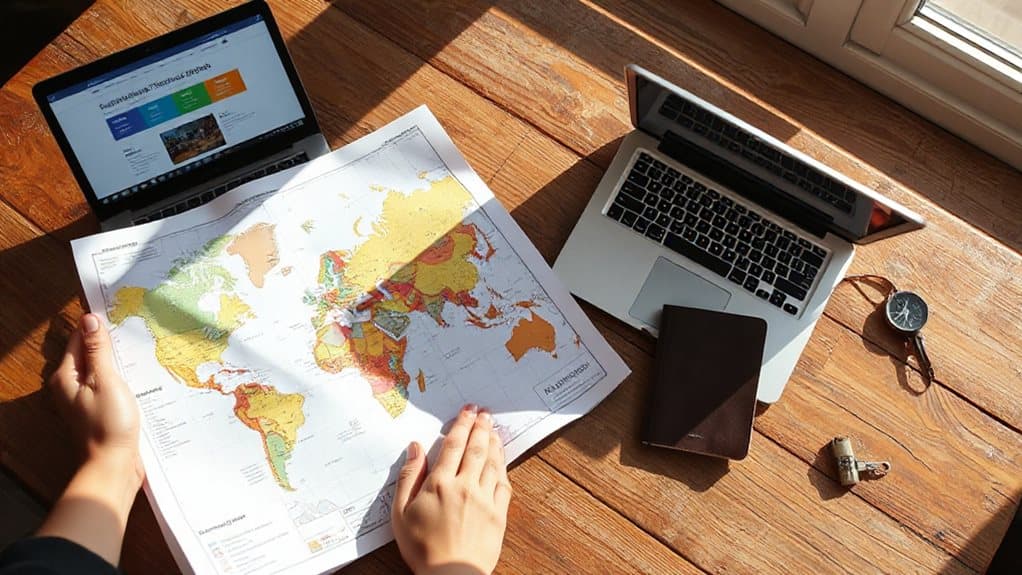
While planning your solo outdoor expedition, starting with official travel advisories can make a big difference in choosing a destination that’s not only exciting but also safe.
Check your home country’s advisory and compare it with others, looking for consistent warnings.
Focus on crime, health, and local risks, especially those affecting solo travelers, and use color-coded maps to avoid high-risk zones.
Consider practical safety measures like blending in with local dress and behavior to reduce unwanted attention while exploring alone.
Create a Solo Trip Plan: and Share It Before You Go
Start strong by building a detailed trip plan—your roadmap to a safe and smooth solo voyage.
Map out each day’s lodging, transport, and activities, including flight numbers, train times, and local transit. Share the plan with a trusted contact, along with copies of your passport, insurance, and bookings. Update it if plans change, and keep offline access handy—freedom feels best when you’re prepared. Also pack a compact first aid kit and basic medications so you can handle minor injuries or ailments on the go (First Aid Kit).
Stay Safe Solo: Scan Surroundings, Avoid Distractions
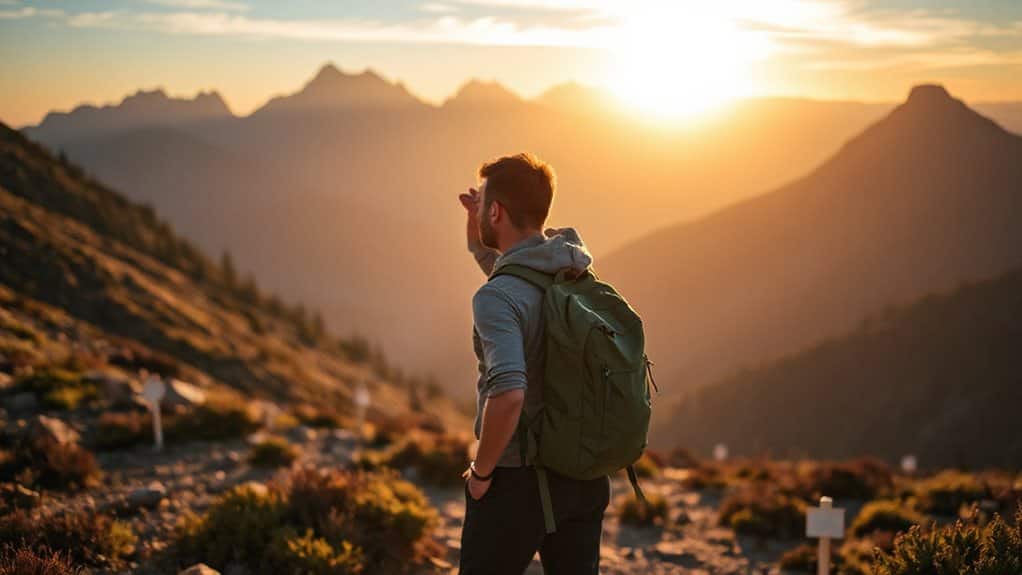
You’re always safer when you’re aware—keeping your eyes and ears open is the simplest, most effective way to stay out of harm’s way while traveling alone.
Scan your surroundings, avoid staring at your phone, and keep earbuds out, or use just one.
Download offline maps, know your route, and trust your gut if something feels off.
Stay alert, stay free.
Pack essential winter gear like insulated gloves and waterproof boots to be prepared for unexpected cold, and learn basic winter survival skills to handle emergencies.
Essential Safety Gear for Solo Travelers (Beyond the Basics)
When venturing into the backcountry alone, having the right gear can make all the difference between a minor setback and a serious situation.
Carry a PLB or satellite messenger for emergency signals, plus GPS and a compass for reliable route-finding.
Pack a headlamp, power bank, and always have emergency shelter, insulation, and a fully stocked first aid kit.
These essentials keep you safe, prepared, and free to roam with confidence.
Also include a compact water filter or purification tablets to ensure safe drinking water on the trail.
Solo Travel Safety: Trust Your Gut, Leave Fast
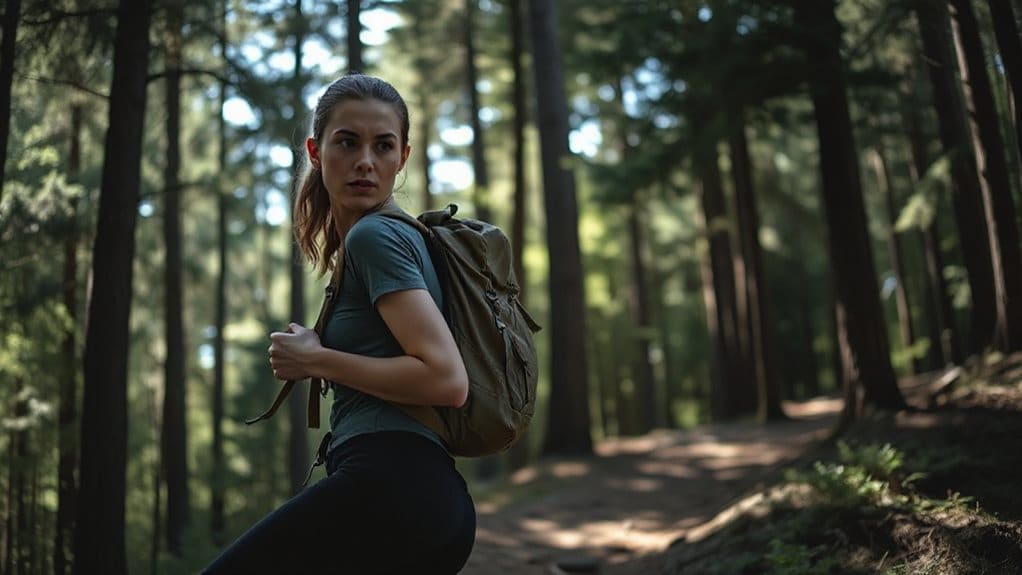
Trusting your instincts isn’t just good advice—it’s a survival skill refined by evolution and experience, quietly scanning your surroundings for subtle shifts in tone, behavior, or environment long before your conscious mind catches up.
If something feels off, it probably is. Don’t rationalize—act. Leave fast, move to crowds or safe havens, and prioritize your safety without apology.
Consider carrying a compact multi-tool for quick fixes and unexpected situations.
Final Note
You’ve got this. By using travel advisories, sharing your plans, staying aware, packing smart, and trusting your instincts, you’re already ahead. Solo travel can be safe and rewarding when you take these steps. Keep your wits about you, stay connected, and don’t hesitate to change plans if something feels off. With a little prep, you’ll enjoy the freedom and confidence that come with exploring on your own.


