
Start with a moisture-wicking base layer to keep sweat off your skin, then add a breathable midlayer—like fleece or a puffy jacket—for warmth. Top it off with a weather-resistant shell that blocks wind and rain while letting moisture escape. Adjust layers as you move or the weather changes, and don’t forget ventilation through zips or layer gaps. Wear hats, gloves, and gaiters to seal in heat. Get the balance right, and you’ll stay dry, warm, and comfortable all day—there’s more to fine-tuning this system than just putting on jackets.
TLDR
- Wear a moisture-wicking base layer to keep skin dry and avoid cotton, which traps sweat.
- Add a breathable midlayer, like fleece or a puffy jacket, for insulation and warmth.
- Use a weather-resistant shell to block wind, rain, and snow while allowing moisture to escape.
- Adjust layers based on activity level—shed or add clothing to prevent overheating or chilling.
- Ensure all layers fit comfortably without restricting movement or compressing insulation.
Start With Layering to Stay Safe and Comfortable Outside
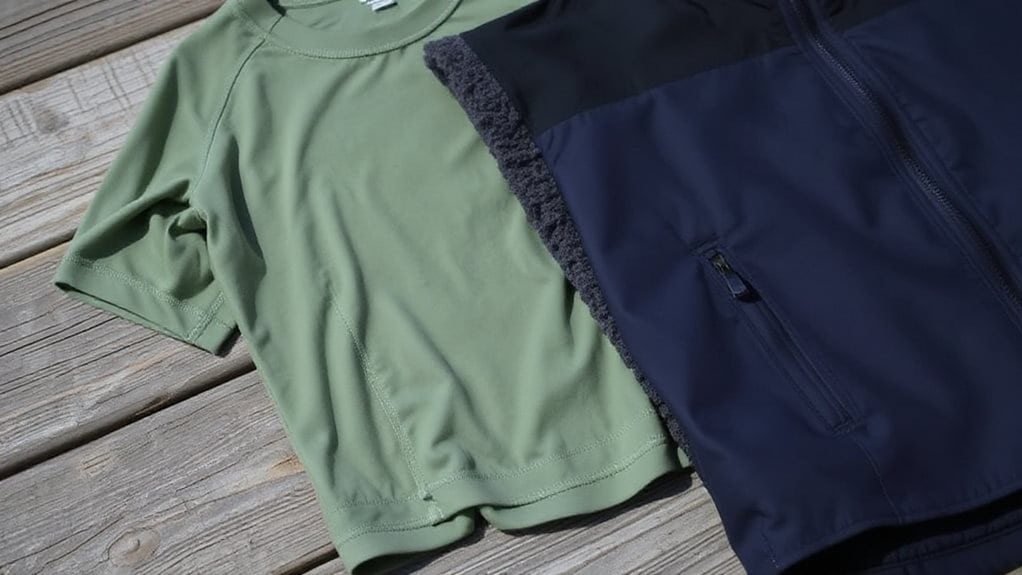
While the great outdoors can be unpredictable, starting with a smart layering system keeps you safe and comfortable no matter the conditions.
You stay warm without overheating, move freely without bulk, and stay dry by wicking moisture.
Layers adapt quickly to changing weather or activity levels, so you’re always in control—ready for exploration, unheld back, and fully protected from wind, rain, and temperature swings.
This adaptability is key to maintaining a balanced body temperature, thanks to the layering system that allows you to add or remove insulation as needed.
Always remember to dress for water temperature when choosing base and insulating layers to stay safe during outdoor activities.
How the 3-Layer System Works in Real Conditions
You’ll stay most comfortable when you actively adjust your layers as conditions and effort change.
Start a bit cool, then unzip, add a mid, or grab your shell before you overheat or get chilled. Smart, small tweaks keep you dry and warm, no matter how the weather or your pace shifts. It also helps to use a moisture-wicking base layer to manage sweat and prevent chilling.
How The System Adapts
When you’re moving hard uphill, your body generates heat and sweat quickly, so the three-layer system has to work proactively to keep you dry and comfortable.
You shed the shell, maybe even a mid layer, to enhance breathability. At rest, you add insulation fast—like a puffy jacket—so warmth doesn’t plummet. Smart layering means staying in control, adapting freely as conditions shift around you.
Layering For Weather Changes
Even in stable weather, conditions can shift quickly once you’re on the move, so dressing in adaptable layers keeps you comfortable as temperatures drop, winds pick up, or storms roll in.
Adjust your base, mid, and outer layers to match changing conditions—vent with zips, add insulation when static, and always keep your shell handy for wind or rain.
Stay dry, stay warm, and move freely.
Choose the Right Base Layer for Moisture Control

What makes a base layer truly effective when you’re pushing your limits outdoors? It wicks sweat fast, dries quickly, and keeps you comfortable. Choose polyester or nylon for speed, Merino wool for odor resistance, or blends like Polartec® Power Wool™ for the best of both. Pick lightweight for high output, midweight for cold, and silkweight for heat—all with flatlock seams and soft, tagless designs to move freely. Wool also retains warmth even when wet, making it a reliable choice in damp conditions and for moisture wicking.
Pick Fleece or Puffy Jackets for Lightweight Warmth
You’ve got your base layer sorted to keep sweat under control, so now it’s time to build on that foundation with the right mid or outer layer for lightweight warmth.
Choose fleece for active warmth—it breathes well, dries fast, and works great under shells. Pick a puffer jacket when you need maximum heat with minimal weight, especially in dry, cold conditions. For very cold or wet conditions, consider adding a waterproof, breathable outer shell to prevent moisture buildup and retain insulation effectiveness (waterproof and breathable).
Use Shells to Complete Your Layering System

You need a shell to protect yourself from wind, rain, and snow while keeping moisture from sweat under control.
Choose a waterproof hardshell for wet storms, a breathable softshell for active days in cool weather, or a lightweight windshell when you just need to block the wind.
Make sure it fits well over your layers, has vents like pit zips, and packs down easily when not in use.
Use a shell that also helps control condensation inside the tent by allowing ventilation and managing moisture ventilation control to keep layers and gear drier.
Waterproof Protection Essentials
When the weather turns and rain starts to fall, your outermost layer makes all the difference in staying dry and comfortable, so choosing the right waterproof shell matters.
Pick a hard shell for heavy rain or snow, with high waterproof ratings and taped seams. Opt for soft shells in light rain when you’re moving fast. Use lightweight, packable shells as emergency layers.
Look for adjustable hoods, sealed zippers, and DWR finishes to stay protected, comfortable, and free to move however you choose.
Ventilation And Fit Tips
While your outer shell shields you from wind and rain, how you manage ventilation and fit plays a crucial role in staying comfortable and dry during active outdoor activities.
Use pit zips, mesh pockets, and two-way zips to dump heat quickly. Adjust cuffs, hems, and hoods for a snug, non-restrictive fit. Match shell breathability to your effort level, and vent early to keep layers dry.
Adapt Your Layers for Cold, Wet, or Hot Weather
Because weather conditions drastically affect how your body manages heat and moisture, adapting your layering system to the environment is essential for staying comfortable and safe outdoors.
In cold, dry weather, trap heat with warm midlayers and windproof shells. When it’s wet, prioritize waterproof protection and synthetic insulation. In hot, sunny conditions, choose lightweight, sun-protective fabrics that breathe and dry quickly.
Ventilate to Stay Dry and Cool
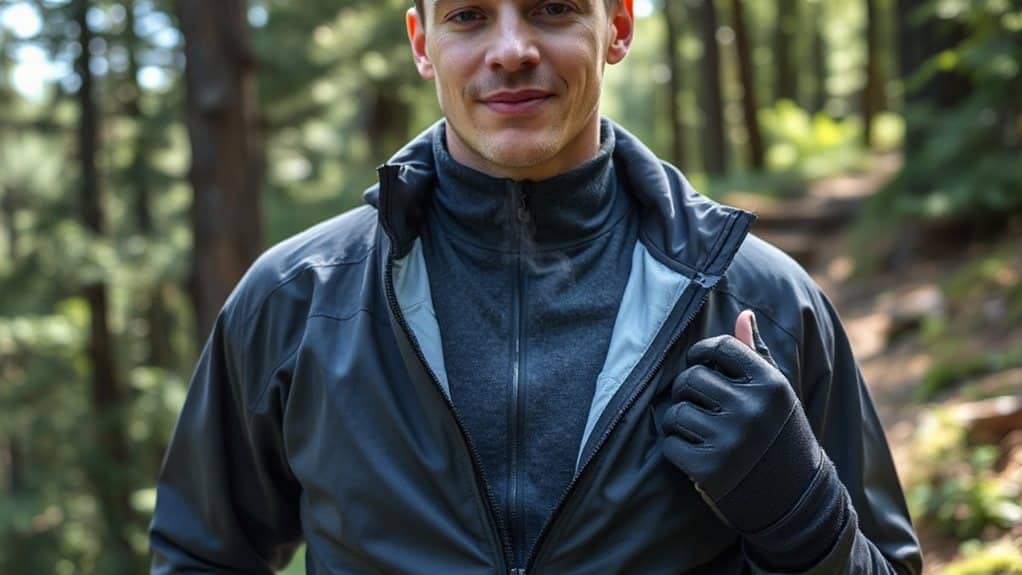
You’ll stay far more comfortable on the trail by managing heat and moisture proactively—starting with smart ventilation. Open zips early to dump heat fast, using pit zips or two-way fronts for quick airflow.
Choose breathable shells that let vapor escape, not just block rain. Wear wicking layers that move sweat away, and adjust vents often to stay dry, not soaked.
Stop Sweating: Avoid These Layering Mistakes
Often, the difference between a comfortable hike and a soggy slog comes down to avoiding common layering mistakes—ones that turn manageable exertion into excessive sweating and damp, chilly misery.
Skip cotton, overdressing, and tight fits; they trap moisture and heat. Instead, wear moisture-wicking base layers, start slightly cool, adjust early, and choose breathable shells. Stay dry, stay in control.
Wear Layers That Move With You: Not Against You

You need layers that move with your body, not against it—start by choosing a fit that supports your stride, reach, and bend without binding.
Avoid compressing your base or mid-layers under tight shells, since restricted fabric can limit mobility and reduce insulation.
Look for stretch zones, articulated joints, and low-friction details so you can adjust quickly and stay efficient on the trail.
Fit For Movement
When hitting the trail or tackling rugged terrain, your clothing shouldn’t hold you back—instead, it should move with you, not against you. Choose stretch fabrics and articulated patterning for freedom at shoulders, hips, and knees.
Fit layers close but not tight, and size outer shells to accommodate mid-layers. Avoid excess fabric that snags, and use adjustable hems and cuffs to stay agile, protected, and on the move.
Avoid Layer Compression
While it might seem logical to bundle up tightly when facing cold or changing conditions, compressing your layers defeats the purpose of layering altogether—trapping less air, restricting movement, and hindering moisture control.
Keep mid-layers loose to maintain warmth, allow airflow, and prevent sweat buildup.
Let each layer work as it should—move freely, stay dry, and stay in control—without squeezing the life out of your system.
Adjust Easily On Trail
Dressing for the trail means building a system that works *with* your body, not against it—so skip stiff, restrictive fabrics that fight every move. Choose stretch fabrics, gusseted panels, and technical cuts that flex with your body.
Wear soft shell or hybrid jackets for breathable mobility. Pick lightweight, quick-drying layers you can easily add or remove, keeping comfort high and bulk low as conditions shift around you.
Don’t Forget Hats, Gloves, and Gaiters in Your System

You’ll often overlook them, but hats, gloves, and gaiters are essential players in a smart outdoor layering system—just like your base, mid, and outer layers, these accessories manage heat, moisture, and protection where your body needs it most.
Choose beanies, liners, or balaclavas for warmth and moisture control. Use glove layers for dexterity and insulation. Wear gaiters to block snow and debris.
Match materials and weight to conditions, and stay comfortable, protected, and free to move.
Final Note
You’ve got this—layering keeps you safe, dry, and comfortable outside. Start with a moisture-wicking base, add an insulating mid-layer like fleece or down, and finish with a weatherproof shell. Adjust layers to avoid sweating, and don’t forget your head, hands, and feet. Choose breathable, flexible clothing that moves with you. With the right system, you’ll stay warm when it’s cold and cool when you’re active—no guesswork needed.


