
Pick a trail that matches your dog’s fitness—easy, flat paths for beginners, steeper, rugged routes only if you’re experienced and the dog is conditioned. Use a sturdy 4‑6‑foot cloth or leather leash, avoid retractables, and keep a hands‑free waist belt for busy sections. Pack water, a collapsible bowl, paw booties, and a compact first‑aid kit; stay hydrated and take shade breaks early to dodge peak heat. Respect leash rules, keep the dog on the path, pick up waste, and ask permission before any interaction. Train reliable recall with high‑value treats and “watch me” commands, gradually increasing distance and distractions. Follow these steps and you’ll be ready for a safe, enjoyable hike, plus more details await if you keep going.
TLDR
- Choose a trail that matches your dog’s fitness, size, and leash‑rules; opt for shaded, gentle paths in hot weather.
- Keep your dog on a sturdy 4–6‑foot leash or hands‑free waist belt, and respect other hikers by asking permission before interactions.
- Pack a compact first‑aid kit, enough water with a collapsible bowl, and paw protection such as booties for varied terrain.
- Start early, take frequent shade breaks, and stay within a mile of water sources to prevent heat exhaustion for both dog and owner.
- Train reliable recall, “watch me,” and “come” commands with high‑value treats, gradually increasing distance and distractions before the hike.
Choose the Right Trail for Your Dog
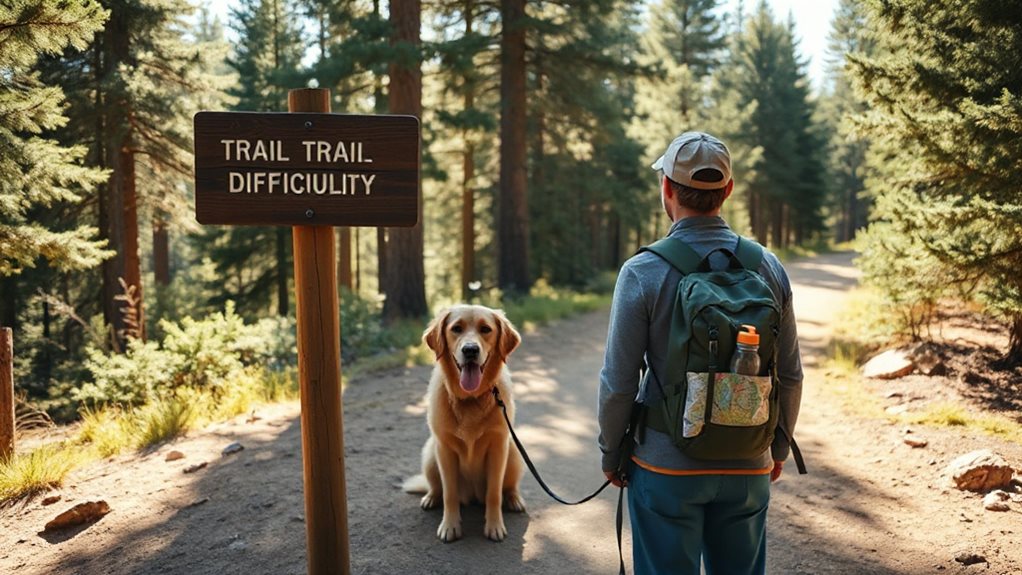
First, gauge your dog’s fitness: steep, rugged routes like Black Butte demand experience, while gentle, shaded paths such as McCloud River Three Falls suit leashed pups in summer. Match difficulty to ability—flat paved lanes like Contra Costa Canal Trail offer easy walks, whereas Franconia Ridge fits conditioned, adventurous dogs. Check leash rules and terrain, then choose a trail that balances challenge with safety. Buddy heater precautions are important to know for overnight trips in tents to avoid carbon monoxide buildup. Mount Judah Loop offers scenic views of Donner Lake and wildflowers, making it a rewarding option for fit hikers and leashed dogs.
Master Leash & Trail Etiquette
How can you keep your dog safe and respectful on the trail? Use a sturdy 4‑6‑foot cloth or leather leash, never a retractable one, and consider a hands‑free waist belt for busy sections.
Scan ahead, recall to heel when passing hikers, and ask permission before any interaction.
Keep your dog on the path, away from wildlife, and always pick up waste.
This simple etiquette protects freedom for everyone.
Also be aware that contact with plants like poison ivy can cause severe reactions, so learn to recognize “leaves of three” on the trail.
Pack Must‑Have Dog Hiking Safety Gear

You’ll want a compact first‑aid kit right in your pack, stocked with bandages, antiseptic wipes, and a muzzle for safe extra if needed.
Bring enough water and a collapsible bowl so your dog stays hydrated, even on hot days or after a vigorous climb.
And don’t forget protective footwear—booties or sturdy shoes guard paws against hot rocks, icy trails, and sharp debris, keeping every step comfortable and safe.
Consider bringing a First Aid Kit similar to those recommended for outdoor activities to ensure you’re prepared for emergencies.
First‑Aid Kit
A well‑stocked first‑aid kit is the cornerstone of safe dog hiking, giving you the tools to treat cuts, scrapes, and emergencies without missing a beat. Pack gauze pads, adhesive tape, vet wrap, and non‑stick bandages for wounds; bring antiseptic wipes, hydrogen peroxide, and saline for cleaning.
Include antibiotic ointment, styptic powder, and insect‑bite relief. Add scissors, tweezers, a multi‑tool, gloves, an instant cold pack, a digital thermometer, and a waterproof pouch to stay organized and ready.
Hydration Supplies
Ever wondered how much water your dog actually needs on a trail? Aim for at least eight ounces per hour, scaling up for larger breeds—two to three liters on multi‑hour hikes. Pack a BPA‑free collapsible bowl, a 22‑oz squeeze bottle with a cup, and a lightweight nylon bowl that clips to your pack. Keep water clean, avoid puddles, and use filters or pre‑filled bottles to prevent parasites.
Protective Footwear
How can you keep your dog’s paws safe on scorching pavement, icy trails, or jagged rocky paths? Choose booties that match conditions—lightweight mesh for heat, insulated rubber for snow, reinforced soles for sharp rocks. Measure each paw, use adjustable straps, and limit wear to a few hours. Look for non‑slip grips, reflective strips, and breathable fabrics, ensuring comfort and protection without sacrificing freedom.
Prevent Heat‑Related Issues on the Trail

Start your trek early, when temperatures are cooler and the sun isn’t at its peak, and plan to pause in the shade every few miles to let both you and your dog recover.
Keep water stations within a short distance—ideally a mile apart—so you can offer fresh water and maybe a quick paw‑cooling splash without losing momentum.
Monitor for signs of heat exhaustion, and if your dog shows confusion, lack of sweating, or a very high temperature call 911 immediately.
Morning Hikes, Cooler Temperatures
Why choose a morning hike? Cool air keeps temperatures below 75°F, so your dog avoids panting and overheating. Pick high‑elevation or shaded trails, carry one ounce of water per pound of weight, and stop every 20‑30 minutes for drinking. Use a collapsible bowl, wet your dog’s belly and paws, and check paw pads often. This pace lets you enjoy freedom without risking heat‑related issues.
Frequent Shade Breaks
A well‑placed shade break can be the difference between a comfortable hike and a dangerous heat episode for your dog, so plan to pause under trees or a portable canopy every 15‑30 minutes when temperatures climb toward 70°F or higher.
Choose dense canopy routes, bring a cooling mat or damp towel, and watch for panting, drooling, or lethargy.
Adjust frequency for brachycephalic breeds, double coats, or high humidity, ensuring each stop restores comfort and prevents overheating.
Hydration Stations Every Mile
Ever notice how a quick drink can feel like a reset button for both you and your dog on a hot trail?
Set up hydration stations every mile, offering 3‑8 oz every 15‑20 minutes, so you never wait for thirst.
Pack at least a liter extra beyond estimates, sip before each water source, and adjust for heat—this keeps you and your pup energized and safe.
Watch Out for Dog‑Specific Wildlife Hazards
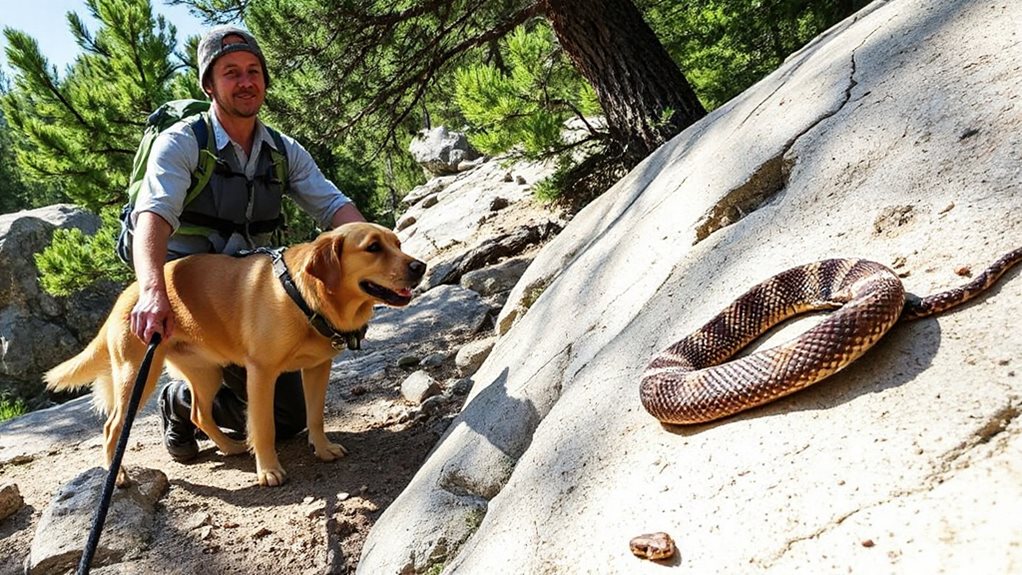
Where do the risks lie when you bring your dog onto a trail? Dogs can chase, stress, or even kill tortoises, seals, birds, squirrels, and deer, pushing wildlife at least 50 meters away. Off-leash pups increase predation and trampling, reducing bird diversity by 35% and tramaging nesting grounds. Keep your dog leashed, stay on paths, and respect wildlife buffers to preserve both freedom and ecosystem health. Helmets reduce head injury risk by up to 85% when people engage in activities with fall risk, so ensure you carry basic safety gear on group outings.
Train Core Commands & Recall for Emergencies
How can you make sure your dog responds instantly when a trail emergency arises? Start close, use a happy tone for the name and “come,” flash a high‑value treat, reward immediately.
Gradually increase distance, add a long leash, practice “watch me” and “touch” to keep focus, introduce mild distractions, then fade treats, testing reliability on hikes with whistles and occasional rewards.
Final Note
By choosing a suitable trail, respecting leash rules, packing essential gear, and staying alert to heat and wildlife risks, you’ll keep your dog safe and happy on every hike. Consistent training of core commands and reliable recall further protects both of you when emergencies arise. Follow these practical steps, and you’ll enjoy confident, enjoyable adventures together, turning each trek into a rewarding experience for you and your canine companion.


