
Pick lightweight, quick‑drying boots with mesh uppers, then wear them at home for an hour to soften the material. Slip on moisture‑wicking padded socks, add a thin liner, and use a heel‑lock lacing technique to prevent slippage. Gradually log 20 miles of varied terrain, starting with short walks and adding distance each day. Apply a leather conditioner or cream to damp boots, use a hair dryer on low heat for stubborn spots, and treat any blisters early with moleskin or antiseptic. Follow these steps and you’ll break in your boots faster, plus more tips await if you keep going.
TLDR
- Wear boots at home for an hour daily, using moisture‑wicking socks and heel‑lock lacing to soften material and spot hot spots.
- Take short walks or stairs tests, gradually increasing to about 20 miles to allow the boot to conform to your foot.
- Use wet‑techniques: lightly dampen leather, wear until dry, then apply leather oil or conditioner for flexibility.
- Apply heat sparingly with a hair dryer or warm packs, then let the boot rest overnight to relax the material.
- Insert custom insoles or trim them to control volume, and treat any blisters immediately with moleskin or blister pads.
Pick Boots That Break In Quickly

Ever wonder which boots will feel comfortable after just one hike? Choose synthetic models—lightweight, flexible, and quick‑drying. They break in after a single trek, especially trail runners and lightweight hiking shoes with mesh uppers that breathe and stay supple. Look for Salomon X Ultra 4 or similar, where the sole softens instantly, giving you freedom without weeks of wear. The break‑in period can be as short as a few days when you use regular short hikes to let the material adapt gradually. Test your gear at home first to catch issues like fit, seams, or leaks before you head out on a trip and ensure early detection prevents failures.
Prepare Your Feet: Sock, Lacing, and Insole Strategies
Put on moisture‑wicking padded socks that keep sweat away and cushion your heels, then add a thin liner sock for extra protection.
Use a heel‑lock lacing technique to secure the tongue and eliminate slippage while still letting your foot move naturally.
Slip in custom insoles that control volume and support your arch, and adjust them as needed to prevent hot spots during the break‑in.
Consider the additional long‑term costs of ownership, like maintenance costs, when choosing durable boots that will last.
Moisture‑Wicking Padded Socks
When you lace up for a hike, the right pair of moisture‑wicking padded socks can make the difference between a comfortable trek and painful blisters. Choose merino‑blend or synthetic fibers that pull sweat to the surface, let it evaporate, and stay breathable. Mesh zones improve airflow, while padding reduces friction. These socks regulate temperature, keep feet dry, and inhibit odor‑causing bacteria, letting you move freely without discomfort.
Heel‑Lock Lacing Technique
Why does your heel keep slipping up the boot on a steep climb? Apply a heel‑lock: lace snugly over the instep, then run each lace straight up to the next quick‑lace hooks, skipping the criss‑cross. Thread one lace under the opposite lace, pull upward, and repeat on the other side. Criss‑cross the remaining eyelets, tie a double knot, and you’ll lock your heel securely, reducing friction and enhancing stability.
Custom Insoles for Volume Control
After securing your heel with a lock lacing, the next step in preventing foot movement is managing the boot’s internal volume. Swap the thin stock insole for a custom‑molded one that matches your arch height, adding a high‑density PE base for bend resistance and an AMF top layer for moisture control. Trim or slide the insole to fill excess space, then place a heel cushion against the back for extra stability.
Indoor Boot‑Wear Warm‑Up
Start by slipping your boots on for an hour, moving around the house, standing, and walking to let the material soften.
When you feel ready, head to a set of stairs and do a quick stairs test—climb up and down a few times, using the toe edge to keep pressure even and check for any hot spots.
This short indoor warm‑up gives you a clear feel for fit and lets you adjust lacing or socks before you head outdoors.
Also consider warming socks and breathable layers to simulate hiking conditions and reduce break‑in time, and choose plant-based options where possible to support eco-friendly camping choices.
Boot Wear Warm‑Up
Ever wondered how to turn a stiff pair of hiking boots into a comfortable companion before hitting the trail? Start with two‑hour indoor sessions, wearing the exact hiking socks you’ll use, layer them if you need extra stretch, and walk around the house. Lace snugly, add a heel lock, and keep the tongue straight. Spot hot spots, apply leather softener, and adjust laces as needed.
Quick Stairs Test
Your boots may already feel a bit looser after the warm‑up walk, but the real test of flexibility comes when you mimic the up‑and‑down motion of a trail.
Slip on thick socks, find a safe 10‑step staircase, and climb continuously for five minutes, then side‑step to stress the walls.
Pause, flex the creases, repeat for twenty minutes, and track torsional twist for freedom‑focused comfort.
Master the 20‑Mile Minimum to Break In Boots

A 20‑mile minimum isn’t a hard‑and‑fast rule, but aiming for roughly that distance helps you gauge when your boots have softened enough for longer hikes.
Start with short walks, then add a few miles each day, letting the leather or synthetic material flex gradually.
Light boots may feel okay after one hike; sturdy leather ones need weeks of varied mileage before you feel truly free on the trail.
Consider checking weather and sun protection recommendations like sunscreen and waterproof clothing to avoid discomfort during longer break‑in hikes.
Add Weight and Vary Terrain Gradually
If you start adding weight and mixing terrain early on, your boots will begin to flex and conform to the shapes you’ll encounter on longer hikes. Begin with light packs on 1‑hour neighborhood walks, then gradually increase load and distance.
Choose short hikes with inclines, rocks, and dirt, then add heavier packs on steeper sections.
Watch for hot spots, adjust lacing, and let the boots adapt naturally.
Wet‑Techniques to Break In Leather Hiking Boots Safely

You can start with light‑dampened walks, letting a misty drizzle or a damp lawn soften the leather just enough to mold to your foot.
If you need a bit more moisture, fill a zip‑lock bag with a few teaspoons of water, tuck it inside the boot, and wear it for a short period while you move around, then remove it before the boot dries completely.
For stubborn spots, a gentle heat stretch—using a hairdryer on low while you flex the boot—helps the material relax without risking damage.
Regularly inspect and care for your gear to catch issues early and extend its useful life, especially checking joint tightness and condition before and after trips.
Light Dampened Walks
Ever wondered how a quick splash can turn stiff leather boots into comfortable companions? Light dampened walks let moisture soften leather while you move, shaping the cup to your foot. Start with short creek strolls, then dry naturally; apply a thin coat of leather oil afterward to lock in flexibility.
Use powder in socks and moleskin on hot spots, and increase distance gradually, avoiding prolonged soaking.
Controlled Water Fill
Light‑dampened walks showed how a little moisture can coax stiff leather into shape, but when you need a faster, more reliable break‑in, a controlled water fill takes the process a step further.
Fill each boot with lukewarm water, seal the tops, wear them until dry, swapping soggy socks for fresh ones.
After drying, towel‑dry thoroughly, then oil the leather to preserve flexibility and prevent cracking.
Gentle Heat Stretching
How can you soften stubborn leather without risking damage? Hold a hair dryer 4‑6 inches away, moving constantly for 1‑2 minutes on medium heat, targeting tight spots like the instep and heel.
Immediately slip on thick socks, walk while the leather’s warm, then let the boots cool in that shape. This gentle heat stretching frees your feet, preserving boot integrity.
Stretch and Expand Your Boots at Home

When your hiking boots feel too tight, a few simple home techniques can give them the extra room you need without a costly professional stretch.
Warm a blow dryer 5 inches away, heat tight spots for a minute, then walk around in the warm boots.
Soak genuine leather in lukewarm water, wear thick socks until dry.
Freeze water‑filled bags inside tight areas overnight.
Use a two‑piece wooden wedge stretcher for targeted expansion.
Use Creams and Heat to Keep Your Boots Comfortable Overnight
After you’ve stretched the tight spots at home, the next step is to soften the leather even more with cream and heat, letting the boots mold to your feet while you sleep.
Apply a leather conditioner to slightly damp boots, then use a hairdryer on low to warm problem areas for a few minutes.
The heat makes the cream penetrate faster, allowing the leather to relax and conform overnight.
Store the boots in a cool, dry spot, away from direct sunlight, and wake up to a more supple, comfortable fit.
Spot and Treat Blisters Early
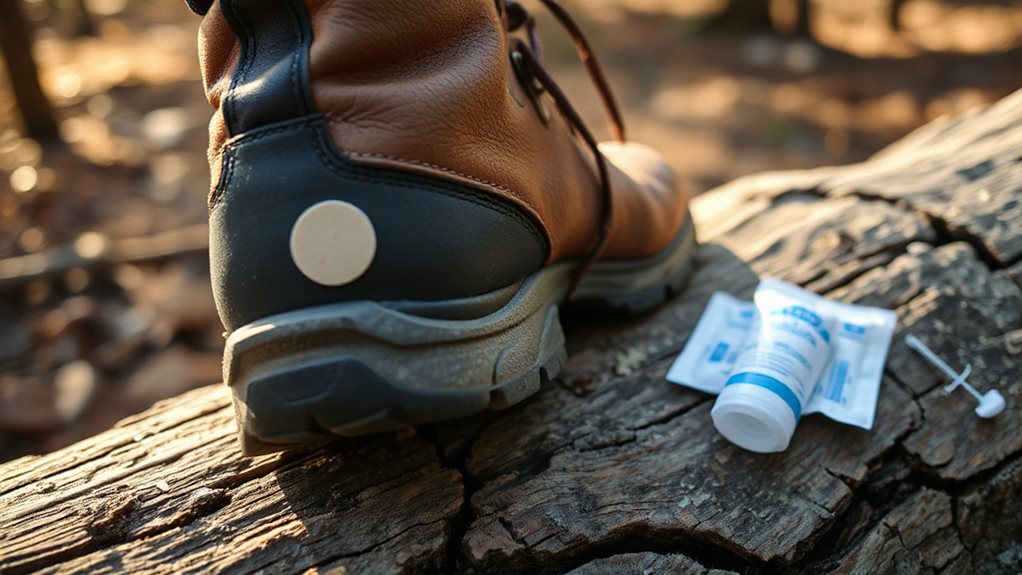
Ever notice a hot, stingy sensation in your foot after a few miles? Spot it early, pull off boot and sock, wipe the red spot with an alcohol pad, let it air‑dry, then cover it with moleskin or surgical tape, using benzoin tincture for grip.
Keep a blister kit—gel pads, tape, antiseptic wipes—handy, and treat any blister with a doughnut‑cut moleskin, tape, and optional antibiotic ointment, changing dressings daily.
How Long Leather, Synthetic, and Fabric Boots Take to Break In
Spotting a blister early saves you pain, but the next step is understanding how long your boots need to settle in before they feel like a second skin. Leather boots, especially full‑grain or nubuck, often need two to four weeks of regular hikes; synthetic models usually soften after a day or a few short walks, while fabric‑based boots may feel comfortable after a single trek. Frequency, foot shape, and weight all influence these timelines.
Troubleshooting: When Boots Won’t Break In and What to Do

Why do your boots still feel stiff after weeks of hiking?
Check lacing—tighten heel lock, add a surgeon’s knot, and adjust tightness to eliminate slip and pressure spots.
Swap thin cotton socks for merino or liner socks, apply Vaseline or Body Glide to friction zones, and use blister pads if hot spots appear.
If the fit feels wrong, get a professional fitting; insoles can help, but sometimes a different boot is necessary.
Final Note
By choosing boots that break in quickly, prepping your feet with the right socks, lacing, and insoles, and warming them up indoors, you’ll shorten the adjustment period. Stick to the 20‑mile minimum, add weight and vary terrain gradually, and use creams or heat to keep them comfortable overnight. Treat blisters early, and recognize that leather, synthetic, and fabric boots each have distinct break‑in timelines. If problems persist, troubleshoot promptly to ensure a smooth, pain‑free hiking experience.


