
Raccoons show up at campsites when you leave food unsecured, sugary snacks, greasy leftovers, or pet kibble out in the open, because the scent trails guide them straight to the feast. Water nearby—streams, marshy edges, or puddles—plus dense vegetation and overhanging branches give them shelter and a perfect foraging zone. Open trash cans and careless waste disposal add to the attraction, while sealed containers, airtight bags, and prompt cleanup break the scent trail and deny them easy meals. If you keep these habits in check, you’ll learn even more ways to stay raccoon‑free.
TLDR
- Unsecured food, sugary snacks, greasy leftovers, and pet food emit strong scents that draw raccoons.
- Open trash cans, overflowing dumpsters, and careless litter create continuous odor trails that attract them.
- Nearby water sources, marshy edges, and dense vegetation provide ideal foraging and shelter habitats.
- Using airtight, critter‑proof containers, storing food away from campsite edges, and promptly cleaning crumbs deter raccoons.
- Installing 45‑degree mesh barriers, sealing gaps, trimming overhanging branches, and employing motion‑activated deterrents block access.
Raccoon Deterrence: Why Raccoons Appear at Campsites
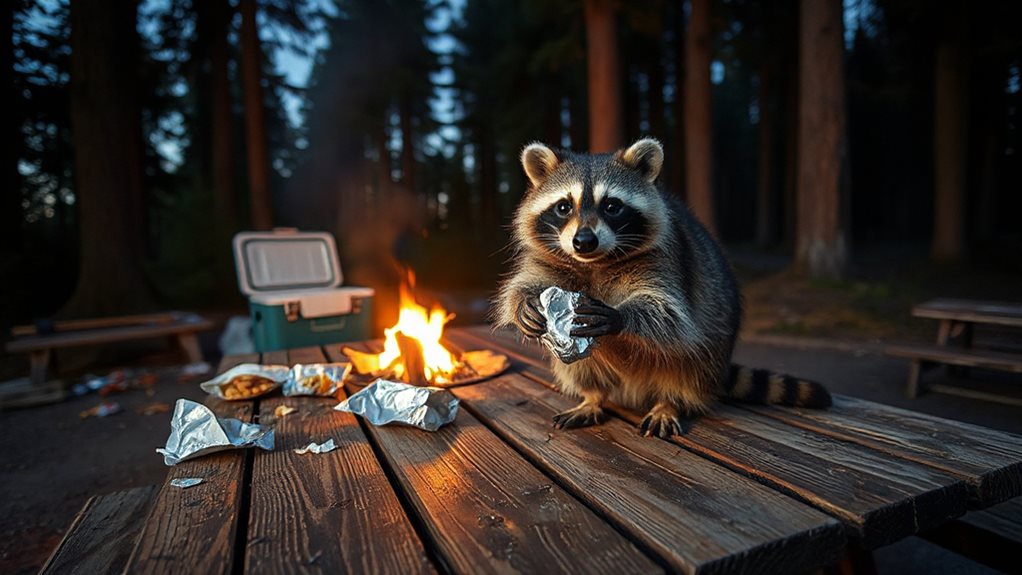
Why do raccoons keep showing up at campsites?
You’re drawn to places where people gather, leave food, and build structures, so raccoons select developed zones—picnic tables, campgrounds, parking lots—over wilderness.
Their GPS‑tracked movements show they stay near human activity, learning problem‑solving tricks there, while avoiding roads.
This attraction fuels property damage, injury risk, disease spread, and impacts wildlife.
Understanding these habits helps you protect your freedom outdoors. Raccoons exhibit a strong preference for anthropogenic food sources that are abundant in developed areas. Raccoons also take advantage of natural cover elements like overhanging branches and undercut banks near campsites to hide while foraging.
Raccoon Deterrence: Food and Habitat Triggers That Attract Them
You’ll find that leaving food unsecured, like open containers or crumbs on the ground, instantly signals a feast to raccoons, while nearby water sources and dense vegetation create a comfortable for for them to hunt and hide.
The combination of easy meals and a natural‑looking habitat draws them in, especially when campfires and cooking smells linger.
Kayaking is an accessible outdoor activity that also promotes upper body fitness and can encourage campers to store food securely away from sleeping areas.
Food Left Unsecured
A raccoon’s nose can sniff out protein‑rich foods from miles away, so leaving meats, cheeses, or pet kibble unsecured turns your campsite into a signal for these opportunistic foragers.
Sugary snacks, greasy leftovers, and open garbage amplify the scent trail, inviting ants and rodents that raccoons follow.
Pack sealed containers, clean residues immediately, and choose low‑odor, plant‑based meals to keep your freedom unspoiled.
Water and Habitat Proximity
Riparian zones and marshy edges act like neon signs for raccoons, drawing them in with the promise of water, shelter, and easy prey. You’ll find them clustering near permanent streams, mudflats, and tree cavities that give cover and hunting grounds.
Raccoon Deterrence: Common Camping Mistakes That Invite Raccoons
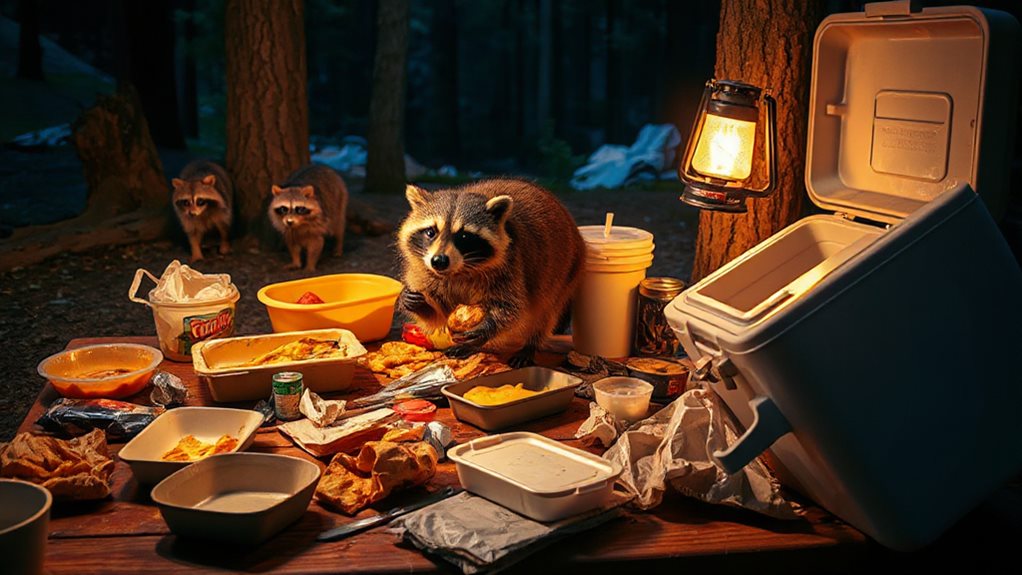
You might think a quick snack left on a rock won’t matter, but unsecured food storage gives raccoons a clear invitation, and a single careless toss of trash creates a scent trail they can’t ignore.
When you pack meals in opaque, odor‑proof containers and seal all waste in tight bags, you cut off the visual and olfactory cues that draw them in.
Plan ahead to minimize risk by researching food storage rules and carrying the 10 essentials so you can store food and manage waste properly.
Unsecured Food Storage
Ever wonder why raccoons seem to appear the moment you leave a cooler unattended?
Unsecured food storage releases protein aromas, greasy residues, and sugary scents that raccoons sniff from yards away, especially meats, cheese, bacon, and pet food left out overnight.
Keep containers sealed, lock coolers, and store snacks in airtight bags; otherwise you’ll invite nightly raids and lose the freedom of a peaceful campsite.
Improper Waste Disposal
Why do raccoons swarm around campsite trash? You leave food scraps, fruit peels, and leftover meals in open bins, and they sniff the scent, overturn cans, and raid dumpsters.
Unlocked containers, irregular pickups, and overflowing dumpsters give them easy access, boosting their numbers and polluting nearby streams. Secure lids, pack out waste, and schedule regular removal to deny them the feast they crave.
Raccoon Deterrence: Simple Food‑Secure Practices to Keep Them Away
A solid food‑secure routine is the backbone of raccoon deterrence, and it starts with how you store and handle every bite you bring to the campsite.
Use critter‑proof containers and odor‑proof bags, keep them out of sight and away from the perimeter, and clean crumbs instantly.
Pack protein in sealed boxes, avoid scented toiletries, and clear all waste after meals to maintain freedom‑filled, raccoon‑free nights.
Targeting sites when animals are most active, such as early morning in peak seasons, increases the effectiveness of food‑secure practices.
Raccoon Deterrence: Physical Barriers That Effectively Block Raccoons
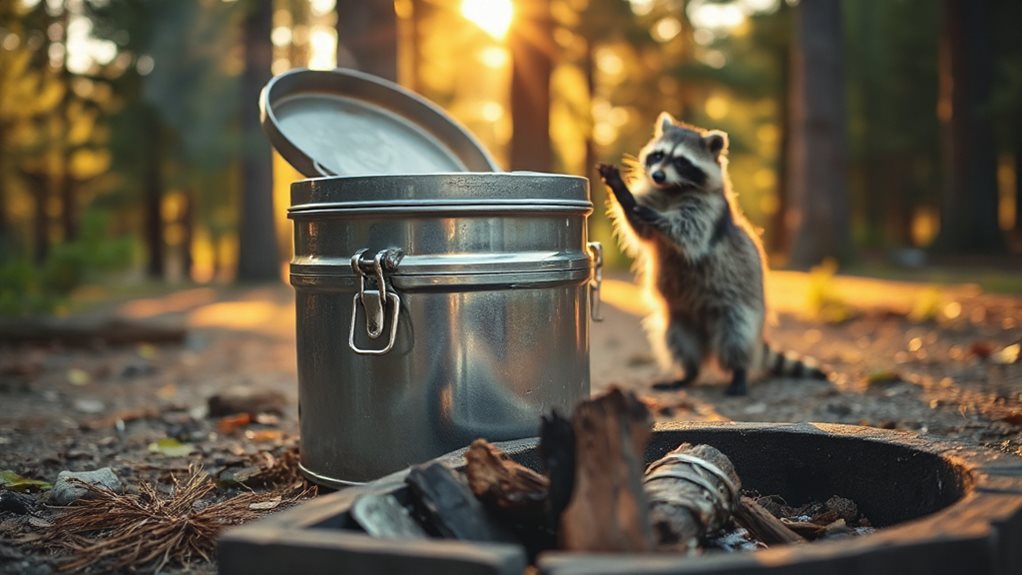
How can you keep raccoons out of your campsite without constantly chasing them away? Install sturdy ratchet‑strap systems or welded wire fencing, add 45‑degree mesh extensions on top, and bury fence bottoms six inches underground. Seal chimney caps, roof vents, and deck gaps with hardware cloth. Trim overhanging branches, use motion‑activated sprinklers or floodlights, and store firewood off the ground. These physical barriers give you lasting freedom from unwanted visitors. Consider using durable, wildlife‑rated materials like rotomolded construction for long‑lasting protective gear and enclosures.
Raccoon Deterrence: How Puzzle‑Box Food Traps Pull Raccoons In
Physical barriers keep raccoons out of campsites, but adding a puzzle‑box food trap can turn a deterrent into a learning tool that draws them away from your supplies.
You place a multi‑lock box with 24 compartments, bait it with cat food, and let RFID tags identify each visitor.
Juveniles often solve the easy latches first, then progress, while older raccoons may scrounge or or ignore.
This selective engagement protects your gear.
Raccoon Deterrence: Night‑Time Activity and Encounter Risk

Ever wondered why raccoons seem to appear the moment the sun sets? Their nocturnal nature drives them to forage after dark, especially near lights, food, and water, so you’ll spot them when you’re sipping coffee by lanterns. Unsecured scraps, garbage, and scented trails lure bold, intelligent raccoons, increasing encounter risk. Keep food sealed, clean crumbs, and use scent repellents to reduce nighttime visits.
Raccoon Deterrence: What to Do When a Raccoon Invades?
When a raccoon wanders onto your campsite, act quickly but calmly: keep a safe distance, turn on a motion‑detector light, and use a deterrent—whether a sprinkle of cayenne pepper, a commercial repellent, or an electronic device—to discourage it from staying.
Then, retreat, flash a light to spot it, and apply repellent or electronic shock, keeping food sealed and trash secured to prevent future invasions.
Raccoon Deterrence: Quick Checklist for a Raccoon‑Free Campsite
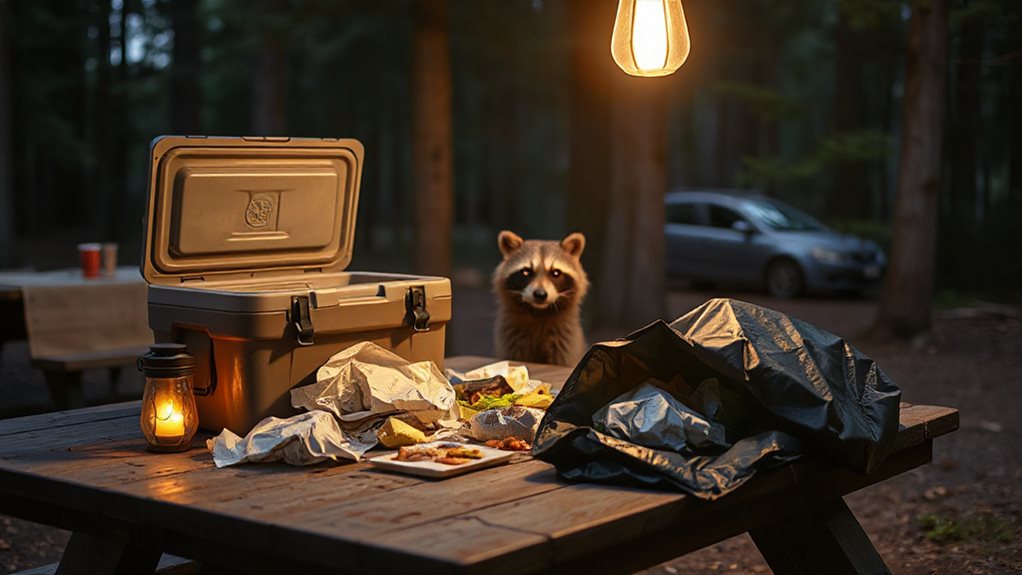
How can you make sure your campsite stays raccoon‑free without spending hours on complicated setups?
Double‑bag trash, seal containers with tight lids, and bungee‑secure them.
Store food in locked coolers inside your vehicle, keep pet supplies sealed, and rinse cans before stashing.
Scatter dryer sheets to mask odors, light lanterns at night, and use motion‑activated sprinklers or a small fire for deterrence.
Keep the area clean and inspect for entry points.
Final Note
By securing food, eliminating shelter, and using sturdy barriers, you’ll keep raccoons at bay and enjoy a peaceful night. Store leftovers in airtight containers, clean up crumbs promptly, and set up a sturdy trash can with a tight lid. Elevate cooking gear, cover grills, and consider a low‑profile fence or mesh netting around your site. If a raccoon does appear, stay calm, give it space, and retreat to your tent. Follow these steps, and your campsite stays raccoon‑free.


