
You rely on a crash pad to stay safe while bouldering, especially over rocky or uneven terrain. It cushions your fall with dual-density foam—soft on top, firm on the base—to absorb impact and reduce injury. Always position it under your center of gravity, adjust for overhangs or slabs, and check for gaps. Use multiple pads and coordinate with spotters for better coverage. With the right setup, you climb harder and land safer—there’s more to mastering your setup than just padding the fall.
TLDR
- Crash pads are portable foam mats used in bouldering to cushion falls and prevent injuries on rocky or uneven terrain.
- They feature dual-density foam layers that absorb impact and reduce bounce-back for safer landings.
- Proper placement under the climber’s center of gravity—adjusted for overhangs or slabs—maximizes protection.
- Using multiple pads and team coordination expands coverage and improves safety during high or traversing climbs.
- Regular maintenance, correct storage, and strategic setup ensure long-term durability and effective fall protection.
What Is a Crash Pad and Why You Need One
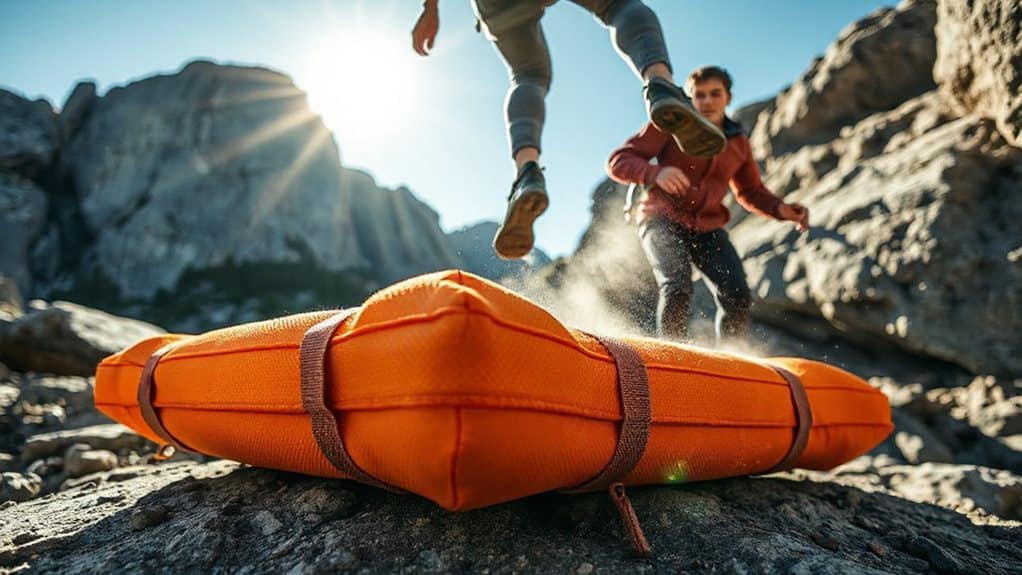
When you’re bouldering, a crash pad isn’t just helpful—it’s essential.
It’s a portable foam mat, usually nylon-covered, that cushions falls on rocky or uneven ground.
You’ll carry it with straps and place it where you’re most likely to fall.
It absorbs impact, prevents injuries, and lets you tackle harder climbs with confidence—all while keeping you safe on jagged terrain.
Many crash pads feature a dual-density foam construction with a softer top layer and firmer base for optimal energy absorption and stability, known as two foam layers.
Ticks can be small and sometimes go unnoticed, so always check your skin after outdoor sessions for hidden ticks.
How Crash Pads Prevent Bouldering Injuries
You rely on your crash pad to absorb impact, thanks to its layered foam that slows your fall and spreads force.
Place pads strategically to cover all likely landing zones, and make sure there are no gaps that could lead to ankle rolls.
Work with your spotting team to guide falls onto the firm, closed-cell surface—this coordination keeps you safe and reduces injury risk.
Choose a pad with a high-quality foam core and durable cover to ensure reliable protection over time.
Impact Absorption Explained
Land safely every time with a crash pad that works as hard as you do.
Your pad’s closed-cell top spreads impact, while the open-cell core compresses to absorb energy. Together, they minimize force and prevent bounce-back.
Multiple layers stop bottoming out, and high-density foams last longer, keeping you protected, mile after mile, fall after fall—freedom to climb, confidently.
Strategic Pad Placement
Your crash pad’s ability to absorb impact means nothing if it’s not positioned where you’re most likely to land.
Place pads under initial, changeover, and top-out fall zones, adjusting for your center of gravity.
Level uneven ground with stacked or folded pads, eliminate gaps to prevent injuries, and always recheck placement after each fall—because smart, active positioning keeps you safe, free, and climbing longer.
Team Spotting Coordination
Often overlooked but essential to safe bouldering, effective team spotting coordination turns a simple crash pad setup into a lively safety system that markedly reduces injury risk.
You communicate clearly, position yourself correctly, and stay alert. With one leader directing pad placement and spotters covering zones, you make certain seamless protection.
You redirect falls, guide landings, and keep the area clear—working together so you can climb freely, confidently, and safely.
Where to Place Your Crash Pad for Safety
When you’re sizing up a boulder problem, think ahead about where things might go wrong—because falls rarely happen straight below the holds.
Place your pad where your center of gravity lands, not just under the boulder. On overhangs, shift it back; for slabs or traverses, offset accordingly.
Scan for rocks, holes, or slopes, and position padding to cover hazards, ensuring a safe, stable landing zone every time. Consider bringing extra insulation like an emergency blanket or foam insert to reduce ground-cold transfer and improve protection for low-impact landings, especially on wet or frozen surfaces where equipment can lose effectiveness; see insulated sleeping mats for related techniques.
Use Multiple Crash Pads With Spotting
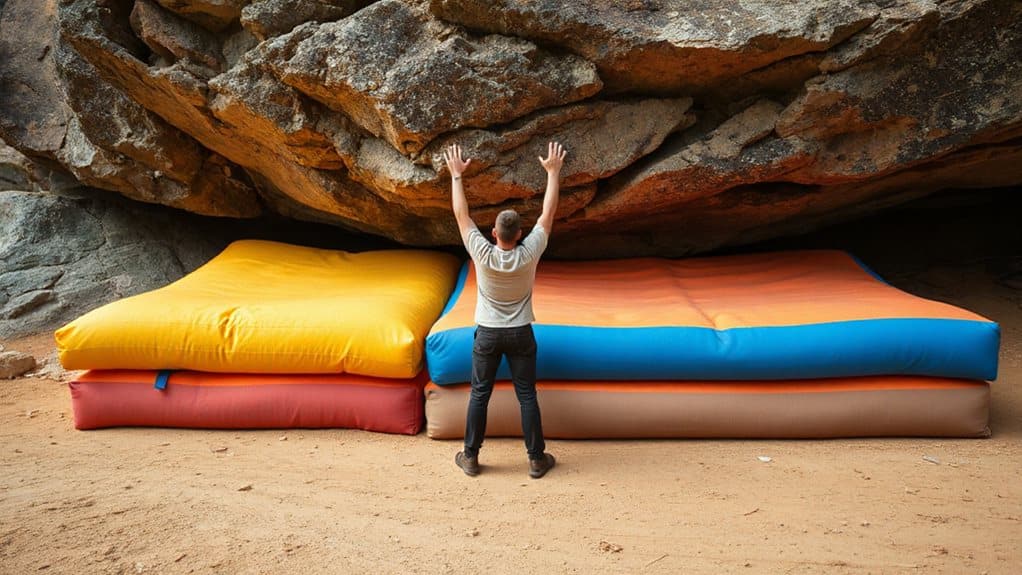
Placing a single crash pad wisely goes a long way, but real safety starts when you expand your landing zone with multiple pads—especially when combined with active spotting.
Use big pads for primary impact zones, medium ones for coverage, and small pads to fill gaps or cover hazards. Stack pads to level uneven ground, and position them along likely fall paths.
Multiple pads mean more foam, better cushioning, and reduced injury risk—especially on highball or traversing problems. You’ll move with more confidence, knowing your landing is secure, stable, and fully managed.
When storing gear between sessions, make sure to keep pads in a cool, dry place and away from direct sunlight to prevent material degradation and long-term damage.
Rotate Spotters and Share Pads in Groups
You’ll stay safer and more alert when your group rotates spotting duties, especially on long sessions where fatigue can set in.
Share crash pads equally and switch roles regularly so everyone stays fresh and focused on protection.
Clear communication and shared responsibility keep your team coordinated, reduce mistakes, and help maintain a smooth, safe climbing rhythm.
Beginner climbers often benefit from wearing properly fitting shoes to improve footwork and stability while bouldering, since climbing shoe fit directly affects performance and comfort.
Rotating Spotter Roles
Often, effective spotting in group bouldering sessions depends on smart role rotation and shared responsibility.
You’ll stay sharp by switching roles regularly, preventing fatigue that could compromise safety.
Rotate spotters every few climbs, assign stronger spotters to high-impact zones, and communicate clearly.
Share pad duties, adjust positions as the climber moves, and keep fall zones clear—teamwork keeps everyone safe and engaged.
Sharing Pads Equally
When climbing with a group, sharing crash pads fairly and effectively isn’t just about splitting the load—it’s about maximizing safety and coverage for everyone on the problem.
You’ll want one big or mid-size pad per person, plus sliders as needed. Communicate placements ahead of time, reposition pads responsively, and use seam-sealers or burrito-style pads to eliminate gaps—keeping landings safe, smooth, and erosion-free.
Maintaining Group Safety
Always prioritize safety by actively rotating spotters and sharing pads within your group—this keeps everyone alert and reduces the risk of misjudged landings.
You maintain stability by positioning yourself slightly behind, knees bent, eyes on the climber’s hips. Communicate pad shifts, adjust for fall zones, double-stack when needed, and clear obstacles to guarantee smooth, responsive spotting for every move.
How Crash Pad Foam Absorbs Your Fall
Think of your crash pad as a smart partner on the ground, springing into action the moment you land. It uses open-cell foam to compress slowly, absorbing your energy, while closed-cell foam on top spreads impact outward, preventing bottoming out.
Together, they create a balanced, durable cushion—giving you the freedom to climb higher, fall safely, and keep pushing your limits without fear.
Choose the Right Crash Pad for Your Climbing Style

Finding the perfect crash pad means matching its design and features to how and where you climb, so you’re not just protected, but also moving efficiently from approach to send.
Choose hinge-style for compactness, taco or tri-fold for rugged terrain, and full pads like Organic Climbing’s 4″ for seamless coverage.
Pick thickness based on fall height, size by landing zone, and prioritize portability with smart straps—because freedom means climbing light, safe, and on your terms.
Final Note
You’ve got the basics—now use them. A crash pad isn’t just gear, it’s your safety net when bouldering. Place it right, rotate spotters, and stack pads for tricky landings. The foam compresses to slow your fall, reducing injury risk. Pick a pad that fits your style, whether you’re hiking to crags or climbing at the gym. Stay smart, stay safe, and keep climbing with confidence—you’ve got this.


