
You tackle rough trails and steep descents with a mountain bike because it’s built for control and durability on rugged terrain. Its suspension soaks up impacts, while slack geometry and wide tires enhance stability. Whether you’re climbing efficiently on an XC rig or charging downhill on an enduro bike, there’s a style customized to your rides. You’ll find hardtails great for smooth efficiency, while full-suspension models handle big hits with ease—keep exploring to see which fit and features match your expedition goals.
TLDR
- Mountain bikes are built for off-road terrain with rugged frames, suspension systems, and grippy tires.
- They come in types like XC, trail, enduro, and downhill, each suited to different riding styles.
- Hardtail bikes have front suspension only, while full-suspension models smooth out rough trails.
- Key features include slack head angles, long reach, and 120–160mm travel for stability and control.
- Choosing the right bike depends on trail difficulty, rider skill, and terrain preferences.
Why Mountain Bikes Handle Tough Trails
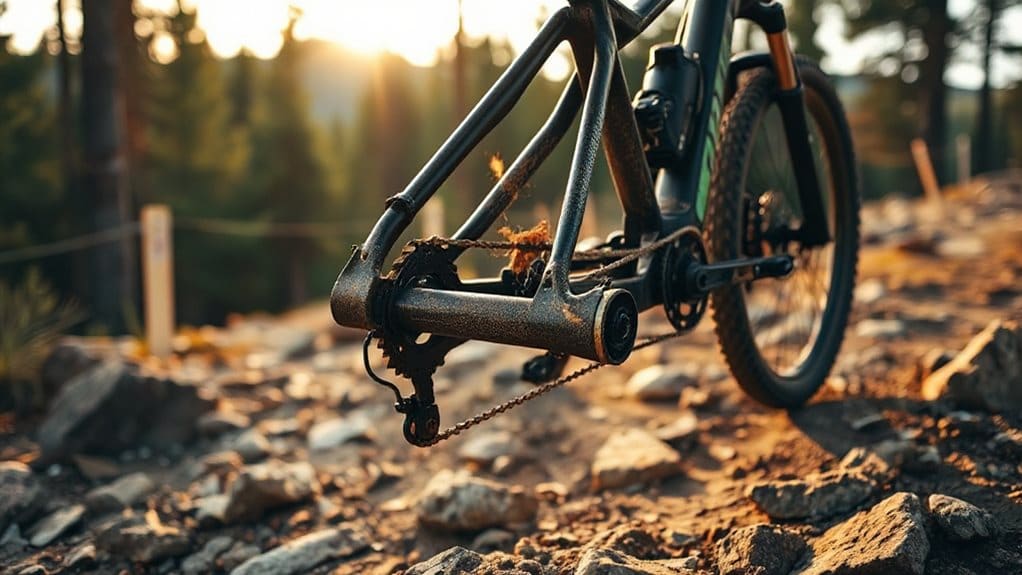
Tackle rugged terrain with confidence—mountain bikes handle tough trails thanks to smart engineering and rider-focused design. You’ll lean into corners with control, thanks to high trail figures and slack head angles.
Suspension systems like DW-link and Horst Link absorb impacts smoothly, while your body position—hinged hips, forward lean—keeps balance. Brake early, corner wide, and let the bike’s geometry and travel work for you. Modern trail bikes offer balanced performance with 150–160mm travel, making them versatile for everything from big jumps to long climbs. Many riders also choose bikes with wide bodies for added stability on technical descents.
6 Types of Mountain Bikes, Explained
Whether you’re eyeing your first mountain bike or looking to upgrade to a model that better suits your riding style, knowing the six main types will help you make a smart choice.
You’ll find XC bikes light and fast for climbing, while downcountry blends speed with trail capability.
Trail bikes handle most terrain with balance, enduro excels on tough descents, and downhill rigs dominate steep, technical runs with maximum suspension and control.
Many riders also choose trails like the Slickrock Trail for unique terrain and skill-building opportunities.
Which Mountain Bike Type Fits Your Riding Style?
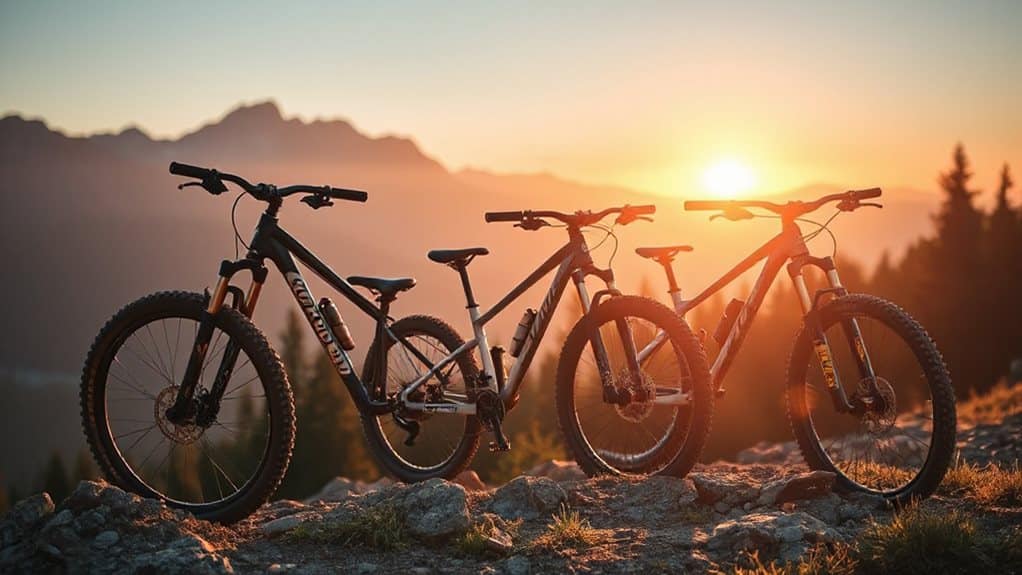
If you’ve ever wondered which mountain bike truly matches how and where you ride, breaking down your typical trail time can point you straight to the right fit.
Love speed and climbing? Go XC. Crave balance on varied terrain? Choose trail. Prefer steep, aggressive descents? Enduro or downhill bikes deliver. Riding snow or sand? Try a fat bike. Want help pedaling farther? eMTB’s got your back. The state also offers excellent riding options like Blankets Creek with accessible stacked-loop trails and features such as berms, rocks, and jumps.
Hardtail vs Full-Suspension: What’s the Difference?
You’ll notice right away that a hardtail gives you front suspension only, making it lighter and more efficient for climbing and smooth trails.
In contrast, a full-suspension bike includes both front and rear shocks, so it handles rough terrain better and keeps your ride comfortable on technical descents.
Each system has its strengths, depending on where and how you ride.
Many riders also prioritize components like grips and suspension tuning to balance comfort and control on varied terrain.
Front Suspension Only
Most of the time, when riders start exploring mountain biking, they find themselves drawn to hardtail mountain bikes—models equipped with front suspension only.
You get a lighter, simpler ride with direct feedback, making it easier to learn trail skills. With no rear shock to maintain, you’ll save time and money, while still enjoying smooth handling on cross-country routes and singletrack.
Dual Suspension System
Often, when riders step up from front-suspension-only hardtails, they turn to dual suspension systems—bikes equipped with both a front fork and a rear shock—to tackle more demanding terrain with greater confidence.
You’ll find designs like Single-Pivot, Horst Link, VPP, and linkage-driven setups, each offering unique tuning for anti-squat, pedal kickback, and travel.
These bikes enhance control, traction, and versatility, letting you ride harder, smoother, and freer across technical trails, jumps, and rough descents with both wheels gripping the terrain effectively.
Suspension, Geometry, and Wheels: What Actually Matters
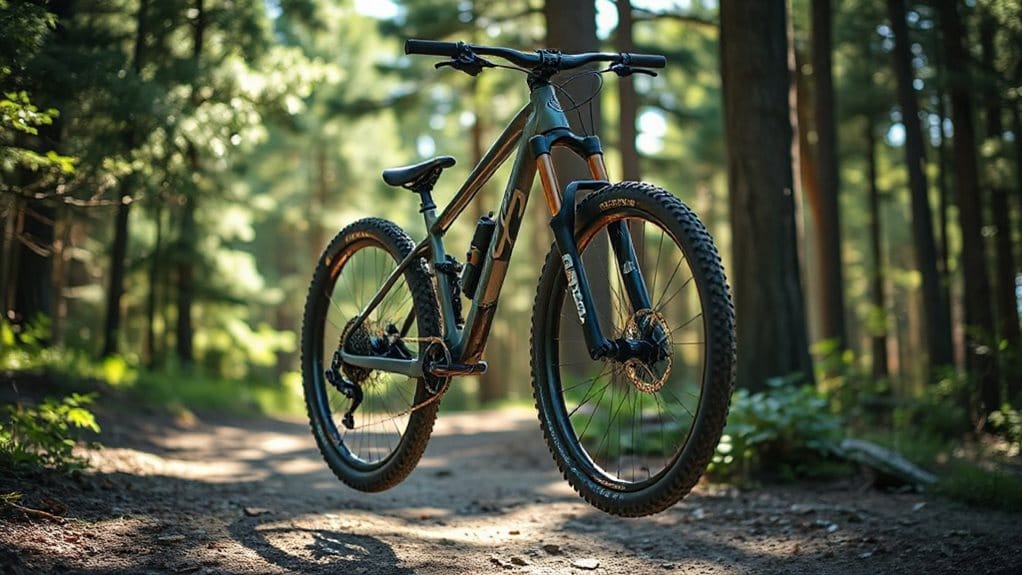
You’ll feel the difference in how your bike handles once you understand suspension travel and frame geometry.
Shorter travel, like under 120mm, gives you a quicker, more efficient ride for climbing and smooth trails, while longer travel, over 120mm, adds control when descending rough terrain.
Getting familiar with these basics helps you pick a bike that matches how and where you ride.
For optimal pedaling and safety, aim for proper leg extension and standover height when choosing a mountain bike frame.
Suspension Travel Explained
When you hit a bump on the trail, your bike’s suspension springs into action, and the distance it compresses—known as suspension travel—plays a key role in how smoothly you roll over rough terrain.
You’ll find shorter travel (100–120mm) on XC bikes for efficiency, while longer travel (150mm+) on enduro or downhill models soaks up big hits, giving you control when you push harder, faster, and deeper into the wild.
Frame Geometry Basics
Your bike’s suspension travel sets the stage for how it handles rough ground, but once you’re rolling, it’s the frame geometry that truly defines how the bike feels and responds.
You steer with your front end—head angle, fork rake, and trail shape your control. Reach and stack set your stance; chainstays and wheelbase affect stability. Front center and bottom bracket height fine-tune balance.
Best Mountain Bike Brands by Riding Style
Whether you’re tackling rocky enduro routes or gliding across smooth cross-country trails, picking the right mountain bike brand for your riding style makes all the difference.
Choose Santa Cruz or Trek for enduro’s rugged demands, Cannondale or Giant for lightweight cross-country efficiency, Specialized or Ibis for versatile trail performance, Commencal or Norco for downhill intensity, and Rocky Mountain or Canyon for all-mountain balance between climbing and descending.
Match Your Bike to the Trail: Terrain by Type
Now that you’ve got a handle on which brands align with your riding style, it’s time to focus on where your tires will actually roll—because matching your bike to the trail type is just as important as choosing the right manufacturer.
Know the rating: green for smooth, beginner-friendly paths; blue for moderate terrain with small obstacles; red and black for steep, technical sections demanding skill; double black for expert-only, extreme features.
Pick rides that match your ability, and you’ll stay safe while progressing confidently, freely, and on your own terms.
Final Note
Now you know what makes mountain bikes built for expedition, from suspension types to frame geometry. You’ve seen how each model suits different trails and riding styles. Whether you’re tackling rocky descents or cruising forest paths, there’s a bike that fits your needs. Pick wisely, ride confidently, and let your next trail journey begin—your perfect ride is out there waiting.


