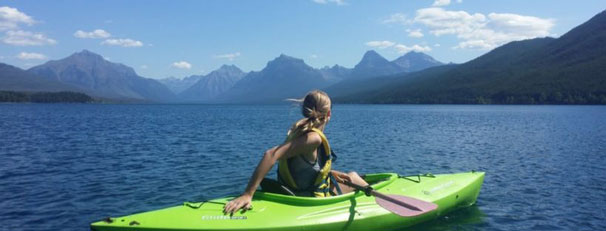
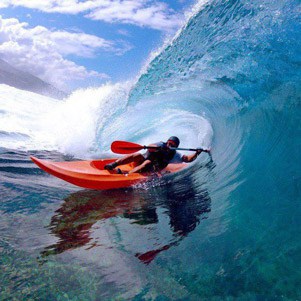
Choose a kayak that matches your paddling goals, whether you’re fishing on calm lakes or tackling wild rivers. Pick a stable, sit-on-top model for easy access and self-draining in warm conditions, or go for a sit-inside if you need better control in rough water. Match the hull shape and size to your skill level and intended use—wider for stability, longer for speed. Consider weight, material, and whether you’ll paddle solo or with a partner. There’s a perfect fit out there waiting for your next move.
TLDR
- Match your kayak to the water type: use stable, wide models for calm lakes and shorter, durable designs for rapids.
- Choose sit-on-top kayaks for fishing or warm-weather use due to their stability and self-draining features.
- Prioritize length and hull shape: longer, V-shaped hulls offer speed, while flat hulls provide calm-water stability.
- Select materials based on needs—polyethylene for durability, composites for lightweight performance, or inflatables for portability.
- Consider solo or tandem configurations depending on whether you want agility or shared paddling with extra cargo space.
Start by Defining Your Paddling Use Case
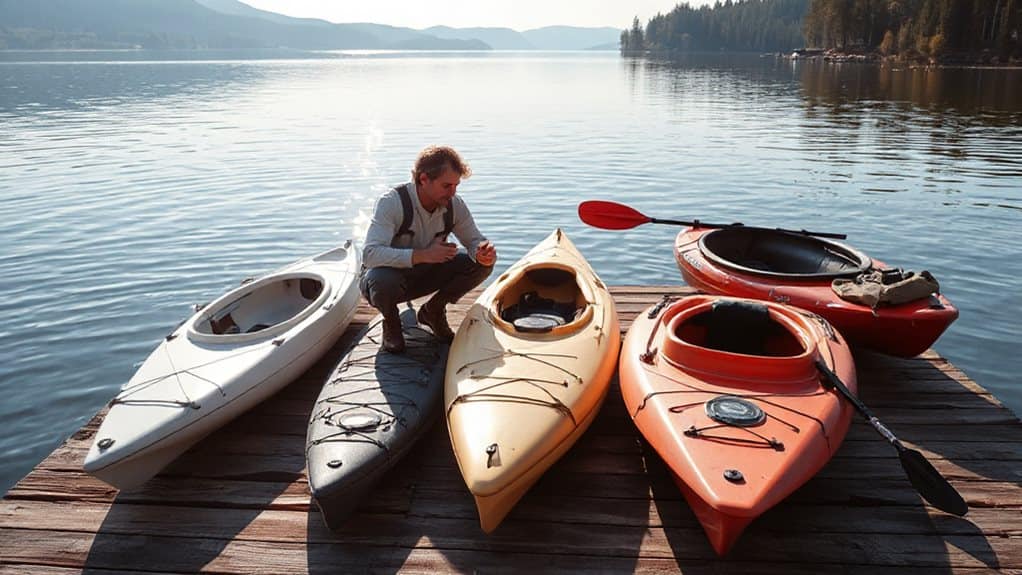
Before you start comparing models or prices, take a moment to think about how and where you’ll actually use your kayak—this one step shapes every other decision you’ll make.
Want calm lakes, fishing spots, or wild rivers? Your paddling style determines the right fit, so match your kayak to your excursions and stay free to roam with confidence.
For example, if you’re planning to fish in calm waters, a sit-on-top fishing kayak offers excellent stability and convenient features like rod holders and storage compartments. Many stable designs also include scupper holes and dry storage to keep gear safe on longer trips.
Match Kayak Types to Water Conditions
You’ll want a stable, wider kayak with a flat hull for calm flatwater lakes and bays, where relaxed paddling and balance matter most.
But if you’re tackling rapids or whitewater, go short and tough—a narrow, durable sit-inside kayak under 10 feet handles quick turns and rough impacts with ease.
Each design fits its environment, so match your boat to the water conditions you’ll actually face.
Be sure to understand applicable laws for your area and whether your kayak is considered a vessel before heading out.
Flat Water Recreation
Gliding across a glassy lake at sunrise or paddling along a peaceful river, flat water recreation offers some of the most accessible and enjoyable ways to experience kayaking.
You’ll want a stable, easy-to-paddle kayak—like a recreational, sit-on-top, or inflatable model. These handle calm conditions well, offer room for gear, and let you move freely.
With their wide, predictable designs, they’re perfect for relaxed outings where freedom and simplicity matter most.
Rapids And Whitewater
When the river picks up speed and the water starts churning with whitewater, your kayak choice becomes critical to both performance and safety.
Choose creekers for steep, rocky runs with high volume, or river runners for balanced speed and control.
Playboats shine in freestyle, while planing hulls handle pushy water.
Match your skill to rapids—Class III needs precision, Class V demands mastery.
Choose the Right Kayak Size for Speed and Stability
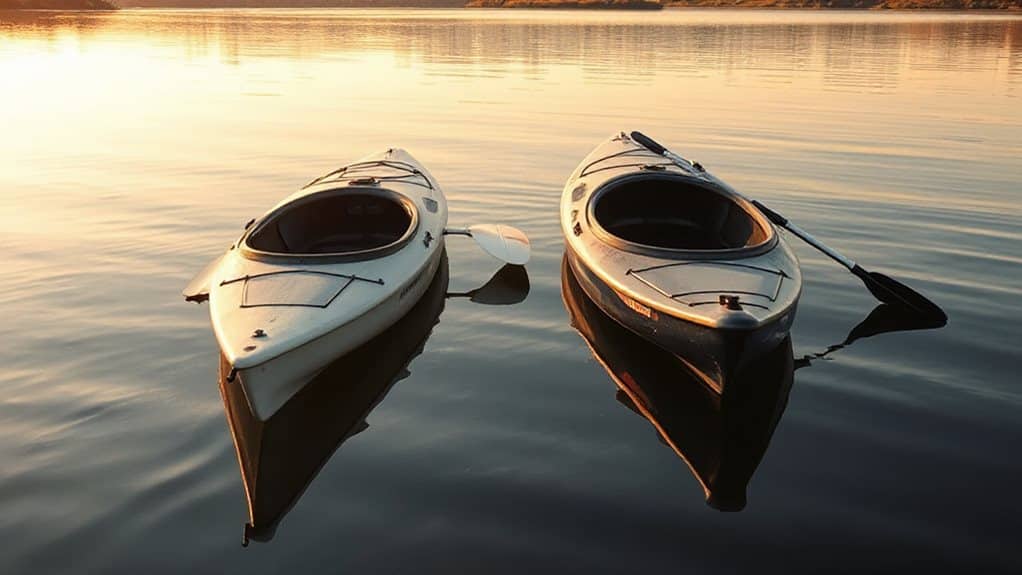
You’ll go faster with a longer kayak, since it cuts through the water more efficiently and tracks straight with less effort.
If stability’s your priority, especially when starting out, a wider model will feel more solid under you, though it’ll slow you down a bit.
Don’t forget hull shape—deeper, rounded or V-shaped hulls add speed and secondary stability, while flat hulls keep you steady in calm conditions.
For heavier loads or multi-person trips, choose a kayak with a higher weight capacity and extra buoyancy to preserve handling and safety.
Length Affects Speed
While you mightn’t immediately link size to performance, the length of a kayak plays a key role in how fast and efficiently it moves through the water.
Longer models, at 12–18 feet, cut through waves with less effort, enhancing speed. You’ll glide faster with fewer strokes, especially on open water—ideal when you value smooth, steady progress over tight turns.
Width Impacts Stability
Often, the first thing you’ll notice about a kayak is how steady it feels on the water—and that stability starts with width. Wider kayaks, over 28 inches, offer great initial stability, perfect for calm lakes or fishing.
Narrower ones, under 25 inches, feel tippier but handle rough water better. Your seat height and gear placement also affect balance—lower is more stable.
Hull Depth Matters
Though hull width sets the foundation for stability, the depth of the hull plays a crucial role in determining both speed and how confidently your kayak handles different water conditions.
Deeper hulls, like V-shaped or rounded designs, cut through water efficiently, enhancing speed and tracking. They’re ideal for open water, where control matters.
Shallow flat or pontoon hulls offer initial stability but sacrifice performance in waves. Choose based on your paddling goals—calm lakes or energetic coastlines—and match the hull depth to your desired balance of speed, stability, and freedom on the water.
Sit-Inside vs. Sit-On-Top: Which Kayak Design Is Right?

If you’re trying to decide between a sit-inside and a sit-on-top kayak, your choice will come down to how and where you plan to paddle, along with your comfort and skill level.
Choose sit-inside for efficiency, control, and rough water performance. Pick sit-on-top for easy access, stability, self-draining, and a drier self-rescue—ideal for fishing, warm water, or beginners. Kayaks also tend to be lighter and faster than canoes, which can make them easier to transport and better in rough conditions.
Compare Kayak Materials: Weight, Durability, and Portability
Pick up any kayak, and you’ll quickly notice how much it weighs—so choosing the right material matters.
Polyethylene is tough and affordable, perfect for beginners, though heavier.
Thermoformed ABS-acrylic offers a smoother, lighter ride with solid durability.
Fiberglass balances weight and strength for efficient paddling.
Kevlar’s light and strong, ideal for touring, while carbon fiber delivers peak lightness for performance—just handle with care.
For apartment dwellers, consider storage needs early on and opt for materials that are easier to store in small spaces, like inflatable kayaks or lighter composite models.
Solo vs. Tandem Kayaks: Which Fits Your Ride?

Now that you’ve considered the material shaping your kayak’s weight and durability, it’s time to think about who’ll be sharing the ride—yourself or a partner.
You’ll find singles lighter, faster, and easier to handle solo, perfect for tight spots or independent trips. Tandems offer stability, shared effort, and extra space—ideal for couples, families, or longer excursions where comfort matters. Choose based on your freedom to discover.
Final Note
Now that you’ve considered your paddling goals, water type, size needs, design preferences, materials, and whether you’ll paddle solo or with a partner, you’re ready to choose wisely. Each factor shapes your experience, so balance them based on your priorities. A well-matched kayak enhances comfort, control, and enjoyment. Trust this guide, assess your needs honestly, and you’ll find a kayak that fits you perfectly—making every outing safer, smoother, and more rewarding on the water.