
Your boots smell fast because sweat‑soaked moisture gets trapped in linings, foam collars, and insoles, creating a warm, humid pocket where bacteria and fungi thrive. The microbes break down sweat into acids like isovaleric, propionic, and methanethiol, which produce cheesy, sharp, and sulfurous odors. Waterproof designs and tight laces keep the damp air from escaping, so the scent builds up after each hike. Proper airflow, drying, and occasional cleaning stop the cycle, and if you keep going you’ll uncover more practical tips.
TLDR
- Moisture trapped in linings, foam collars, and insoles creates warm pockets where sweat‑mix residue persists.
- Bacteria such as *Staphylococcus* and *Propionibacterium* thrive in that moisture, converting sweat into foul acids.
- Fungi and mold grow in poorly ventilated, damp boot interiors, adding musty, earthy notes to the odor.
- Insoles and liners absorb sweat; without regular removal, drying, or treatment, they become hidden odor hotspots.
- Inadequate drying after use lets microbes restart, while quick air‑drying, cleaning, and moisture‑wicking socks prevent rapid odor buildup.
How Wet Boots Turn Into Smelly Factories
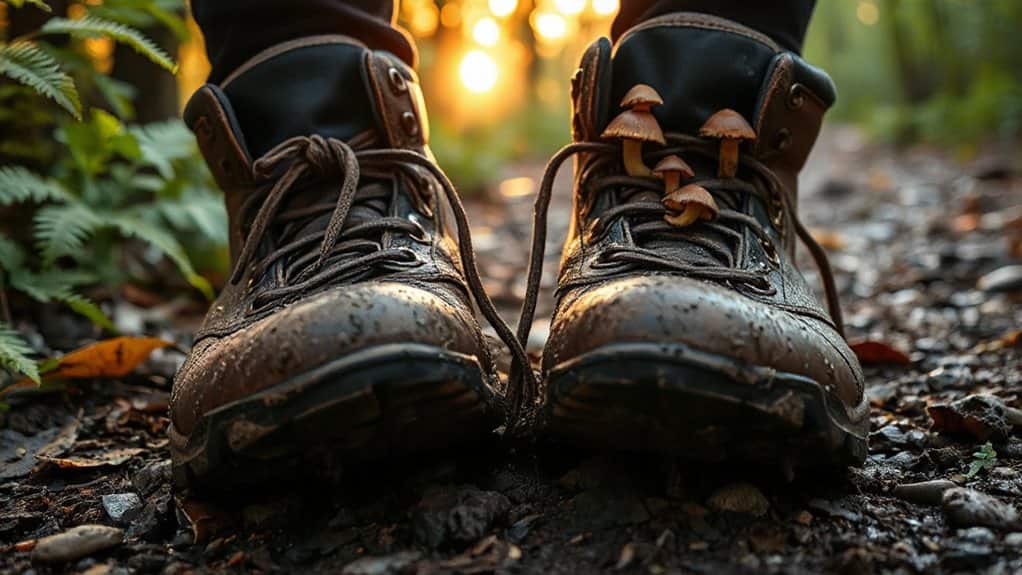
When moisture seeps into every layer of a hiking boot, it sets off a chain reaction that turns the shoe into a smelly factory.
Water lingers in linings, foam collars, insoles, and seam tape, creating warm, humid pockets where sweat‑mixed residue thrives.
Waterproof designs trap more moisture, slowing evaporation, so even a brief damp period leaves hidden pockets that fuel odor on the next trek. Insufficient drying can cause the smell to return quickly.
Regular cleaning and thorough air-drying, including removing insoles and laces and stuffing boots with newspaper, helps prevent persistent odors from developing.
How Bacteria & Fungi Generate Boot Odor
Moisture that lingers in every layer of a boot creates a perfect breeding ground for microbes, and once those bacteria and fungi are active, they start turning sweat and skin debris into the pungent smells you notice after a hike.
You’ll find *Staphylococcus* releasing cheesy isovaleric acid, *Propionibacterium* producing sharp propionic acid, and *Brevibacterium* emitting sulfurous methanethiol.
Meanwhile, damp, poorly ventilated interiors let molds grow, adding musty, earthy notes that amplify the overall stench.
Feet that stay warm and sweaty for long periods are especially prone to this process, since excess moisture and friction promote microbial growth and blister formation on toes.
Hidden Boot Odor Hotspots: Insoles, Liners & Laces
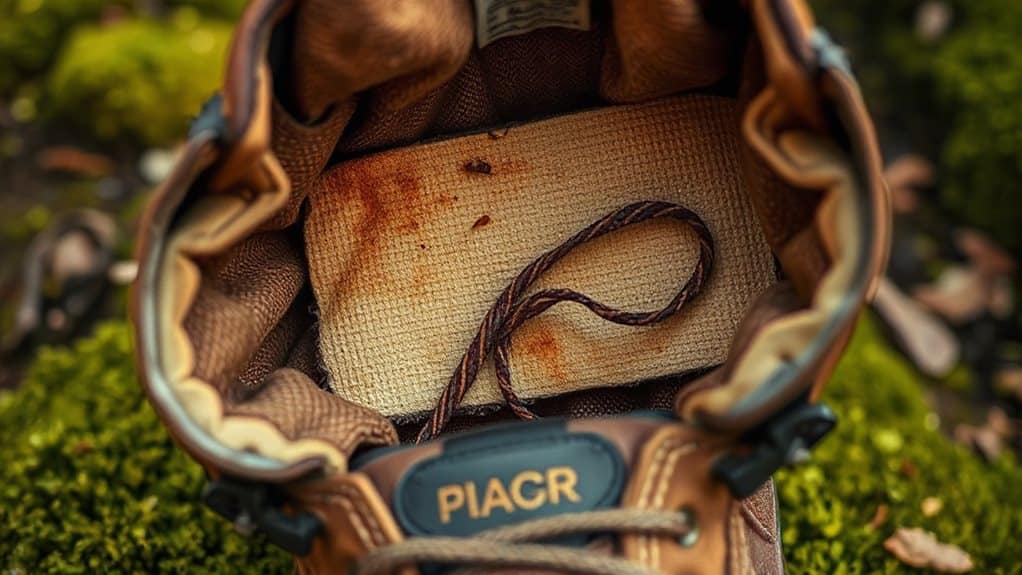
Insoles, liners, and laces form a hidden trio of odor hotspots that most hikers overlook, yet each one plays a significant role in how quickly your boots develop that unmistakable stink.
Insoles soak up sweat, breeding bacteria; remove, air‑dry, or swap them regularly, using charcoal or enzyme treatments.
Liners trap moisture, so fully saturate them with enzyme solution, then air‑dry without rinsing.
Loosen laces to free airflow, letting sweat‑laden channels breathe and allowing cleaning agents to reach every stitch.
Try these steps alongside choosing the right footwear for your hikes, especially picking the proper boot cut for ankle support and breathability.
Why Proper Drying Stops Boot Odor (and What to Do If It’s Still Smelly)
If you let your boots sit damp after a hike, the moisture creates a perfect breeding ground for the bacteria and fungi that turn sweat into that unmistakable stink.
Dry them quickly with airflow—air‑dry, fan, or sun—to cut moisture, halt microbes, and prevent odor from re‑establishing.
If a smell lingers, clean the interior, apply vinegar or enzymatic spray, then finish with baking soda after fully drying.
Also, protect high-friction areas with moisture-wicking socks to reduce sweat buildup and lower the chance of persistent odors.
Quick Fixes & Habits to Eliminate Boot Odor
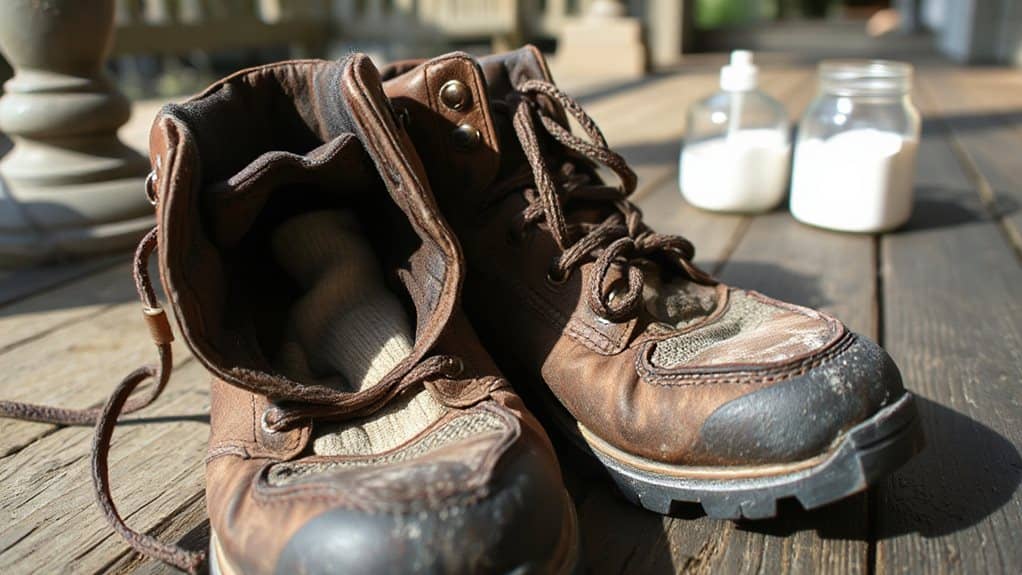
Grab your boots as soon as you step inside and give them a quick wipe-down; removing sweat, skin cells, and surface grime right away stops the odor-building bacteria before they get a chance to multiply. Then spray a 1:1 vinegar solution inside, sprinkle baking soda, let it sit overnight, shake it out, and air-dry.
Rotate pairs, keep insoles separate, and use enzyme sprays for lasting freshness. Add a compact first-aid kit to your hiking pack to treat cuts and blisters promptly and prevent infection, including basic wound supplies and disinfectant first-aid.
And Finally
By keeping your boots dry, cleaning them regularly, and treating the inner components—insoles, liners, and laces—you’ll stop bacteria and fungi from turning them into odor factories. Quick fixes like airing, using silica packets, and applying antifungal sprays work, but the best habit is proper drying after each hike. Consistent care prevents the smell from returning, letting you enjoy the trail without worrying about stinky footwear.


