
Pick a campsite at least 100 yards from game trails, berry patches, and water sources, and choose a designated bear‑resistant area with clear sightlines. Set up a triangle layout: cooking, food storage, and tent each spaced 100 yards apart, keep the tent upwind, and hang scented gear 20 feet high and 10 feet from trunks. Store food in a certified canister or metal locker, seal all trash in an IGBC‑certified cart placed 100 yards from sleeping zones, and keep gear sealed and dry. Install portable bear‑proof barriers, carry bear spray for a 20‑30‑foot burst, make regular noise, and travel in groups during daylight; the next sections will show you how to fine‑tune each step.
TLDR
- Choose a campsite at least 100 yards from game trails, berry patches, and bear corridors, preferably in a clear, open area with good visibility.
- Arrange cooking, food storage, and sleeping zones in a triangle, keeping each at least 100 yards apart and positioning the tent upwind from other zones.
- Store all food and scented items in certified bear canisters or metal lockers, hanging toiletries 20 feet high and 10 feet from tree trunks.
- Use a locked, bear‑resistant trash container placed at least 100 yards from sleeping areas, and pack out all waste after rinsing containers.
- Carry bear spray, make regular noise while moving, and set trip alarms or portable barriers around the perimeter for early detection.
Select a Bear‑Safe Campsite
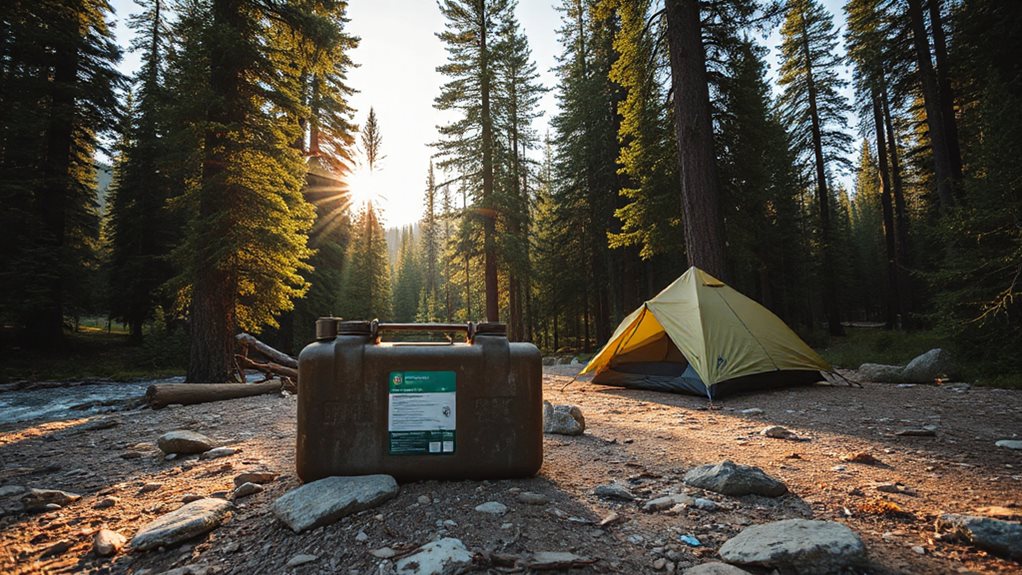
Where should you set up your tent to stay safe while enjoying the woods? Choose a denser forest spot away from berry patches, salmon streams, and known bear corridors, keeping at least 100 yards from game trails and high-traffic corridors.
Favor clearings for visibility, avoid natural funnels, and use designated campsites with bear-resistant storage.
Raise food storage, consult local wildlife data, and keep food 100 yards from sleeping areas. Spring is also a good time to check for discounted bear-resistant storage options and stock up affordably.
Avoid known bear feeding zones to further reduce the likelihood of encounters.
Design a Bear‑Safe, Scent‑Free Campground Layout
If you arrange your campsite like a triangle—cooking area, food storage, and tent—each point spaced at least 100 yards apart, you’ll dramatically reduce the chances that a bear will follow a scent trail from one zone to another.
Position the tent upwind, keep all gear sealed, scatter dishwater downwind, and set trip alarms around the perimeter for early alerts. Store clothing and other scented items clean and dry, and use breathable containers or hang items to prevent moisture that can attract wildlife.
Store Food and Scented Gear Safely
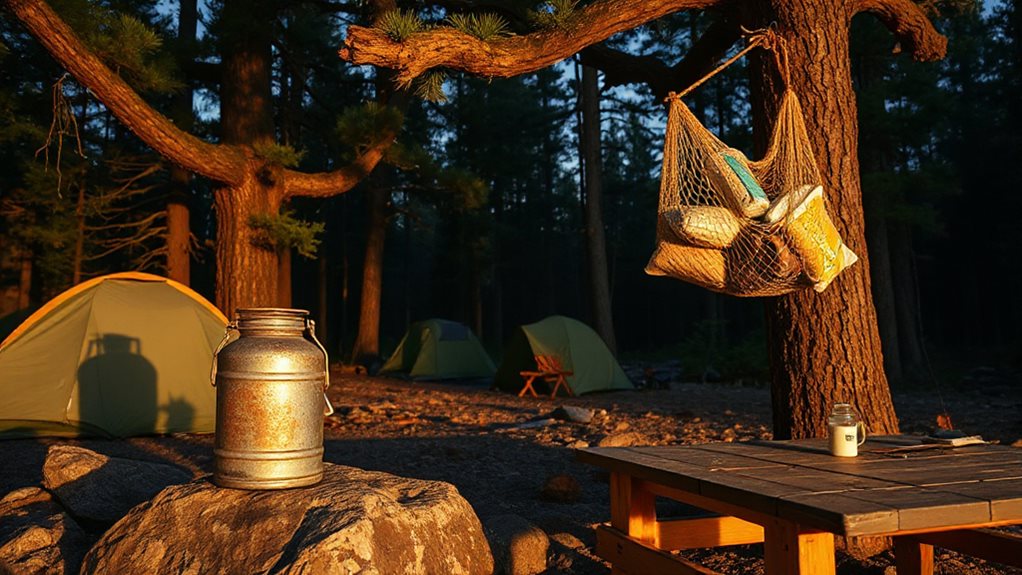
Ever wonder why a simple change in where you stash your meals can keep bears at bay? Use a certified bear canister or metal locker, placing it at least 100 feet from your tent, cooking area, and fire. Hang scented gear—cosmetics, toiletries, so—at 20 feet height, 10 feet from trunks, and keep everything in the same container. This distance and sealed storage stop bears from associating your site with food. Choose tight-sealing containers and practice proper storage to minimize odors and reduce bear encounters.
Keep Trash Away From Bears
How do you keep bears from turning your campsite into a buffet? Rinse containers, seal food in bags, and store trash in an IGBC‑certified Bearier™ cart or BearProofInc container inside a building, not outside. Place the bin at least 100 yards from sleeping areas, keep it locked, and clean grills regularly. Pack out all waste, never bury it, and report habituated bears promptly. Align spools and maintain consistent tension when securing gear to avoid creating noisy, scent-holding tangles.
Install Portable Bear‑Proof Barriers
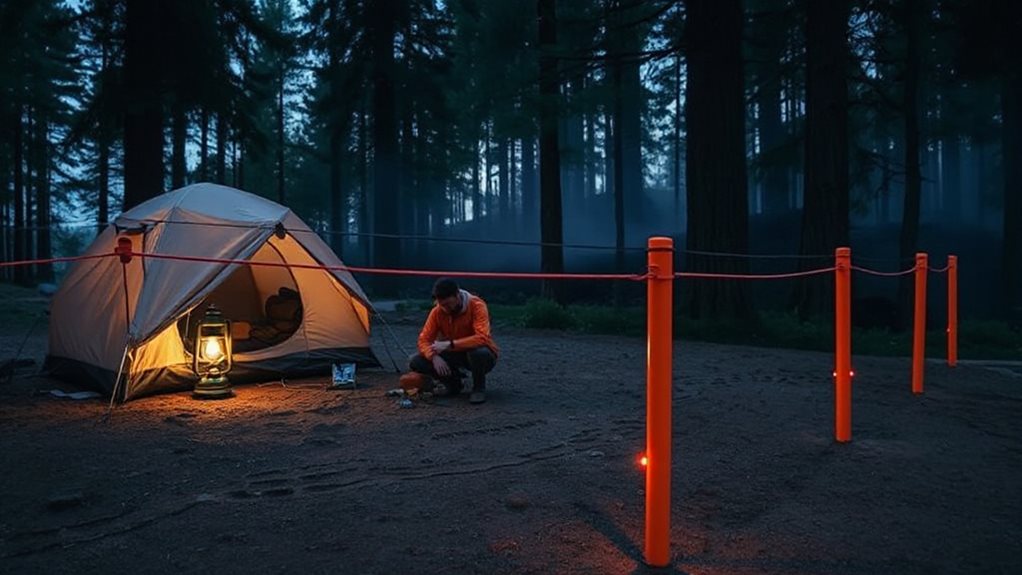
Keeping your food sealed and trash stored away is only half the battle; the next step is to set up a portable bear‑proof barrier that deters curious bears before they even reach your campsite. Plant aluminum poles 6‑8 inches deep, attach insulators at multiple heights, thread polywire, clip joints, and connect the grounding rod to the battery‑powered energizer. Position the unit inside, set a low intensity, verify the red indicator, then enjoy freedom with confidence. Test your gear at home by pitching the barrier and checking for issues like stability and fit before you head into the backcountry.
Carry and Deploy Bear Spray for Safety
Why carry bear spray? You’ll stop aggressive behavior in 92% of encounters, from grizzlies to polar bears, with a cloud that reaches up to 35 feet, giving you a vital buffer as bears charge at 50 feet per second.
It deploys instantly, requires only general direction, and never kills.
Keep it accessible, check temperature effects, and be ready for a second burst if the first doesn’t fully deter the animal.
Use Noise and Visibility to Deter Bears
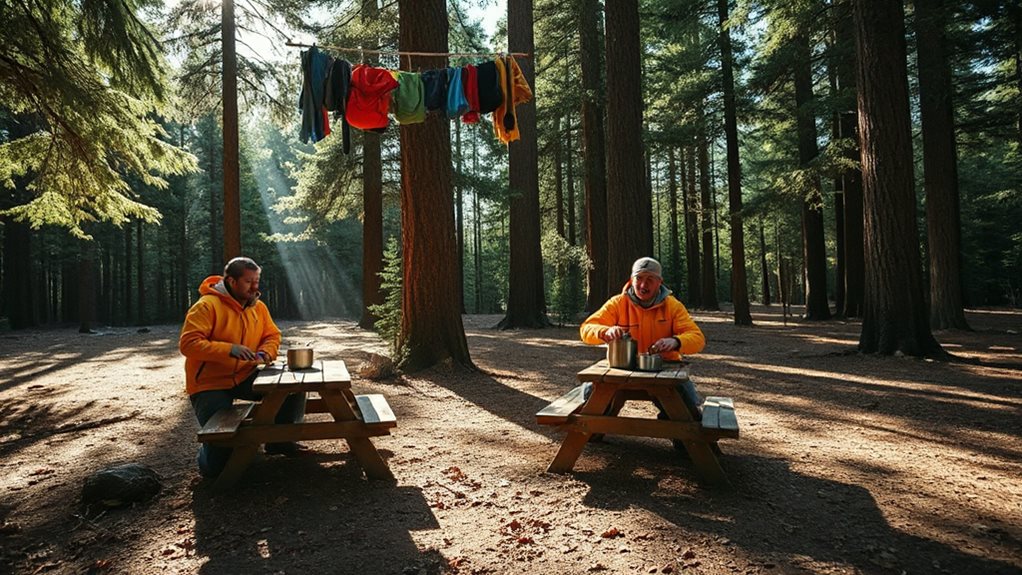
You’ll want to keep a steady stream of noise—talk, sing, or clap—so bears hear you long before they spot you, and you should stay visible by hiking in a group and spreading out slightly while maintaining cohesion. By combining constant sound with clear sightlines, you reduce the chance of a surprise encounter and give the animal time to move away. Remember, loud, regular noises and staying in sight work together to keep both you and the wildlife safe.
Make Noise Constantly
A steady stream of noise, whether it’s a voice, an air horn, or a metallic clank, lets bears know you’re nearby long before they can surprise you, and that early warning is the simplest way to keep encounters safe.
Keep talking, singing, or shouting in rhythm with your steps; blast short air‑horn bursts every few minutes, especially on open trails.
Avoid quiet moments, because a constant audible presence warns bears, reduces surprise, and lets you enjoy freedom without fear.
Stay Visible, Avoid Surprise
Ever wondered how staying visible can keep a bear from surprising you? Choose open sites with clear sightlines, avoid dense brush, berry patches, and stream edges, and set your tent at least 50 meters from trails. Travel during daylight, keep your group together, make regular noise, and stay alert on undulating terrain, so bears see you long before they could approach.
Your Pre‑Trip Bear‑Safety Checklist
How can you guarantee you’re ready for a bear‑active adventure before you even set foot on the trail? Pack bear spray in a belt‑pouch, check local regulations, and practice a 20‑30‑foot burst for a few seconds. Bring bear‑resistant containers or a Ursack, suspend food 10 feet off the ground, and keep trash sealed. Space cooking, sleeping, and eating areas at least 70 steps apart, pitch the tent away from brush, and clean all utensils immediately after meals. Travel in groups, stay alert, and keep dogs leashed.
Final Note
By following these steps, you’ll keep both yourself and the bears safe. Choose a site away from food sources, arrange your gear to minimize scent, and store everything in bear‑proof containers. Dispose of trash properly, set up portable barriers, and always have bear spray within reach. Stay alert, make noise, and use lights to stay visible. With this checklist in mind, you can enjoy the wilderness confidently, respecting wildlife while protecting your excursion.


