
Visit Zion in late spring (April‑May) or early fall (September‑October) for the best mix of mild 60‑70 °F weather, thin crowds, and vibrant waterfalls. In April you’ll catch wildflowers along Riverside Walk and Emerald Pools, while September offers warm days, easy parking, and fewer visitors. October brings golden foliage and comfortable 70 °F hikes. Summer can be hot and crowded, and winter offers wildlife and dark skies but colder temps. Keep reading to discover detailed tips for each season.
TLDR
- Spring (March‑May) and fall (September‑October) offer mild 60‑70 °F weather, fewer crowds, and vibrant waterfalls and golden cliffs, ideal for families, solo hikers, and photographers.
- November provides cooler temperatures (52‑65 °F), very low visitor numbers (~218 k), and weekend‑only shuttles, perfect for a quiet experience and early‑season foliage.
- Summer brings high heat, monsoon storms, and crowded shuttles; hike before 8 a.m., use main canyon shuttles, and monitor parking apps to mitigate crowds and heat.
- Winter offers low crowds, wildlife sightings (mule deer, bighorn sheep), and dark night skies for stargazing, though mornings can be near freezing.
- For optimal photography, target early mornings in spring/fall for golden light, shoot waterfalls during peak flow, and avoid peak summer crowds on popular trails.
Why November Offers Solitude & Cool Weather
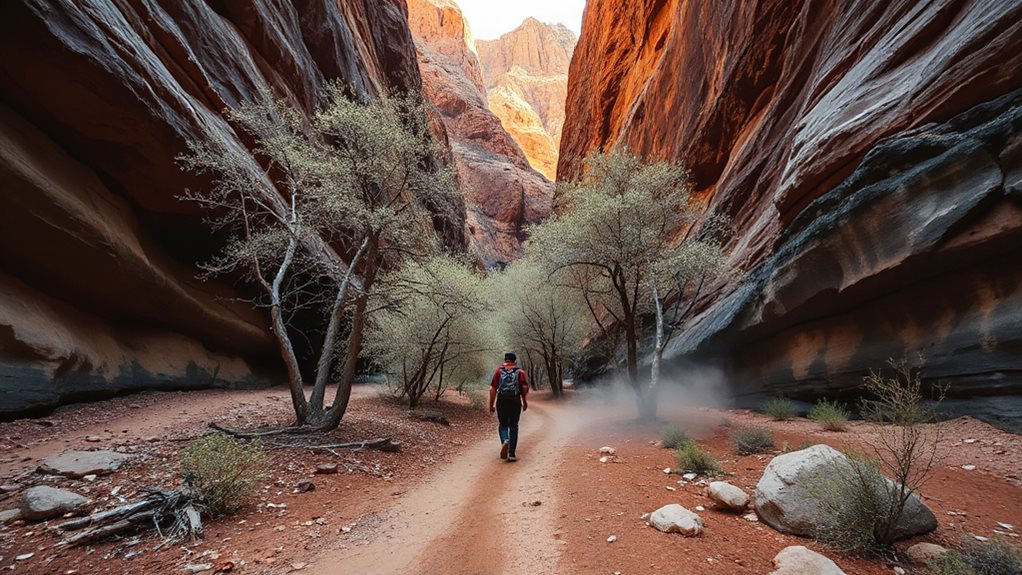
Why November feels like a secret haven in Zion? You’ll find fewer crowds—about 218 000 visitors—so trails stay quiet, and the shuttle runs weekends only, giving you space to explore. Temperatures hover between 52°F and 65°F at midday, requiring light layers, while mornings stay chilly, rarely above freezing. Daylight shortens, yet the sun remains crisp, perfect for hiking the Grotto Trail amid golden foliage. Snow is rare, but occasional dustings add drama without overwhelming the landscape. The growing season ends around early November, making the landscape transition into a quiet, cool period.
Shoulder‑Season Balance: Crowd & Climate (Mar‑May, Sep‑Oct)
Ever wonder how the shoulder seasons strike a perfect balance between crowd size and climate in Zion? In March, cool mornings (45 °F) and warm afternoons (65 °F) let you photograph melt‑driven waterfalls while crowds stay thin, though some high trails may still hold ice.
May brings 60‑75 °F, skies, and early‑morning starts to beat parking lines.
September offers 80‑85 °F, fewer hikers, but watch for monsoon rain.
October delivers golden cottonwoods, 70‑degree days, and reduced shuttles—just confirm schedules.
Dress in layers, stay flexible, and enjoy the park’s quieter, more open spirit.
April Wildflowers: Temps, Trails & Photo Tips
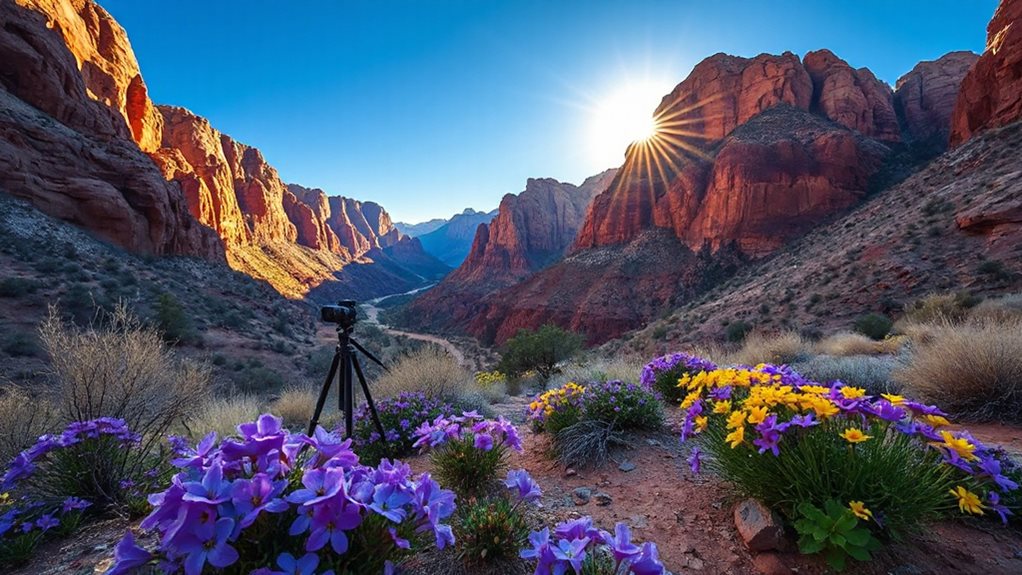
When April arrives in Zion, temperatures climb to a pleasant 70‑75 °F (21‑24 °C) in the canyon while night lows dip to 40‑45 °F (4‑7 °C), creating ideal conditions for wildflower bursts across the riverbanks and cliffs.
Follow the Riverside Walk for hanging‑garden shooting stars, Kayenta for yellow wallflowers, and Emerald Pools for red paintbrushes.
Shoot early, use macro for tiny blooms, and capture the contrast of vivid colors against red sandstone.
September in nearby mountain parks often brings cooler nights, early snowfall at higher elevations, and opportunities to spot migrating wildlife like pronghorn migration as seasons shift.
September Warmth + Manageable Crowds: Hikes & Parking
You’ll find September’s highs hovering around the mid‑90s while nights dip into comfortable 60‑degree ranges, making morning hikes on Observation Point or the East Rim pleasant without the summer scorch.
Visitor numbers drop to a moderate 480‑500 K, so the trailheads and parking lots—especially at Angels Landing—stay manageable, letting you pull into a spot without a long wait.
With the crowds thinning, you can enjoy early‑morning parking, catch the changing foliage on Taylor Creek, and still have plenty of daylight for the Narrows before any afternoon thunderstorms roll in.
Also, consider checking gear and presentation optimization to ensure comfortable and safe outings when conditions or trails change.
Pleasant September Temperatures
Why does September feel so just in Zion? Daytime highs hover around 91°F in the canyon and dip to 80°F on the Kolob mesas, while evenings cool to 60°F and 51°F respectively, giving you comfortable relief after summer’s triple‑digit blaze.
You’ll enjoy 12.5 hours of daylight, clear blue skies, and only a few rain days, making sunrise hikes and sunset photography effortless.
Moderate Visitor Numbers
September’s pleasant warmth still invites outdoor activity, but the crowds start to thin out, making it an ideal time for both hikes and parking. You’ll find about 11 % of annual visitors in September, far fewer than June’s 12 %, so trails feel open and shuttle buses run smoothly. Parking pressure eases, allowing you to park near the canyon without hunting for spots. Enjoy longer scenic drives and shorter, more flexible hikes while still experiencing Zion’s iconic vistas.
Ample Early‑Morning Parking
Ever wonder how a simple shift in arrival time can metamorphose your Zion experience?
Arriving before 8 AM enhances your odds of snagging a spot, since lots fill by 9 AM and stay packed through 3 PM.
Early parking gives you cooler temps for longer hikes, avoids shuttle queues, and lets you beat crowd spikes on Angels Landing and The Narrows, while Springdale shuttles and the Pedestrian Entrance keep entry smooth.
October 70°F Hiking & Autumn Foliage
How does October feel when you step onto Zion’s trails, with daytime highs hovering around 70°F and evenings dropping into the 40s? You’ll enjoy cool, dry air, perfect for strenuous hikes and rock climbing, while layers guard against 30‑degree swings. Early‑season yellow flowers bloom, then higher‑elevation foliage turns gold, creating vivid contrast against sandstone cliffs. Moderate crowds let you explore freely, parking and trailheads less contested. Plan early, dress smart, and savor autumn’s serenity. For longer stays, consider leveling and stabilizing your trailer on-site with stabilizing jacks to maintain comfort and prevent damage over time.
Navigating Peak Summer Crowds (May‑Aug)
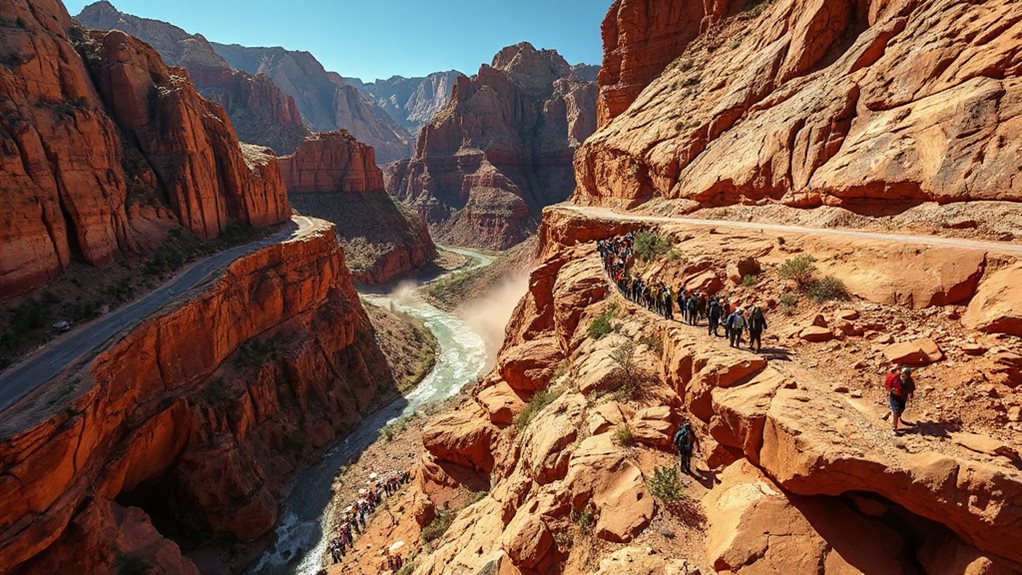
You’ll beat the midday rush by heading to the park before 8 a.m., when shuttles run frequently and parking lots are still open, and then consider less‑crowded trails like the East Rim or Kolob Terrace for a quieter hike.
If you must use the main canyon, park at the designated lot and hop on the shuttle to avoid traffic jams, while keeping an eye on real‑time parking apps for available spots.
Paddling nearby rivers or lakes can also boost your fitness and reduce stress through a full-body workout that engages core and upper-body muscles.
Early Start Strategies
When summer crowds swell in Zion, timing your start can mean the difference between a smooth hike and a long wait. Arrive before the first shuttle, aim for sunrise‑to‑9 am entry, and beat the heat before it climbs above 90 °F.
Start Angels Landing and other strenuous routes before 10 am, hydrate, wear sunscreen, and enjoy cooler morning light while trails are less crowded.
Alternative Trail Options
Looking for ways to dodge the July‑August throngs at Zion? Try Kolob Canyons, 40 miles away, where the Timber Creek Overlook Trail offers a cool, 1‑mile hike with just 100 ft gain.
On the east side, Pa’rus Trail and Riverside Walk stay permit‑free, family‑friendly, and river‑cool, while Deertrap Mountain and Coalpits Wash remain low‑traffic gems for freedom‑seeking explorers.
Parking Management Tips
Avoiding the July‑August crowds on the main canyon means mastering the parking game, and the quickest way to secure a spot is to treat the Zion Canyon Visitor Center lot as a first‑come, first‑served race that starts before sunrise. Arrive by 8 AM, use the large‑vehicle lot for RVs or motorcycles, park at pullouts on the Carmel Highway if the main lot fills, and remember Springdale streets offer extra spaces. Stay flexible, follow shuttle stops, and you’ll keep your odyssey free.
Winter Wildlife & Stargazing Benefits (Dec‑Feb)
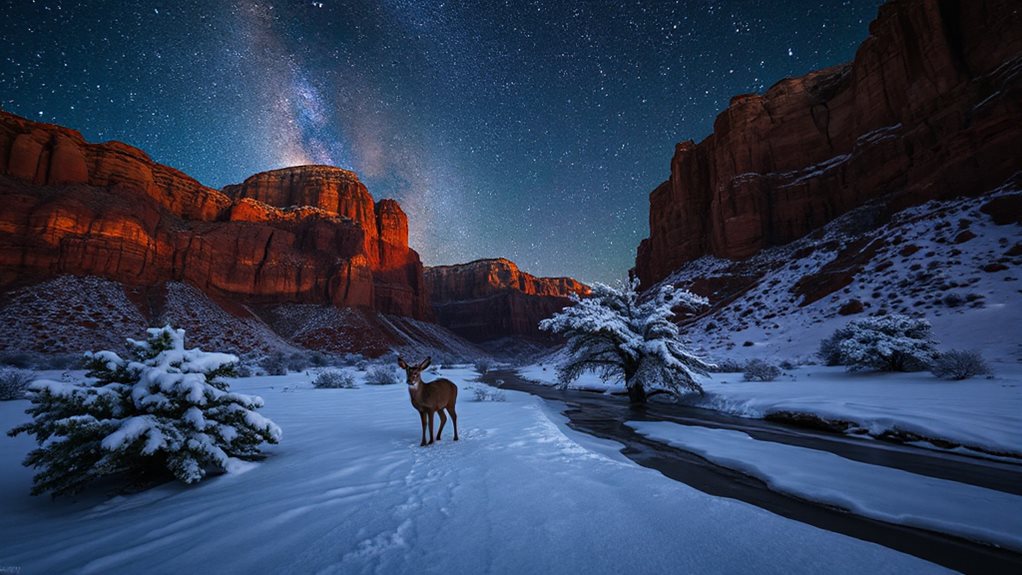
Ever wonder why December through February feels like a secret season for Zion’s wildlife and night sky? You’ll find mule deer grazing low meadows, bighorn sheep perched on canyon ledges, and foxes prowling dawn‑lit campgrounds, all visible against crisp snow.
Fewer visitors dim the lights, so constellations blaze, and clear, cold nights sharpen every star, giving you uninterrupted, awe‑inspiring stargazing.
Bring reusable gear and practice waste‑conscious camping to help protect these quiet winter habitats and preserve the dark sky for everyone; see tips on reducing single‑use plastics to get started.
Best Season for Families, Solo Hikers, & Photographers
After enjoying the quiet winter nights and wildlife sightings, you’ll want to contemplate when Zion best serves families, solo hikers, and photographers alike. Spring and fall give mild 60‑70°F weather, fewer crowds, and radiant waterfalls or golden cliffs—perfect for kids, solo treks, and unobstructed shots.
Summer offers school‑holiday freedom but hot temps, shuttle lines, and monsoon risks, so plan accordingly.
Final Note
Pick the season that matches your goals—whether you crave quiet trails in November, lively wildflowers in April, or mild hiking weather in October. Each window offers distinct advantages: lower crowds, comfortable temps, and unique scenery. By aligning your preferences with these seasonal insights, you’ll maximize enjoyment, safety, and photographic opportunities at Zion National Park. Plan ahead, pack accordingly, and experience the park at its best.


