
Thread your plastic worm by inserting the hook point into the nose and pushing it through until the eye reaches the tip, then bring the point back through the body about 1/4″ down to create a weedless Texas rig. Match your hook size to the worm—use 3/0 for 4–7″ baits and 4/0 or 5/0 for larger offerings. This secure attachment prevents the worm from sliding down the shank during casts and strikes, while keeping it properly centered for natural action that’ll help you uncover advanced techniques for various water conditions.
TLDR
- Thread hook through worm nose until eye reaches tip, keeping hook centered along axis for straight, natural presentation.
- Use multiple piercing wrap technique: insert hook 1/4″ from head, wrap and re-pierce 2–3 times for secure hold.
- Match hook size to worm length: 3/0 for 6–8″ worms, 1–2 for under 4″, 4/0–5/0 for larger baits.
- Choose barbed hooks to grip worms securely and prevent bait loss during casting and aggressive strikes.
- Inspect worms for tears regularly and replace damaged baits immediately to maintain effective presentation and reduce losses.
Essential Rigging Methods for Bass Fishing Success
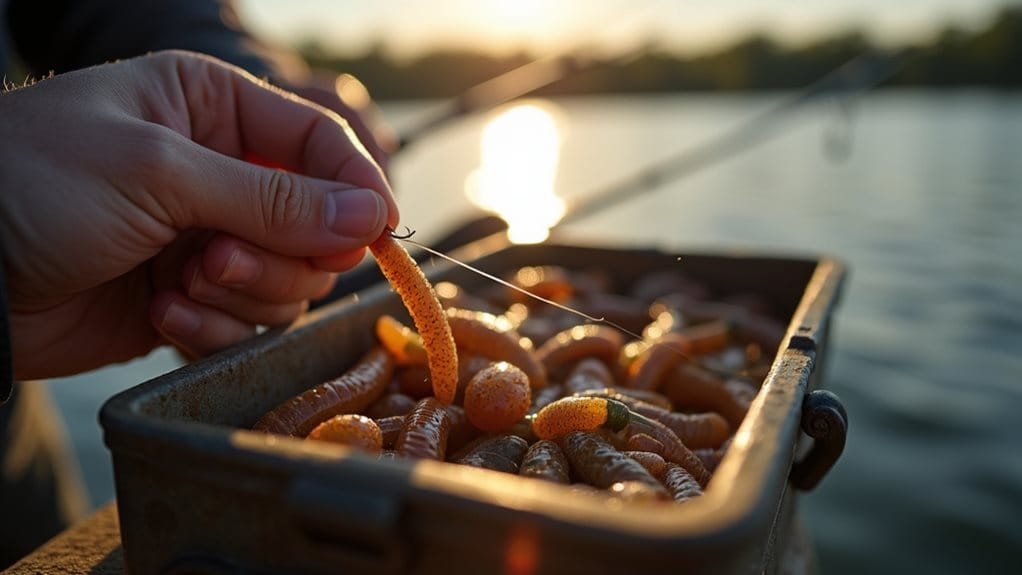
Choosing the right rigging method can make or break your bass fishing success, as each technique offers distinct advantages depending on water conditions, cover density, and bass behavior.
Texas rigging excels in heavy vegetation with its weedless design, while Carolina rigging covers expansive flats efficiently.
Weightless presentations work best in shallow spawning areas, and wacky rigging creates irresistible action for finesse situations.
The drop shot rig provides excellent versatility for targeting bass suspended around cover or holding tight to the bottom with its separated weight and fluorocarbon leader.
Modern anglers often pair these presentations with GPS waypoints to return to productive spots reliably.
Matching Hook Size and Style to Your Worm
Choosing the right hook involves more than just matching size to worm length—you’ll also need to take into account the hook’s overall proportions and features to maximize your hookup ratio.
The hook’s shank length affects how your worm sits in the water and moves naturally, while its weight capacity determines whether it can handle aggressive strikes from larger bass without bending or failing. For standard plastic worms, sproat and offset-shank worm hooks with longer shanks work ideally for Texas-rigged presentations, with 3/0 hooks suited for 4-7″ worms and 4/0 or 5/0 hooks for larger 8-12″ worms.
You should also decide between barbed hooks, which grip worms securely but make release harder, and barbless options that slide out easily but may lose both fish and bait more frequently.
Many anglers also rely on onX and other mapping tools to locate productive public waters and structure where larger bass congregate.
Selecting Proper Hook Length
When you’re rigging a plastic worm for bass, matching your hook size to the length and bulk of your bait is one of the most critical decisions you’ll make.
Standard 6–8 inch worms pair best with 3/0 hooks, while smaller baits under 4 inches require size 1 to 2 hooks.
For larger worms exceeding 7 inches, shift to 4/0 or 5/0 hooks to assure proper coverage and solid hooksets.
Weight Capacity for Strikes
Bass strike with surprising force, and your hook must handle that impact while still penetrating effectively through tough jaw tissue.
Light wire hooks allow quick penetration on subtle strikes but may bend with large fish.
Medium gauge hooks (3/0 to 5/0) balance strength and flexibility for most situations.
Heavy gauge hooks provide solid hooksets in dense cover, though they require stronger force and may reduce hook-up rates on lighter bites.
Barbed vs. Barbless Options
The barb on your hook might seem like a minor detail, but it materially affects both how well you keep your worm rigged and how successfully you land bass.
Barbed hooks provide a stronger hold, reducing the chance of losing your worm during casting or strikes. Barbless hooks facilitate quicker, safer catch-and-release with less injury, though you’ll risk losing bait or fish more often.
Step-by-Step Techniques for Secure Worm Attachment
Securing your worm properly starts with understanding two fundamental attachment methods that’ll keep bass from stealing your bait.
Threading through the nose is the most common approach, where you insert the hook point into the worm’s head and push it through until it exits cleanly, creating a straight, natural presentation.
The multiple piercing wrap method offers extra security by threading the hook through several points along the worm’s body, effectively locking it in place for aggressive strikes or when fishing around heavy cover.
Many anglers also prefer to use a weedless hook to reduce snags and keep the bait on during heavy cover.
Threading Through the Nose
Why do so many anglers struggle to keep their soft plastic worms attached during a fishing trip?
Threading through the nose offers superior retention when done correctly. Insert your hook point into the worm’s very tip, pushing it through until the eye reaches or slightly enters the nose.
Keep the hook centered along the worm’s axis, and make sure it sits straight to maintain natural action.
Multiple Piercing Wrap Method
When bass strike aggressively or you’re fishing through heavy cover, a single threading method often leaves your worm sliding down the hook shank or flying off completely.
The multiple piercing wrap method solves this by securing the worm with several piercings along the hook shaft. Start by inserting the hook point about a quarter-inch from the worm’s head, then wrap and re-pierce two to three times, keeping everything aligned straight.
Proper Presentation and Movement Strategies
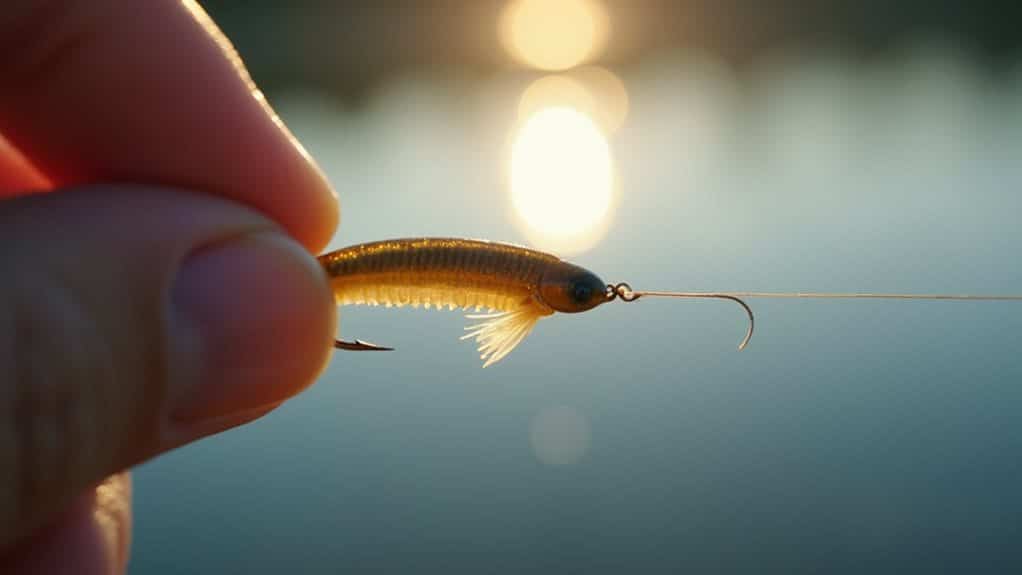
Once you’ve hooked your worm properly, the way you present and move it through the water determines whether bass will strike or ignore it entirely.
Start with a slow, steady retrieve, adding occasional twitches to trigger strikes.
Watch your line closely during the fall, as bass often hit then.
Adjust your speed based on conditions, slowing down when fish are inactive or hesitant to bite.
Also consider using darker hues on sunny days to make your presentation more visible and enticing.
Preventing Worm Loss During Strikes and Retrieval
Losing your worm during a strike or retrieval is one of the most frustrating experiences in bass fishing, but you can dramatically reduce this problem by understanding how bass attack and adjusting your technique accordingly.
Don’t set the hook immediately when you feel a bite; instead, allow the bass to hold the worm briefly for better hook placement. Use a firm but controlled hookset to prevent tearing the plastic or pulling it off the hook entirely.
Selecting the Right Worm for Water Conditions
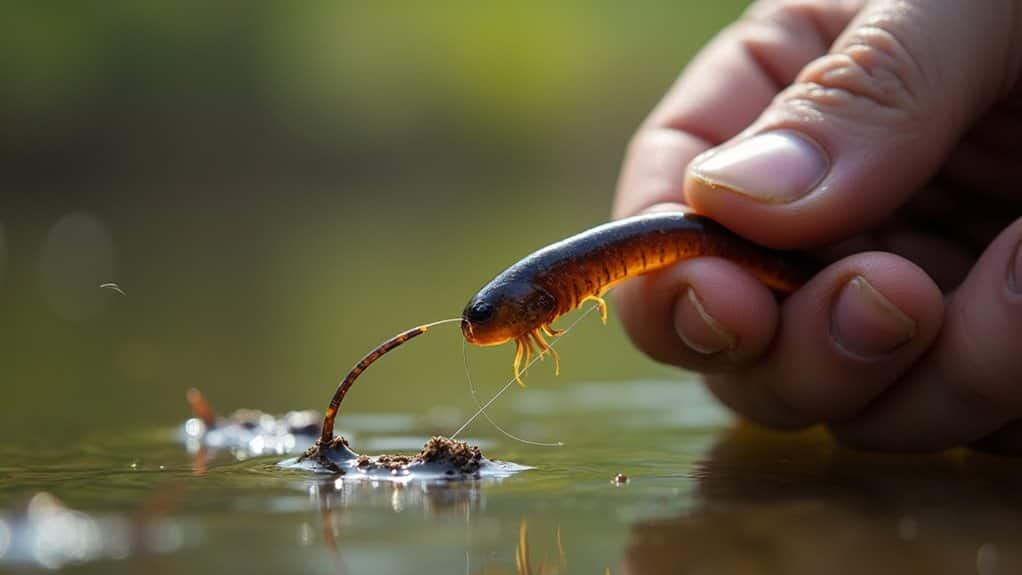
Matching your worm selection to the water conditions you’re fishing can mean the difference between a slow day and a successful outing, as bass rely heavily on sight and vibration to locate prey in their environment.
In dark or muddy water, you’ll want black or black with red flake worms. Clear water calls for natural colors like green pumpkin or darker blues, while stained water responds well to red bug shades.
Maintaining Your Rig for Maximum Durability
A bass fishing rig is only as reliable as its weakest component, and maintaining each part throughout your fishing session will keep you hooking and landing more fish while preserving your soft plastic worms.
Frequently check your worm for splits or tears, inspect knots for wear and retie as needed, and examine your hook point for sharpness.
Replace damaged components immediately to prevent losing bass and worms to preventable rig failure.
Final Note
You’ve now got the fundamental techniques to keep your worms secure and maximize your bass fishing success. Remember, the right hook size, proper rigging method, and careful presentation make all the difference between losing bait and landing fish. Practice these techniques until they become second nature, and you’ll notice fewer lost worms and more strikes. Now it’s time to hit the water and put your new skills to work.


