
You’ll find world‑class trout fishing in Yellowstone’s cutthroat‑rich lake and firehole river, secret high‑altitude brook streams in the Great Smoky Mountains, Glacier’s backcountry waters teeming with bull, rainbow, and cutthroat trout, Acadia’s landlocked salmon and bass lakes, and Rocky Mountain’s catch‑and‑release greenback cutthroat streams. Each park offers distinct gear rules, seasonal permits, and conservation guidelines, so you can plan a safe, rewarding trip and discover more details ahead.
TLDR
- Yellowstone NP offers diverse lake and river trout species, including cutthroat, lake trout, brown, and rainbow, with extensive backcountry access.
- Great Smoky Mountains NP provides pristine cold‑water streams rich in brook, rainbow, and brown trout, plus secluded high‑altitude sanctuaries.
- Glacier NP features multiple trout species—bull, rainbow, cutthroat, and brook—across high‑elevation streams and remote lakes.
- Acadia NP supplies abundant landlocked salmon and bass in accessible lakes and ponds, with year‑round fishing seasons.
- Rocky Mountain NP emphasizes catch‑and‑release greenback cutthroat fishing, requiring Colorado licenses and barbless, artificial‑lure gear.
U.S. National Parks With World‑Class Trout Fishing – Quick Overview
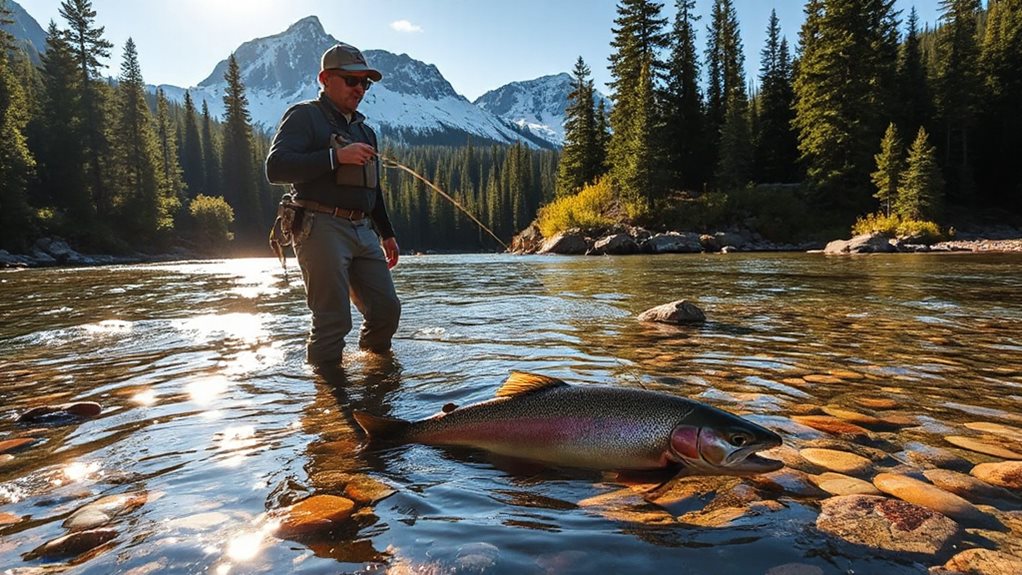
Ever wondered which U.S. national parks deliver world‑class trout fishing? In Yellowstone, you’ll find cutthroat and lake trout in Yellowstone Lake, trophy cutthroat in Lamar Valley, brown and rainbow in Firehole River, and Arctic grayling at Grebe Lake. Great Smoky Mountains offers wild brook trout, rainbow and brown in cold streams. Glacier boasts bull, rainbow, cutthroat and brook trout. Olympic’s steelhead run pristine mountain streams, while Shenandoah provides aggressive native brook trout on accessible hikes. Everglades National Park offers extensive inshore and estuarine fishing opportunities with seasonal peaks for redfish, snook, and tarpon. Many anglers increase success by matching lure size and type to seasonal conditions and local forage, especially using versatile lures that cover multiple depths and presentations.
Gear Guide for Each Park’s Waters
A solid gear setup starts with a medium‑light rod about 5 ½ to 6 ½ feet long, paired with a matching reel that handles 4‑ to 12‑pound test line, and an 8‑pound monofilament spool in light blue, clear, or green—usually a 100‑yard spool fills most reels. Add size‑6 hooks, split shot, ½‑ounce sinkers, a small tackle box, bobbers, and a landing net. Carry a PFD, throw bag, rod holder, and lead‑free tackle, plus a license, safety belt, and cooler for catch‑and‑release.
Trip Planning: Permits, Seasons, Conservation
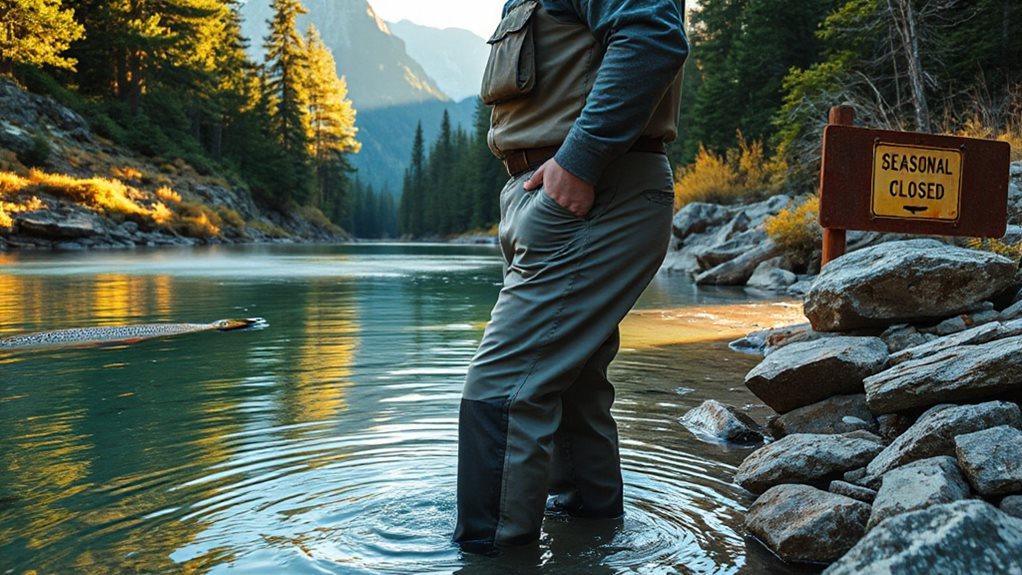
When you start planning a fishing trip to a national park, you’ll need to sort out permits, seasonal rules, and conservation guidelines before you hit the trail. Check each park’s licensing system—Great Smoky Mountains needs a Tennessee or North Carolina license, no trout stamp. Purchase licenses online or in nearby towns, bring ID, and respect age limits and resident discounts. Follow state‑issued seasons, keep documentation handy, and remember fees fund fish protection and restocking. Also consider bringing kid-friendly gear and activities to keep children engaged while you fish, such as simple fishing basics and safety equipment.
Fish Yellowstone’s Legendary Trout Rivers
Where do you start when you want to chase Yellowstone’s legendary trout? Pack for backcountry, head to Yellowstone River’s remote sections below the lake, where cutthroats and rainbows average 14‑16 inches, then explore below Knowles Falls for brown trout.
On Firehole River, early‑season dry‑fly action thrives on thermally heated riffles.
Try Slough Creek’s native cutthroats, Lamar River’s 7‑mile stronghold, and Soda Butte Creek’s meadow pools for varied, unforgettable runs.
Secret Brook Streams in Great Smoky Mountains
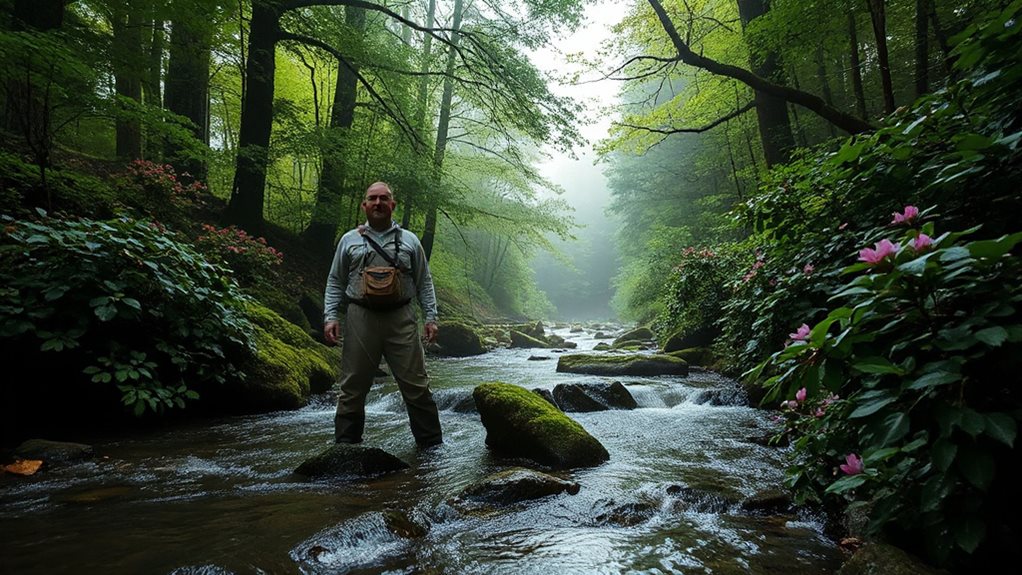
You’ll find high‑altitude brook sanctuaries tucked in remote headwaters, where the water stays cool and the native trout thrive. Arriving before sunrise gives you early‑morning access to these quiet streams, letting you beat the crowds and fish in pristine conditions. With a single hand‑held rod and artificial fly, you can experience the park’s best kept secret while respecting the delicate ecosystem. Observing fish feces can help you monitor trout health and the stream’s ecological balance.
High‑Altitude Brook Sanctuaries
Ever wondered why the Great Smokies hide some of the best brook trout in secret, high‑altitude streams? You’ll find Bunches Creek, accessed via Heintooga Ridge Road and Flat Head Trail, where small, cold‑water brookies thrive.
Flat Creek, starting at 5,310 feet near Balsam Mountain Campground, offers pristine, remote habitat. Catch‑and‑release rules protect these fragile populations, rewarding experienced anglers with uncrowded, wild fishing.
Early‑Morning Access Streams
How can you make the most of those quiet, pre‑sunrise hours when the park’s streams are still hushed?
You’ll slip into backcountry trails, reach hidden brook streams before sunrise, and fish with a single‑handed rod, artificial fly, and one hook. Follow strict catch‑and‑release rules, respect fragile ecosystems, and carry proper gear, because stealth and preparation unlock unforgettable early‑morning freedom.
Target Grand Teton’s Fine‑Spotted Cutthroat & Grayling
Where can you find the best chances to land a fine‑spotted cutthroat or an Arctic grayling in Grand Teton?
Head to high‑elevation streams and lakes open August 1‑November 30, use artificial flies or lures, and respect the creel limit of six trout per day, no more than three cutthroats, one over twelve inches.
Release all cutthroats under twenty inches immediately, and avoid fishing in closed‑season sections like Buffalo Fork.
This approach maximizes your freedom while protecting native species.
Acadia Trout Fishing Hotspots: Landlocked Salmon & Bass
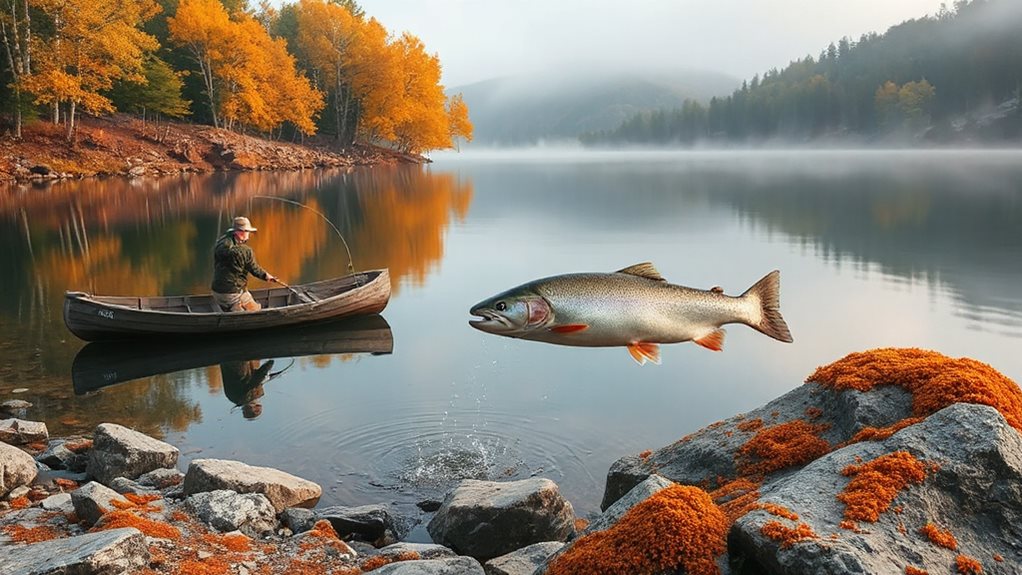
You’ll find the best landlocked salmon hot spots on Mount Desert Island’s cooler lakes and ponds, especially where charters guide you to places like Penobscot River and Grand Lake Stream.
Bass thrives in the park’s warmer waters, with smallmouth and largemouth populations populating lakes such as Witchhole Pond and Jordan Pond, accessible from shore or a modest boat.
Plan your trips between April and October for peak freshwater action, and keep an eye on the January‑March ice‑fishing window if you’re after a winter challenge.
Many anglers also enjoy evening campfire activities and conversation starters to unwind after a day on the water, especially sharing stories about stargazing and wildlife sightings.
Longlocked Salmon Hotspots
Ever wondered where the best landlocked salmon hide on Mount Desart Island? You’ll find them in Jordan Pond’s cool spring waters, Eagle Lake’s deep coves, Echo Lake’s stocked bays, and Long Pond’s open waters.
Use a 9‑foot 6‑weight fly rod, launch from the rough boat ramps, and target the thermocline before June.
Park passes, motor limits, and seasonal rules keep the experience free and focused.
Bass Fishing Hotspots
After exploring the best landlocked salmon hideaways, let’s turn to the bass scene on Mount Desert Island. Smallmouth bass bite in Long Pond, Somes Pond, Round Pond, Echo Lake, Seal Cove Pond, and both Upper and Lower Hadlock, so bring a rod and a license.
Shore anglers can launch from Manset Town Landing or Bar Harbor pier, while boat ramps at Seal Cove and Tremont open Blue Hill Bay.
Striped bass swarm Sargent Drive and Somes Sound July‑September, no license needed—just register online.
Seasonal Timing Tips
When planning your Acadia trout outings, keep the seasonal windows in mind so you can match the fish’s behavior with the right gear and location. From April through October, target stream‑bound brook trout; April‑June is prime for bank‑fishing landlocked salmon and lake trout. Late September to October, watch spawning runs from Bubble Pond to Eagle Lake. Ice fishing opens January‑March on larger ponds, especially Witch Hole and Long Pond. Use artificial flies after August 15, and respect motor restrictions at Witch Hole.
Rocky Mountain Trout Fishing: Greenback Cutthroat
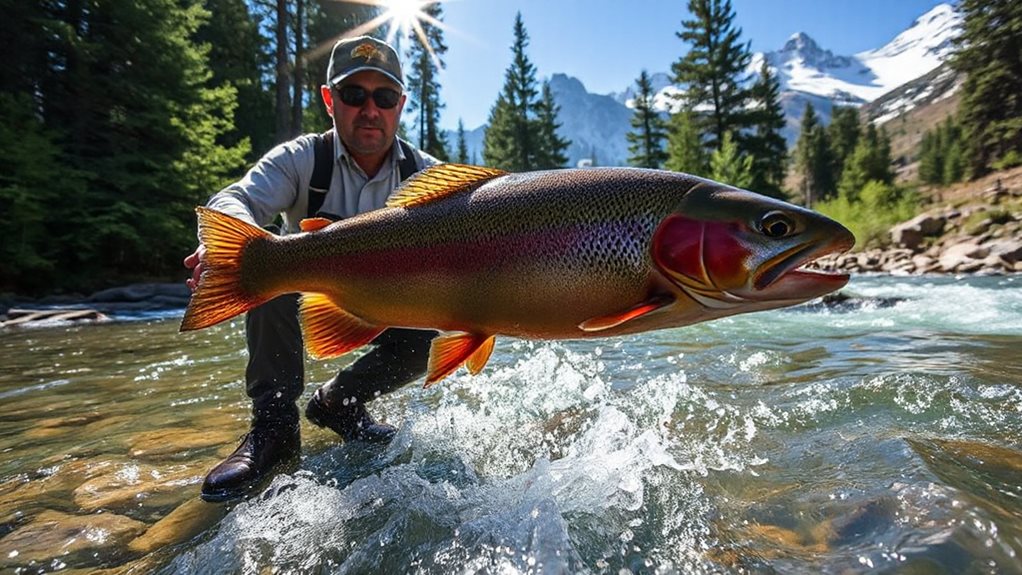
Where can you find the elusive greenback cutthroat in Rocky Mountain National Park? You’ll locate them in Roaring River and high‑country streams like Ouzel Lake, mostly catch‑and‑release zones.
Carry a valid Colorado license, use a single rod, barbless hooks, and artificial lures only.
No lead sinkers or felt soles.
Keep within 18‑trout limits, report catches, and handle fish head‑first, supporting the belly, pointing upstream. Regular paddling also improves stamina and contributes to overall fitness.
Final Note
You now have a solid roadmap for the nation’s top trout‑rich parks, from Yellowstone’s legendary rivers to Acadia’s hidden bass haunts. Pack the right gear, check permit rules, and time your trips to match seasonal windows, then you’ll enjoy abundant catches and pristine scenery. Follow the local guidelines, respect conservation efforts, and you’ll leave each waterway better than you found it—ready for the next angler’s excursion.


