
Pick a well‑lit, level site with nearby restrooms, water, and a grocery store, then pack age‑appropriate sleeping bags, insulated pads, a nightlight, and a stocked first‑aid kit; include layered clothing, rain gear, sun hats, sunscreen, insect repellent, and a map or GPS. Plan simple one‑pot meals and pre‑made snack packs stored in reusable bags and insulated lunch bags. Set up a clear tent layout with a low‑step entrance, wide aisle, and a kid‑safe path using a rug and shoe‑off spot. Follow a structured daily schedule of wake‑up, play, meals, and bedtime, observe campsite etiquette, keep kids supervised, and store food properly; continue for more detailed tips.
TLDR
- Choose a well‑lit, level campsite with visible sightlines, playgrounds, and easy access to restrooms and water.
- Pack age‑appropriate sleeping gear, nightlights, a stocked first‑aid kit, and layered clothing for weather protection.
- Plan simple one‑pot meals and pre‑made snack packs, using reusable containers to minimize waste and mess.
- Arrange the tent with a clear floor plan, low‑step entrance, and a kid‑safe pathway free of obstacles.
- Create a structured daily schedule with supervised activities, quiet hours, and quick hazard checks.
Select a Kid‑Friendly Campsite
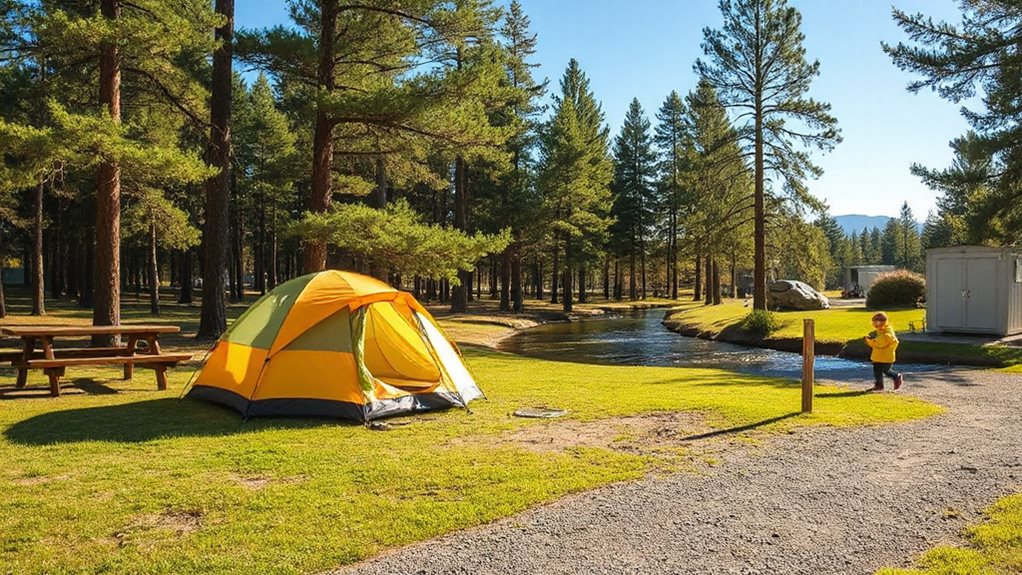
Where should you start when picking a kid‑friendly campsite? Look for well‑lit paths, secure boundaries, and level sites that let you keep an eye on kids, while quiet settings and clean facilities enhance safety. Choose a spot with playgrounds, splash pads, and nearby trails, plus easy access to restrooms, water, and grocery stores, ensuring freedom to explore without hassle. Visible sightlines from RV spots aid supervision of children. A small dry bag can help keep spare clothes and electronics safe from rain and splashes during family outings (waterproof materials).
Pack Comfort & Safety Essentials for Kid‑Friendly Camping
How can you make sure your kids stay comfortable and safe while you’re out under the stars? Pack age‑appropriate sleeping bags, insulated pads, and familiar pillows, plus battery nightlights for reassurance.
Bring a stocked first‑aid kit, whistles, headlamps with spare batteries, and waterproof flashlights.
Layer clothing for weather, include rain gear, sturdy boots, sun hats, sunscreen, and insect repellent.
Add hand sanitizer, toothbrushes, quick‑dry towels, and a map or GPS for orientation.
Hunting is sometimes used to manage overpopulation of certain wildlife species to protect habitats and reduce vehicle collisions.
Prepare Easy Meals & Snack Stations for Kid‑Friendly Camping
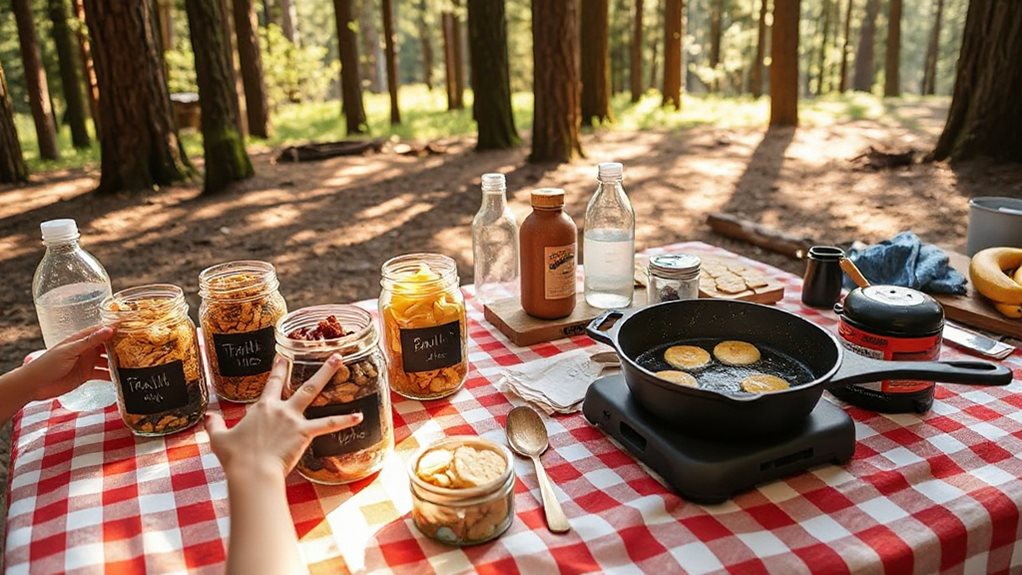
You can simplify dinner by cooking one‑pot pasta meals that combine noodles, sauce, vegetables, and protein in a single skillet, so the kids help stir while the flavors meld.
Pre‑made snack packs—granola bars, mason‑jar parfaits, or cheese‑mac mini‑stations—keep energy up and mess down, letting you pull a bag or jar whenever hunger strikes. By pairing these quick, hearty meals with ready‑to‑grab snacks, you’ll spend less time in the kitchen and more time enjoying the campsite with your children. Adding compact pre-made snack packs can also make transitions between activities smoother and reduce waste.
One‑Pot Pasta Meals
Ever wonder how you can serve a warm, nutritious dinner that kids actually enjoy without juggling multiple pots and endless cleanup? You’ll love one‑pot pasta: toss canned tomatoes, broth, pasta, and pre‑measured protein into a Dutch oven, cover, bring to a boil, then simmer 10‑15 minutes, stirring occasionally. Add spinach, cheese, or herbs near the end, remove the lid, and let excess liquid absorb. The result is a balanced, flavorful meal with minimal dishes, perfect for campsite freedom.
Pre‑Made Snack Packs
What makes a camping snack station both efficient and kid‑friendly?
Pack pre‑made grab‑and‑go items—granola bars, cheese sticks, yogurt tubes—alongside fresh apple slices with peanut butter, carrot sticks, and berries.
Use reusable silicone bags, insulated lunch bags with ice packs, and individual compartment boxes.
Portion protein‑rich turkey roll‑ups, trail mix, and hard‑boiled eggs, then label each pack for quick, independent access.
Arrange a Practice‑Ready Tent Layout for Kid‑Friendly Camping
You’ll want to map out a clear, open floor plan that gives each child room to move without bumping into gear, so start by positioning the sleeping area against one wall and leaving a wide aisle in the middle.
Choose a low‑step entrance or a small vestibule that lets kids step in and out safely, and make sure the path stays free of backpacks or coolers that could cause trips.
For added safety and convenience, consider placing gear and heavy items near the tent edge to reduce tripping hazards and make retrieval easier during nighttime with a reliable low‑step entrance.
Layout for Space
How do you turn a simple family tent into a kid‑friendly campsite that feels spacious, organized, and ready for any excursion? Lay a tarp, then a soft blanket for clean floor space; set three foot‑pumped air mattresses side‑by‑side, reserving a corner for a separate sleeping zone. Attach a screened porch or garage for gear, add a pop‑up awning for extra shelter, and place folding chairs and lanterns evenly to keep pathways clear and the interior airy. This layout maximizes room, keeps clutter out of the way, and gives kids freedom to move and play safely.
Kid‑Safe Entrance Pathway
After spreading the tarp and arranging the air mattresses, turn your attention to the entrance—making it a clean, dry, and well‑lit gateway that lets kids move in and out safely. Lay a runner rug at the doorway, clear rocks, seal seams, and set a shoe‑off spot outside. Add headlamps, low‑light lanterns, and clear markers to guide them to the bathroom, ensuring a stable, slip‑free path.
Design a Kid‑Approved Daily Schedule
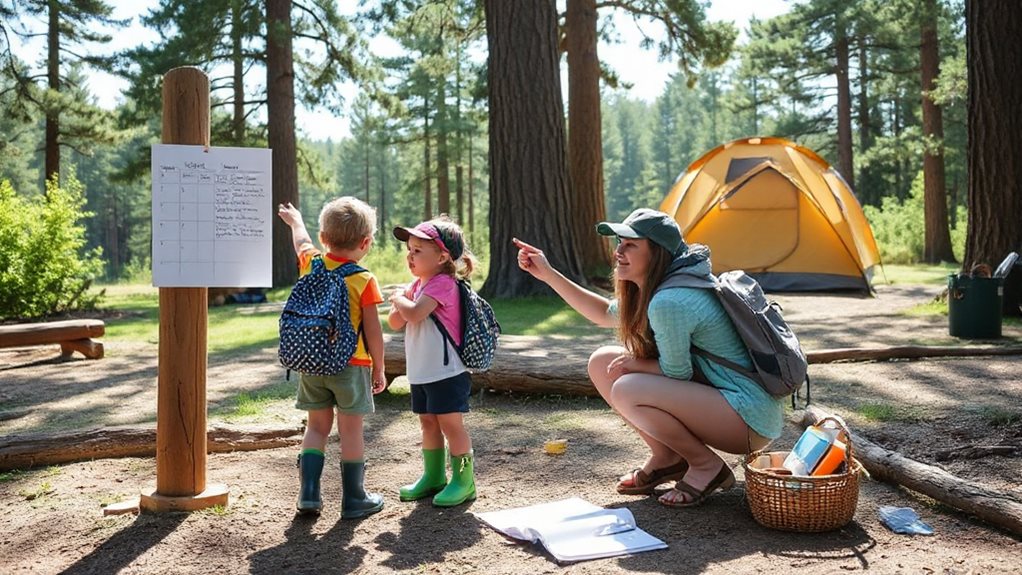
Ever wonder how a kid‑approved daily schedule can keep the camp buzzing with activity while still giving families the structure they need? Use a template that lists date, activity, start‑and‑end times, facilitator, group, status and notes. Block mornings for wake‑up, breakfast, hygiene, free play, yard games; midday for lunch, snacks, rest, board games; afternoons for arts projects, sports, transitions; evenings for dinner, campfire, crafts, bedtime check‑offs. Print in color or black‑and‑white, customize with writing prompts, and keep it editable for flexibility. Remember to routinely sanitize shared water containers and tanks using household bleach to help prevent contamination.
Teach Camp‑Ground Etiquette for Kid‑Friendly Camping
What does it mean to respect camp‑ground etiquette, and why is it essential for a smooth, kid‑friendly camping experience?
You keep noise low after quiet hours, whisper near thin tent walls, and limit loud games. Stay inside your site, avoid other campers’ areas, and keep gear where it belongs. Pack out trash, tidy up, and teach kids to observe wildlife from a distance, respecting boundaries and safety rules.
Ensure Night‑Time Safety & Comfort for Kids
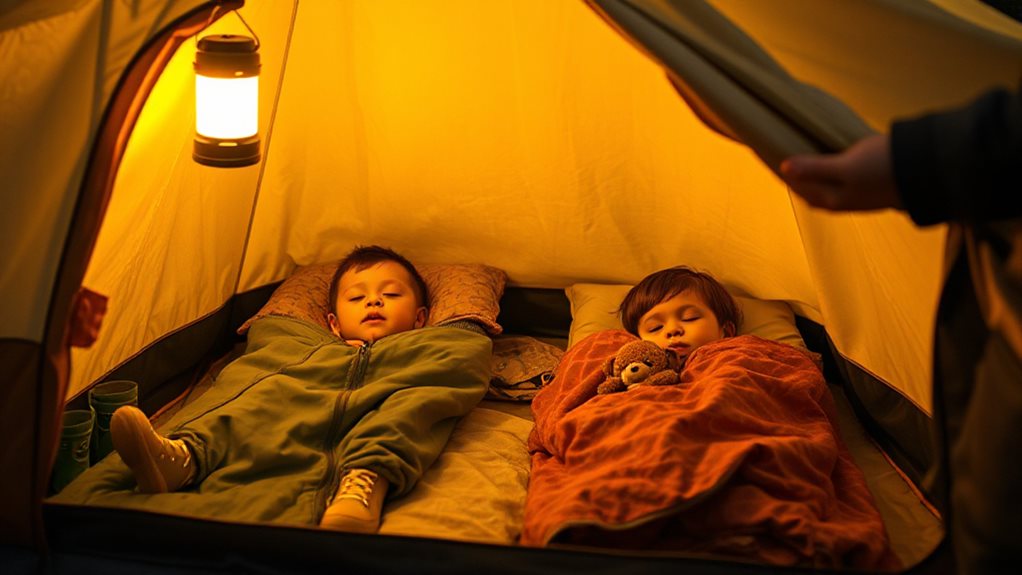
Respecting camp‑ground etiquette sets the stage for a calm night, but the real challenge begins when the sun sets and kids need to settle in. Keep bedtime routines familiar—read stories, play audiobooks, and use blackout tents or masks to block light. Layer pajamas, socks, and hats, add a fan or white‑noise device, and bring home bedding or travel cribs for comfort.
Resolve Common Safety Issues Quickly for Kid‑Friendly Camping
How can you swiftly tackle the most common safety hiccups that arise when camping with kids? Scout the site for poisonous plants, sharp rocks, and steep edges, then choose a flat, dry spot away from roads and water. Keep kids in sight, set clear boundaries, use whistles, and store food in bear‑proof containers. Supervise any water or fire activity, have a bucket and shovel ready, and always extinguish flames before bedtime.
Quick Clean‑Up & Reflection for Kid‑Friendly Camping
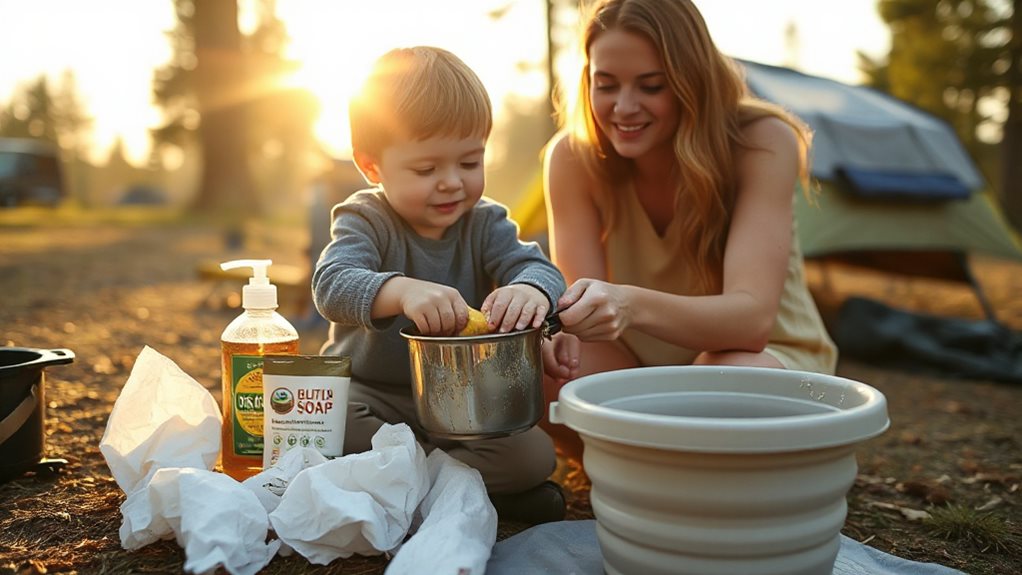
After securing the site and keeping kids safe, the next step is to streamline cleanup and reflect on the day’s activities. Use color‑coded bins for gear, toys, and fire starters, and keep a bucket with sponges, soap, and wipes in zip‑locked bags to contain moisture. Deploy a pop‑up hamper for trash, separate recycling, compost, and landfill in lidded bins, and let kids help with grabbers. Wipe faces and hands with unscented wipes, swap dirty pajamas for clean ones, and use hand sanitizer before bedtime. Clean marshmallow pokers, bag dirty shoes, and air‑out the tent to prevent mold. Finish with a team sweep, clearing rocks and debris, then dry clothes on a paracord line to reduce laundry.
Final Note
You’ve got the basics: pick a kid‑friendly site, pack safety gear, plan simple meals, set up a tent that’s easy to get in and out of, and schedule activities that balance fun and rest. Teach the kids campsite etiquette, keep nights safe and comfortable, and handle any issues promptly. After the trip, tidy up together and reflect on what worked. With these steps, you’ll create memorable, stress‑free camping experiences for the whole family.


