
You’ll find the Grand Canyon buzzing with 447 bird species—ruby‑crowned kinglets near the rim, red‑tailed hawks on the floor, and osprey gliding at RM205—while the Great Smoky Mountains offer 31 salamanders, 14 frogs, and spectacular firefly shows in Elkmont woods each late May. Yellowstone delivers massive herds of bison, 123 wolves, and over 1,000 grizzlies roaming free. Big Bend’s Chisos Lizard Loop and Canyonlands Snake Trail reveal whiptails, coachwhips, and rattlesnakes across varied desert terrain. In the Everglades, shallow tidal flats host flamingos and deep marshes attract great egrets. Denali crowns the list with high‑altitude Dall sheep and caribou. Continue for detailed season tips, gear recommendations, and safety basics.
TLDR
- Grand Canyon offers 447 bird species, with hotspots like Bright Angel Trail for songbirds and RM150 for raptors.
- Great Smoky Mountains host 45 amphibian species and synchronized firefly displays in Elkmont woods, best viewed late May–early June.
- Yellowstone provides massive mammal populations, including 4,000+ bison, 123 wolves, and 1,000+ grizzlies, creating dynamic wildlife viewing.
- Big Bend’s Chisos Lizard Loop and Canyonlands Snake Trail showcase diverse desert reptiles, from whiptails to rattlesnakes, especially at night.
- Everglades features waterfowl such as flamingos and great egrets in shallow tidal flats and marshes; rain‑resistant gear enhances comfort.
Grand Canyon Bird‑Watching Hotspots for Your Wildlife Safari
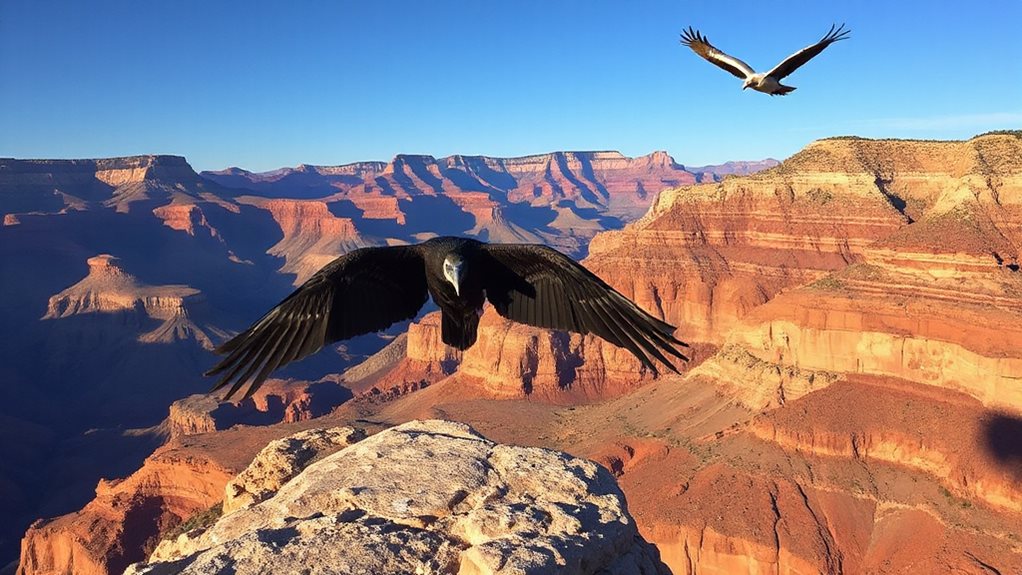
Ever wondered where to spot the most lively birdlife along the Bright Angel Trail? You’ll find ruby‑crowned kinglets, song sparrows, and bushtits flitting near the rim, while western bluebirds and common ravens dominate the canyon floor. Near RM193, northern shoveler flocks, cinnamon teal, and green‑winged teal gather, and an osprey glides at RM205. Raptors like red‑tailed hawks, turkey vultures, and a peregrine falcon soar below RM150, offering endless, freedom‑filled viewing. Grand Canyon hosts an estimated 447 bird species, making it a premier destination for birdwatchers. Radio communication at parks can help coordinate sightings and safety by using UHF and VHF channels adapted to different terrains.
Great Smoky Mountains Amphibians & Bugs You Must See
You’ll find the Great Smoky Mountains a true amphibian diversity hotspot, where 31 salamander species and 14 frogs and toads coexist in oxygen‑rich streams and misty forests.
While you hike, keep an eye out for the synchronous firefly displays that light up the night in perfect unison, offering a magical, natural light show.
These combined wonders make the park a must‑visit for anyone keen to experience wildlife that’s both abundant and uniquely spectacular.
Cast netting with a 1/2 mesh is commonly used by anglers to catch schooling baitfish like gizzard shad, which congregate in specific depths and habitats that can inform where to observe aquatic wildlife such as stream-dwelling amphibians and their predators—see thermocline zones for more.
Amphibian Diversity Hotspot
Where does the Great Smoky Mountains National Park rank among the world’s amphibian hotspots? You’ll find it near the top—45 species, including 31 salamanders and 14 frogs, make it a living laboratory.
The park’s salamanders outmass mammals, and new lungless species keep emerging. Stream‑dwelling, high‑elevation, and burrowing varieties all thrive, offering you unrivaled, hands‑on biodiversity.
Synchronous Firefly Displays
The park’s amphibian richness sets the stage for another nighttime wonder: the synchronous firefly displays that light up the Elkmont woods each spring. You’ll find Photinus carolinus flashing in 5‑8 burst cycles, pauses of eight seconds, creating a pulsating green‑yellow canopy. Peak weeks run late May to early June; secure a lottery spot, bring a red‑light headlamp, arrive by six, and sit quietly after ten for the best view.
Yellowstone Mammal Hotspots: Bison, Wolves & Grizzlies
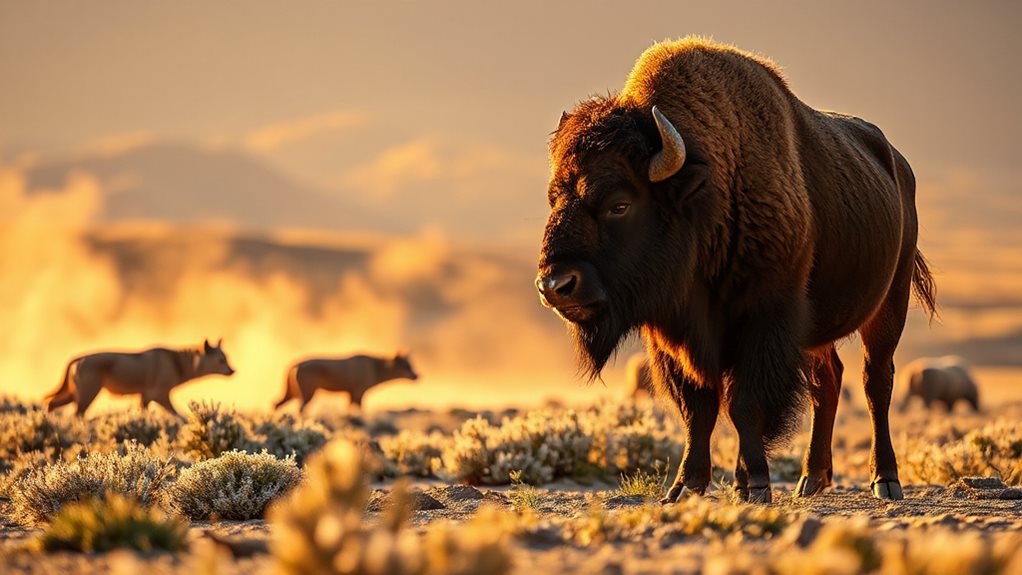
Ever wondered why Yellowstone’s wildlife hotspots feel like a living classroom? You’ll see over 4,000 bison shaping grasslands, creating burrows for prairie dogs and fueling 35 million pounds of plant consumption.
Gray wolves, 123 strong across nine packs, chase elk and sculpt herd patterns, while grizzlies, now over 1,000, roam expanded territories, sharing the park with abundant black bears.
This dynamic web offers unrivaled, free‑spirited observation.
Big Bend Desert Reptiles: Top Trails for Lizards & Snakes
You’ll want to start with the Chisos Mountains Lizard Loop, where marbled whiptails and Texas horned lizards bask on rocky outcrops, and the trail’s varied elevation offers plenty of spotting opportunities.
The Canyonlands Snake Trail takes you through riparian zones and desert scrub, perfect for spotting coachwhips, western diamondback rattlesnakes, and the occasional striped whipsnake.
If you’re out after dark, the Desert Nighttime Reptile Spotting route lets you observe nocturnal snakes and lizards under the stars, giving you a chance to see species that hide during daylight.
Regular gear care is important on these trails to preserve your equipment’s performance, so be sure to perform routine maintenance like waxing and checking edges to extend its lifespan and safety for many seasons regular maintenance.
Chisos Mountains Lizard Loop
Curious about spotting desert reptiles without battling scorching heat? You’ll love the 2‑mile Chisos Mountains Lizard Loop, a moderate, counter‑clockwise trek at 5,000 ft that stays cool under pine, oak, and juniper shade. Whiptail lizards dart through dense arroyos, while rock squirrels and bird calls add life. March brings mild weather, easy navigation, and abundant wildlife signs—perfect for freedom‑seeking explorers.
Canyonlands Snake Trail
If you’re hunting for a compact, reptile‑rich trek, the Canyonlands Snake Trail delivers exactly that, winding through a narrow slot canyon that mirrors the iconic Closed Canyon Trail in Big Bend Ranch State Park. You’ll find greater earless lizards, desert spiny lizards, and western diamondback rattlesn along the walls and floor.
Park at FM 170, pay at the self‑serve station, and stay alert for mountain lions—don’t run if you spot one.
The trail is hikers‑only, pet‑friendly, and offers shaded spots for spotting tracks and scat.
Desert Nighttime Reptile Spotting
When the desert sun sets, the terrain evolves into a bustling arena for nocturnal reptiles, and Big Bend’s trails become prime spots for spotting lizards and snakes that hide by day.
You’ll find rattlesnakes, horned lizards, and elusive milk snakes along Madera Canyon and Gage Gardens, especially after summer rains, while road‑cruising surveys reveal dozens of species darting across rocky flats and brushlands.
Everglades Waterfowl: Where to Spot Flamingos & Egrets
Where can you spot the elusive flamingos and graceful egrets in the Everglades? Head to shallow tidal flats of Florida Bay, especially near Flamingo and the estuarine shallows at park boundaries, where Caribbean flamingos occasionally gather.
Great egrets favor water deeper than 25 cm, so explore the deeper marshes and Cape Sable lakes for reliable sightings.
Rain pants designed for complete freedom of movement often use 4-way stretch fabrics to enhance comfort during long hikes.
Denali High‑Altitude Wildlife: Dall Sheep & Caribou
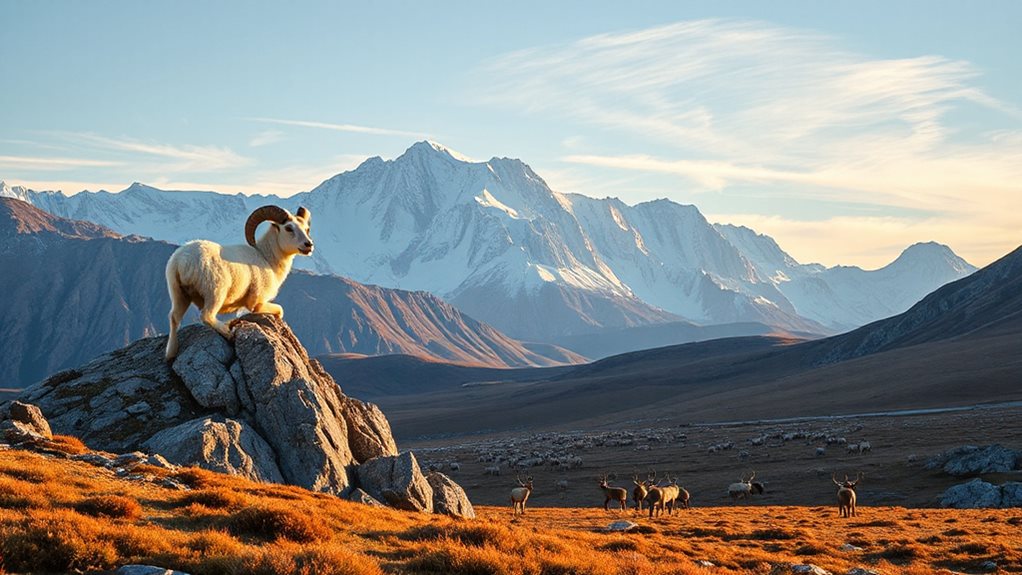
After spotting flamingos on the tidal flats of the Everglades, you’ll find a completely different kind of spectacle on Denali’s high‑altitude ridges, where Dall sheep and caribou dominate the rugged tundra.
You’ll see white‑coated Dall sheep on Polychrome Overlook’s steep slopes, their spiraled horns silhouetted against wind‑swept flora, while caribou graze open tundra near Savage River and Toklat River.
Pack a telephoto lens, binoculars, and a summer itinerary; the treeline offers unobstructed vistas, and park road tours boost your chances of spotting both iconic species.
Many visitors combine their wildlife watching with nearby hikes, such as those offering coastal views and varied terrain.
Safari Planning: Season, Gear & Safety Essentials
Which season you choose, what gear you pack, and how you stay safe all determine whether your wildlife safari becomes a memorable odyssey or a frustrating scramble.
Pick summer for Yellowstone’s grizzlies, spring in Great Smoky for black bears, winter in Redwood for elk, winter in Everglades for alligators.
Bring binoculars, sturdy boots, bear spray, long lenses, weatherproof layers.
Keep 100‑yard distance, stay on boardwalks, secure food, travel in groups.
Final Note
By planning your trip around the best seasons, packing appropriate gear, and respecting park regulations, you’ll maximize wildlife sightings across these iconic parks. Stay alert, move quietly, and use binoculars or a telephoto lens to keep distance while capturing the action. Remember that each park offers unique habitats—high‑altitude meadows, desert canyons, wetlands, and alpine tundra—so adapt your approach accordingly. With careful preparation, you’ll enjoy rewarding encounters and leave with lasting memories of America’s diverse wildlife.


