
You’ll love camping in Yellowstone’s Grant Village, where flat boardwalks, showers, laundry, and pet‑friendly sites sit near geysers and a lake, plus discounted rates for Access Pass holders; Yosemite’s Upper Pines and Camp 4 give you iconic valley views, quiet hours, and permit‑required backcountry access; the Grand Canyon’s rim campgrounds—Mather, Trailer Village, Desert View—offer stunning vistas and easy trail links, while river sites need permits; Great Smoky Mountains provide wildflower corridors and secluded, permit‑only spots like Gregory Bald; Rocky Mountain’s alpine lakes and high‑altitude tents near Bear Lake deliver fly‑fishing thrills; Grand Teton’s lakeside camps at Colter Bay and Jenny Lake combine water views with mountain‑side backcountry loops. Continue on for detailed gear, safety, and permit tips.
TLDR
- Yellowstone: family-friendly campgrounds with showers, laundry, and easy geyser access; flat boardwalks and pet‑welcome sites.
- Great Smoky Mountains: wildflower corridors and permit‑only backcountry sites like Gregory Bald and Deep Creek for sunrise solitude.
- Yosemite: iconic valleys, permit‑required backcountry, and early‑booked Upper Pines or Camp 4 for stunning granite scenery.
- Grand Canyon: rim campgrounds (Mather, Trailer Village) plus river camps (Bright Angel, Indian Garden) with scenic hikes and starry nights.
- Rocky Mountain: alpine lake campsites and high‑altitude tent sites near Bear Lake, Longs Peak, and Moraine Park for mountain vistas.
Choosing the Perfect National‑Park Camping Spot
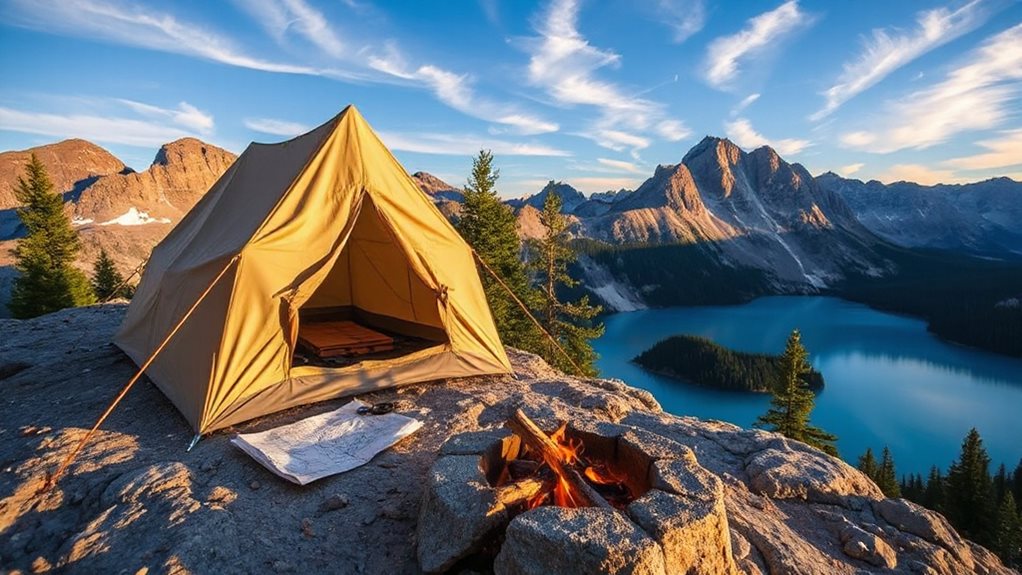
Where exactly should you set up camp to make the most of your park expedition? Pick level ground, stay at least 200 feet from water, trails, and wildlife paths, and avoid dead trees or flash‑flood zones. Choose a spot with morning sun, afternoon shade, and a breezy windward side. Check for potable water, showers, and toilet access, and book early or scout first‑come sites. Keep cooking, eating, and sleeping areas spaced for safety. Proximity to attractions adds excitement and reduces driving time for outdoor activities.
Yellowstone National‑Park Family‑Friendly Campgrounds & Geyser Views
You’ll find family‑friendly campgrounds like Grant Village just minutes from West Thumb and Upper Geyser basins, offering flat boardwalks, stroller‑accessible paths, and pet‑friendly sites with lake and geyser vistas. The easy, to Old Faithful lets you watch eruptions without a long hike, while nearby amenities such as showers, laundry, and fire grates keep your stay comfortable. With discounted rates for Access Pass holders and quiet hours that suit kids, these campgrounds blend convenience, scenery, and safety for a memorable Yellowstone adventure.
Family‑Friendly Campgrounds Near Geysers
Ever wondered which Yellowstone campgrounds let you wake up to geyser steam while keeping the whole family comfortable? Choose Norris for direct access to Norris Geyser Basin and Steamboat Geyser, Grant Village for lower‑elevation warmth and West Thumb views, and Madison for nearby Norris and Gibbon River hikes. Tent sites, group spots, and full‑hookup RV options cater to families, but book early—sites fill fast.
Easy Access to Old Faithful
How can you enjoy a quick, hassle‑free drive to Old Faithful while staying in a family‑friendly campground? Choose Madison, just 16 miles north, or Grant at 19 miles south, both on Grand Loop Road for easy access. Reservations are required, and sites accommodate tents and RVs up to 40 feet. Enjoy central locations, nearby amenities, and the freedom to investigate geysers on your schedule.
Pet‑Friendly Sites With Scenic Views
After enjoying a hassle‑free drive to Old Faithful, you can keep the excursion going by staying at a pet‑friendly campground that also offers spectacular scenery. Choose Grant Village for geyser‑side vistas and well‑kept sites, Madison for river views and hydrothermal overlooks, Canyon Village for canyon rim panoramas, Mammoth for year‑round terraces, or Tower Fall for dramatic waterfall scenery—all leashed‑pet‑friendly, family‑oriented, and value‑rich.
Yosemite National‑Park Iconic Valleys & Backcountry Adventures
What makes Yosemite’s iconic valleys and backcountry routes so irresistible is the blend of dramatic granite cliffs, towering sequoias, and pristine alpine meadows that invite both seasoned hikers and first‑time campers to roam. You’ll need a wilderness permit for Little Yosemite Valley or High Sierra sites, respect the 30‑night yearly limit, and book Upper Pines or Camp 4 early via Recreation.gov. Quiet hours, vehicle caps, and fire bans keep the experience safe and serene. Fast-action rods provide better sensitivity and hook-setting power for anglers in alpine lakes and rivers, so consider bringing fast-action gear when fishing on backcountry excursions.
Grand Canyon National‑Park Rim & River Campgrounds for Scenic Hikes
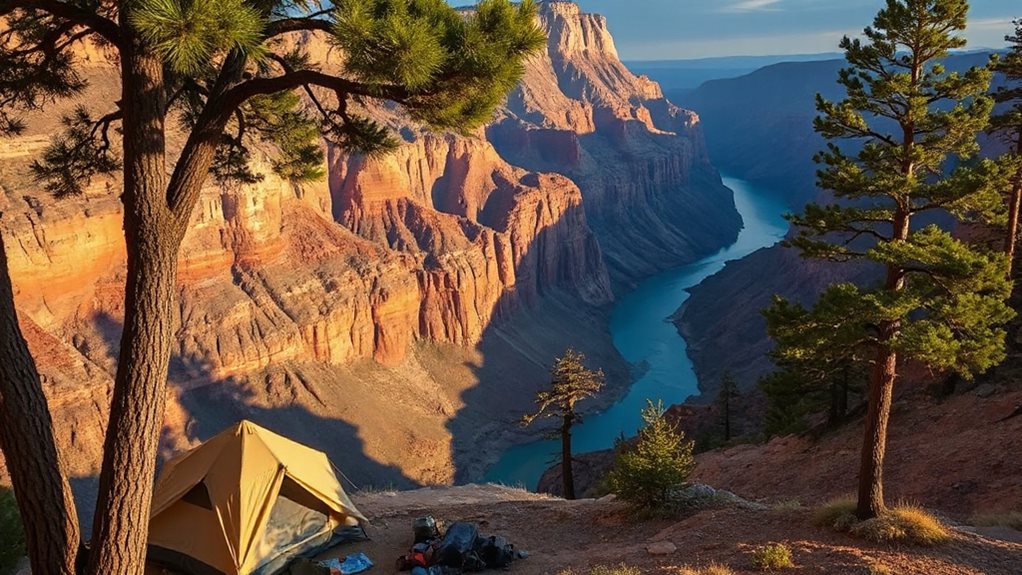
You’ll find the rim campgrounds—Mather, Trailer Village, and Desert View—perfect for easy access to iconic trailheads, while the North Rim offers quieter sites and a gateway to the Kaibab Trail.
If you crave river exploits, the backcountry camps at Bright Angel, Indian Garden, and Cottonwood let you set up along the canyon floor, though you’ll need a permit for each.
All of these spots connect to scenic hikes, so you can start your day with a sunrise stroll and end it by a campfire under the stars.
These backcountry sites are ideal for anglers using versatile octopus hooks that work well with live or dead bait.
Rim Campground Highlights
Where can you find the best blend of rugged canyon vistas and convenient amenities? The Rim Campground sits a mile north of the Lodge, offering 89 tent‑friendly sites with picnic tables, campfire rings and grills.
Perimeter spots frame stunning rim views within 30 yards, while shuttle stops and a nearby general store keep supplies close.
Restrooms, showers, laundry and potable water are available, and pets are welcome on leashes.
River Access Camping Options
Three main river‑side campgrounds—Bright Angel, Cottonwood, and Havasupai Gardens—offer the most direct access to the Colorado River for scenic hikes, but each requires a backcountry permit and limits stays to two nights per campground, whether consecutive or not. You’ll also find 22‑, 23‑, and 24.5‑mile sites, plus the expansive 132‑mile camp, each demanding permits and offering rugged, unrestricted riverfront experiences.
Scenic Trail Connections
Ever wondered how to link the iconic rim vistas with the secluded river campgrounds for a seamless scenic hike? You can start on the Rim Trail, a 13‑mile flat stretch near South Rim RV sites, then drop into Bright Angel for shade, water, and a 9.6‑mile ascent to the bottom.
On the North Rim, follow North Kaibab to Cottonwood, or tackle South Kaibab’s 7.4‑mile plunge to Phantom Ranch for a true rim‑to‑river expedition.
Great Smoky Mountains National‑Park Wildflower Trails & Secluded Campsites
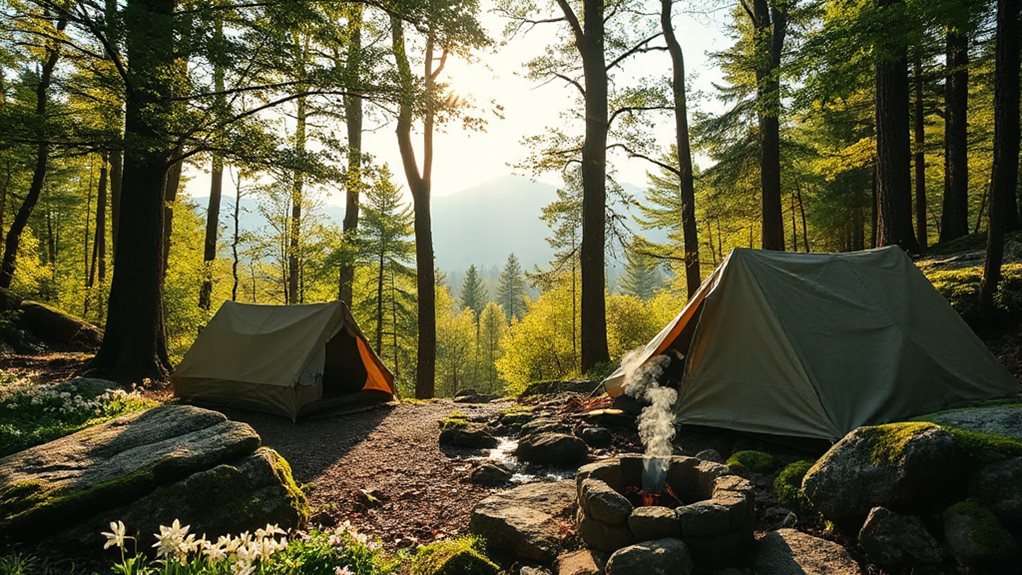
What draws hikers to the Great Smoky Mountains is the seamless blend of lively wildflower corridors and hidden backcountry campsites, and you’ll find both in abundance along trails like Porters Creek, Andrews Bald, Schoolhouse Gap, Bradley Fork, and Deep Creek.
You’ll wander past bloodroot, trilliums, blue phlox, and rhododendron‑laden meadows, then pitch at permit‑only sites such as Gregory Bald’s ridge view or Deep Creek’s primitive clearings, soaking sunrise, solitude, and fragrant breezes.
For those planning overnight trips, consider bringing spare line and practicing spool alignment to prevent frustrating tangles and ensure smooth gear use.
Rocky Mountain National‑Park Alpine Lakes, High‑Altitude Tents & Fly‑Fishing Access
Ever wondered how a single day can take you from crystal‑clear alpine lakes to a secluded high‑altitude tent site, then onto a quiet stretch of river perfect for fly‑fishing? You’ll hike Bear Lake shuttle to Nymph, Dream, Emerald, or loop Cub Lake and Fern Lake for water‑edge camping. Pitch a tent at Longs Peak (9,405 ft) or Moraine Park (8,160 ft) for stunning views, then wade into the upper Colorado River at Timber Creek for trout‑filled serenity. Reservations vary, but most sites cost $30‑$35 nightly. Plan ahead and prepare by checking permits, weather, and packing the 10 essentials to keep these places wild and safe.
Grand Teton National‑Park Lakeside Camps & Mountain‑Side Backcountry Loops
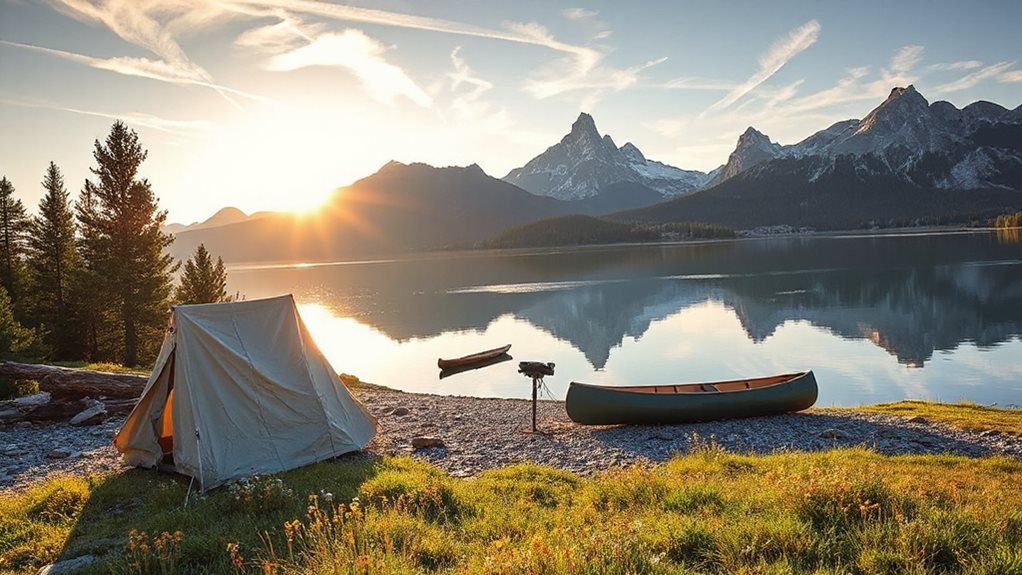
Looking for a lakeside spot that lets you paddle, hike, and unwind without a long drive? Choose Colter Bay for 335 wooded sites, electric hookups, and easy boat access; Jenny Lake offers 49 walk‑in sites near a glacial lake and shuttle to Hidden Falls; Lizard Creek provides 60 secluded spots in spruce‑fir forest.
Backcountry loops like Berry Creek or Hechtman Horse Camp deliver mountain‑side solitude, with tent pads, fire rings, and required permits.
Many campers prefer rods made from graphite and fiberglass for durability and sensitivity during shoreline fishing.
National‑Park Camping Gear, Permit & Safety Checklist
How do you make sure you’re prepared for a night under the stars without a hitch? Pack a sturdy tent with stakes, guylines, footprint and rainfly, plus a seasonal sleeping bag and insulated pad. Bring a headlamp, extra batteries, stove, fuel and lightweight cookware. Include a first‑aid kit, bear spray, water filter, multi‑tool, and a reliable charger. Secure permits, ID, cash, and a park‑specific firewood source, and follow storage rules. Dress in moisture‑wicking layers, pack sunscreen, insect repellent, and personal meds. Use maps, compass or GPS for navigation.
Final Note
Pick the park that matches your interests, pack the right gear, and secure any needed permits before you go. Respect fire rules, wildlife, and trail etiquette to keep the environment pristine. Stay flexible—weather can change quickly, so have a backup plan and know the nearest rescue services. By planning carefully and staying informed, you’ll enjoy safe, memorable camping experiences across America’s most iconic national parks.


