
Grab a lightweight hydration vest with water, electrolytes, snacks, and pockets for your phone and keys, then dress in moisture‑wicking shorts, a breathable jacket, hat, and sunglasses. Choose trail shoes whose lug depth matches the terrain—shallow for hard‑packed dirt, deep for mud or snow—and pair them with merino‑nylon blend socks that wick sweat and prevent blisters. Pack a GPS watch, compass, small first‑aid kit, headlamp, emergency blanket, sunscreen, and a whistle in a waterproof bag. Start with three easy runs a week, gradually extending one long run by 15 minutes each week, and add a short hill set once weekly for strength. Keep your pace steady, stay upright, and place your feet deliberately on rocks, roots, and loose soil; this foundation will set you up for safe, enjoyable trail journeys.
TLDR
- Choose moisture‑wicking clothing, a hydration vest, and essential safety gear (phone, first‑aid kit, emergency blanket) before each run.
- Select trail shoes with appropriate lug depth: shallow lugs for hard‑packed surfaces, deep lugs for mud, snow, or loose soil.
- Wear merino‑blend, moisture‑wicking socks with proper heel hug and toe‑box room to prevent blisters.
- Follow a progressive training schedule: 3‑5 easy runs weekly, gradually extending weekend runs by 15 minutes and adding weekly hill repeats.
- Carry a GPS watch, compass, and weather‑proof layers; always have charged communication and signaling tools.
What Gear Should You Pack for Your First Trail Run?
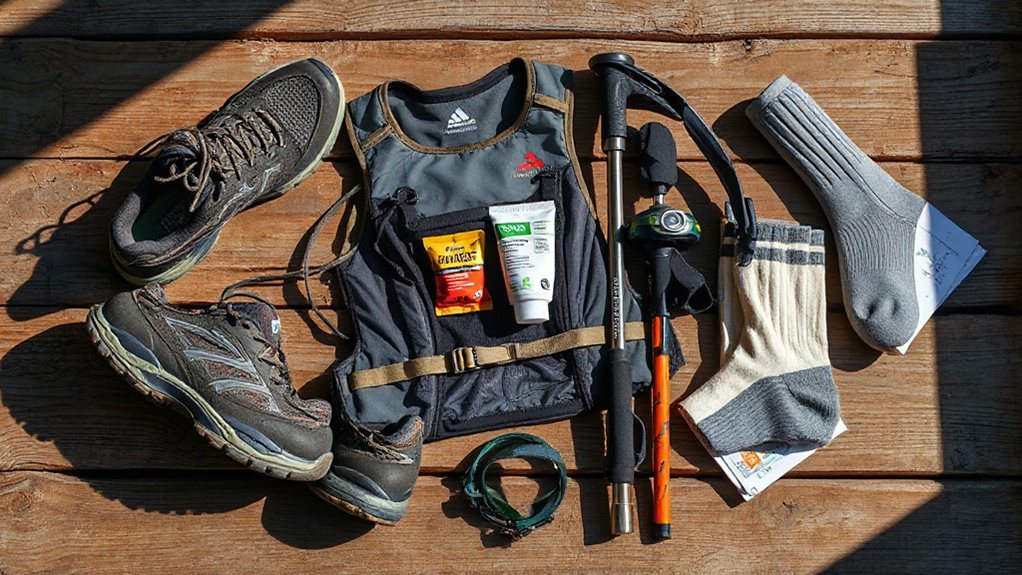
Ever wonder what you truly need to bring on your first trail run? Pack a hydration vest with water, electrolytes, snacks, and pockets for phone and keys; it’s lighter than a bottle and lets you sip while you move.
Slip on moisture‑wicking shorts, a breathable jacket, hat, and sunglasses. Trail running also builds endurance and can help with weight management when done regularly.
Slip a GPS watch, compass, and small first‑aid kit in a waterproof bag, and add a headlamp, emergency blanket, and sunscreen for safety and comfort. Include a sun‑protective hat to reduce UV exposure and prevent sunburn.
How to Choose the Right Trail‑Running Shoes and Socks
You’ll want shoes whose tread matches the terrain you’ll run on, from aggressive lugs for technical paths to moderate patterns for hard‑packed trails, while picking socks made of moisture‑wicking, cushioned fabrics that protect against blisters.
Check that the shoes fit snugly yet comfortably, considering width, length, and any gender‑specific designs, and look for supportive midsoles and durable uppers that can handle rocks, mud, or mixed terrain.
Finally, balance heel‑to‑toe drop and overall durability with your stride style and the conditions you expect, so you stay stable, comfortable, and injury‑free.
Grip and Terrain Compatibility
How do you match your shoes to the trail you’ll tackle, and why does the right grip matter? Choose shallow lugs (2‑4 mm) for hard‑packed dirt, gravel, or fire roads, letting you roll efficiently.
Pick deep lugs (5 mm+) for mud, snow, or loose soil, where they bite and shed debris.
Tightly spaced lugs grip even, dry surfaces; widely spaced lugs excel on muddy, soft terrain.
Select a shoe style—light, rugged, or hybrid—that aligns with terrain technicality, and consider stiffer soles or Earth‑Link technology for a grounded, stable feel.
Sock Material and Cushioning
Choosing the right sock material and cushioning is as essential as picking the perfect shoe, because it directly affects comfort, blister prevention, and temperature control on the trail. Opt for merino‑nylon blends for moisture‑wicking, odor resistance, and soft feel, adding Lycra for snug stretch. Light cushioning works in heat, while zonal or medium pads protect heels and forefoot on rocky sections, and mesh zones enhance breathability.
Fit, Support, and Durability
Comfort begins with a proper fit, because a shoe that hugs your heel, leaves room in the toe box, and respects your foot’s width and arch type will keep blisters and hot spots at bay on uneven terrain.
Choose a heel‑to‑toe drop matching your strike: 10‑12 mm for heel strikers, 5‑10 mm for midfoot, 0‑4 mm for forefoot.
Look for arch support, structured counters, and midfoot wraps for stability, while reinforced uppers and Vibram outsoles guarantee durability over 300‑500 miles.
Pair with moisture‑wicking socks featuring heel tabs and targeted cushioning for secure, comfortable runs.
How to Build a Safe Training Schedule From 3‑Run Weeks to 5‑Mile Long Runs
A solid foundation starts with three to five easy runs each week, letting your muscles and joints adapt before you add distance or intensity. Begin with 20‑30‑minute midweek runs, extend to 30‑35 minutes week two, then 35‑40 minutes week three, while weekend trail sessions grow from one hour to 1½ hours.
Add a weekly 60‑second hill set, replace one easy run, and increase long runs by 15 minutes each week until you reach five miles. Rest days protect recovery, and optional cross‑training keeps you balanced. Using a scope can improve accuracy and shooting range when aiming at distant targets.
How to Control Pace, Posture, and Foot‑Placement on Trail Runs

Ever wonder why trail running feels so different from road running? You’ll control pace by feeling effort, using RPE or heart‑rate zones instead of mile times, and start slower on long runs. Shorten strides, keep a relaxed mid‑body rotation, tuck your chin, and land forefoot. Look 10‑15 feet ahead, dodge obstacles with light, quick steps, and adjust foot‑placement constantly for stability. Consider carrying a water bottle and wearing sunscreen for sun protection while out on longer runs, and bring waterproof clothing if conditions call for it.
How to Adapt Your Run to Rocky, Muddy, and Steep Trails
After mastering pace, posture, and foot‑placement on relatively smooth trails, the next step is learning how to adjust your run when the terrain turns rocky, muddy, or steep.
Pick clean landing spots, keep feet flat on rocky steps, dig heels into mud on downhills, lean forward on steep grades, use short, controlled strides, and engage core and hip strength for balance and power.
Essential Trail‑Running Safety Gear and Emergency Prep
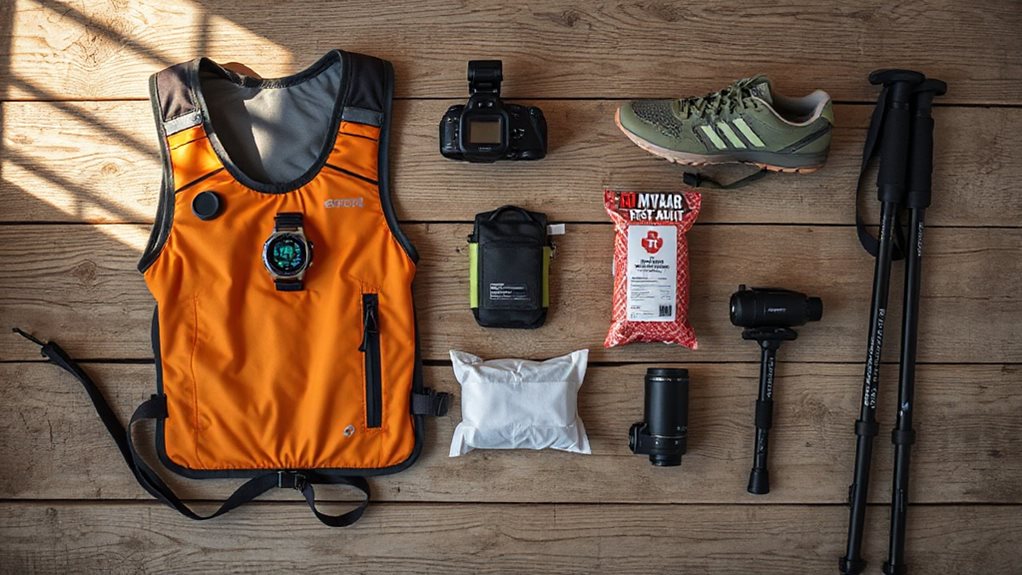
You’ll want a concise checklist that covers shoes with aggressive tread, a hydration vest that balances water and gear, and weather‑proof layers like a wind‑ and rain‑rated jacket.
Add a compact first‑aid kit, a charged phone or whistle, and a lightweight emergency shelter or survival bag for unexpected delays.
With these essentials packed, you’ll stay safe, stay comfortable, and stay prepared for any trail challenge.
Also, consider wearing a beanie made from moisture‑wicking fabric and taking breaks to protect your hair and scalp.
Essential Gear Checklist
What gear should you pack before hitting the trail? Slip on trail‑specific shoes with aggressive tread and toe caps, pair them with moisture‑wicking socks. Wear a lightweight base layer, a breathable jacket, and a hat for sun. Load a hydration vest (1–3 L) with water, snacks, and a spare layer. Carry a map, compass, charged phone, and a small first‑aid kit with blister tape and sunscreen.
Emergency Prep Essentials
A solid emergency plan starts with the right gear, because when you’re far from help a prepared runner can signal, stay warm, and protect health until rescue arrives.
Pack a satellite messenger or Garmin inReach, a whistle, and a signal mirror; keep a waterproof ID pouch with contacts and medical info.
Bring a space blanket, gloves, a compact first‑aid kit, a GPS watch, and bright clothing for visibility.
Share your route and location with a trusted contact before you go.
How to Stay Motivated: Community, Tracking, and Fun Workouts
Ever wondered why some beginners keep lacing up while others drop out after a few weeks?
Join a local group or pair up with a friend; social ties enhance affiliation motivation and keep you accountable.
Track mileage, pace, and elevation on a simple app to visualize progress and set realistic goals.
Sprinkle in trail games, interval hikes, or scenic loops to keep workouts fresh and enjoyable.
Consider how long-term trends like captive breeding can lower barriers and increase access to gear and resources over time.
Final Note
By packing the right gear, choosing supportive shoes and socks, and following a progressive schedule, you’ll build confidence on the trail. Keep your pace steady, maintain good posture, and adjust foot‑placement for rocks, mud, and steep climbs. Carry essential safety items and know emergency basics. Stay motivated with community runs, tracking apps, and varied workouts. With these fundamentals, you’re ready to enjoy trail running safely and consistently.


